About this artwork
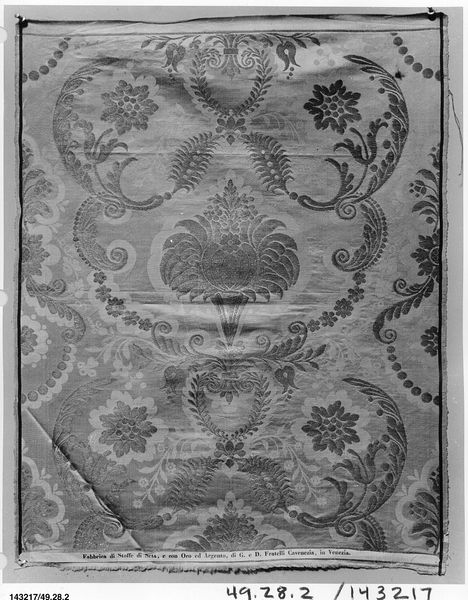
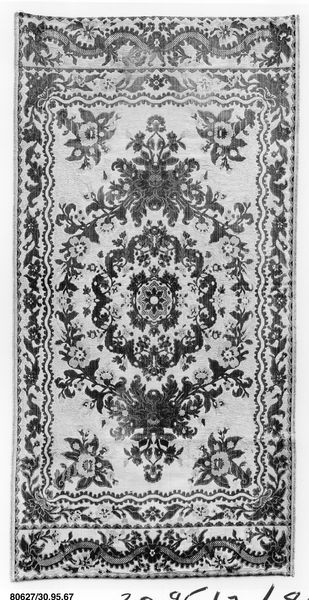
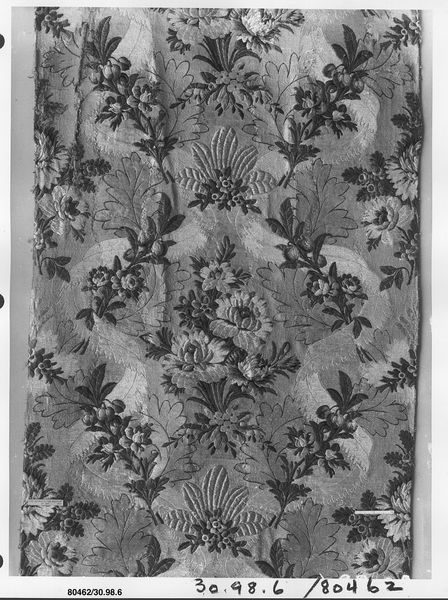
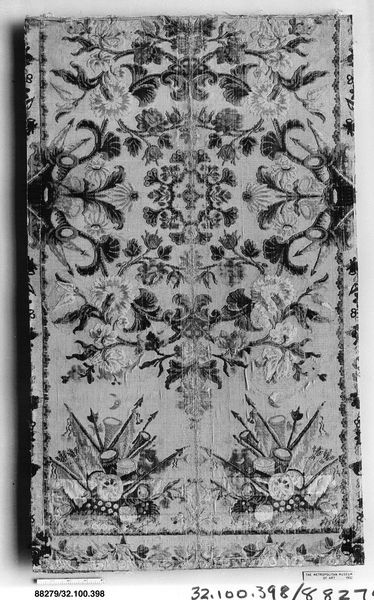
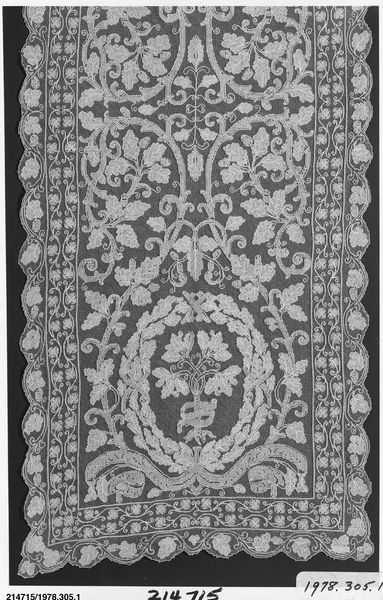
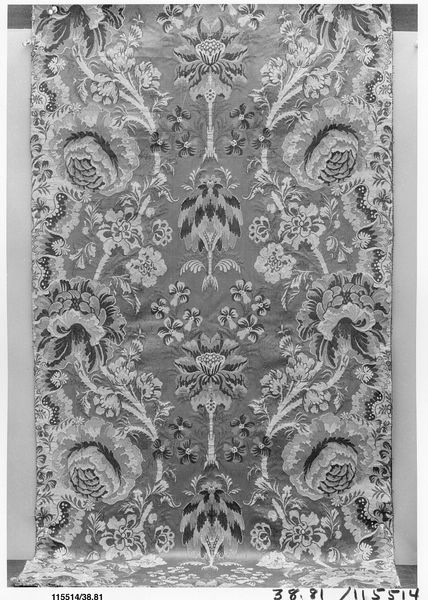
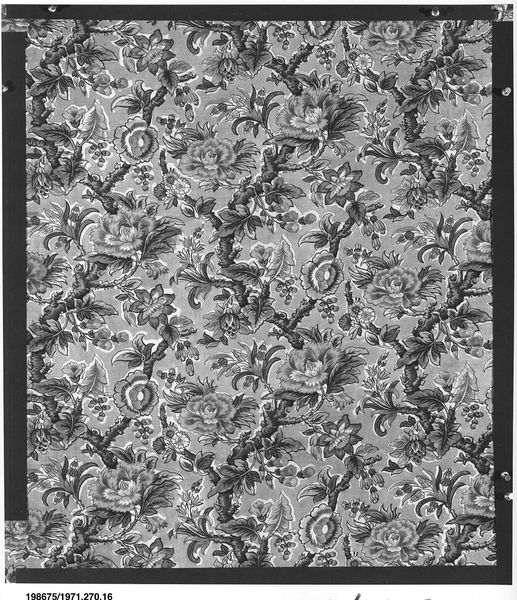
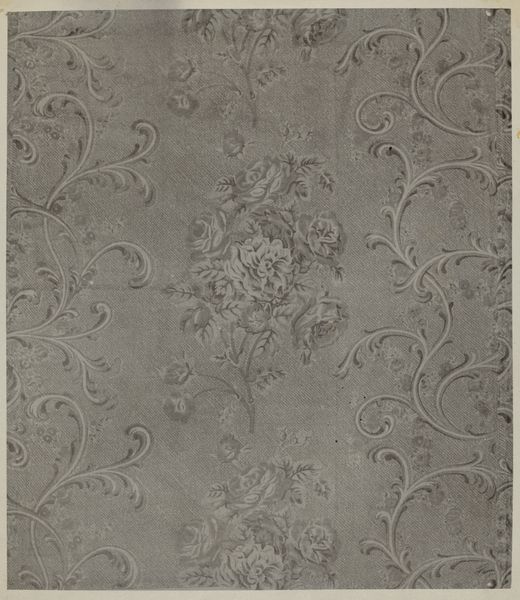
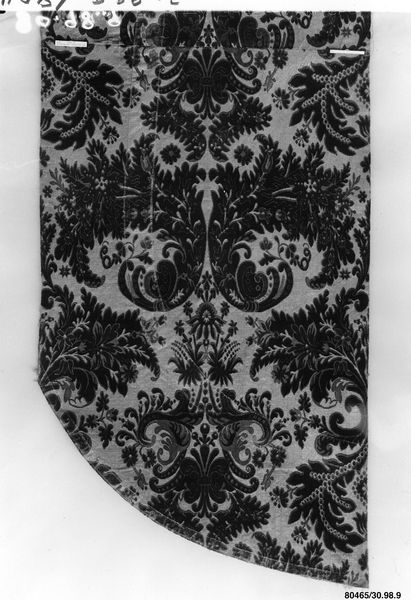
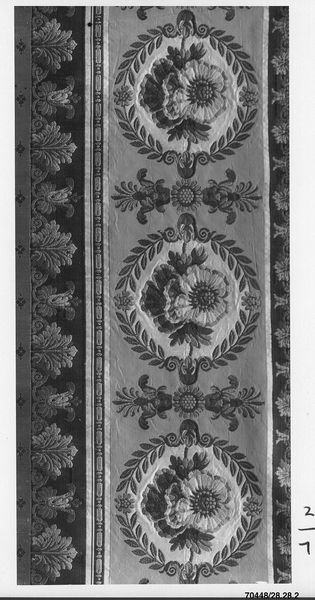
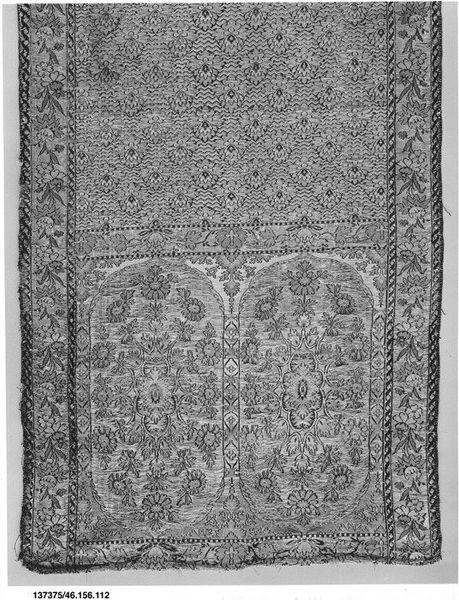
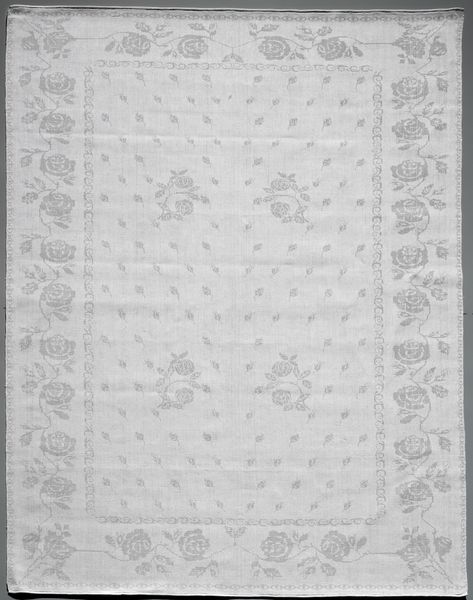
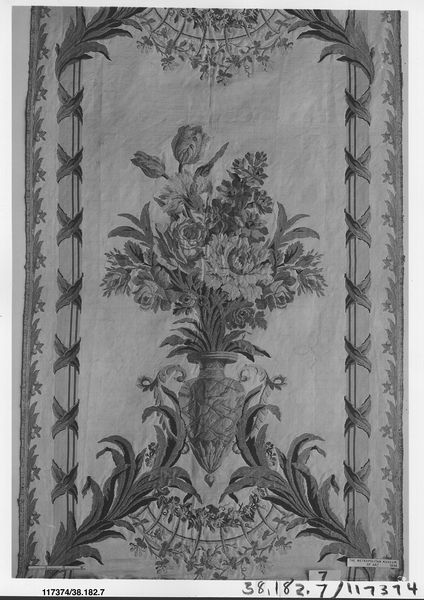
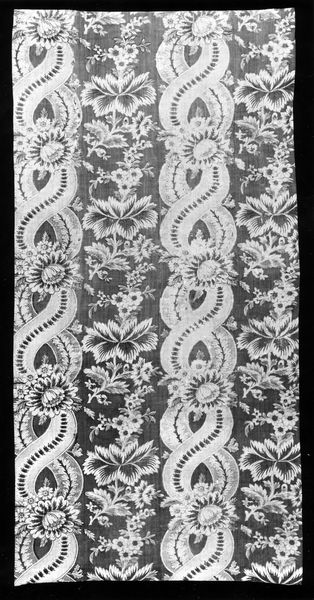
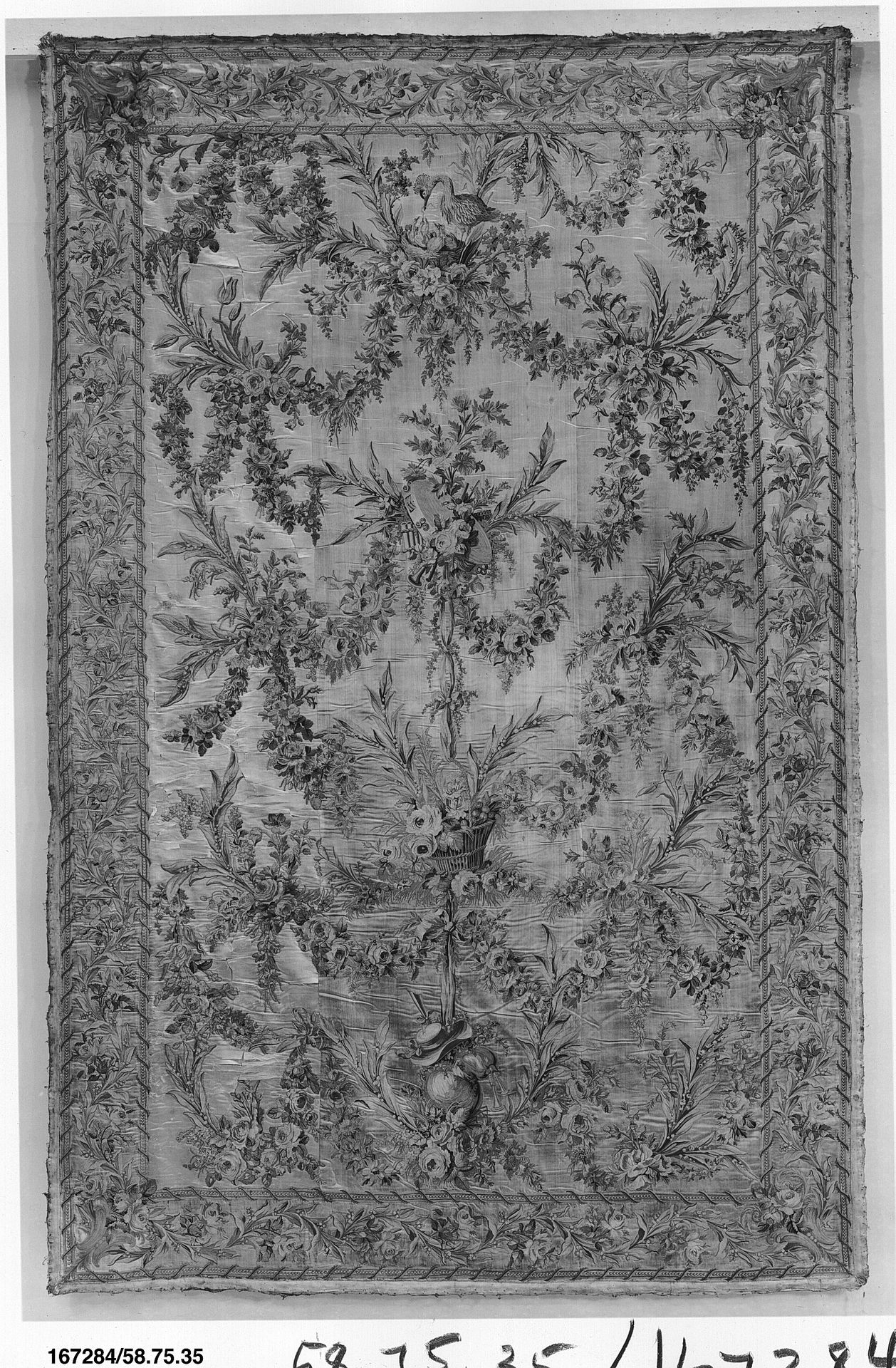
These silk wall hangings, of which there are three, were designed by Philippe de Lasalle in France in the eighteenth century. These monochrome textiles, with their abundance of flowers and vegetal decoration, speak to the rise of the luxury industries in Lyon. Lasalle’s production depended upon the labor of many skilled artisans. The silk industry itself was closely tied to the court of Louis XV, for whom the maintenance of French prestige and the provision of employment through manufacture were a matter of state. The hangings evoke the kind of leisure and pleasure that was the preserve of the aristocracy, who were the primary consumers of these goods. The very architecture of their domestic spaces was built around the display of such artworks. These hangings give us a glimpse into the complex web of social relations that underpinned artistic production in eighteenth-century France. We can draw upon a wide range of historical records to explore these social relations further.
Wall hangings (3)
1774 - 1793

Philippe de Lasalle
1723 - 1804
The Metropolitan Museum of Art
Metropolitan Museum of Art, New York, NYArtwork details
- Dimensions
- .35: H. 127 x W. 80 1/2 inches (322.6 x 204.5 cm); .36 and .37 each: H. 126 x W. 83 inches (320 x 210.8 cm)
- Location
- Metropolitan Museum of Art, New York, NY
- Copyright
- Public Domain
Comments
Share your thoughts
About this artwork
These silk wall hangings, of which there are three, were designed by Philippe de Lasalle in France in the eighteenth century. These monochrome textiles, with their abundance of flowers and vegetal decoration, speak to the rise of the luxury industries in Lyon. Lasalle’s production depended upon the labor of many skilled artisans. The silk industry itself was closely tied to the court of Louis XV, for whom the maintenance of French prestige and the provision of employment through manufacture were a matter of state. The hangings evoke the kind of leisure and pleasure that was the preserve of the aristocracy, who were the primary consumers of these goods. The very architecture of their domestic spaces was built around the display of such artworks. These hangings give us a glimpse into the complex web of social relations that underpinned artistic production in eighteenth-century France. We can draw upon a wide range of historical records to explore these social relations further.
Comments
Share your thoughts