About this artwork
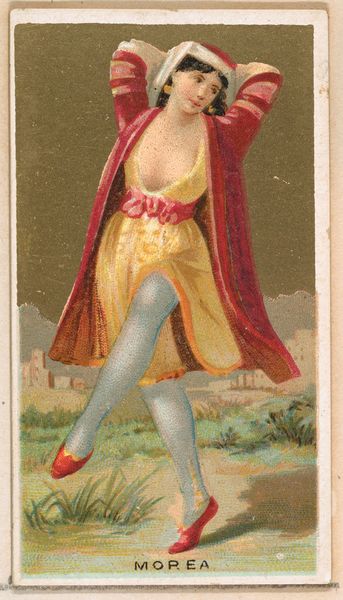
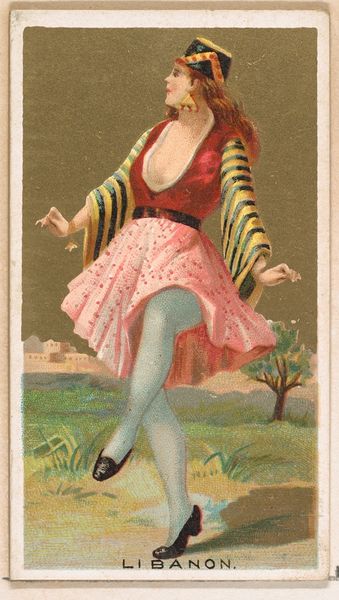
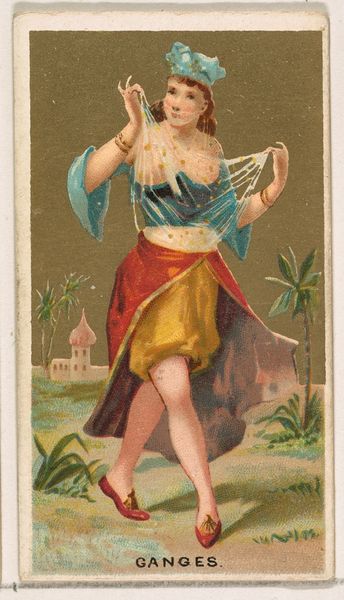
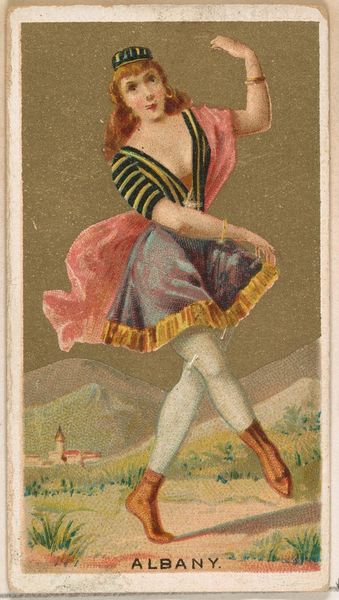
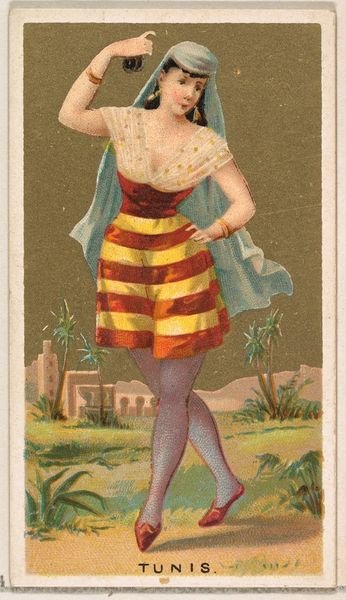
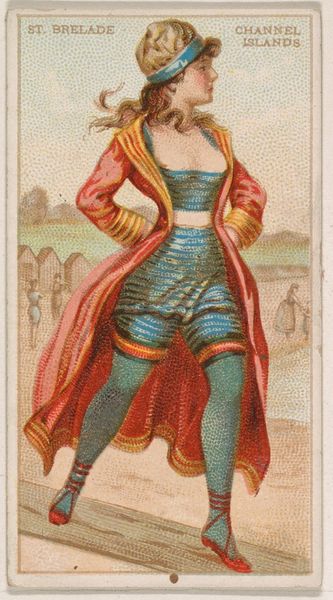
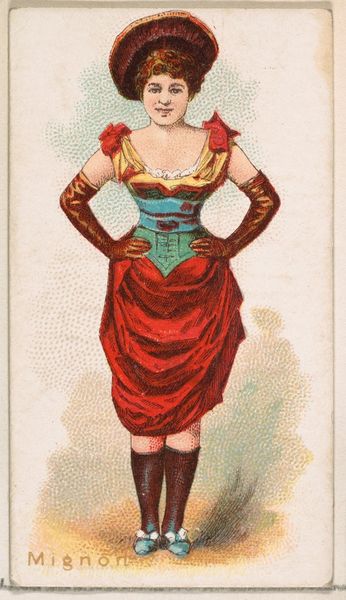
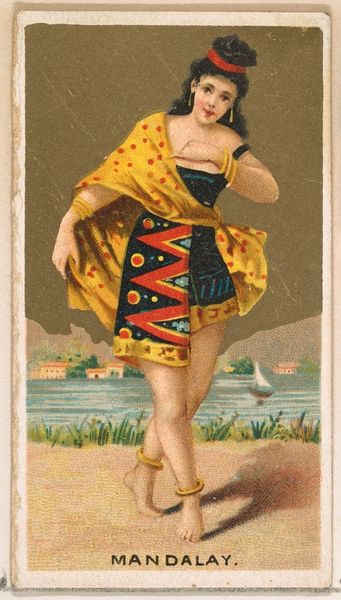
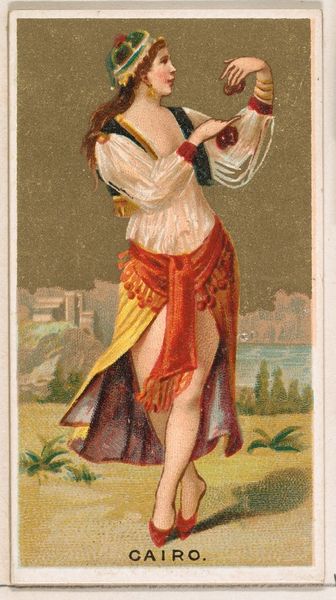
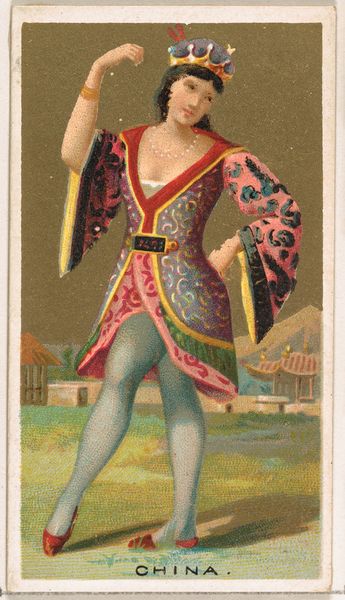
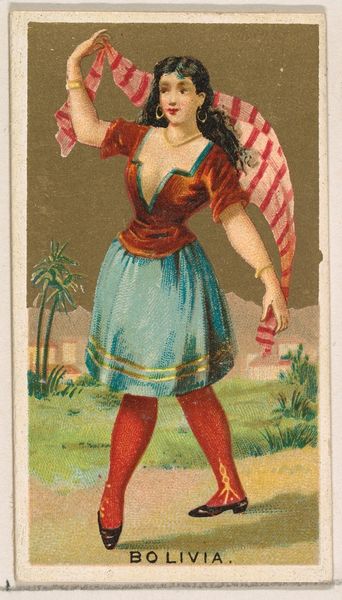
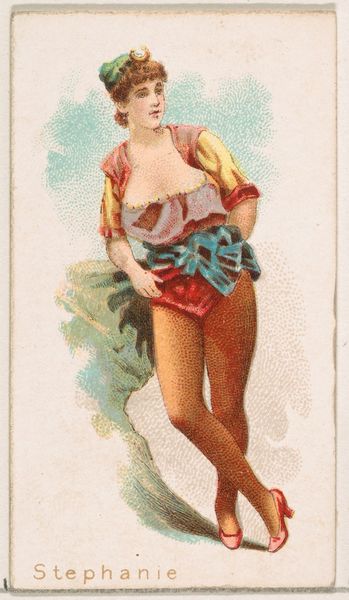
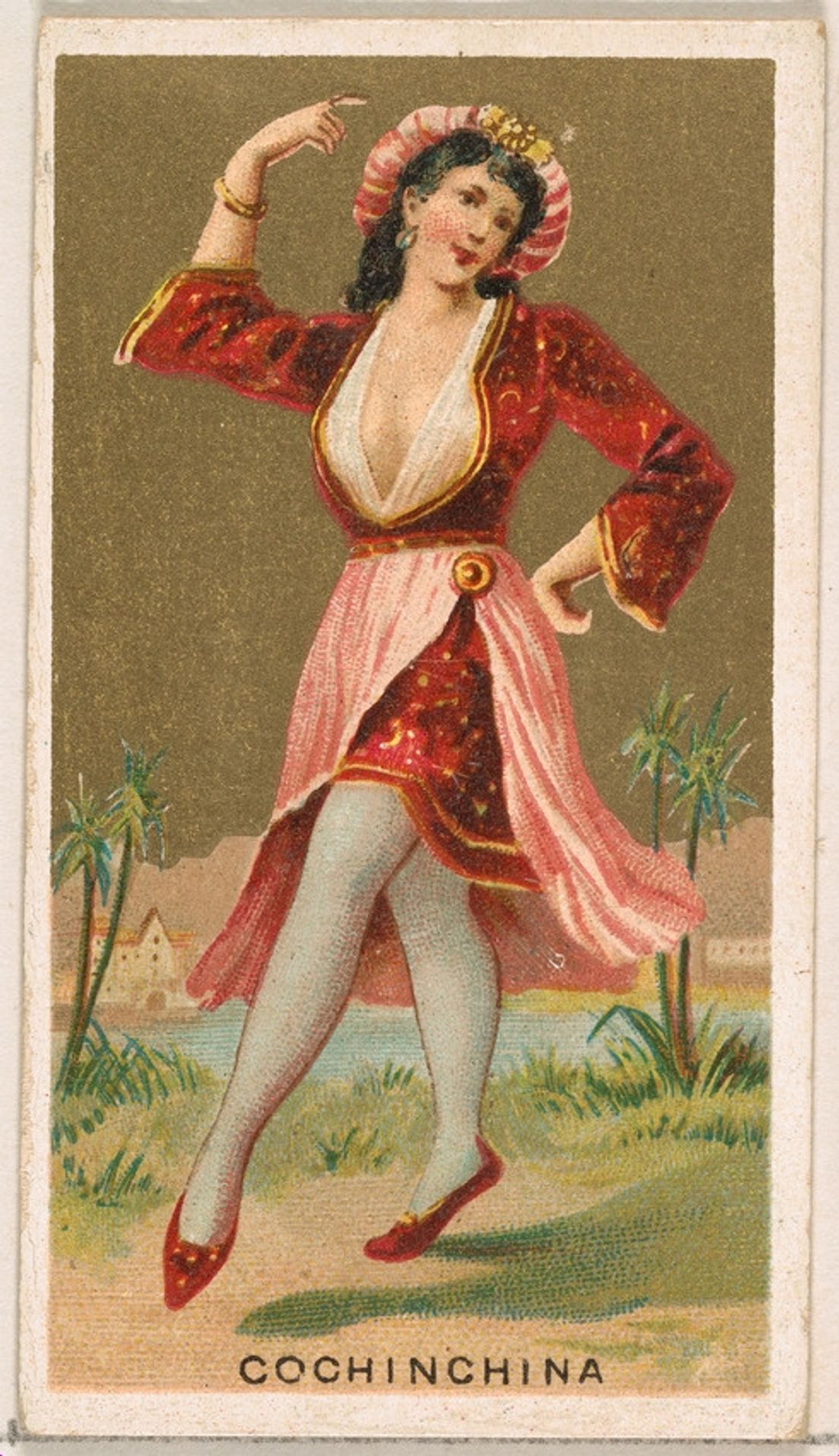
This small chromolithograph, titled "Cochinchina," was produced by the Wm. S. Kimball & Co. as part of a series of collectible cards included in cigarette packs. The offset printing technique allowed for mass production and distribution, making art accessible to a wide audience. The card’s design features vibrant colors and meticulous detail, achieved through layering multiple layers of ink. The process involves transferring an image from a stone or metal plate to a rubber blanket, then onto paper. This indirect method produces a high-quality image with consistent color and sharpness. The card’s smooth, glossy surface reflects the industrial processes used in its creation, a stark contrast to the exotic subject matter. The image of a dancer exoticizes a distant land for the consumption of smokers, reflecting the global reach of the tobacco industry and its reliance on cheap labor and mass production. Ultimately, this card challenges our notions of art, blurring the lines between commercial product and cultural artifact.
Cochinchina, from the Dancing Girls of the World series (N185) issued by Wm. S. Kimball & Co.
1889

William S. Kimball & Company
@williamskimballcompany
The Metropolitan Museum of Art
Metropolitan Museum of Art, New York, NYArtwork details
- Medium
- drawing, print
- Dimensions
- Sheet: 2 11/16 × 1 1/2 in. (6.8 × 3.8 cm)
- Location
- Metropolitan Museum of Art, New York, NY
- Copyright
- Public Domain
Tags
Comments
Share your thoughts
About this artwork
This small chromolithograph, titled "Cochinchina," was produced by the Wm. S. Kimball & Co. as part of a series of collectible cards included in cigarette packs. The offset printing technique allowed for mass production and distribution, making art accessible to a wide audience. The card’s design features vibrant colors and meticulous detail, achieved through layering multiple layers of ink. The process involves transferring an image from a stone or metal plate to a rubber blanket, then onto paper. This indirect method produces a high-quality image with consistent color and sharpness. The card’s smooth, glossy surface reflects the industrial processes used in its creation, a stark contrast to the exotic subject matter. The image of a dancer exoticizes a distant land for the consumption of smokers, reflecting the global reach of the tobacco industry and its reliance on cheap labor and mass production. Ultimately, this card challenges our notions of art, blurring the lines between commercial product and cultural artifact.
Comments
Share your thoughts