About this artwork
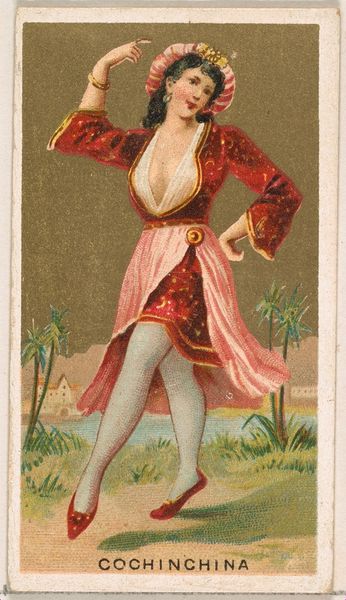
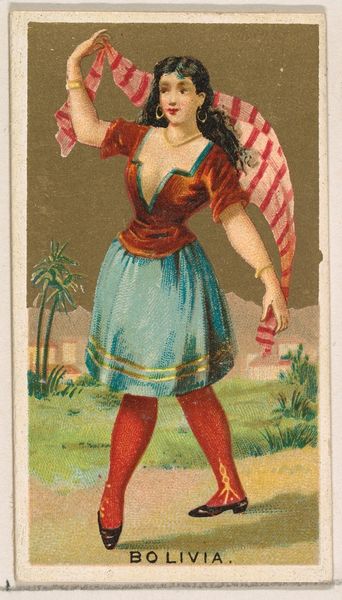
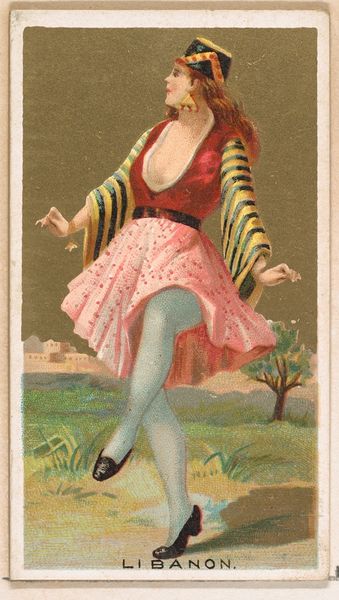
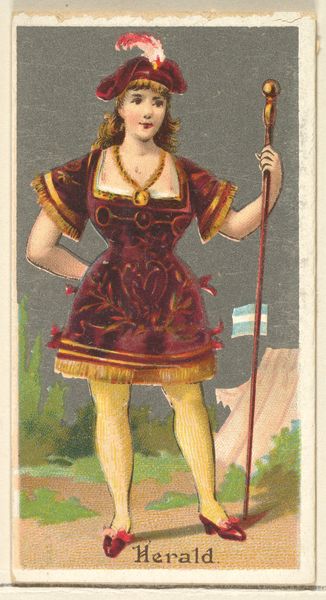
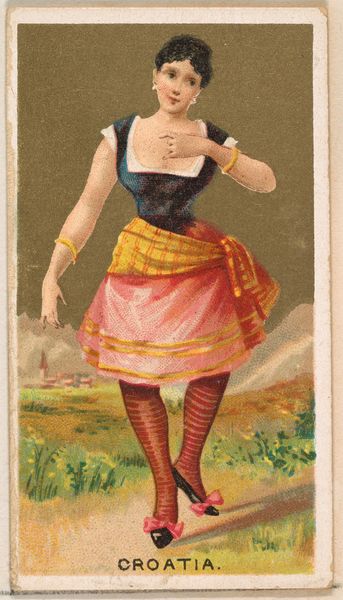
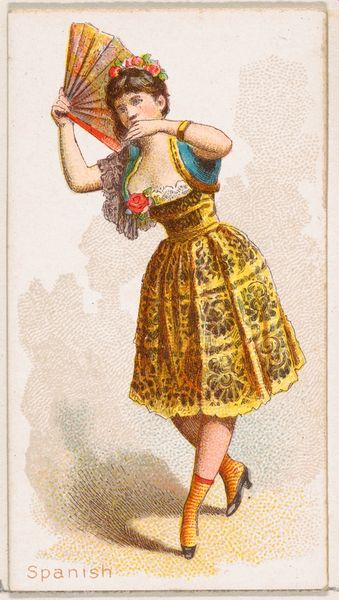
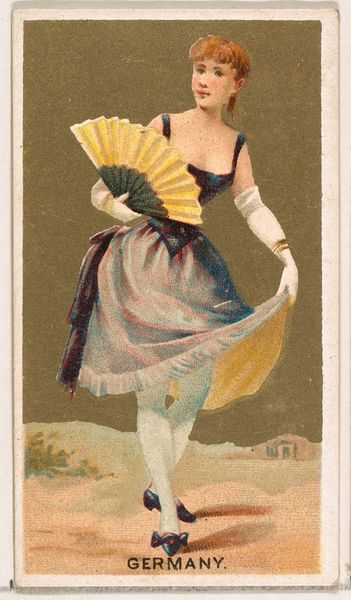
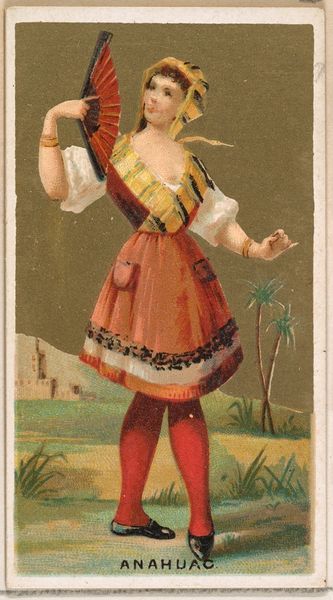
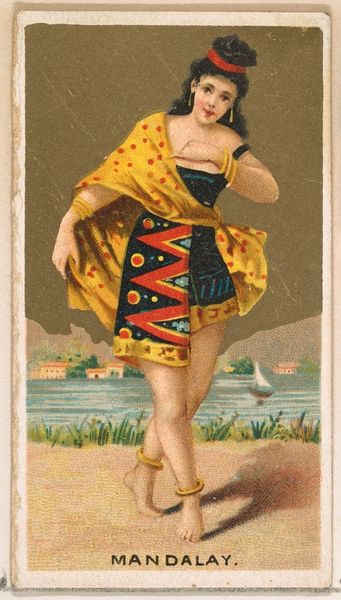
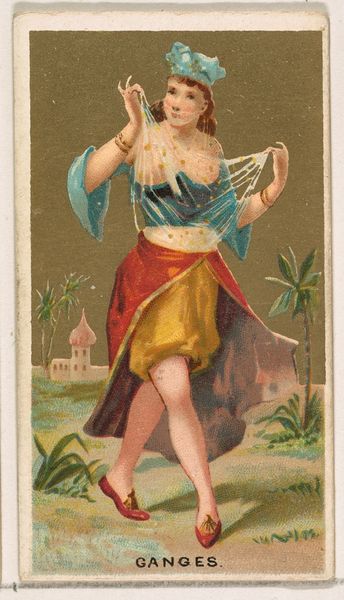
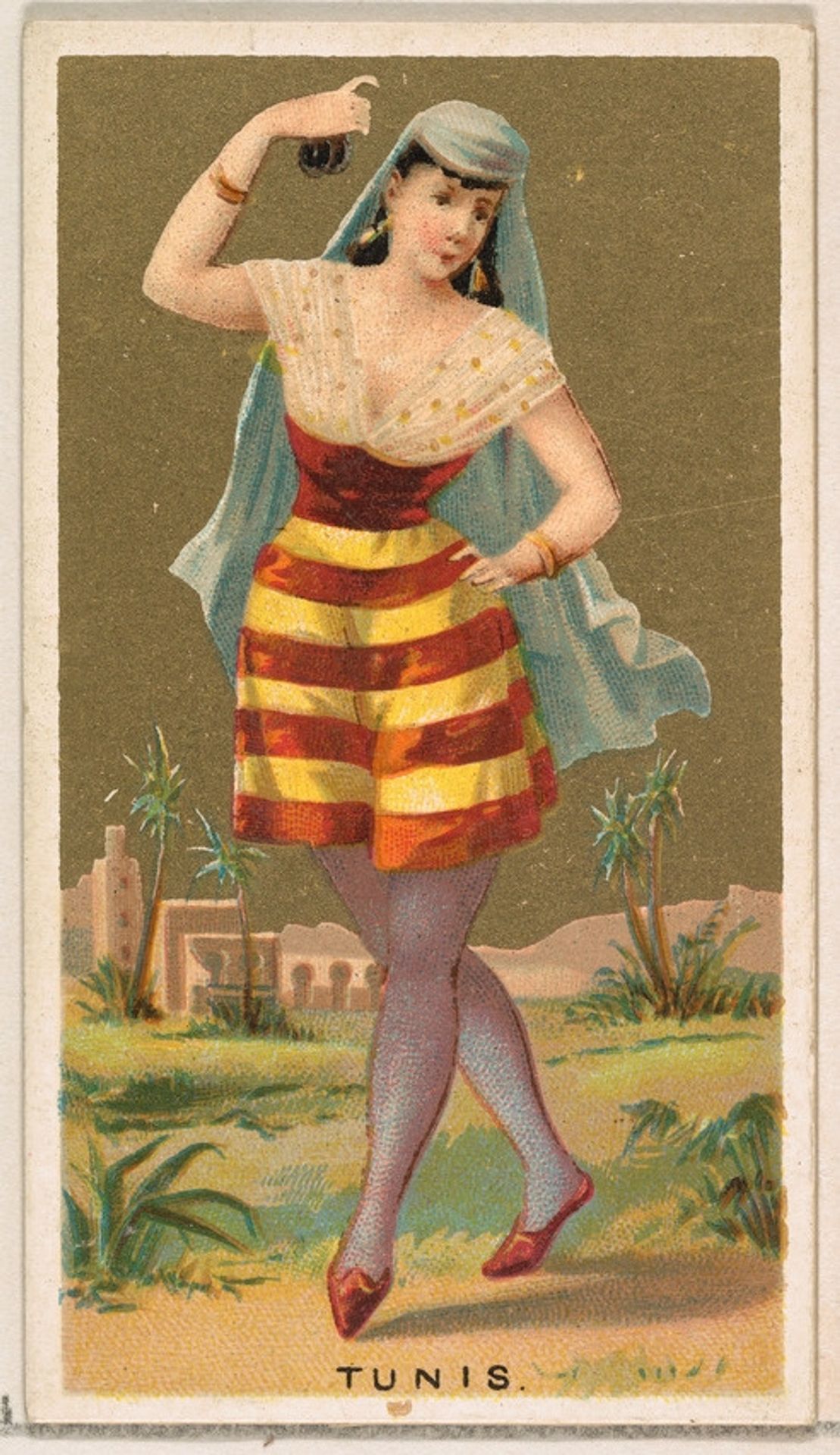
This small chromolithograph titled "Tunis, from the Dancing Girls of the World series" was created by Wm. S. Kimball & Co. The print depicts a dancer in a posed stance against a loosely rendered landscape, notable for its flattened perspective and muted tones. The woman's attire, featuring bold, horizontal stripes, creates a striking contrast with the soft background, emphasizing her figure as the focal point. Considering the historical context, this image functions as a signifier of exoticism and cultural spectacle. The structural arrangement uses color and form to reinforce a binary between the Western gaze and the 'other,' playing into established orientalist themes. The dancer's stylized presentation and the use of visual tropes highlight the complex interplay between representation, cultural identity, and commercial exchange in the late 19th century. It is a cultural artifact that requires ongoing interpretation.
Tunis, from the Dancing Girls of the World series (N185) issued by Wm. S. Kimball & Co.
1889

William S. Kimball & Company
@williamskimballcompany
The Metropolitan Museum of Art
Metropolitan Museum of Art, New York, NYArtwork details
- Medium
- drawing, coloured-pencil, print
- Dimensions
- Sheet: 2 11/16 × 1 1/2 in. (6.8 × 3.8 cm)
- Location
- Metropolitan Museum of Art, New York, NY
- Copyright
- Public Domain
Tags
Comments
Share your thoughts
About this artwork
This small chromolithograph titled "Tunis, from the Dancing Girls of the World series" was created by Wm. S. Kimball & Co. The print depicts a dancer in a posed stance against a loosely rendered landscape, notable for its flattened perspective and muted tones. The woman's attire, featuring bold, horizontal stripes, creates a striking contrast with the soft background, emphasizing her figure as the focal point. Considering the historical context, this image functions as a signifier of exoticism and cultural spectacle. The structural arrangement uses color and form to reinforce a binary between the Western gaze and the 'other,' playing into established orientalist themes. The dancer's stylized presentation and the use of visual tropes highlight the complex interplay between representation, cultural identity, and commercial exchange in the late 19th century. It is a cultural artifact that requires ongoing interpretation.
Comments
Share your thoughts