About this artwork
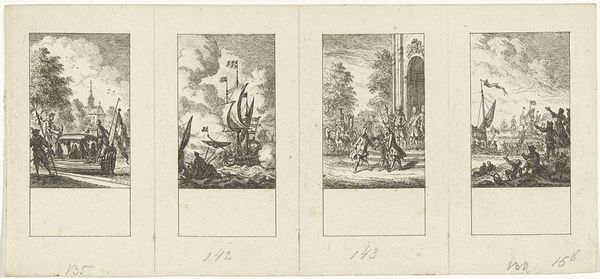
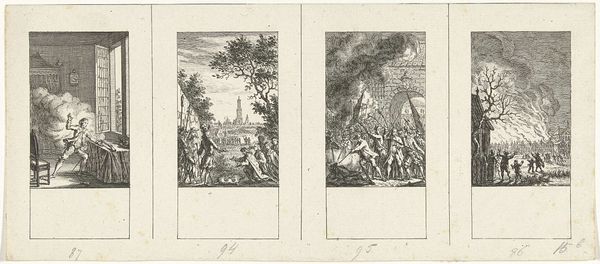
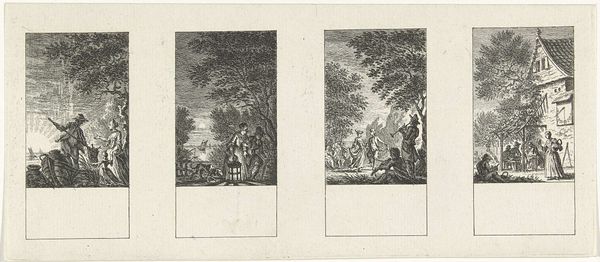
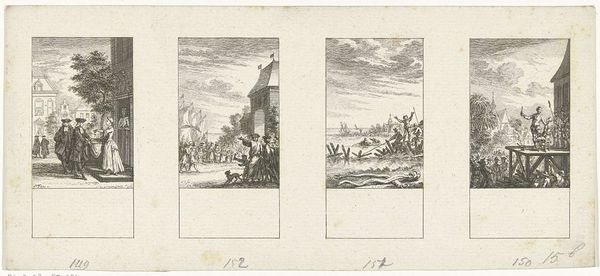
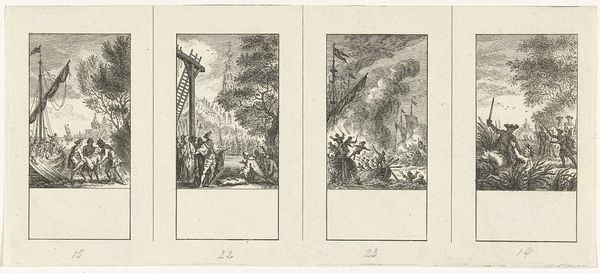
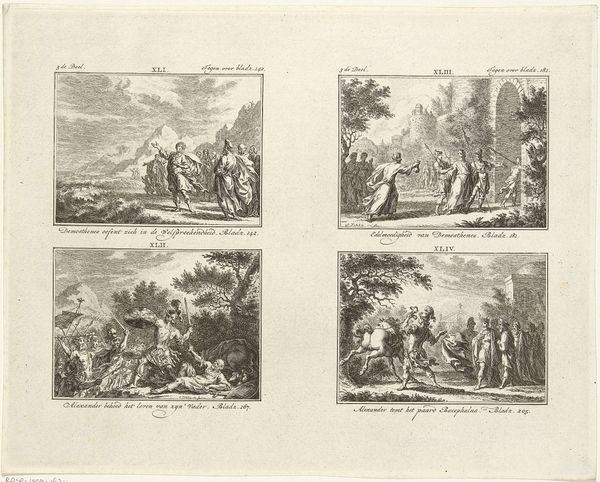
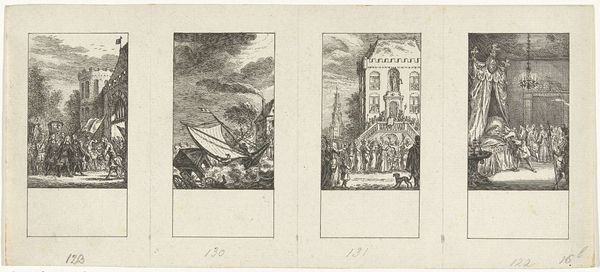
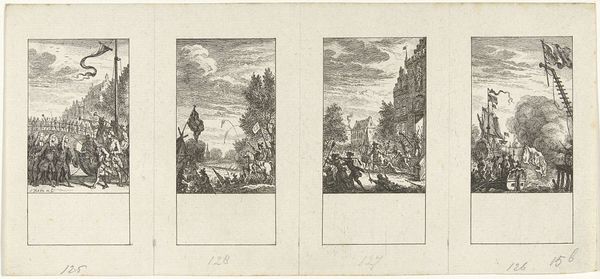
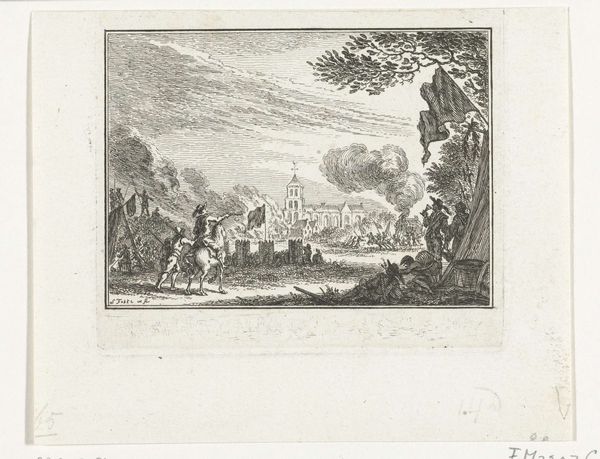
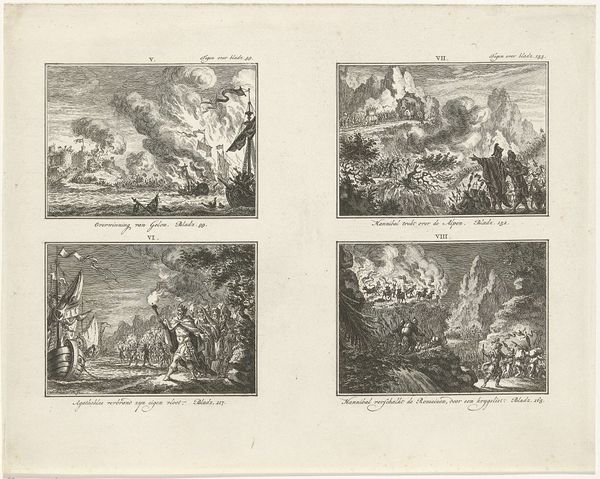
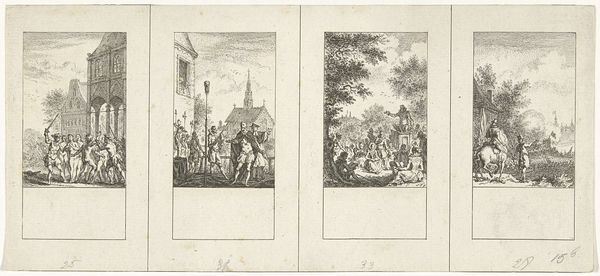
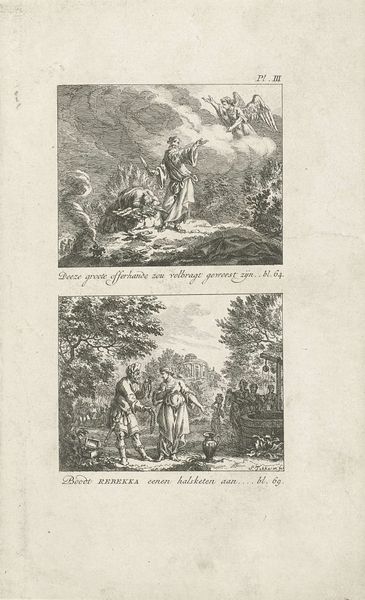
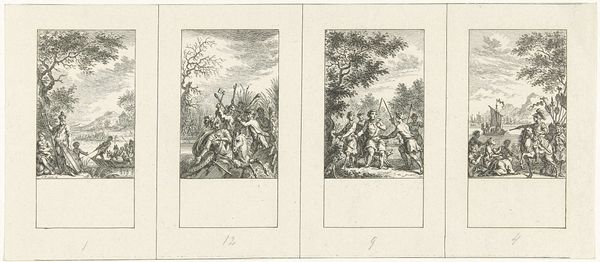
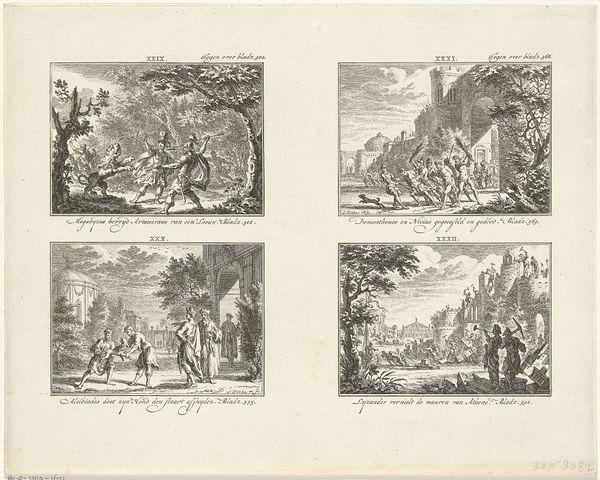
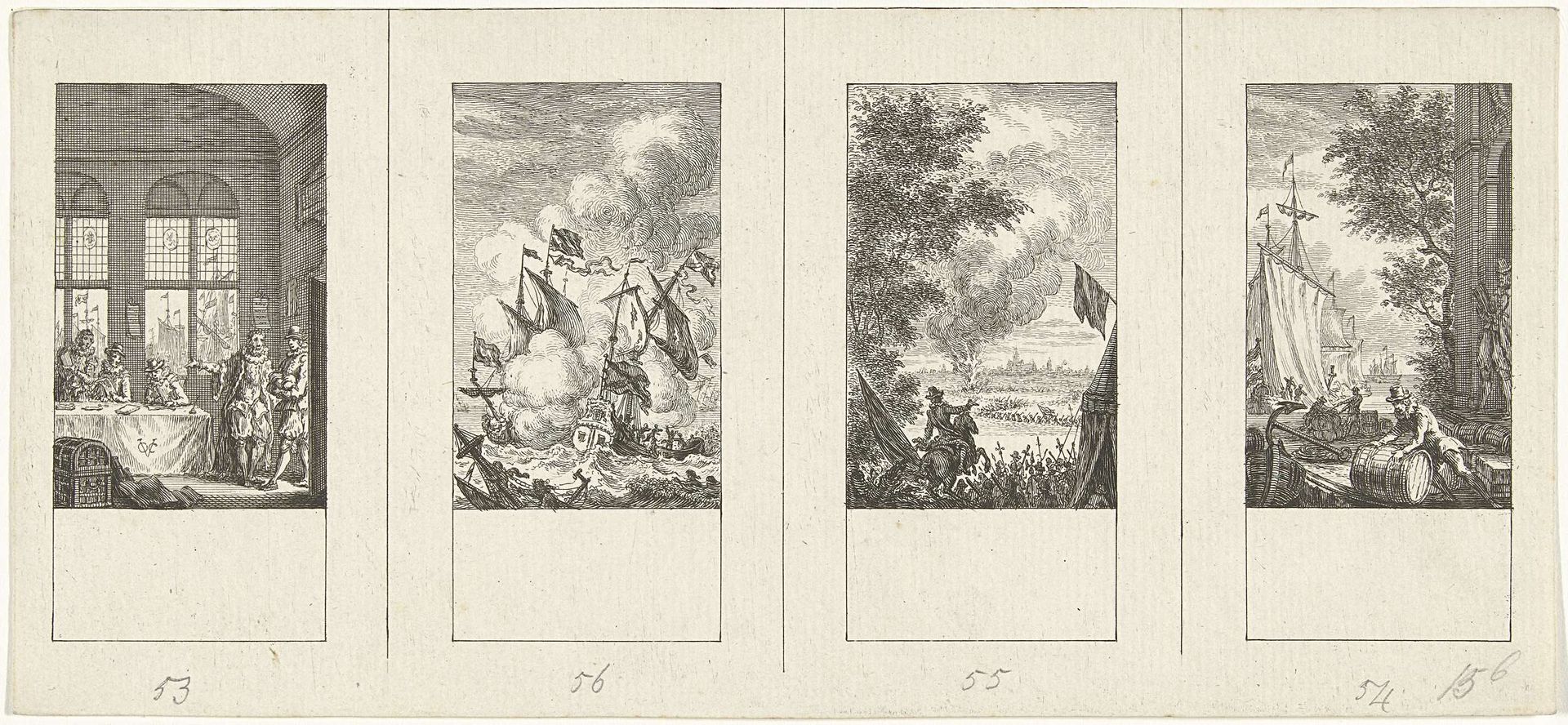
"Vier episodes uit de vaderlandse geschiedenis" was made by Simon Fokke sometime in the 18th century. It consists of four scenes, each capturing a moment of Dutch history. Engravings like this served a vital cultural function in the 1700s. In an era before photography, they were a primary means of disseminating information and shaping public opinion. Each scene is rendered with meticulous detail, inviting viewers into dramatic moments of conflict and resolution. Think about how these images might have reinforced a sense of national identity. Fokke's work reminds us that history is not just a series of events, but a carefully constructed narrative. It’s a narrative that often reflects the values and perspectives of those in power. By examining these historical moments, we are prompted to reflect on the stories a society tells itself, and how those stories shape its sense of self. Consider how Fokke’s engravings might have stirred feelings of pride or belonging, but also who might have been excluded or marginalized by these depictions of national glory.
Vier episodes uit de vaderlandse geschiedenis
1722 - 1784

Simon Fokke
1712 - 1784Location
RijksmuseumArtwork details
- Medium
- print, etching, engraving
- Dimensions
- height 114 mm, width 248 mm
- Location
- Rijksmuseum
- Copyright
- Rijks Museum: Open Domain
Tags
Comments
Share your thoughts
About this artwork
"Vier episodes uit de vaderlandse geschiedenis" was made by Simon Fokke sometime in the 18th century. It consists of four scenes, each capturing a moment of Dutch history. Engravings like this served a vital cultural function in the 1700s. In an era before photography, they were a primary means of disseminating information and shaping public opinion. Each scene is rendered with meticulous detail, inviting viewers into dramatic moments of conflict and resolution. Think about how these images might have reinforced a sense of national identity. Fokke's work reminds us that history is not just a series of events, but a carefully constructed narrative. It’s a narrative that often reflects the values and perspectives of those in power. By examining these historical moments, we are prompted to reflect on the stories a society tells itself, and how those stories shape its sense of self. Consider how Fokke’s engravings might have stirred feelings of pride or belonging, but also who might have been excluded or marginalized by these depictions of national glory.
Comments
Share your thoughts