About this artwork
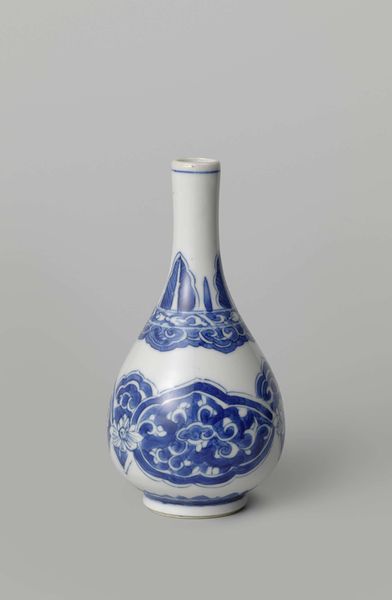
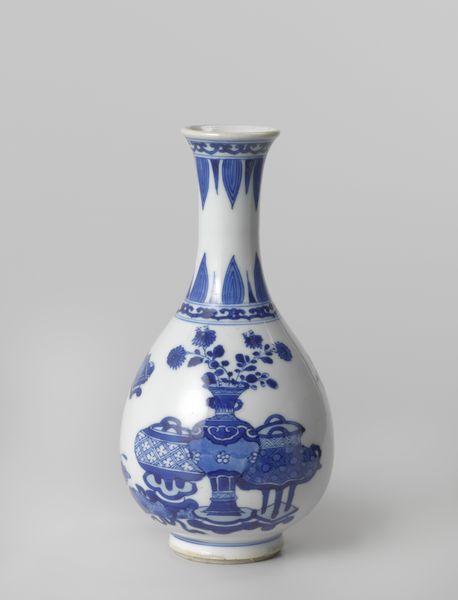
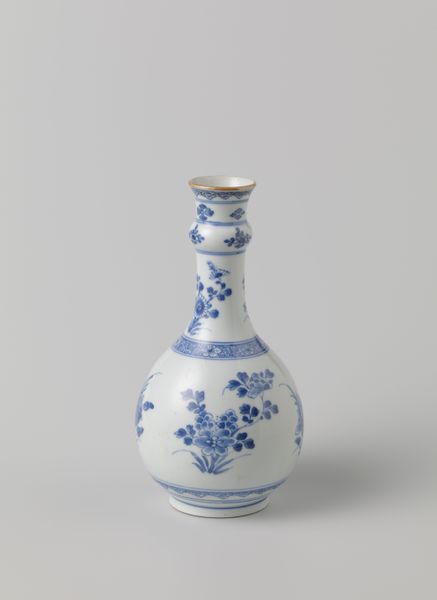
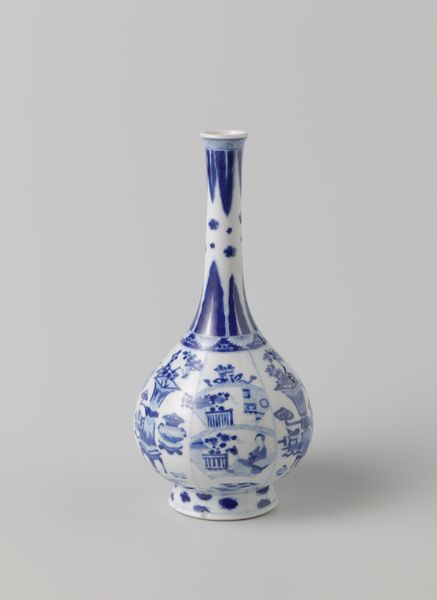
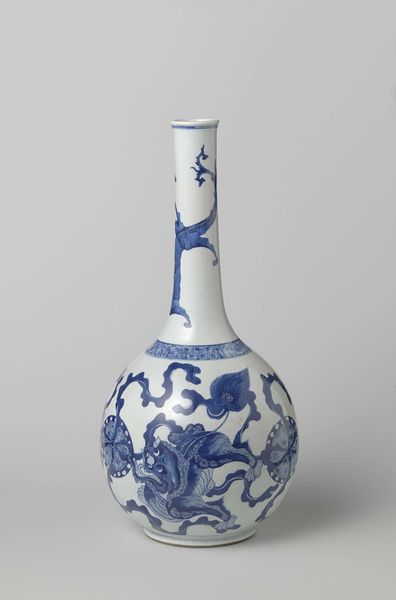
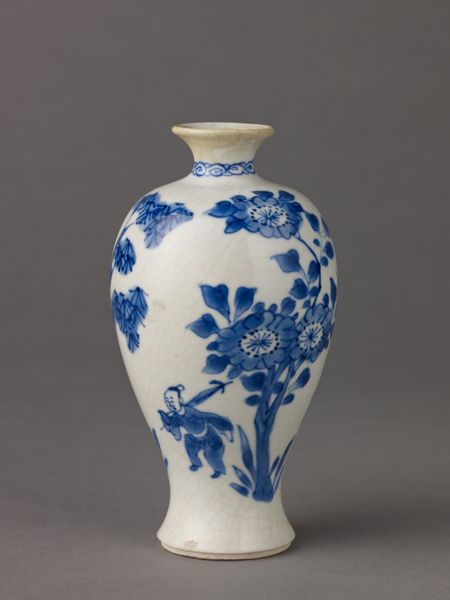
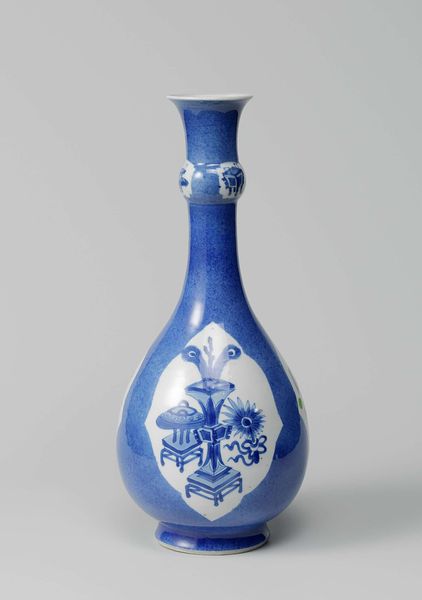
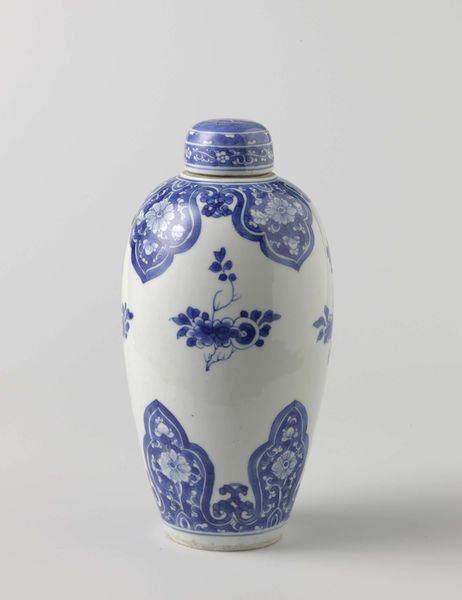
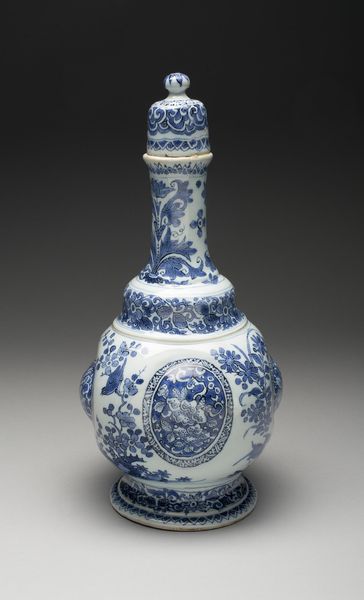
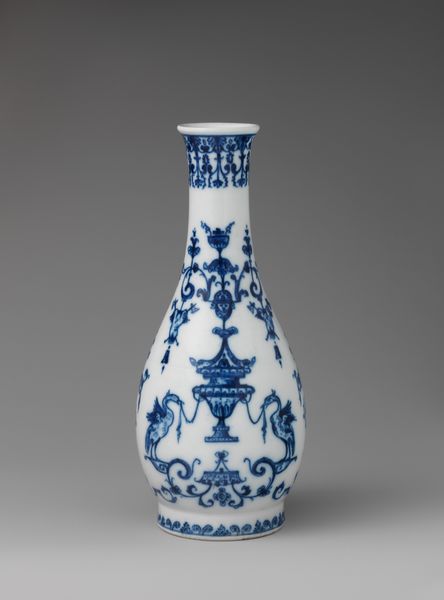
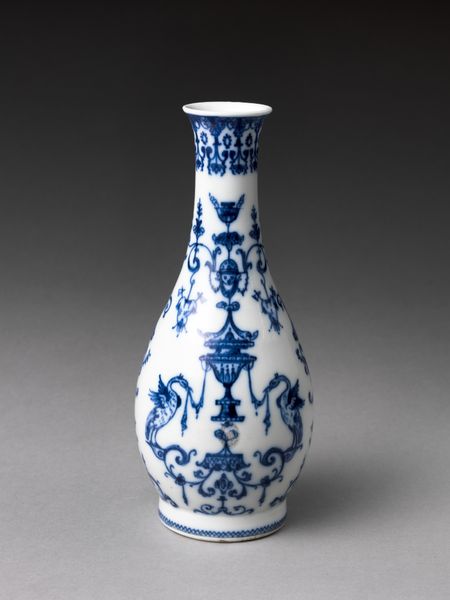
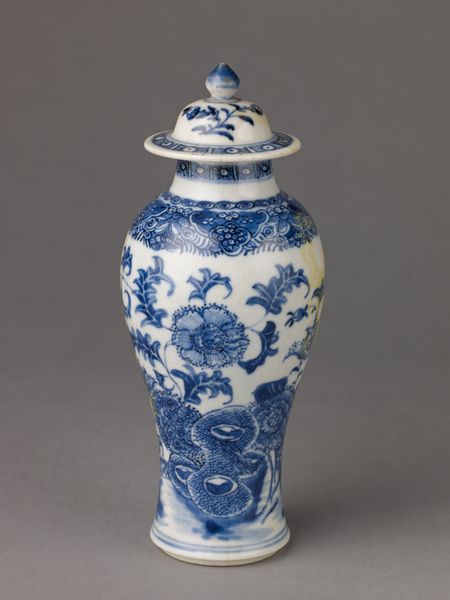
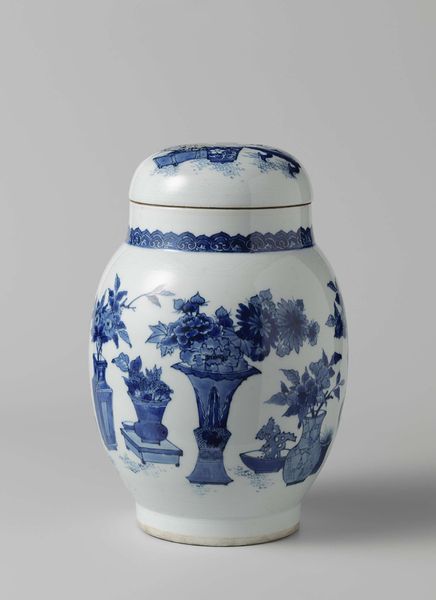
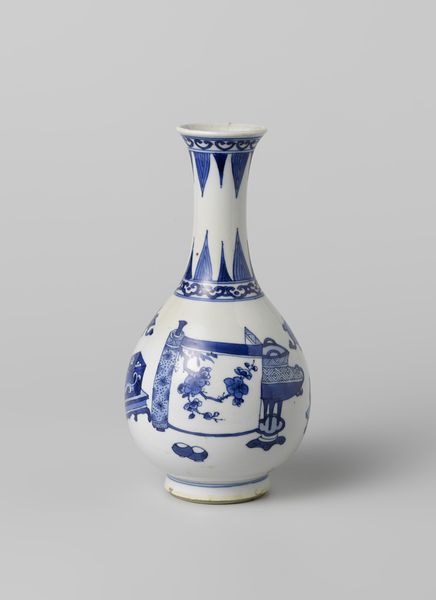
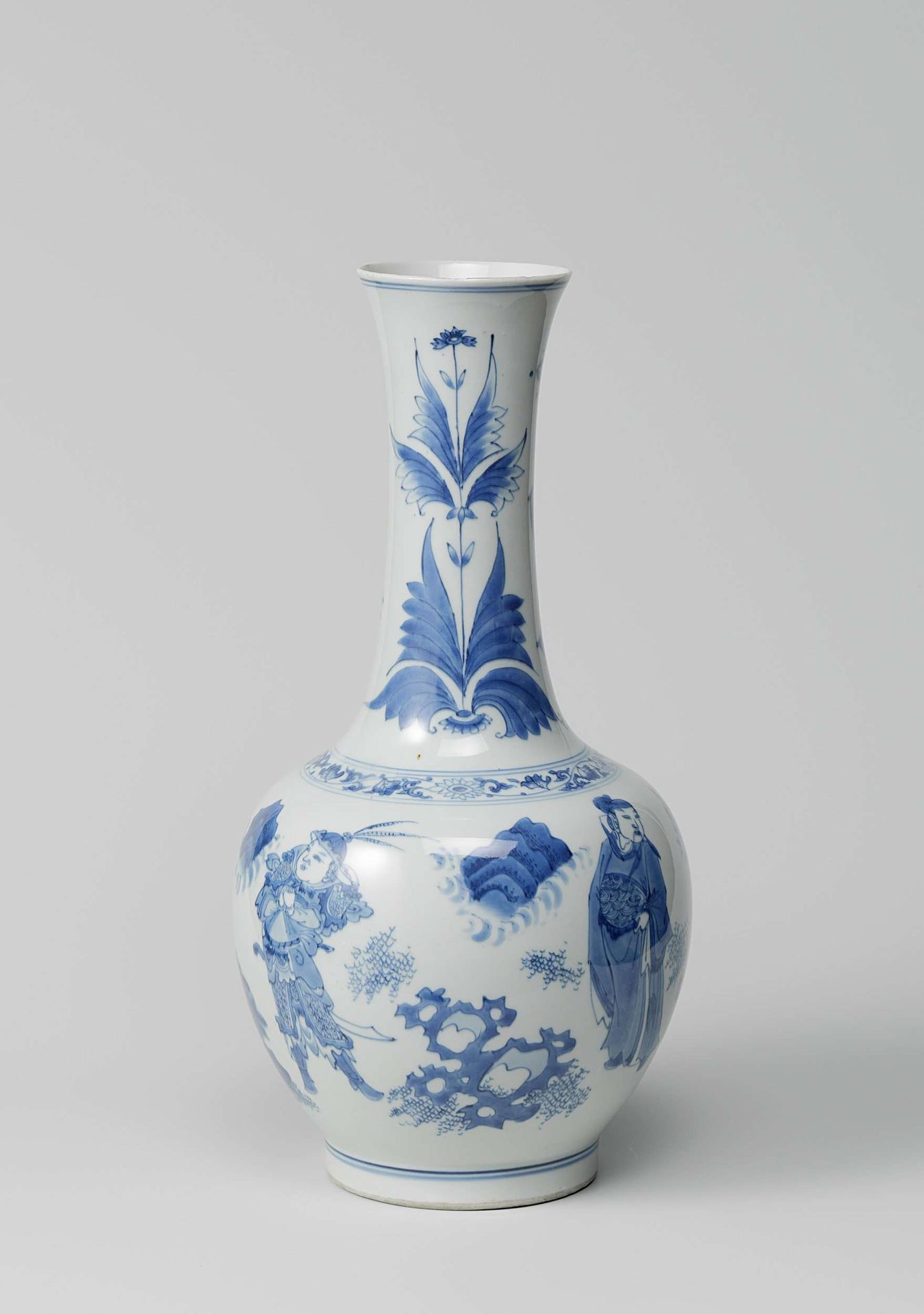
Curator: This stoneware vase, currently held in the Rijksmuseum, dates from around 1635 to 1650. Though the artist is anonymous, it’s a fantastic example of the ceramic carving traditions flourishing at that time. Editor: Gosh, it looks both incredibly elegant and slightly melancholic to me, the way the blue swirls across the pristine white. I’m just feeling its cool touch already. The figures feel a bit ghostly too. Curator: Absolutely. We should remember that pieces like this were frequently commissioned and traded across cultures, reflecting the era’s mercantile spirit, yet carrying significant symbolic weight. Editor: The way the blue pigment pools in the incised areas is really catching my eye; like tiny frozen oceans! It almost feels like these scenes—the figures, those clouds—are moments trapped in glaze, don't you think? Curator: Well observed. It reminds us, too, that ceramics occupied a key position, influencing aesthetic trends and reflecting shifting social dynamics. The imagery itself would have spoken to certain values and beliefs dominant at the time. Editor: Definitely! The carving somehow emphasizes the quiet story being told across the surface. There's this dreaminess... This vase feels like a conversation, not just a pretty object! Curator: Indeed! Studying it provides insights into global trade, intercultural exchange, and evolving aesthetic values of the time. So much history is baked into this artwork! Editor: I never thought I'd have such a rich emotional experience from staring at a vase, but the stories whispered by its design really move me! A melancholic conversation frozen in ceramic!

Artwork details
- Medium
- carving, ceramic
- Dimensions
- height 37.2 cm, diameter 19.5 cm
- Location
- Rijksmuseum
- Copyright
- Rijks Museum: Open Domain
Tags
carving
asian-art
ceramic
figuration
stoneware
ceramic
Comments

Het Moriaanshooft Factory produced Delftware of the highest quality. The glaze on this vase is milky in colour with a bluish tinge. The painting clearly reveals how the decoration is built up using dark outlines, which are filled with lighter blue tones.
About this artwork
Curator: This stoneware vase, currently held in the Rijksmuseum, dates from around 1635 to 1650. Though the artist is anonymous, it’s a fantastic example of the ceramic carving traditions flourishing at that time. Editor: Gosh, it looks both incredibly elegant and slightly melancholic to me, the way the blue swirls across the pristine white. I’m just feeling its cool touch already. The figures feel a bit ghostly too. Curator: Absolutely. We should remember that pieces like this were frequently commissioned and traded across cultures, reflecting the era’s mercantile spirit, yet carrying significant symbolic weight. Editor: The way the blue pigment pools in the incised areas is really catching my eye; like tiny frozen oceans! It almost feels like these scenes—the figures, those clouds—are moments trapped in glaze, don't you think? Curator: Well observed. It reminds us, too, that ceramics occupied a key position, influencing aesthetic trends and reflecting shifting social dynamics. The imagery itself would have spoken to certain values and beliefs dominant at the time. Editor: Definitely! The carving somehow emphasizes the quiet story being told across the surface. There's this dreaminess... This vase feels like a conversation, not just a pretty object! Curator: Indeed! Studying it provides insights into global trade, intercultural exchange, and evolving aesthetic values of the time. So much history is baked into this artwork! Editor: I never thought I'd have such a rich emotional experience from staring at a vase, but the stories whispered by its design really move me! A melancholic conversation frozen in ceramic!
Comments
Het Moriaanshooft Factory produced Delftware of the highest quality. The glaze on this vase is milky in colour with a bluish tinge. The painting clearly reveals how the decoration is built up using dark outlines, which are filled with lighter blue tones.