About this artwork
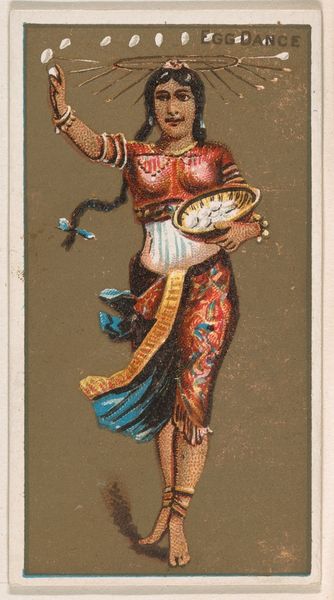
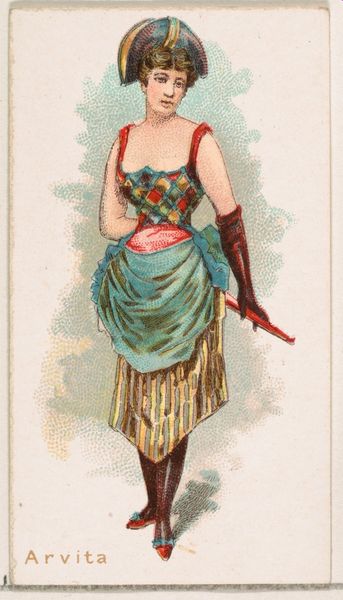
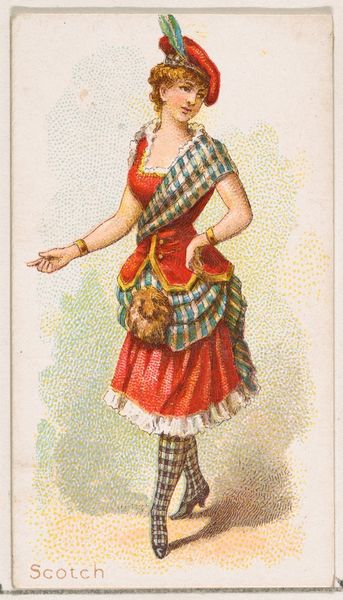
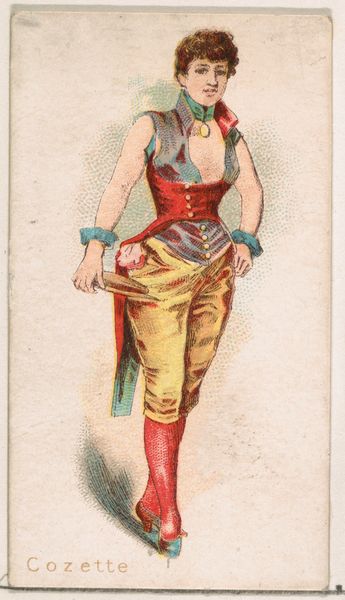
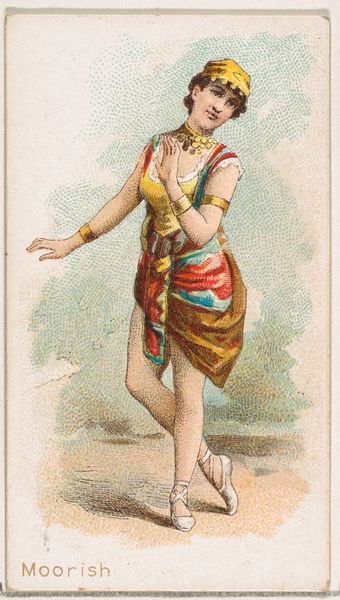
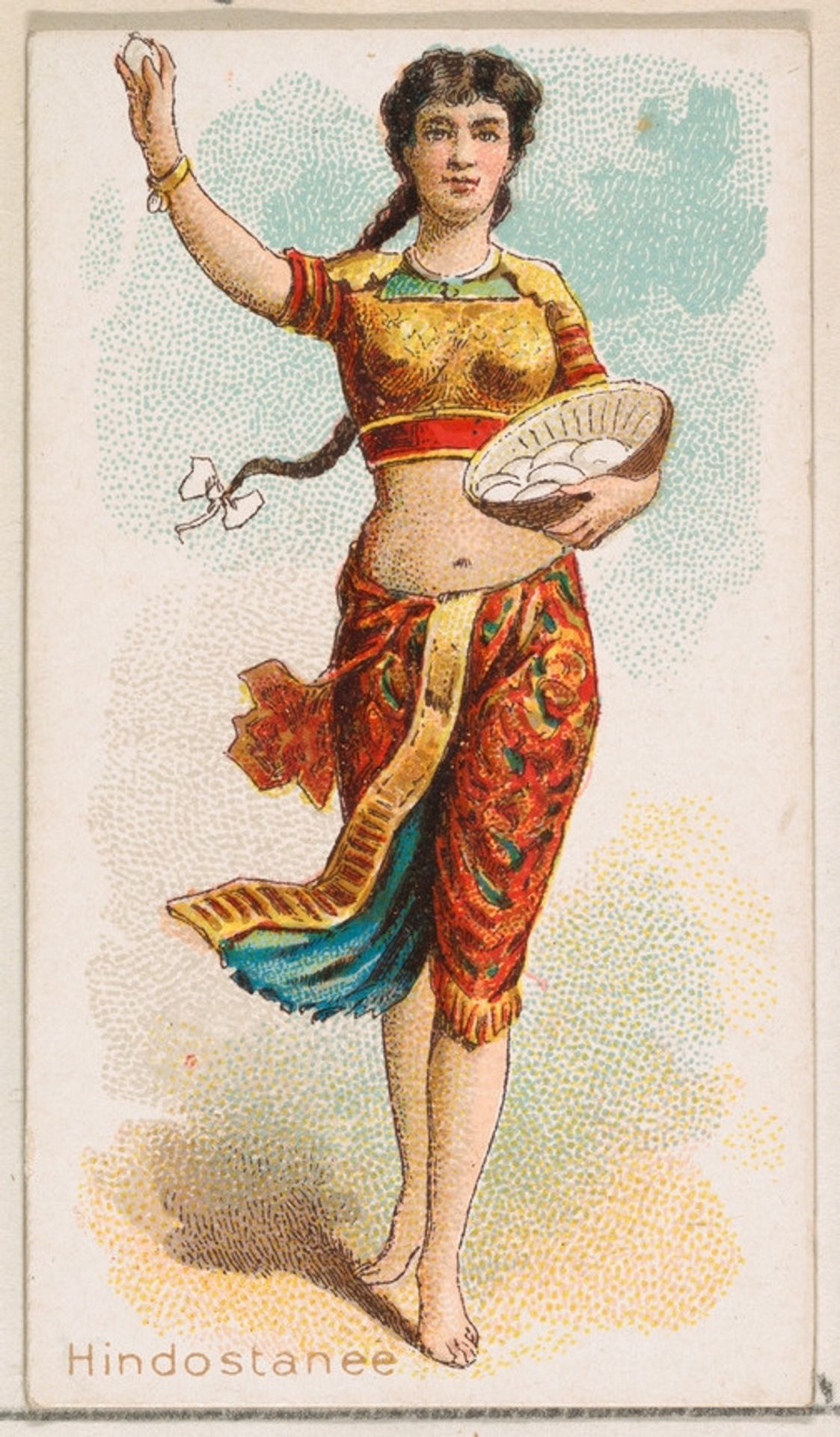
This late 19th-century chromolithograph of a "Hindostanee Dancer" was produced by the Wm. S. Kimball & Co. as part of a series of collectible cards included in their tobacco products. These cards, popular at the time, offer a window into the era's fascination with exoticism and its complex relationship with other cultures. The image presents a romanticized and somewhat stereotypical view of an Indian dancer. The dancer's attire, a mix of traditional and imagined elements, reflects the Western gaze and the Orientalist fantasies prevalent during the late 19th century. The term "Hindostanee" itself, a dated and somewhat imprecise term for someone from the Indian subcontinent, highlights the cultural distance and the tendency to generalize diverse populations. To truly understand this image, we would need to delve into the archives of the Kimball company, look at popular media of the time, and explore the historical context of British colonialism in India. This analysis helps us reveal the social, political, and economic forces at play in shaping these representations.
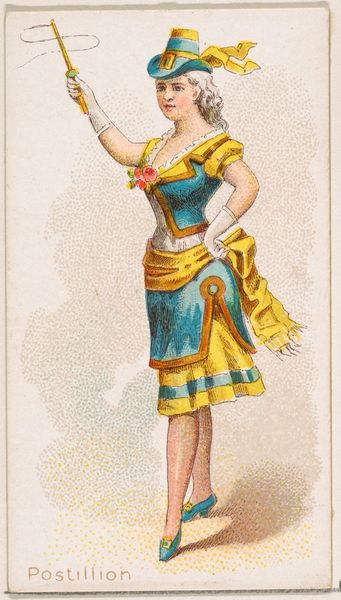
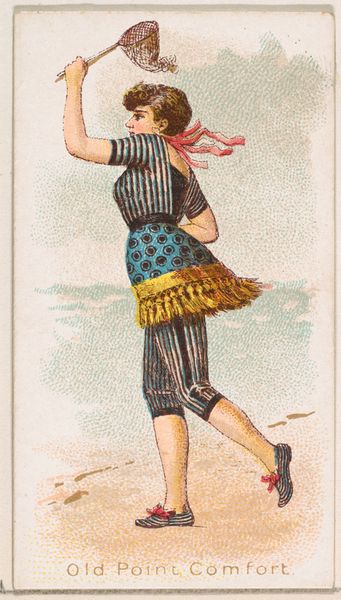
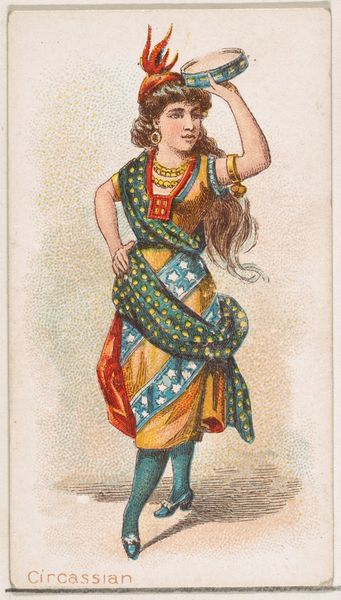
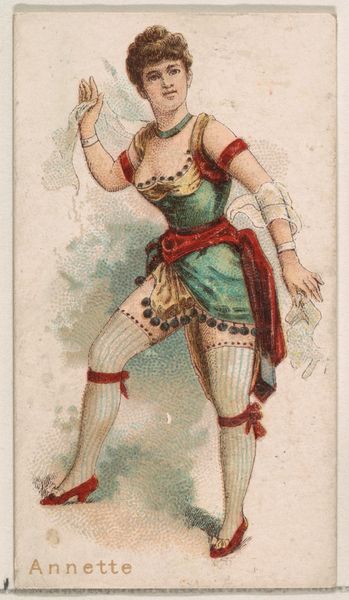
Hindostanee Dancer, from the Dancing Women series (N186) issued by Wm. S. Kimball & Co.
1889

William S. Kimball & Company
@williamskimballcompany
The Metropolitan Museum of Art
Metropolitan Museum of Art, New York, NYArtwork details
- Dimensions
- Sheet: 2 11/16 × 1 7/16 in. (6.9 × 3.7 cm)
- Location
- Metropolitan Museum of Art, New York, NY
- Copyright
- Public Domain
Comments
Share your thoughts
About this artwork
This late 19th-century chromolithograph of a "Hindostanee Dancer" was produced by the Wm. S. Kimball & Co. as part of a series of collectible cards included in their tobacco products. These cards, popular at the time, offer a window into the era's fascination with exoticism and its complex relationship with other cultures. The image presents a romanticized and somewhat stereotypical view of an Indian dancer. The dancer's attire, a mix of traditional and imagined elements, reflects the Western gaze and the Orientalist fantasies prevalent during the late 19th century. The term "Hindostanee" itself, a dated and somewhat imprecise term for someone from the Indian subcontinent, highlights the cultural distance and the tendency to generalize diverse populations. To truly understand this image, we would need to delve into the archives of the Kimball company, look at popular media of the time, and explore the historical context of British colonialism in India. This analysis helps us reveal the social, political, and economic forces at play in shaping these representations.
Comments
Share your thoughts