About this artwork
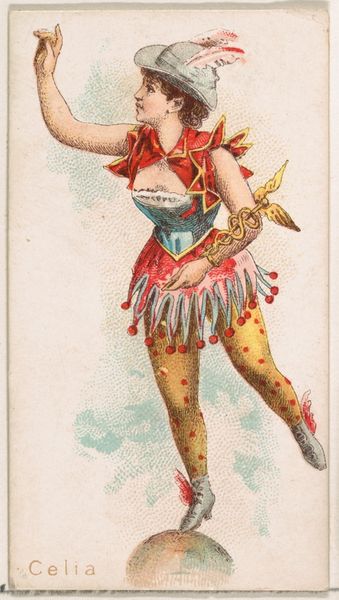
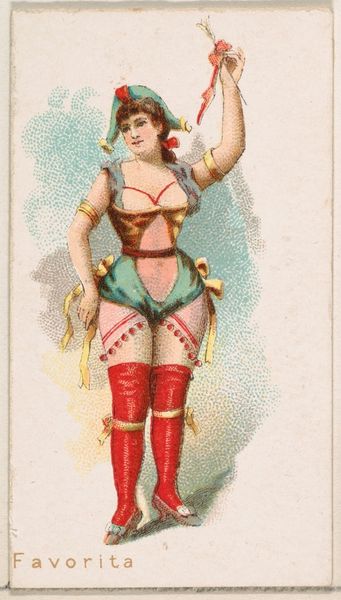
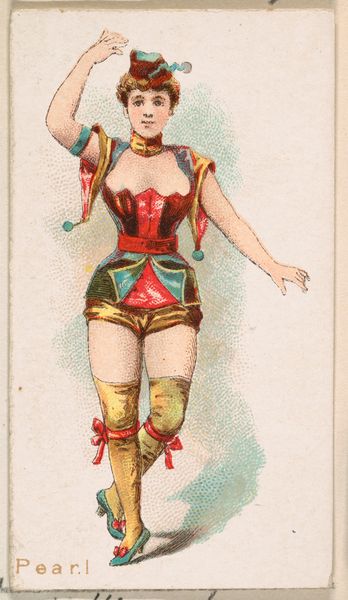
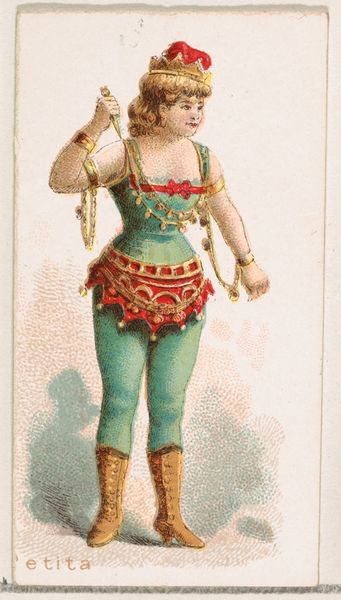
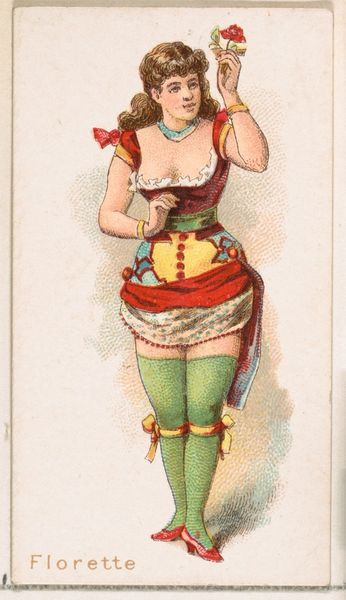
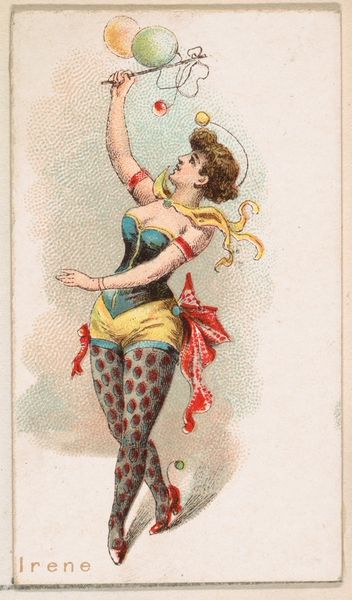
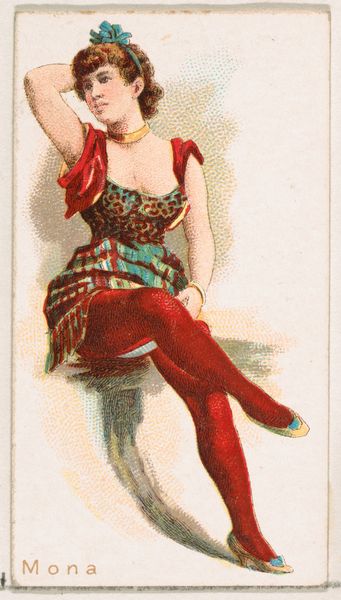
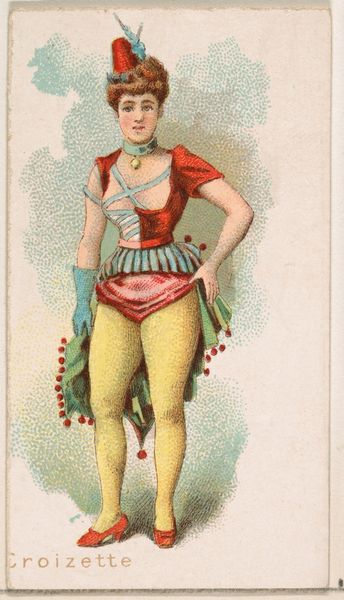
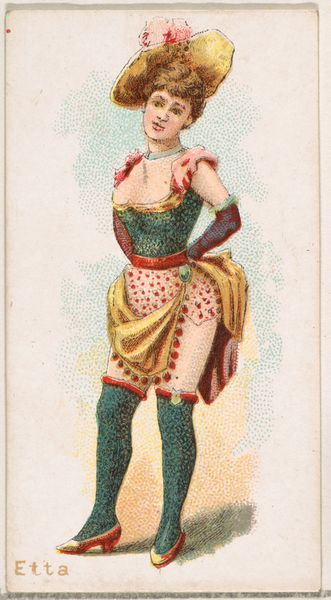
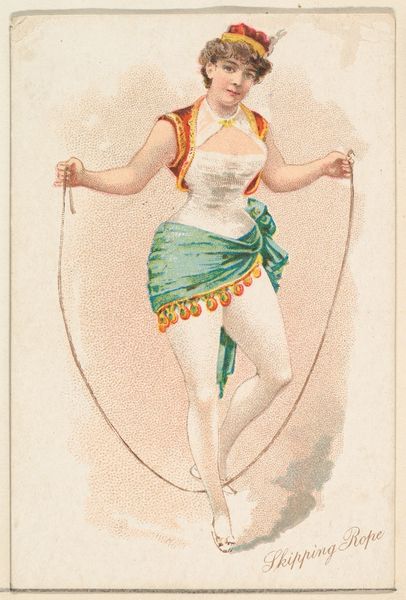
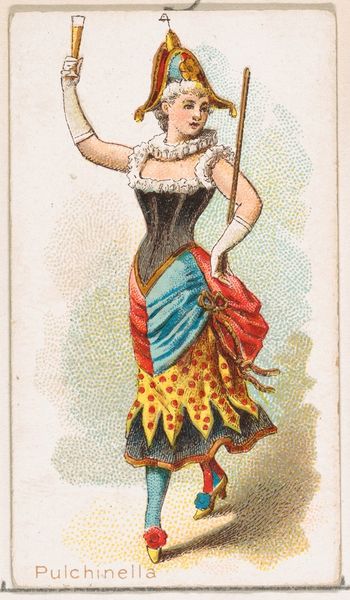
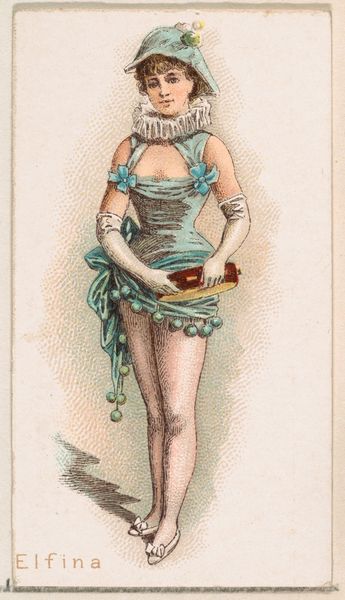
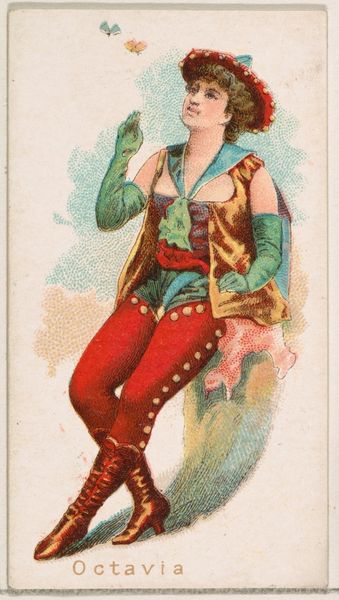
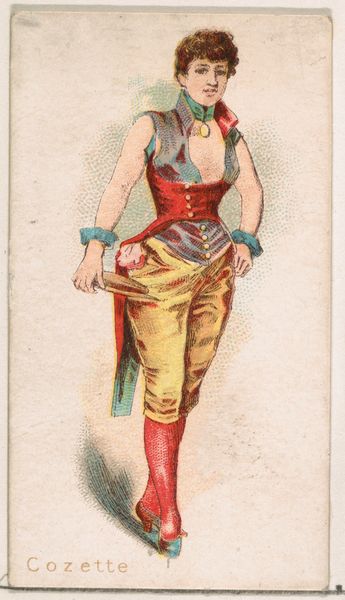
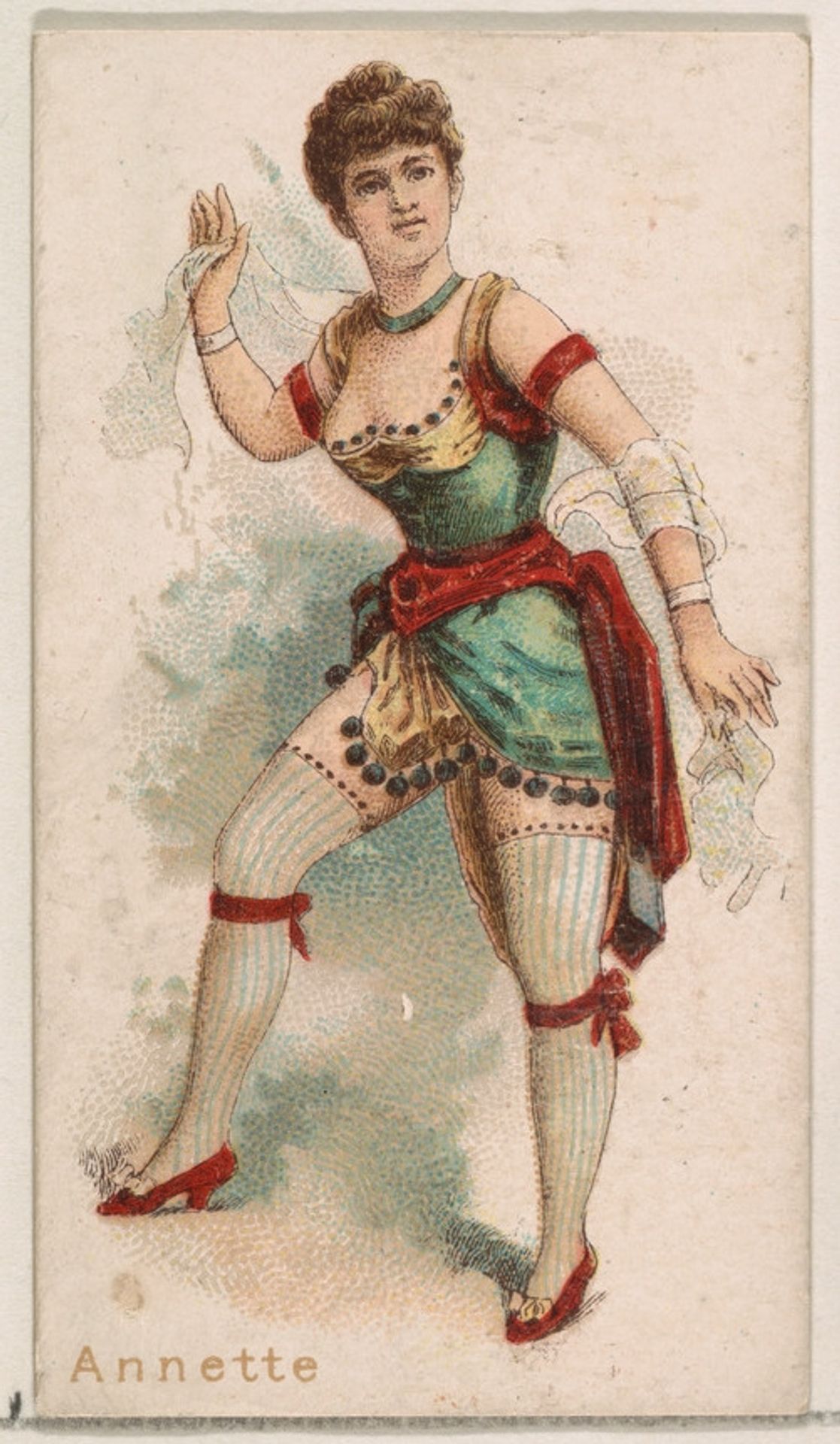
This small lithograph was produced by Wm. S. Kimball & Co. in the late 19th century as part of a series called "Ballet Queens," and it was originally included in packages of cigarettes. These cards offer a fascinating glimpse into the cultural landscape of the time. In this era, institutions such as the theater and the burgeoning advertising industry played a significant role in shaping public perceptions. Note how the dancer, Annette, is presented. The image highlights the popular fascination with ballet, but also uses the female form to market tobacco products. This reveals much about the role of women in advertising and popular culture during this period. To truly understand the image’s implications, one might delve into archives of advertising history, theater programs, and sociological studies of the period. By exploring the cultural context, we gain a deeper understanding of the complex interplay between art, commerce, and society.
Annette, from the Ballet Queens series (N182) issued by Wm. S. Kimball & Co.
1889

William S. Kimball & Company
@williamskimballcompany
The Metropolitan Museum of Art
Metropolitan Museum of Art, New York, NYArtwork details
- Medium
- drawing, coloured-pencil, print
- Dimensions
- Sheet: 2 3/4 × 1 1/2 in. (7 × 3.8 cm)
- Location
- Metropolitan Museum of Art, New York, NY
- Copyright
- Public Domain
Tags
Comments
Share your thoughts
About this artwork
This small lithograph was produced by Wm. S. Kimball & Co. in the late 19th century as part of a series called "Ballet Queens," and it was originally included in packages of cigarettes. These cards offer a fascinating glimpse into the cultural landscape of the time. In this era, institutions such as the theater and the burgeoning advertising industry played a significant role in shaping public perceptions. Note how the dancer, Annette, is presented. The image highlights the popular fascination with ballet, but also uses the female form to market tobacco products. This reveals much about the role of women in advertising and popular culture during this period. To truly understand the image’s implications, one might delve into archives of advertising history, theater programs, and sociological studies of the period. By exploring the cultural context, we gain a deeper understanding of the complex interplay between art, commerce, and society.
Comments
Share your thoughts