About this artwork
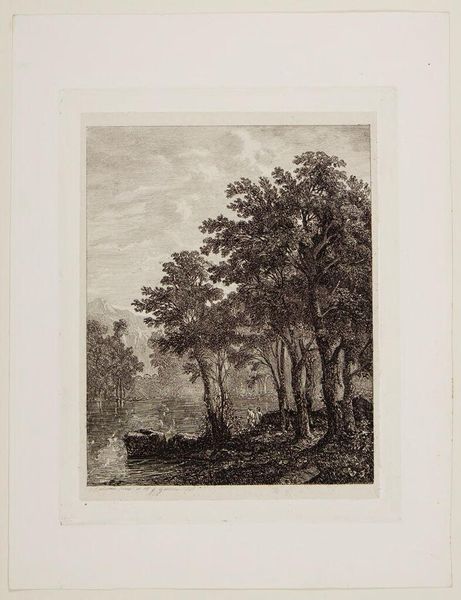
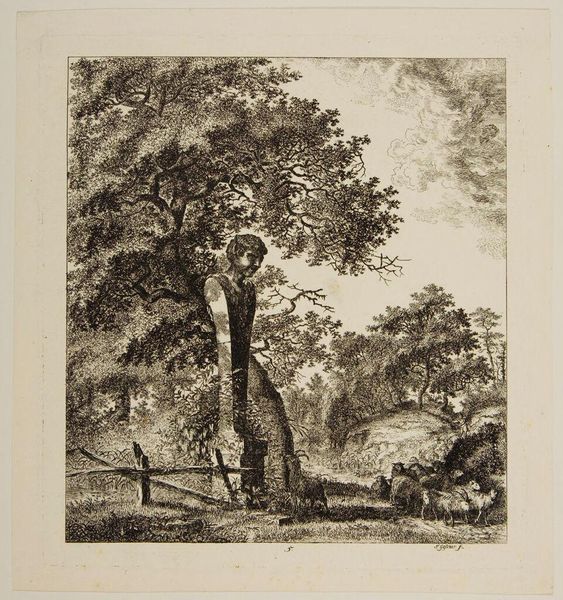
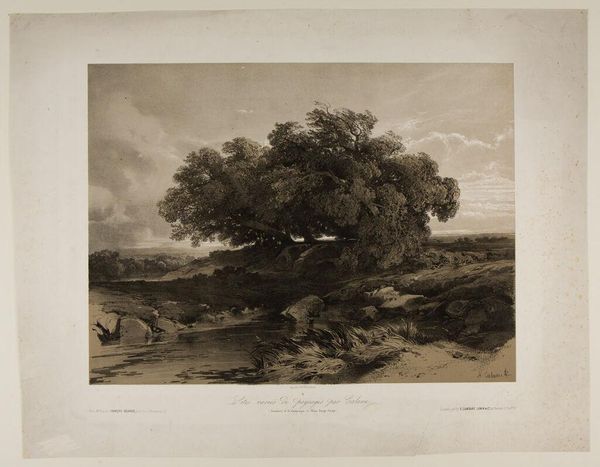
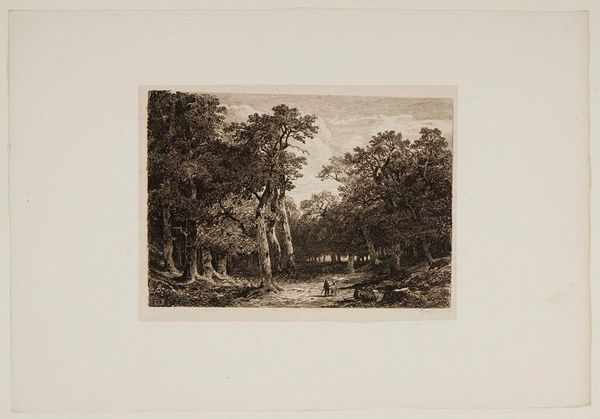
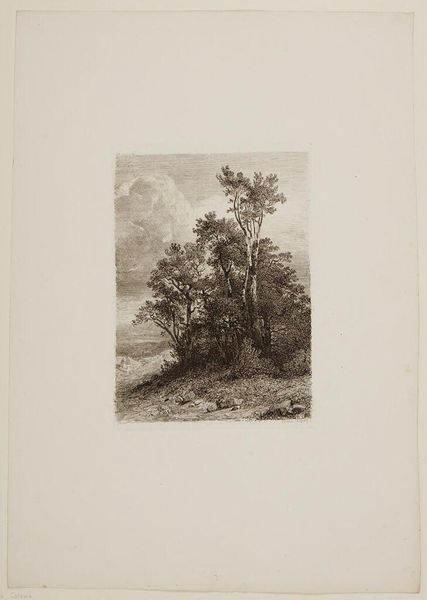
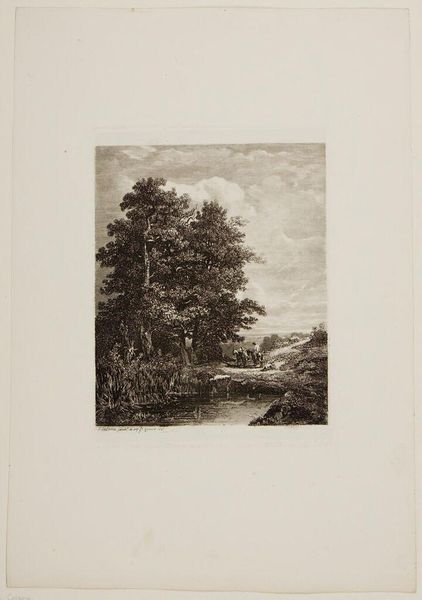
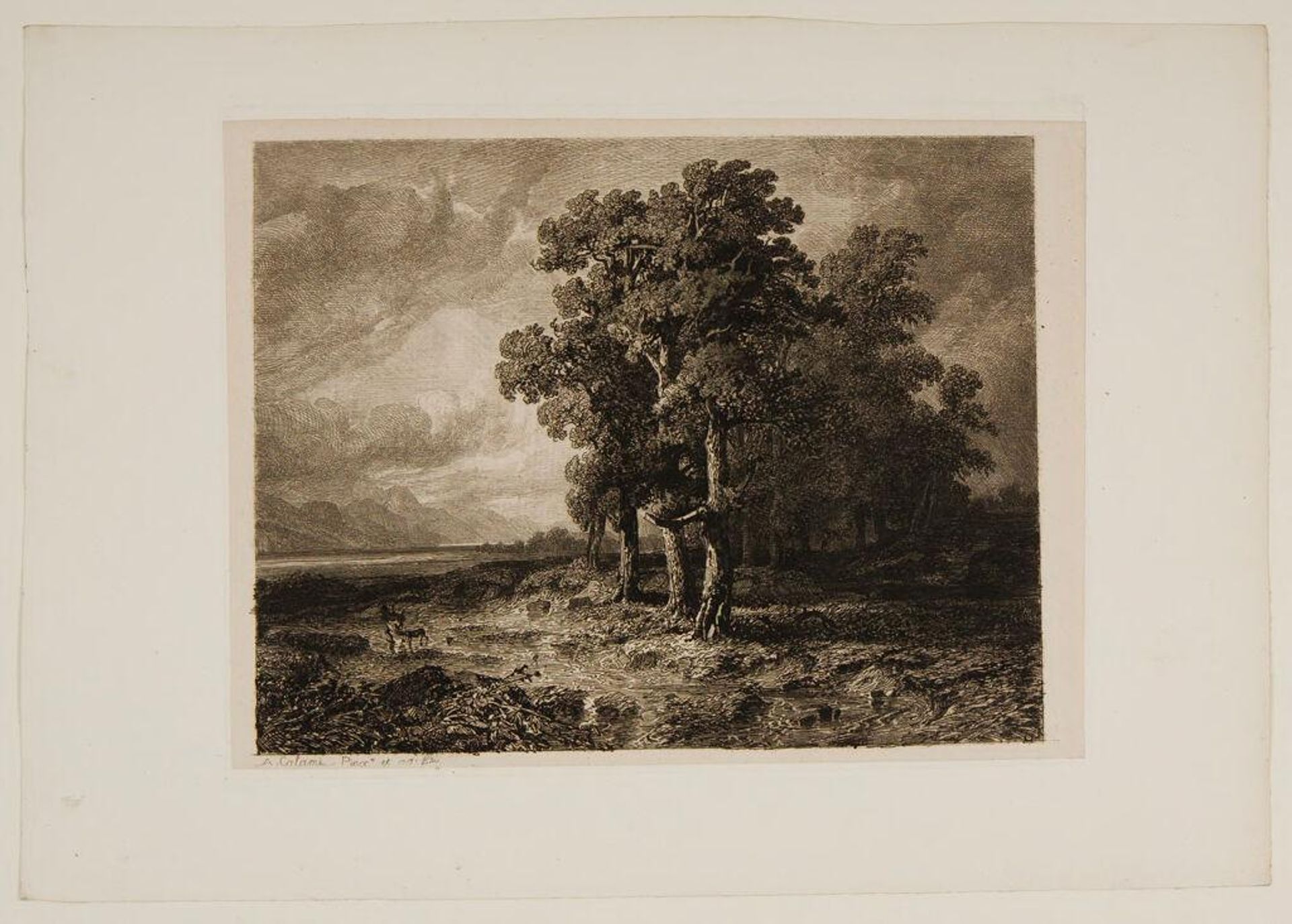
Curator: Alexandre Calame created "A Peasant and His Dog by a Stand of Trees." The sweeping vista gives way to a very somber, almost menacing quality. Editor: The stark contrast certainly contributes to that feeling. Note how the artist uses the trees to frame the peasant and his dog, who seem dwarfed by the landscape. Curator: Precisely, the composition emphasizes the formal elements—the balance between light and shadow, the texture of the foliage, which draw the eye across the whole picture plane. Editor: It’s hard not to think about the realities of rural life in 19th-century Europe. The work perhaps speaks to the peasant’s relationship with the land and the socio-economic forces at play. Curator: I see it more as an exploration of form. The subject is simply the vehicle. Editor: I think both interpretations enrich our viewing experience. Curator: Indeed, it's a testament to how different lenses reveal new facets.
A Peasant and His Dog by a Stand of Trees
c. 19th century


Artwork details
- Location
- Harvard Art Museums
- Copyright
- CC0 1.0
Comments
Share your thoughts
About this artwork
Curator: Alexandre Calame created "A Peasant and His Dog by a Stand of Trees." The sweeping vista gives way to a very somber, almost menacing quality. Editor: The stark contrast certainly contributes to that feeling. Note how the artist uses the trees to frame the peasant and his dog, who seem dwarfed by the landscape. Curator: Precisely, the composition emphasizes the formal elements—the balance between light and shadow, the texture of the foliage, which draw the eye across the whole picture plane. Editor: It’s hard not to think about the realities of rural life in 19th-century Europe. The work perhaps speaks to the peasant’s relationship with the land and the socio-economic forces at play. Curator: I see it more as an exploration of form. The subject is simply the vehicle. Editor: I think both interpretations enrich our viewing experience. Curator: Indeed, it's a testament to how different lenses reveal new facets.
Comments
Share your thoughts