About this artwork
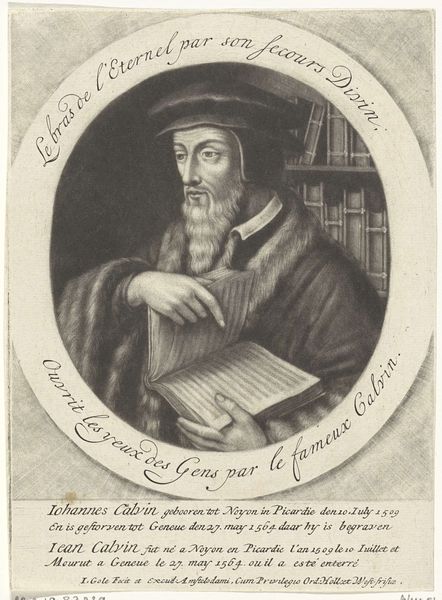
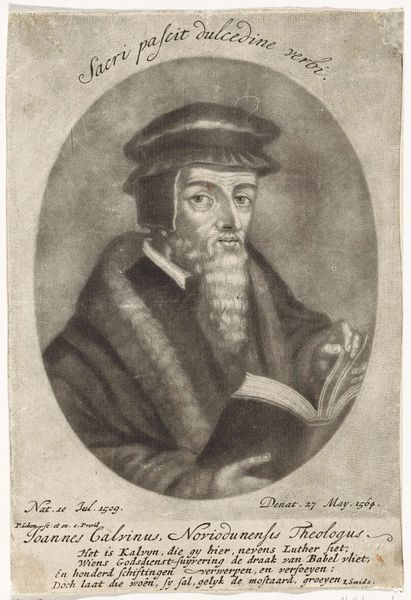
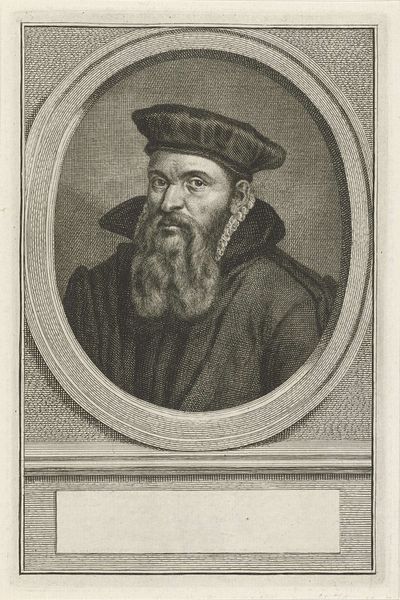
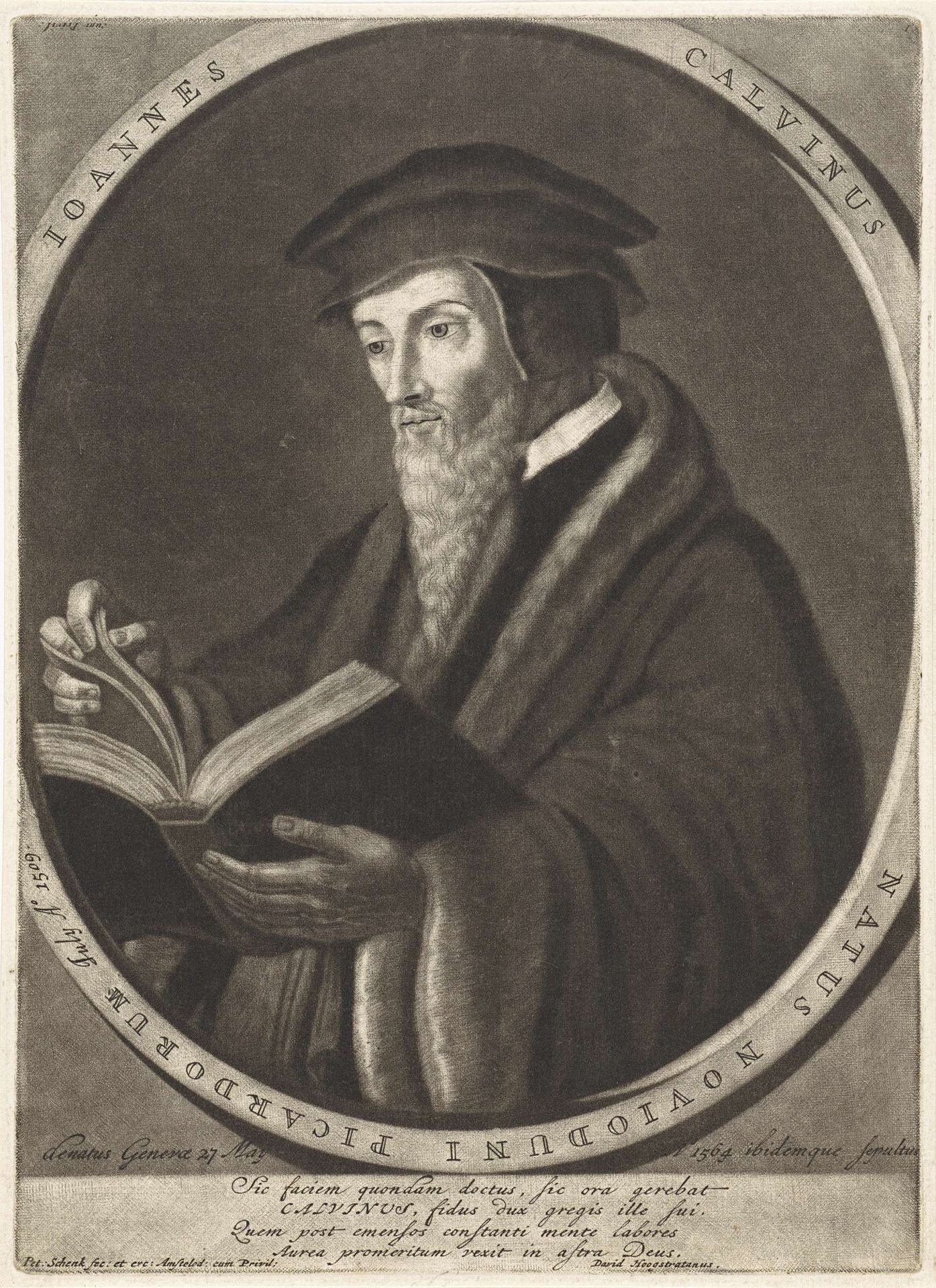
This is Pieter Schenk's portrait of Johannes Calvijn, made around the turn of the 18th century using etching and engraving. The image captures Calvijn, a key figure in the Protestant Reformation, in a moment of contemplation with a book in his hands. The choice to depict Calvijn with a book emphasizes his intellectual contributions and his focus on scripture. During the Reformation, there was a strong desire to return to the original texts, challenging existing norms and hierarchies. This portrait reflects the values of the reformation, highlighting individual interpretation and a direct relationship with the divine. Consider the cultural context: Schenk created this portrait long after Calvijn's death, during a time when religious and political identities were still deeply intertwined. The portrait then isn't merely a likeness; it’s a statement about the enduring influence and the continued relevance of Calvijn's ideas. It invites us to reflect on how religious figures shape societal structures, and how their legacies continue to resonate through art.

Artwork details
- Medium
- drawing, print, paper, ink, charcoal, engraving
- Dimensions
- height 246 mm, width 177 mm
- Location
- Rijksmuseum
- Copyright
- Rijks Museum: Open Domain
Tags
Comments
Share your thoughts
About this artwork
This is Pieter Schenk's portrait of Johannes Calvijn, made around the turn of the 18th century using etching and engraving. The image captures Calvijn, a key figure in the Protestant Reformation, in a moment of contemplation with a book in his hands. The choice to depict Calvijn with a book emphasizes his intellectual contributions and his focus on scripture. During the Reformation, there was a strong desire to return to the original texts, challenging existing norms and hierarchies. This portrait reflects the values of the reformation, highlighting individual interpretation and a direct relationship with the divine. Consider the cultural context: Schenk created this portrait long after Calvijn's death, during a time when religious and political identities were still deeply intertwined. The portrait then isn't merely a likeness; it’s a statement about the enduring influence and the continued relevance of Calvijn's ideas. It invites us to reflect on how religious figures shape societal structures, and how their legacies continue to resonate through art.
Comments
Share your thoughts