About this artwork
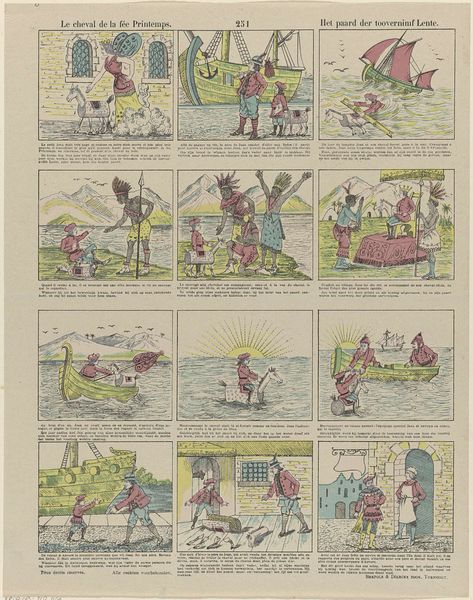
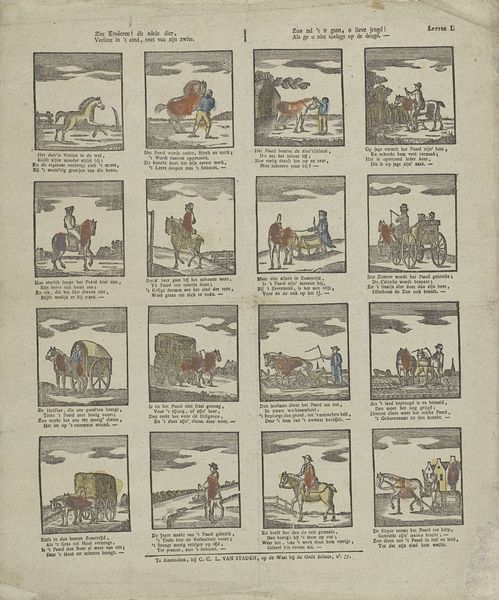
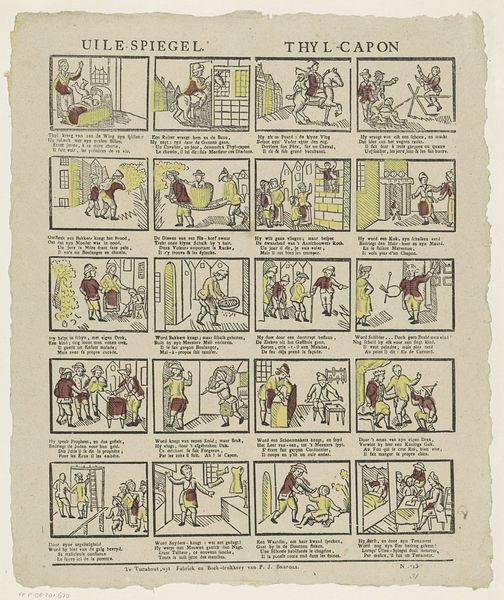
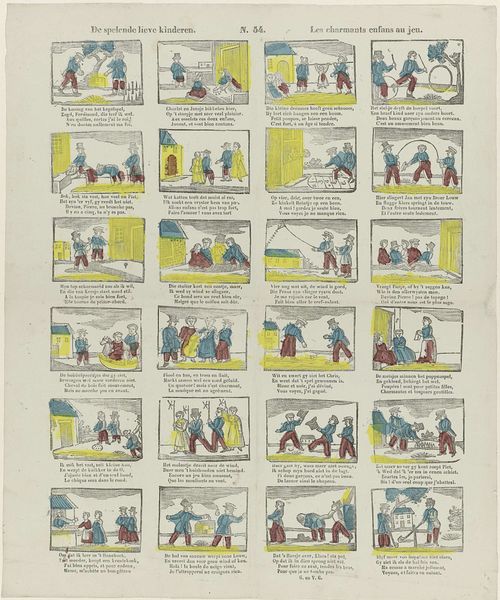
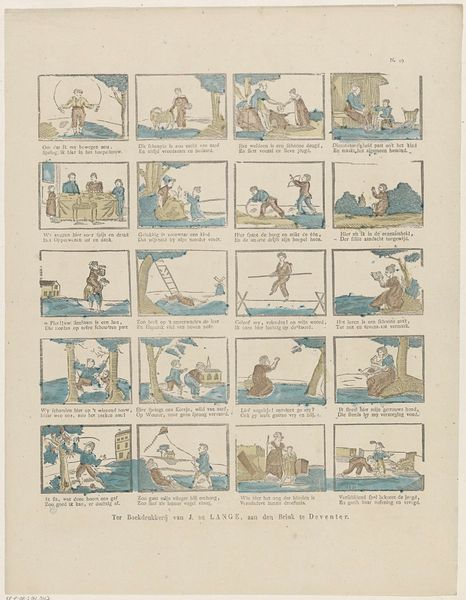
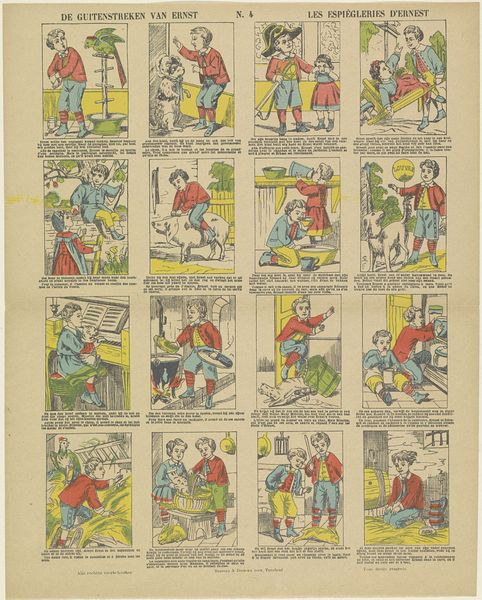
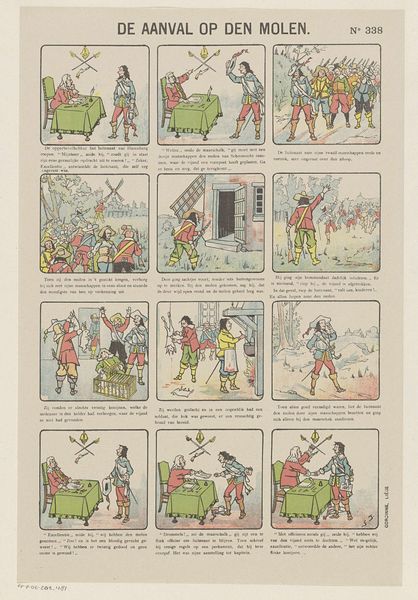
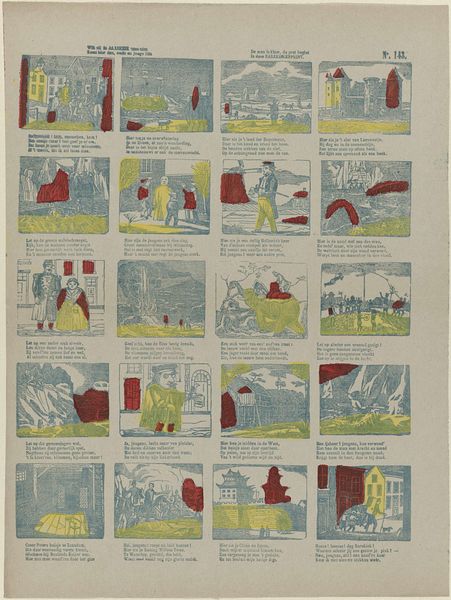
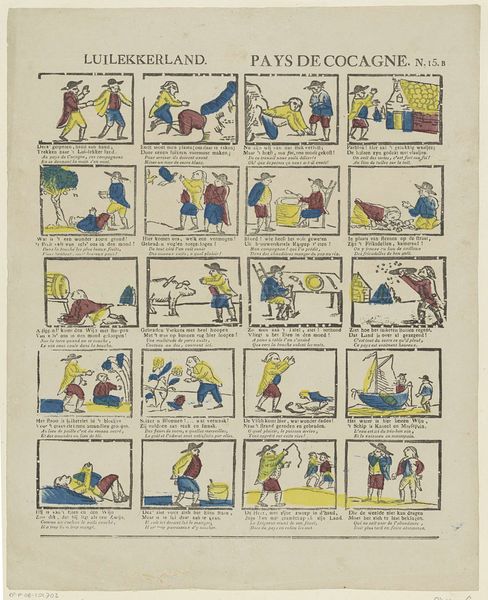
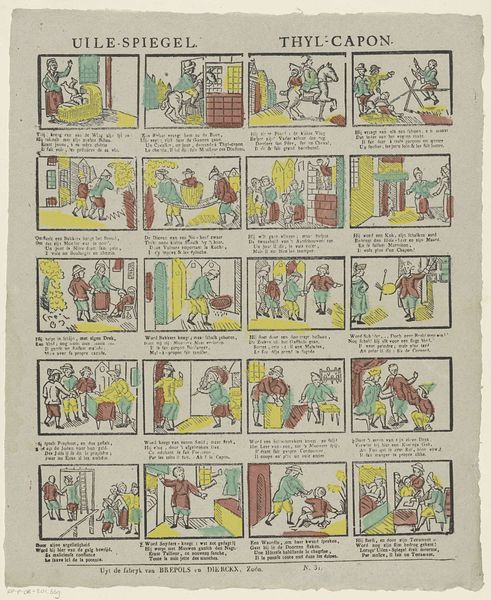
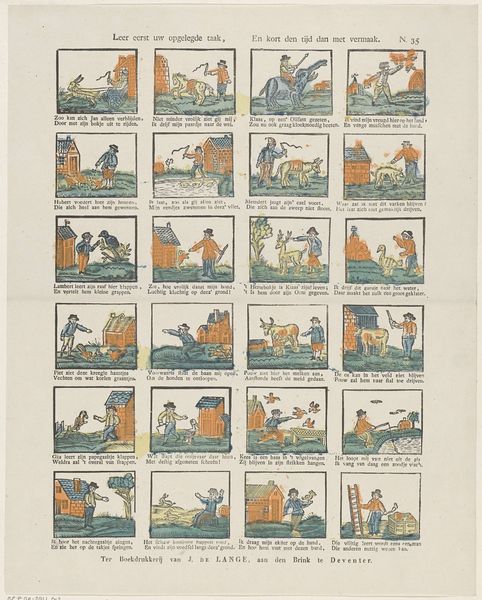
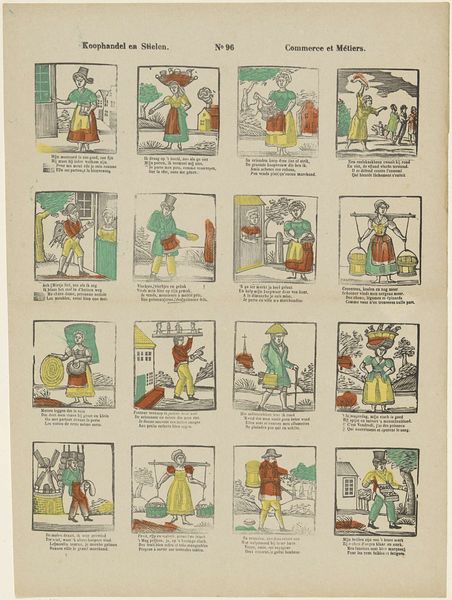
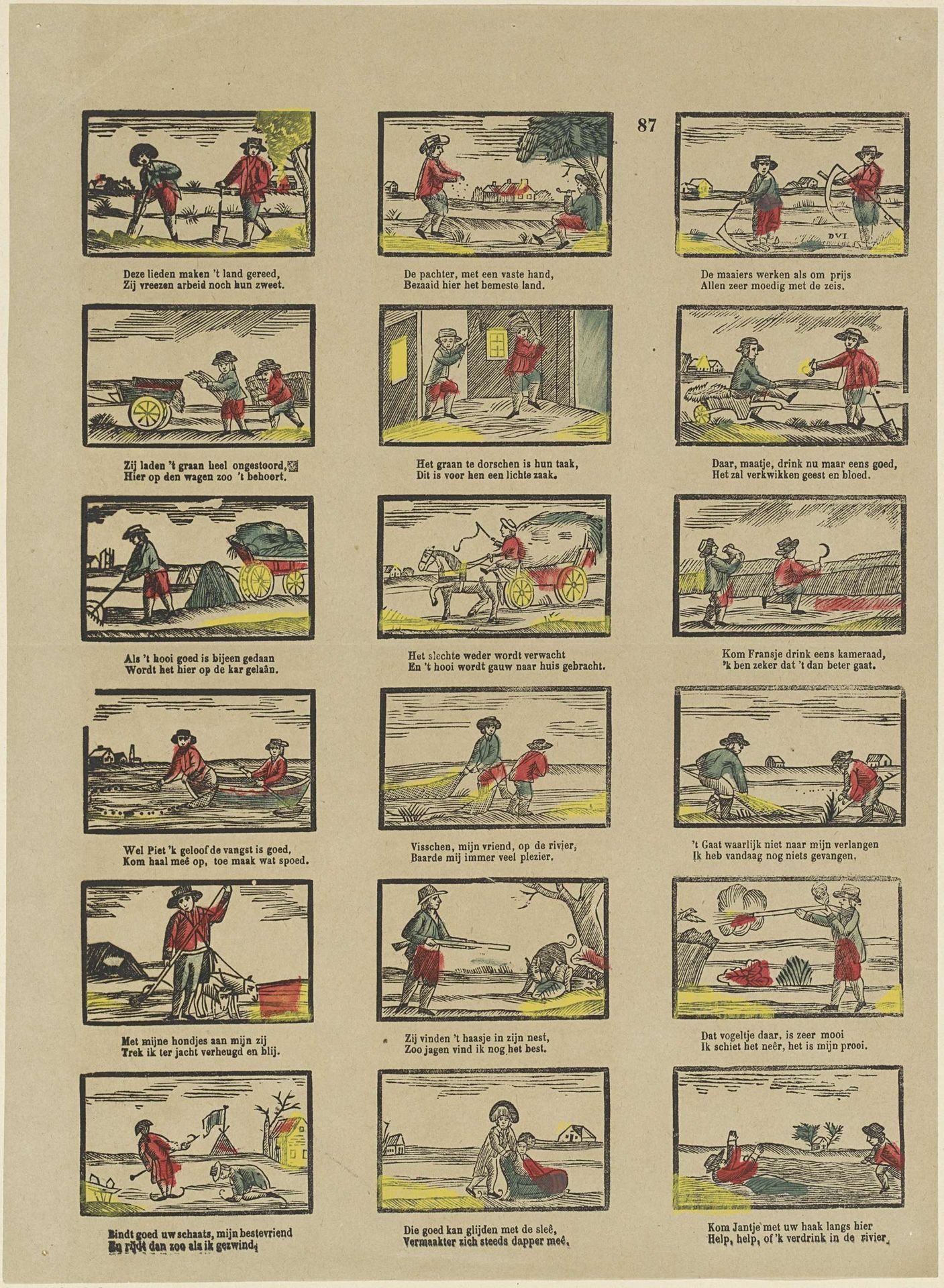
This print, titled 'Landbouw, visvangst, jacht en wintervermaak,' was made by Dirk van Lubeek in the late 18th or early 19th century. The composition is structured as a series of vignettes, each framed in its own small rectangle. The artist uses a limited palette of muted reds, yellows, greens, and blues, creating a world that feels both quaint and systematically organized. The scenes offer an encyclopedic view of rural life, from plowing fields to ice skating. Each block presents a mini-narrative, hinting at the socio-economic structures that govern agricultural life, leisure, and the relationship between humans and nature. Consider how the artist meticulously arranges these scenes, suggesting an underlying order to the world. This ordering imposes a particular worldview, and the visual structure reinforces a sense of harmony and control. The print is a testament to an era grappling with how to represent the complexities of human experience through symbolic arrangements.
Landbouw, visvangst, jacht en wintervermaak
1866 - 1902

Dirk van Lubeek
1747 - 1811Location
RijksmuseumArtwork details
- Medium
- print, woodcut, engraving
- Dimensions
- height 407 mm, width 298 mm
- Location
- Rijksmuseum
- Copyright
- Rijks Museum: Open Domain
Tags
Comments
Share your thoughts
About this artwork
This print, titled 'Landbouw, visvangst, jacht en wintervermaak,' was made by Dirk van Lubeek in the late 18th or early 19th century. The composition is structured as a series of vignettes, each framed in its own small rectangle. The artist uses a limited palette of muted reds, yellows, greens, and blues, creating a world that feels both quaint and systematically organized. The scenes offer an encyclopedic view of rural life, from plowing fields to ice skating. Each block presents a mini-narrative, hinting at the socio-economic structures that govern agricultural life, leisure, and the relationship between humans and nature. Consider how the artist meticulously arranges these scenes, suggesting an underlying order to the world. This ordering imposes a particular worldview, and the visual structure reinforces a sense of harmony and control. The print is a testament to an era grappling with how to represent the complexities of human experience through symbolic arrangements.
Comments
Share your thoughts