About this artwork
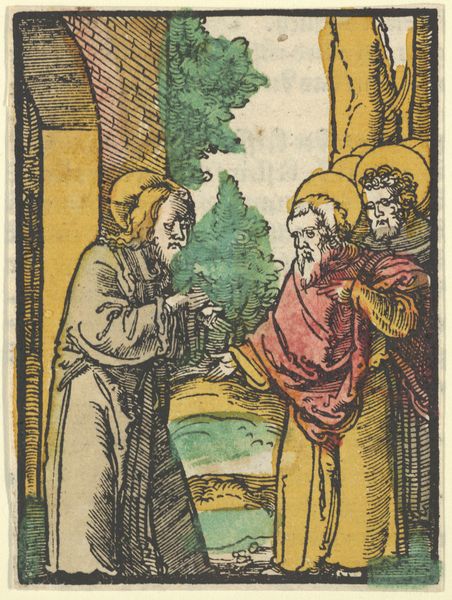
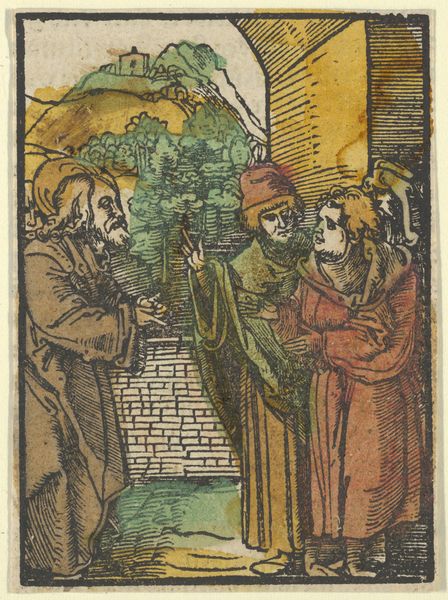
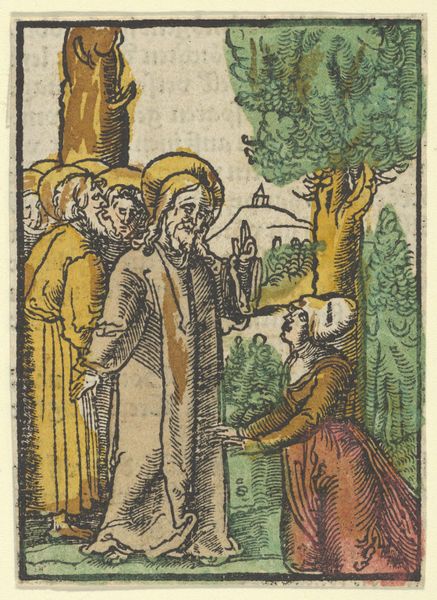
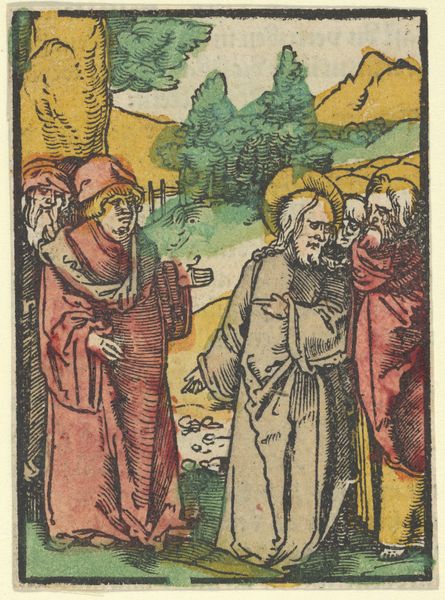
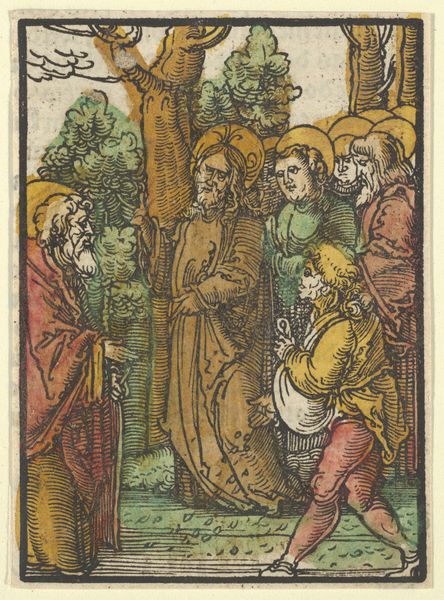
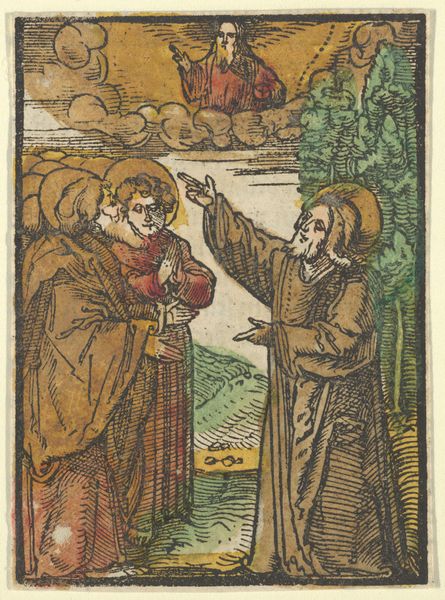
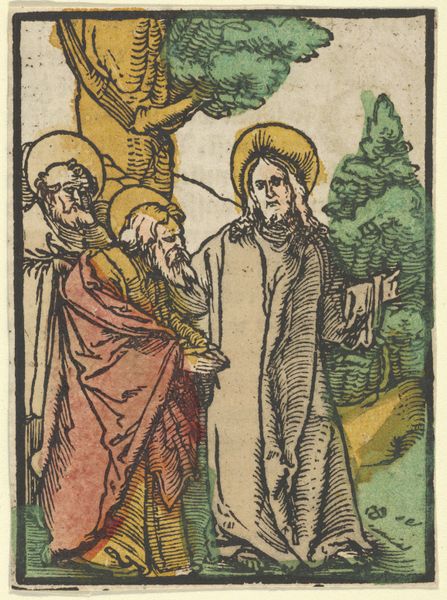
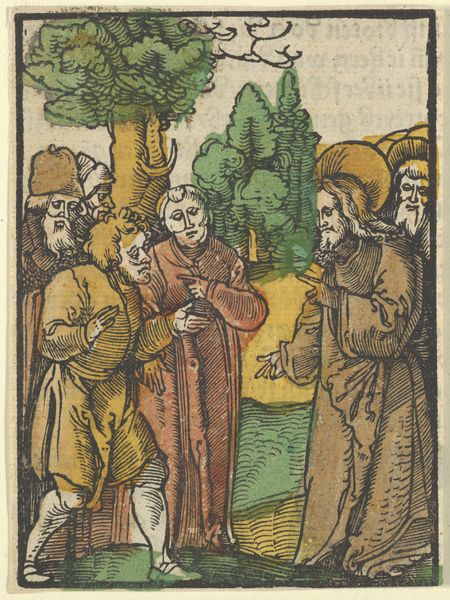
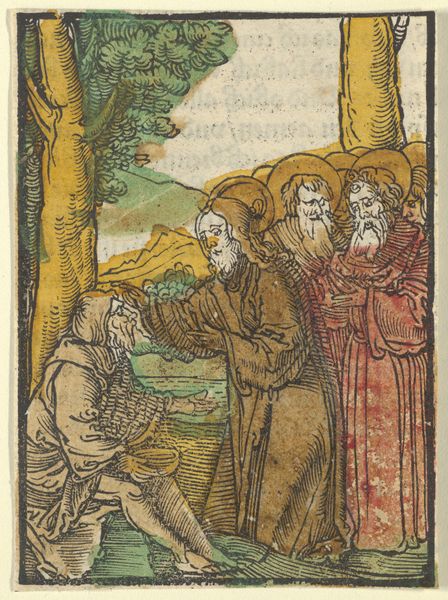
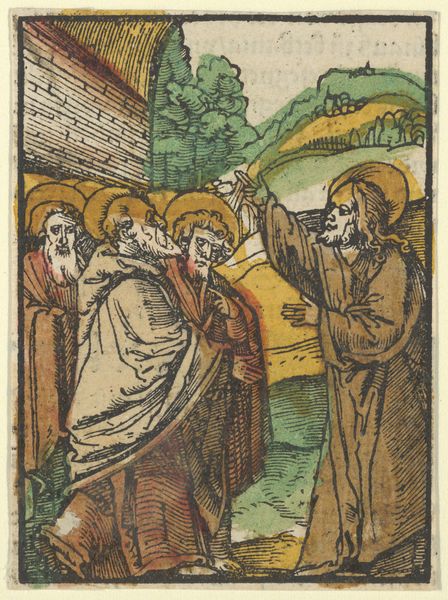
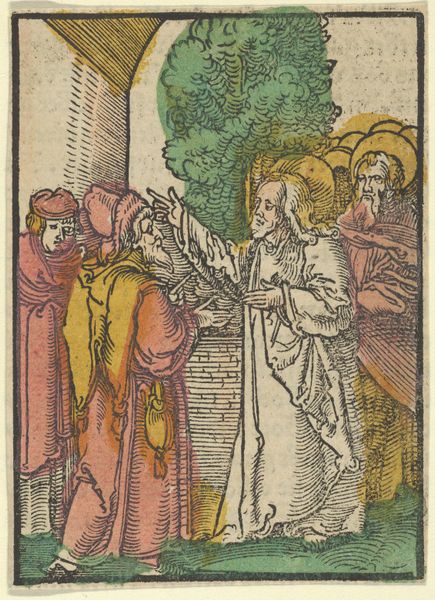
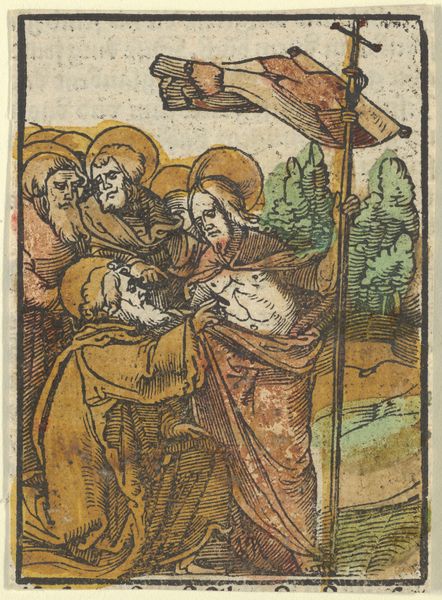
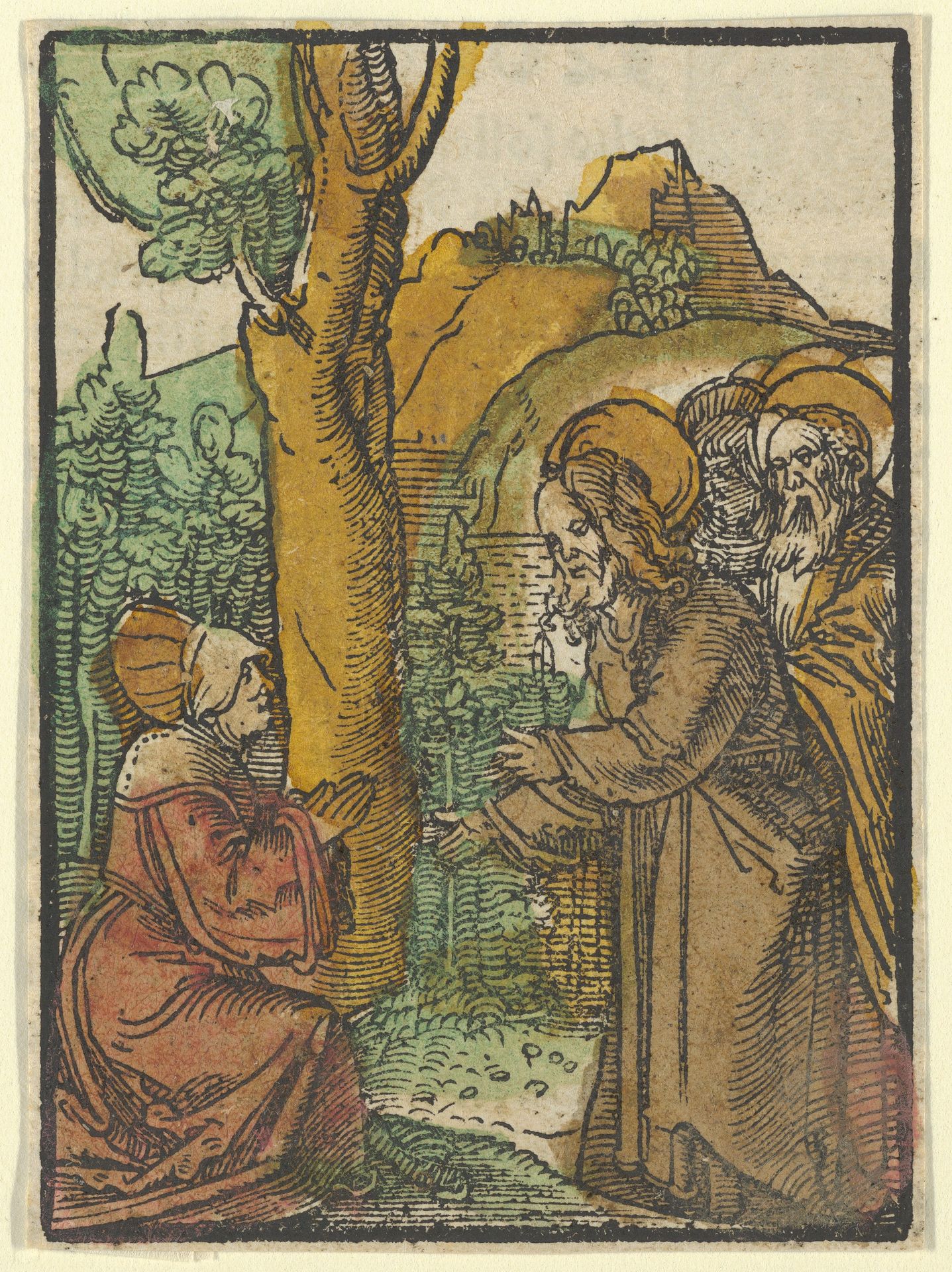
This small, early 16th-century print by Hans Schäufelein depicts Christ and the Woman of Canaan, and comes from a book called Das Plenarium. It's made using woodcut, a process where the artist carves an image into a block of wood, inks it, and presses it onto paper. Look closely, and you’ll notice the stark lines defining each figure and landscape element. The nature of wood as a material dictates this aesthetic. Schäufelein’s skill lies in using these limitations to create a dynamic scene filled with detail. The cross-hatching, for example, gives depth and shadow, bringing the biblical story to life. Woodcut was a relatively accessible medium at the time, allowing for mass production and distribution of images like this. The labor was intensive, requiring skilled hands to carve the blocks. The availability of such prints meant that religious narratives became more widely accessible, playing a crucial role in shaping popular beliefs. This wasn't just art; it was a product of its time, deeply intertwined with labor, religion, and the rise of print culture.
Christ and the Woman of Canaan, from Das Plenarium
1517


Artwork details
- Medium
- drawing, print, woodcut
- Dimensions
- Sheet: 3 11/16 × 2 11/16 in. (9.4 × 6.8 cm)
- Location
- Metropolitan Museum of Art, New York, NY
- Copyright
- Public Domain
Tags
drawing
narrative-art
figuration
woodcut
northern-renaissance
christ
Comments
Be the first to share your thoughts about this work.
About this artwork
This small, early 16th-century print by Hans Schäufelein depicts Christ and the Woman of Canaan, and comes from a book called Das Plenarium. It's made using woodcut, a process where the artist carves an image into a block of wood, inks it, and presses it onto paper. Look closely, and you’ll notice the stark lines defining each figure and landscape element. The nature of wood as a material dictates this aesthetic. Schäufelein’s skill lies in using these limitations to create a dynamic scene filled with detail. The cross-hatching, for example, gives depth and shadow, bringing the biblical story to life. Woodcut was a relatively accessible medium at the time, allowing for mass production and distribution of images like this. The labor was intensive, requiring skilled hands to carve the blocks. The availability of such prints meant that religious narratives became more widely accessible, playing a crucial role in shaping popular beliefs. This wasn't just art; it was a product of its time, deeply intertwined with labor, religion, and the rise of print culture.
Comments
Be the first to share your thoughts about this work.