About this artwork
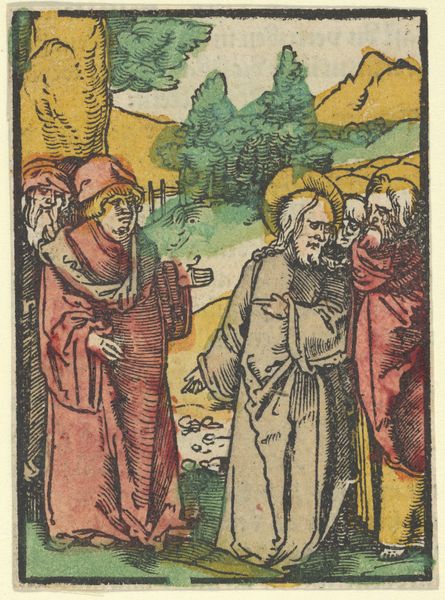
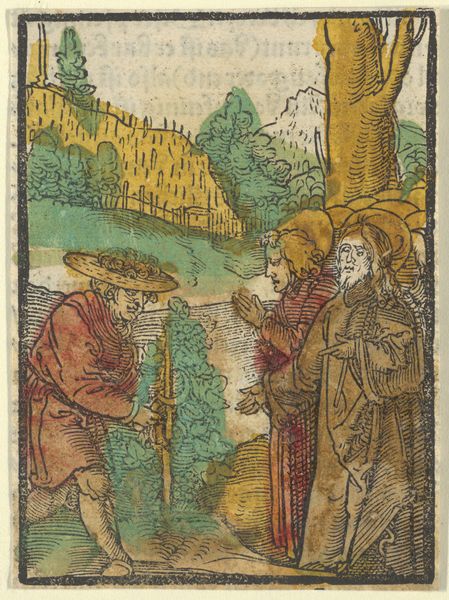
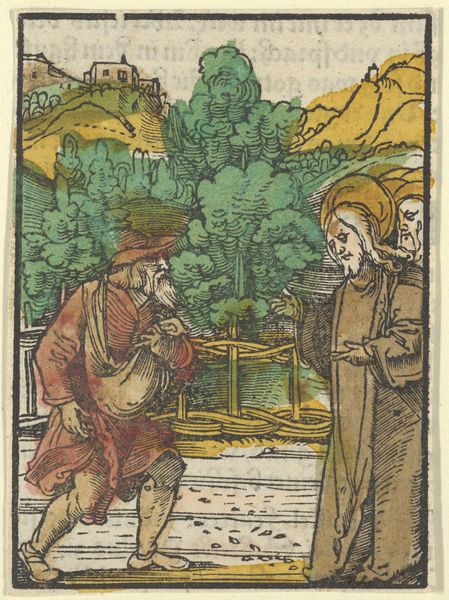
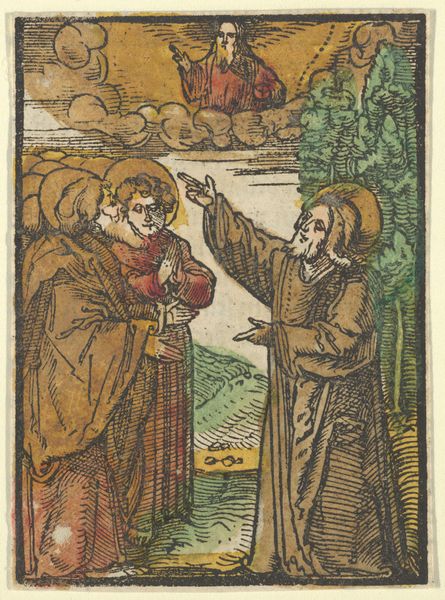
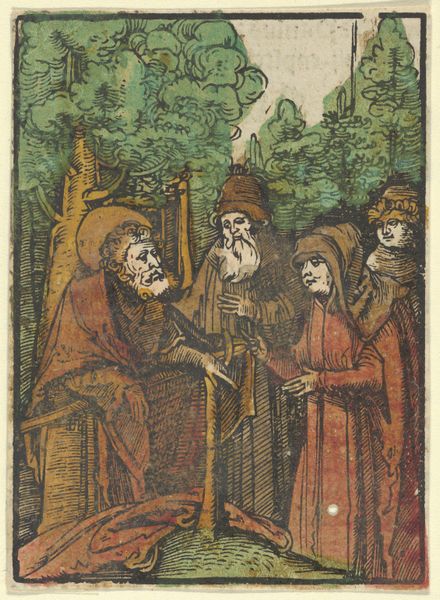
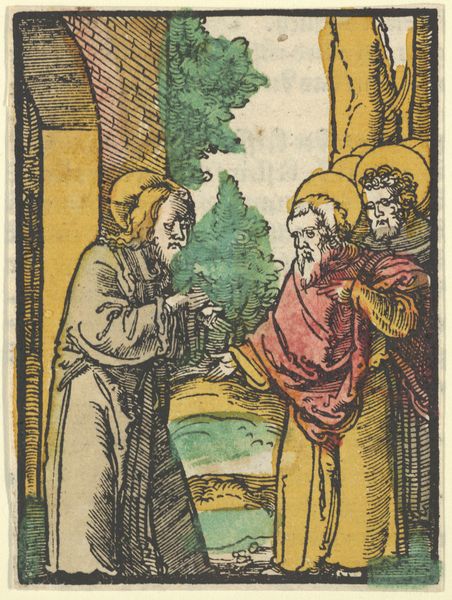
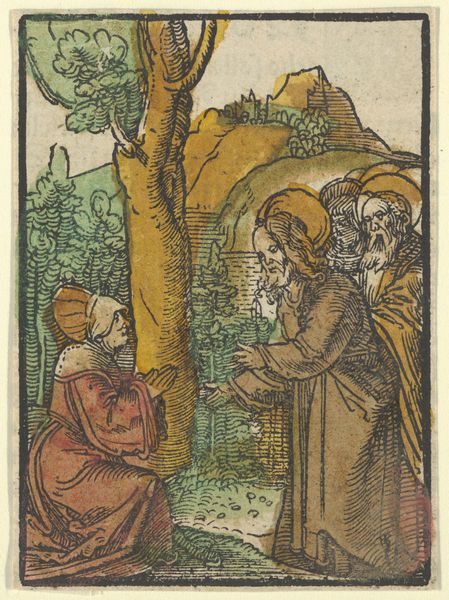
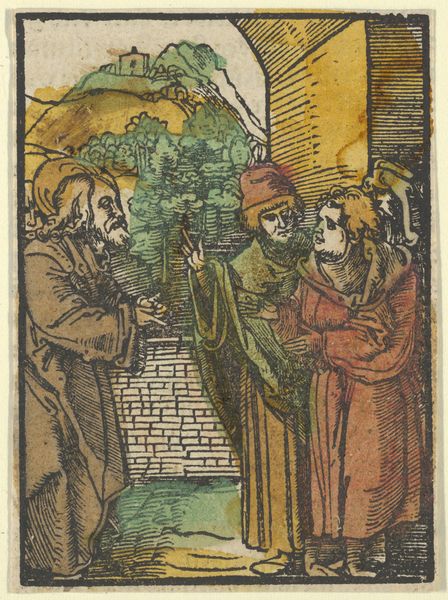
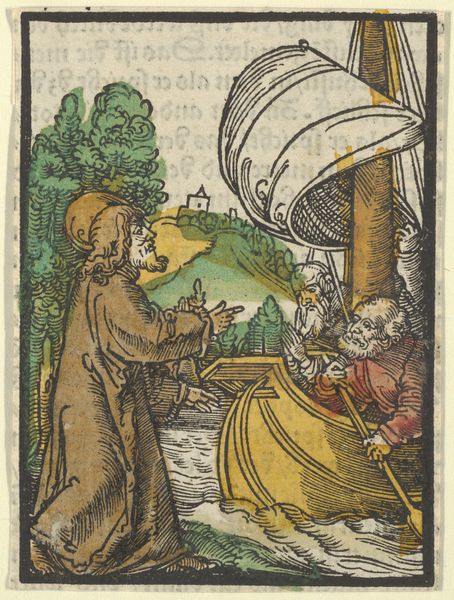
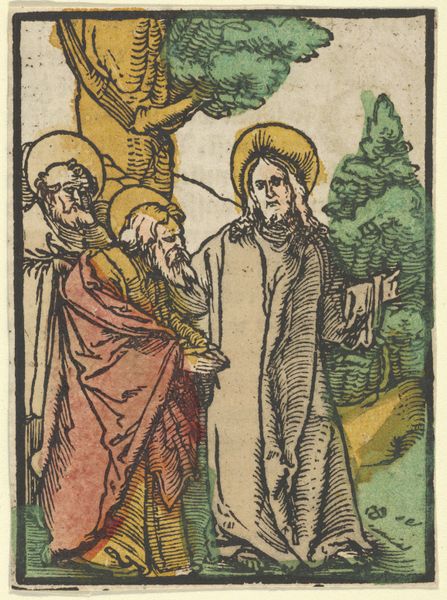
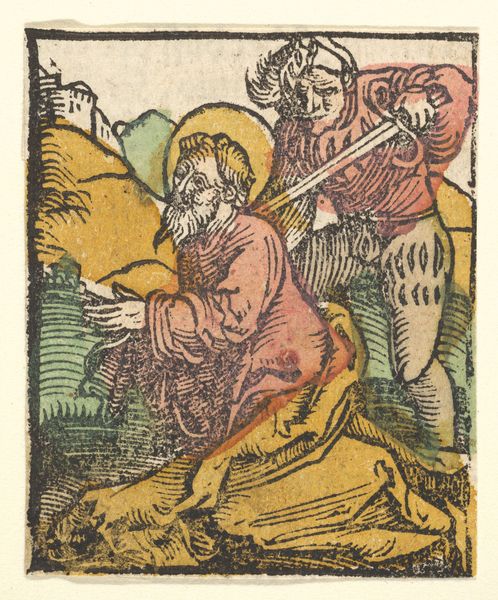
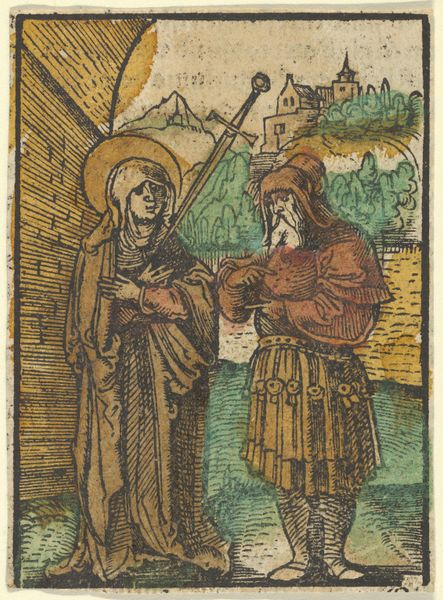
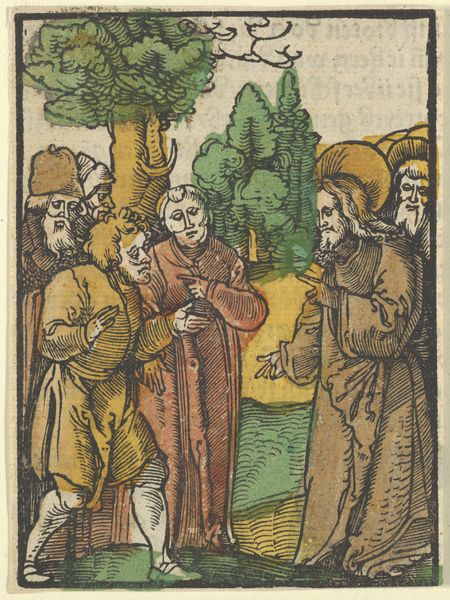
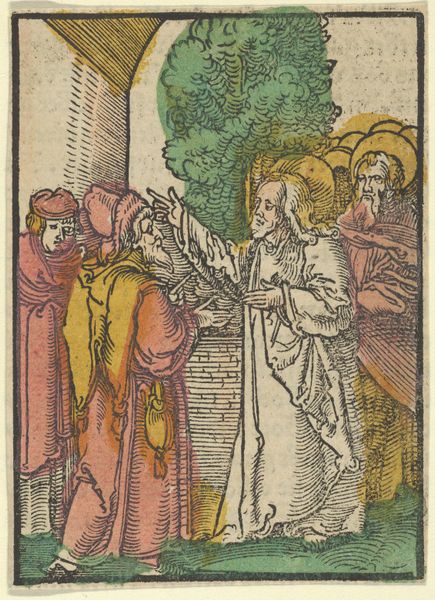
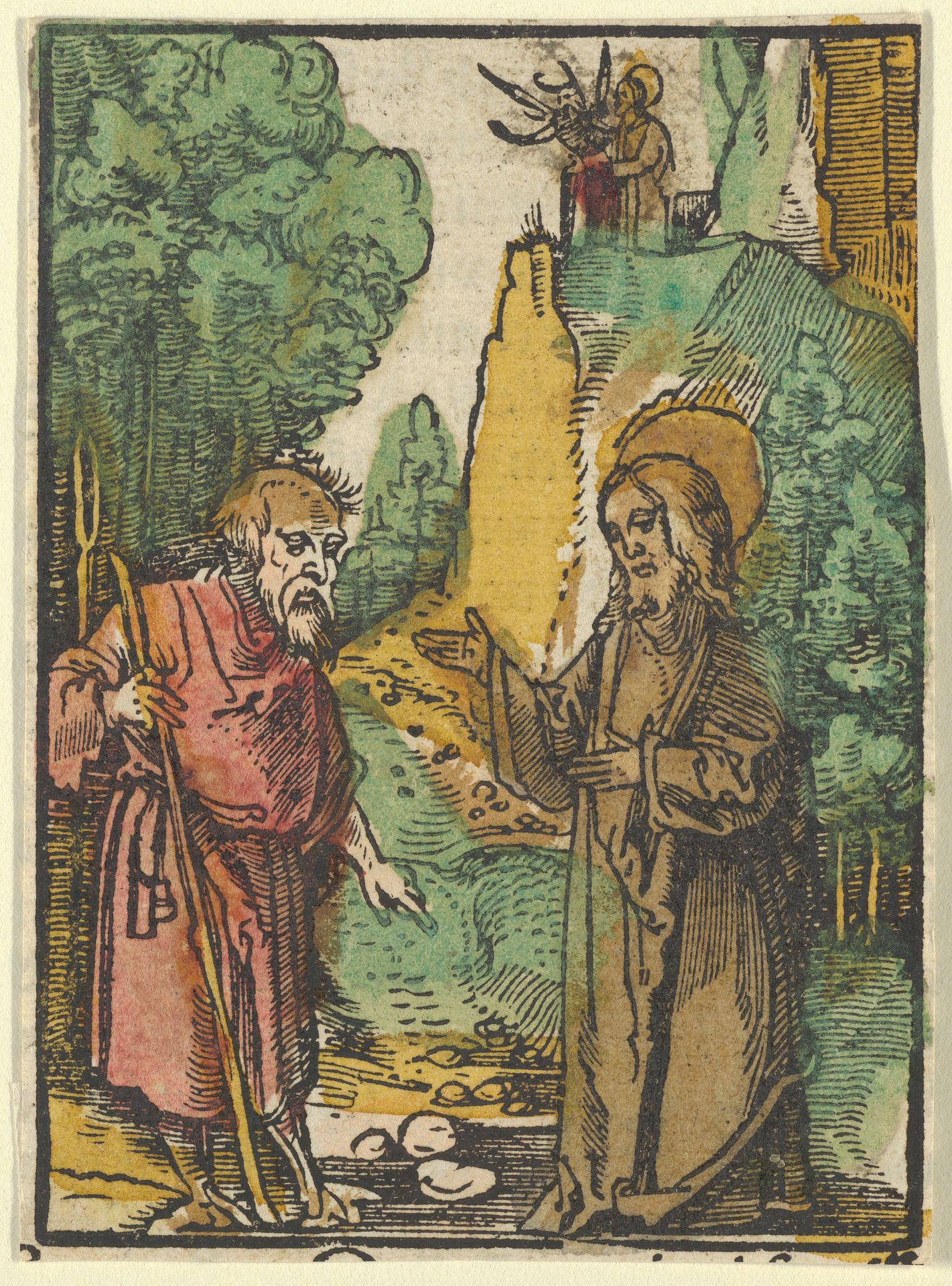
Hans Schäufelein’s “The Temptation of Christ,” a woodcut from Das Plenarium, presents a scene teeming with stark contrasts. The composition is split, with dense, dark greenery on the left balancing the lighter, open space on the right, creating a visual tension that mirrors the moral dilemma at hand. The figures, Christ and Satan, are rendered with a graphic simplicity typical of woodcuts, yet their interaction is charged with subtle cues. Note the color; the muted tones against the haloed figure of Christ work to amplify the visual and thematic dichotomy between good and evil. The use of line is especially striking. It defines form but also conveys texture, from the rough bark of the trees to the fabric of the figures’ robes. Schäufelein uses these formal elements to engage viewers with the narrative. This reflects broader artistic concerns of the period, where religious art served not just as a depiction but as a didactic tool, using composition and form to communicate complex theological ideas to a wide audience.
The Temptation of Christ, from Das Plenarium
1517


Artwork details
- Medium
- drawing, print, woodcut
- Dimensions
- Sheet: 3 11/16 × 2 11/16 in. (9.4 × 6.8 cm)
- Location
- Metropolitan Museum of Art, New York, NY
- Copyright
- Public Domain
Tags
Comments
Share your thoughts
About this artwork
Hans Schäufelein’s “The Temptation of Christ,” a woodcut from Das Plenarium, presents a scene teeming with stark contrasts. The composition is split, with dense, dark greenery on the left balancing the lighter, open space on the right, creating a visual tension that mirrors the moral dilemma at hand. The figures, Christ and Satan, are rendered with a graphic simplicity typical of woodcuts, yet their interaction is charged with subtle cues. Note the color; the muted tones against the haloed figure of Christ work to amplify the visual and thematic dichotomy between good and evil. The use of line is especially striking. It defines form but also conveys texture, from the rough bark of the trees to the fabric of the figures’ robes. Schäufelein uses these formal elements to engage viewers with the narrative. This reflects broader artistic concerns of the period, where religious art served not just as a depiction but as a didactic tool, using composition and form to communicate complex theological ideas to a wide audience.
Comments
Share your thoughts