About this artwork
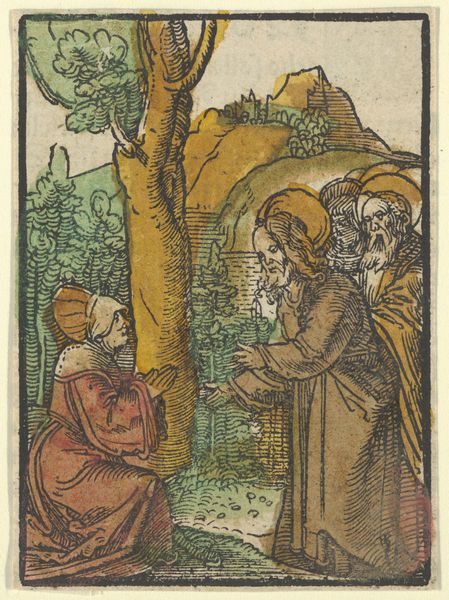
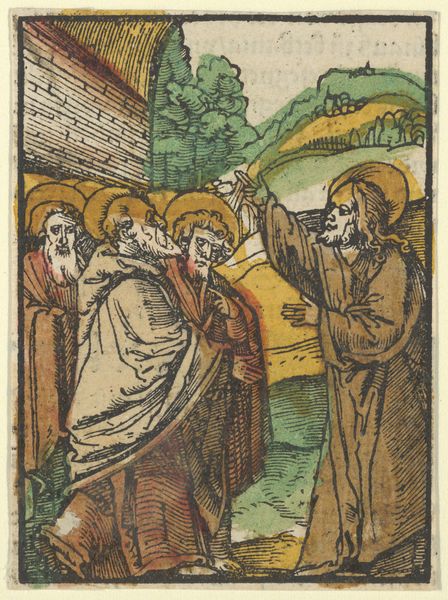
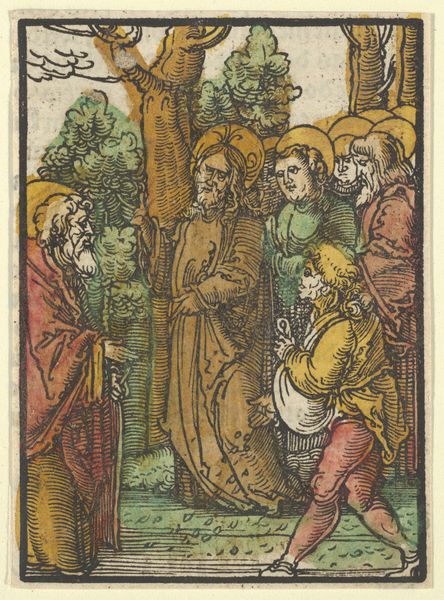
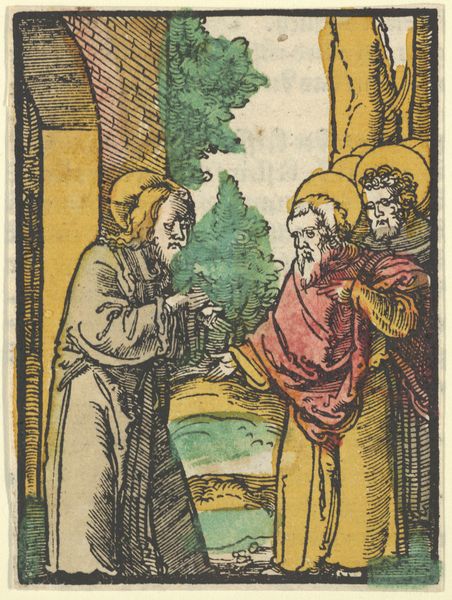
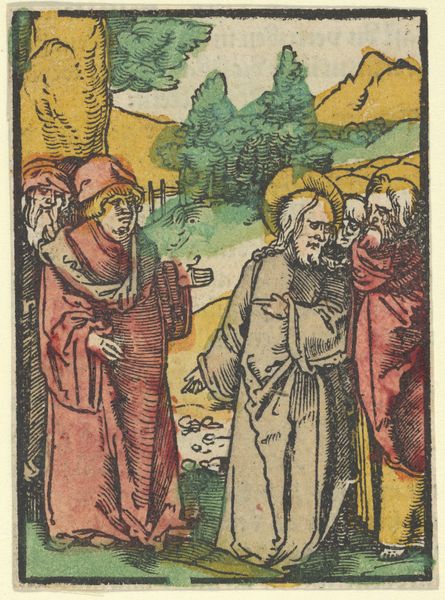
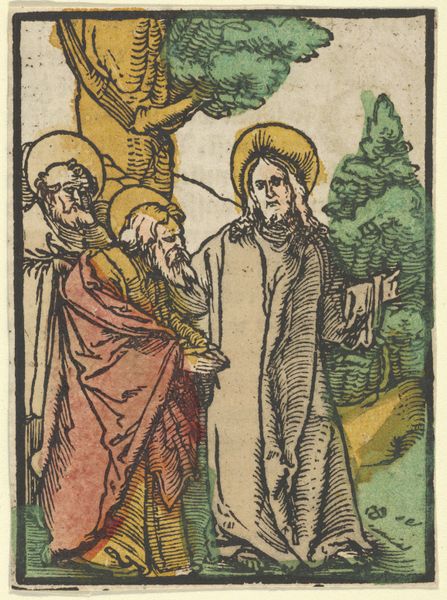
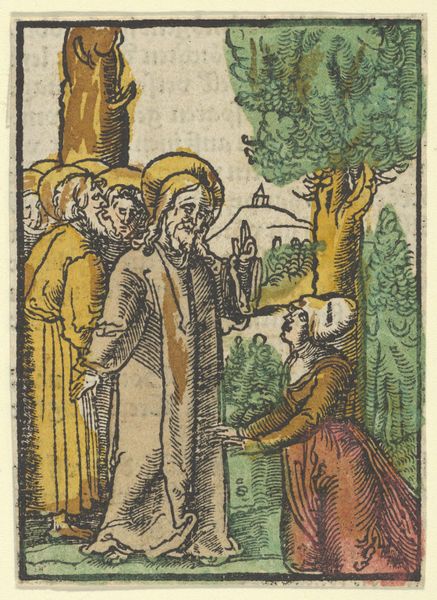
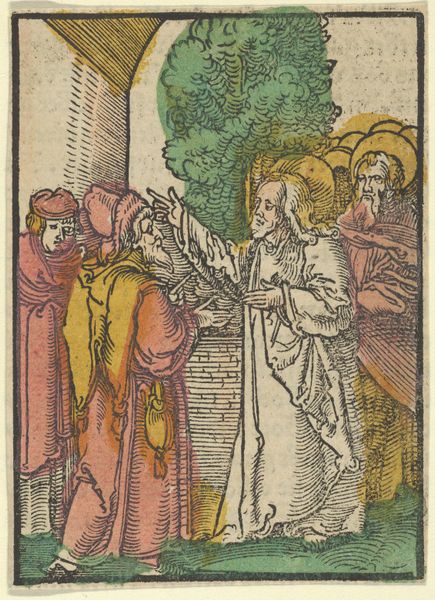
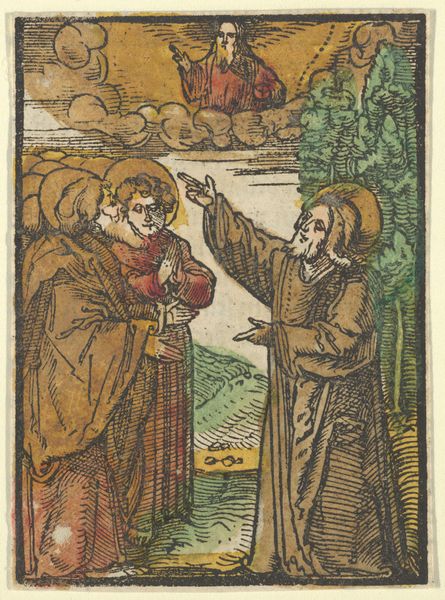
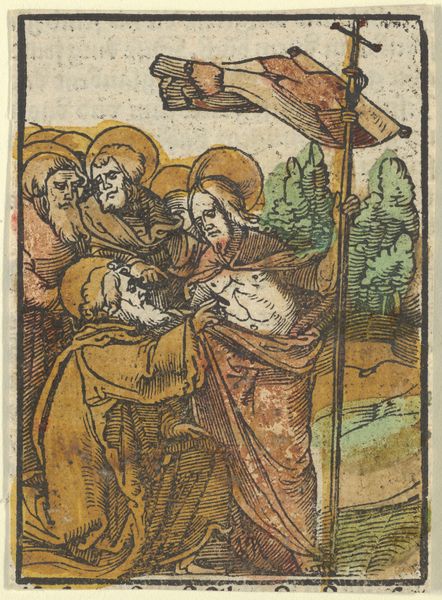
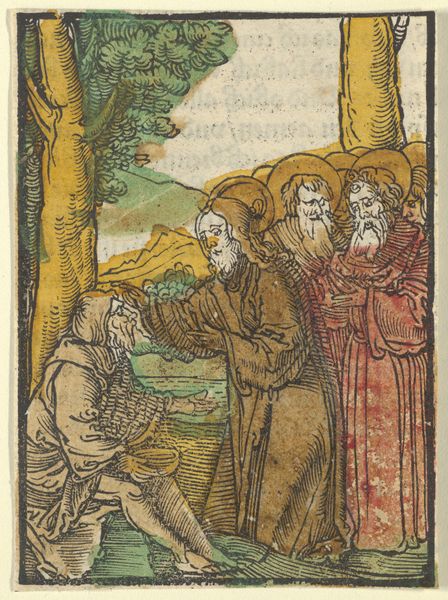
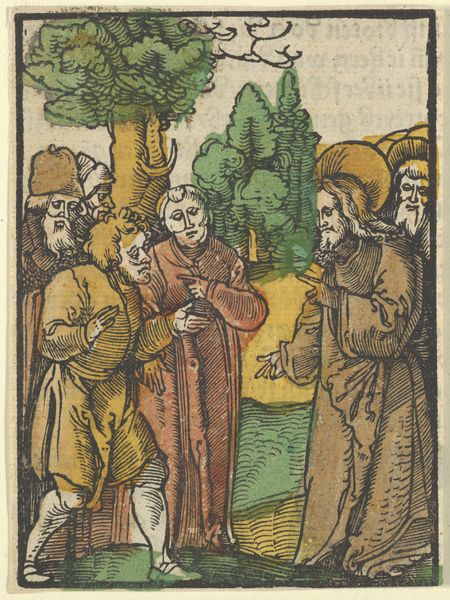
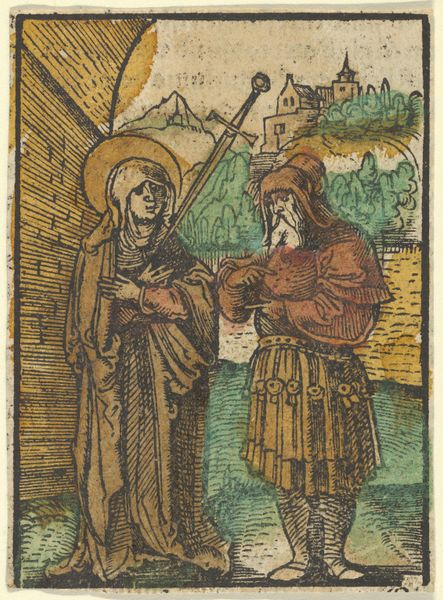
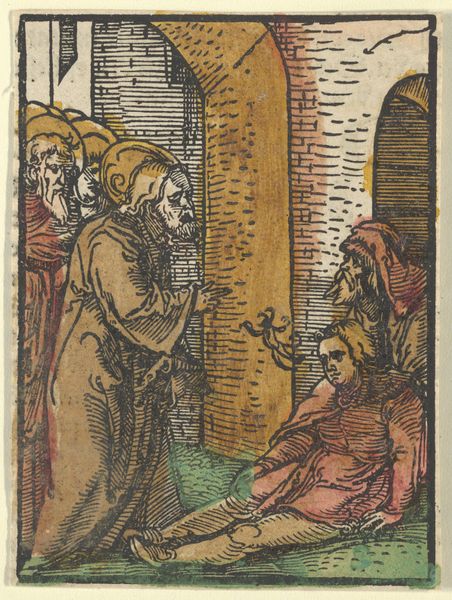
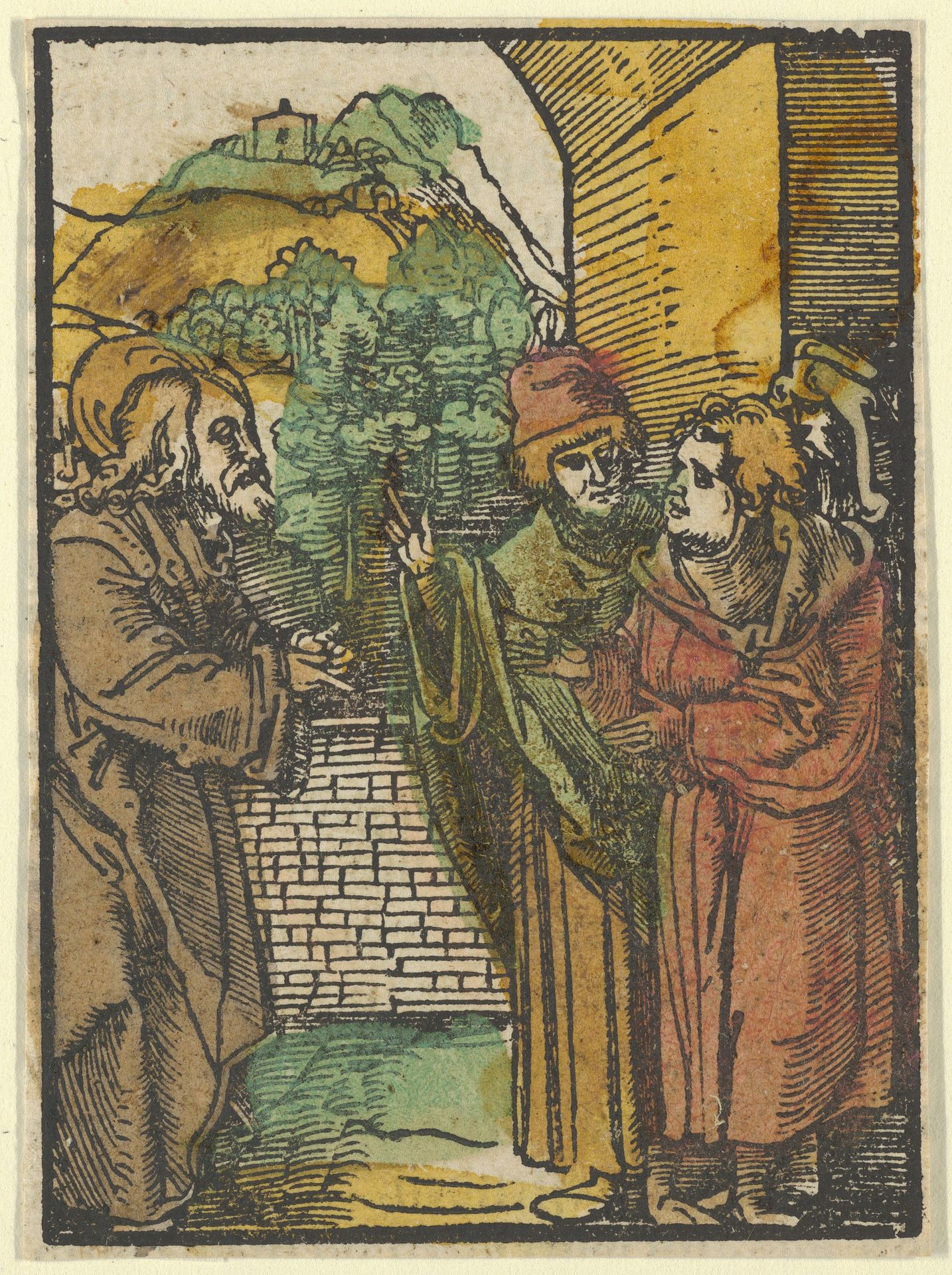
Hans Schäufelein created this woodcut of Christ and the Pharisees, sometime in the early 16th century, using paper, ink, and watercolor. Woodcut is a relief printing process, meaning that the artist carves away the areas of the block that should not receive ink, leaving the design raised on the surface. Schäufelein would have used knives and gouges to carefully cut along the grain of the woodblock, a process that requires great skill and control, and then rolled ink onto the surface. The block was then pressed onto paper, transferring the image. The resulting print is characterized by its bold lines and graphic quality, which Schäufelein has then augmented with watercolor. Woodcuts like this were relatively inexpensive to produce and could be widely distributed, making them an ideal medium for disseminating religious imagery and texts to a broad audience during the Reformation. The labor-intensive process reflects a pre-industrial mode of production, where craft skill and manual dexterity were highly valued. It also speaks to a growing market for printed materials, which made art more accessible and affordable, challenging traditional hierarchies between fine art and popular culture.
Christ and the Pharisees, from Das Plenarium 1517


Artwork details
- Medium
- drawing, print, woodcut
- Dimensions
- Sheet: 3 11/16 × 2 11/16 in. (9.4 × 6.8 cm)
- Location
- Metropolitan Museum of Art, New York, NY
- Copyright
- Public Domain
Tags
drawing
narrative-art
woodcut
history-painting
northern-renaissance
christ
Comments
No comments
About this artwork
Hans Schäufelein created this woodcut of Christ and the Pharisees, sometime in the early 16th century, using paper, ink, and watercolor. Woodcut is a relief printing process, meaning that the artist carves away the areas of the block that should not receive ink, leaving the design raised on the surface. Schäufelein would have used knives and gouges to carefully cut along the grain of the woodblock, a process that requires great skill and control, and then rolled ink onto the surface. The block was then pressed onto paper, transferring the image. The resulting print is characterized by its bold lines and graphic quality, which Schäufelein has then augmented with watercolor. Woodcuts like this were relatively inexpensive to produce and could be widely distributed, making them an ideal medium for disseminating religious imagery and texts to a broad audience during the Reformation. The labor-intensive process reflects a pre-industrial mode of production, where craft skill and manual dexterity were highly valued. It also speaks to a growing market for printed materials, which made art more accessible and affordable, challenging traditional hierarchies between fine art and popular culture.
Comments
No comments