About this artwork
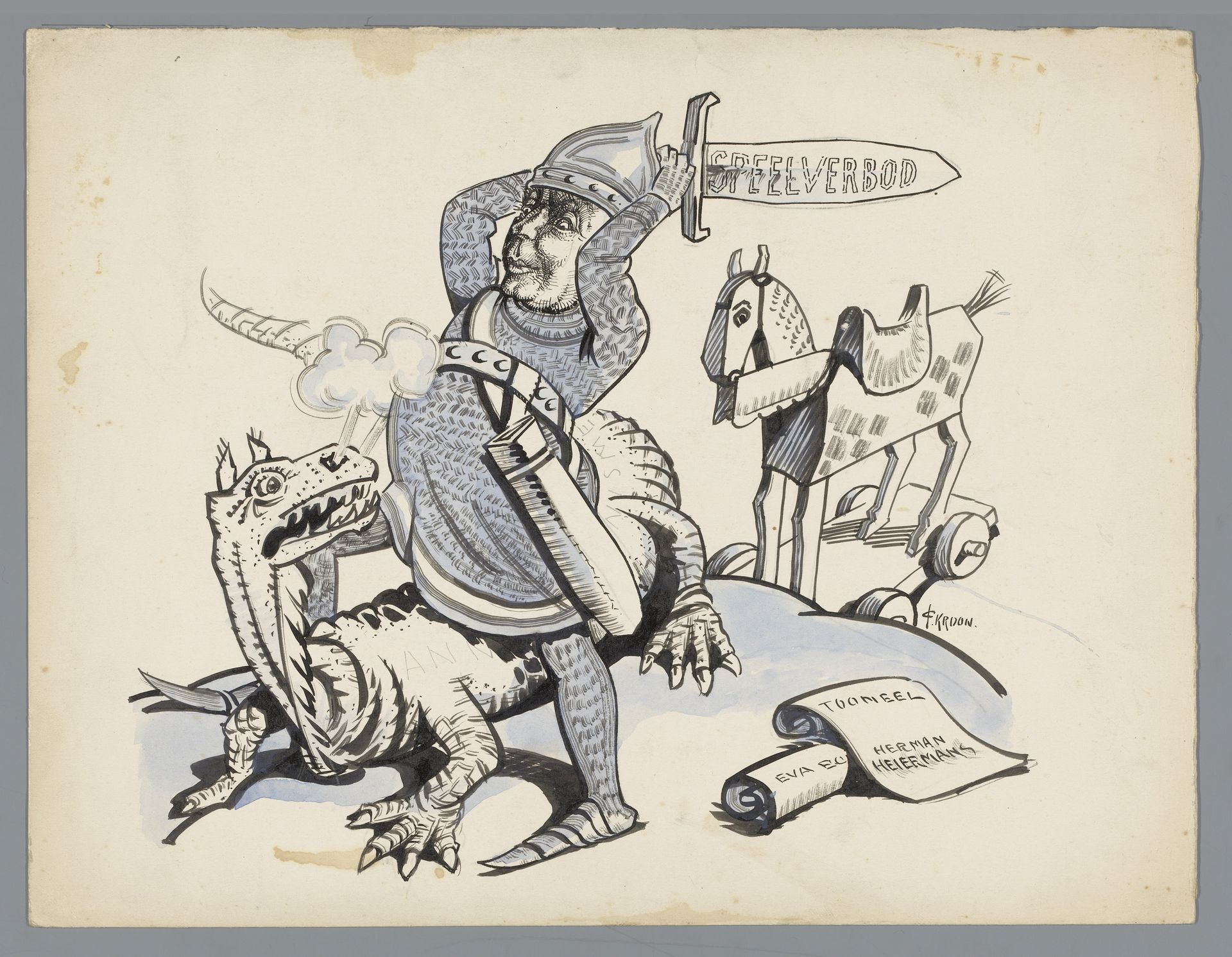
Patricq Kroon created this drawing of Saint George and the Dragon with a prohibition of play for Herman Heijermans, in pen and ink, at an unknown date. It encapsulates the tumultuous relationship between art, censorship, and social commentary. Kroon appropriates the iconic image of Saint George slaying the dragon, a symbol of good triumphing over evil, but with a twist. Here, Saint George wields a sword inscribed with 'Speelverbod,' meaning 'play ban,' and is riding the dragon while a Trojan horse is looming behind. This symbolises the cultural and political battles surrounding Herman Heijermans, a Dutch playwright and his work. The scroll at the bottom corner titled “Toomsel, Eva Bon Herman Heijermans” refers to Heijermans’s plays. The drawing is a commentary on the banning of his plays and the stifling of artistic expression. To truly understand its meaning, we need to delve into the history of Dutch theatre and the social and political climate of the time. Scholarly articles, theatrical reviews, and archival materials can shed light on the specific context of the 'play ban' and Heijermans's role as a social commentator.
Sint Joris en de draak en speelverbod voor Herman Heijermans
1919 - 1924

Artwork details
- Medium
- drawing, ink
- Dimensions
- height 248 mm, width 324 mm
- Copyright
- Rijks Museum: Open Domain
Tags
Comments
Share your thoughts
About this artwork
Patricq Kroon created this drawing of Saint George and the Dragon with a prohibition of play for Herman Heijermans, in pen and ink, at an unknown date. It encapsulates the tumultuous relationship between art, censorship, and social commentary. Kroon appropriates the iconic image of Saint George slaying the dragon, a symbol of good triumphing over evil, but with a twist. Here, Saint George wields a sword inscribed with 'Speelverbod,' meaning 'play ban,' and is riding the dragon while a Trojan horse is looming behind. This symbolises the cultural and political battles surrounding Herman Heijermans, a Dutch playwright and his work. The scroll at the bottom corner titled “Toomsel, Eva Bon Herman Heijermans” refers to Heijermans’s plays. The drawing is a commentary on the banning of his plays and the stifling of artistic expression. To truly understand its meaning, we need to delve into the history of Dutch theatre and the social and political climate of the time. Scholarly articles, theatrical reviews, and archival materials can shed light on the specific context of the 'play ban' and Heijermans's role as a social commentator.
Comments
Share your thoughts