About this artwork
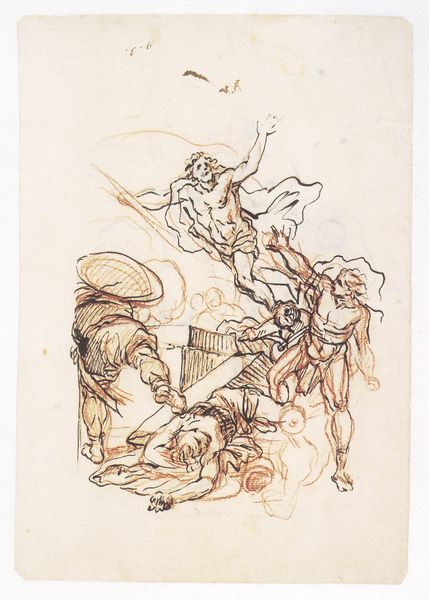
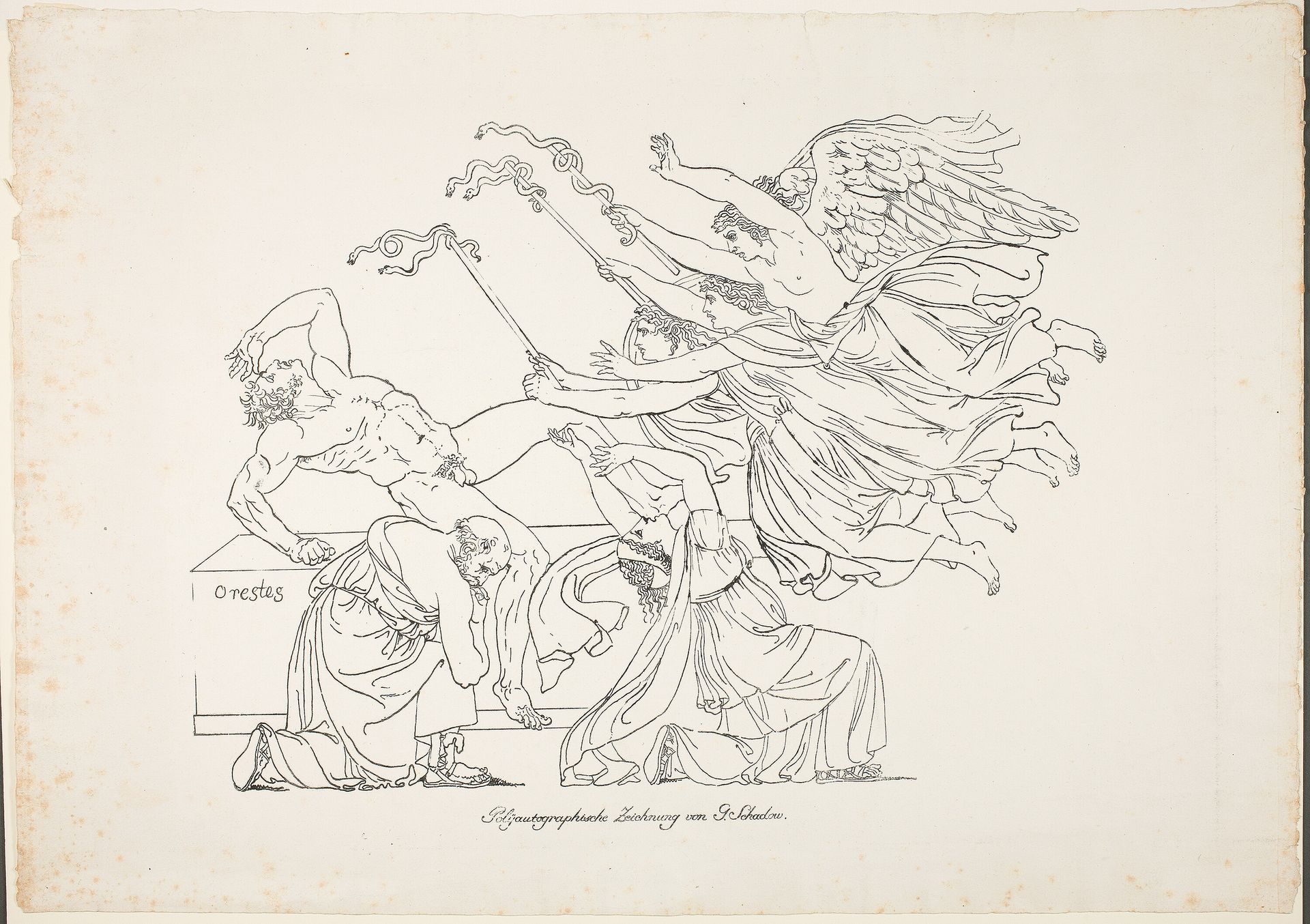
Johann Gottfried Schadow drew "Persecution of Orestes" with pen and black ink, showing Orestes tormented by the Furies. Schadow made this drawing during a period of renewed interest in classical antiquity. Artists and intellectuals across Europe looked to ancient Greece and Rome for models of beauty, virtue, and civic order. In this context, Schadow, working in late 18th- or early 19th-century Germany, would have expected his audience to recognize Orestes as a figure from Greek tragedy, a man driven mad by guilt after killing his mother. The Furies embody this torment, driving Orestes to the brink of despair. The work reflects the values of the Enlightenment, during which artists and thinkers explored themes of justice, morality, and the psychological consequences of crime. To understand Schadow’s visual language, we might consult contemporary philosophical texts, histories of classical art, and literary studies. These resources help us understand how art engages with broader social and intellectual currents.
Persecution of Orestes
1804


Artwork details
- Medium
- drawing, lithograph, print, paper, ink
- Dimensions
- 325 × 482 mm
- Location
- The Art Institute of Chicago
- Copyright
- Public Domain
Tags
Comments
Share your thoughts
About this artwork
Johann Gottfried Schadow drew "Persecution of Orestes" with pen and black ink, showing Orestes tormented by the Furies. Schadow made this drawing during a period of renewed interest in classical antiquity. Artists and intellectuals across Europe looked to ancient Greece and Rome for models of beauty, virtue, and civic order. In this context, Schadow, working in late 18th- or early 19th-century Germany, would have expected his audience to recognize Orestes as a figure from Greek tragedy, a man driven mad by guilt after killing his mother. The Furies embody this torment, driving Orestes to the brink of despair. The work reflects the values of the Enlightenment, during which artists and thinkers explored themes of justice, morality, and the psychological consequences of crime. To understand Schadow’s visual language, we might consult contemporary philosophical texts, histories of classical art, and literary studies. These resources help us understand how art engages with broader social and intellectual currents.
Comments
Share your thoughts