About this artwork
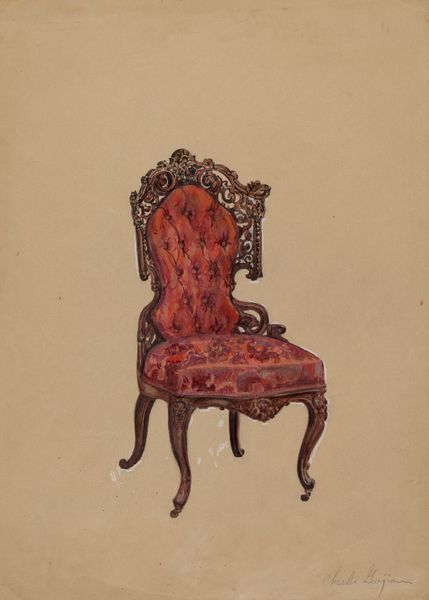
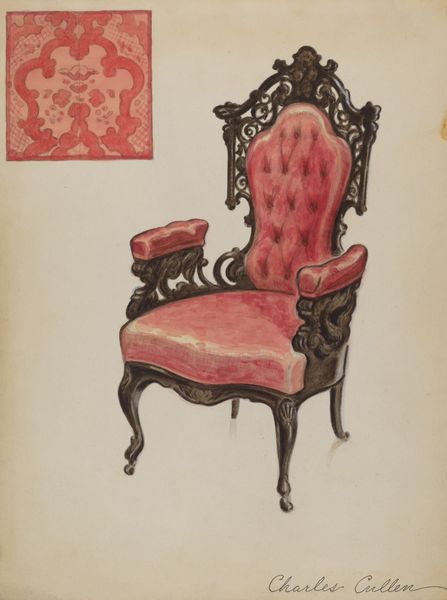
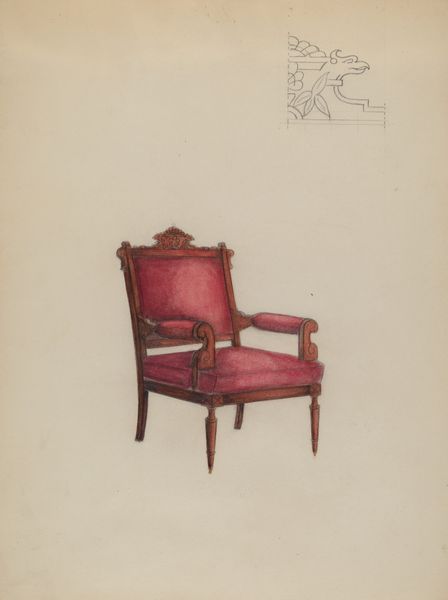
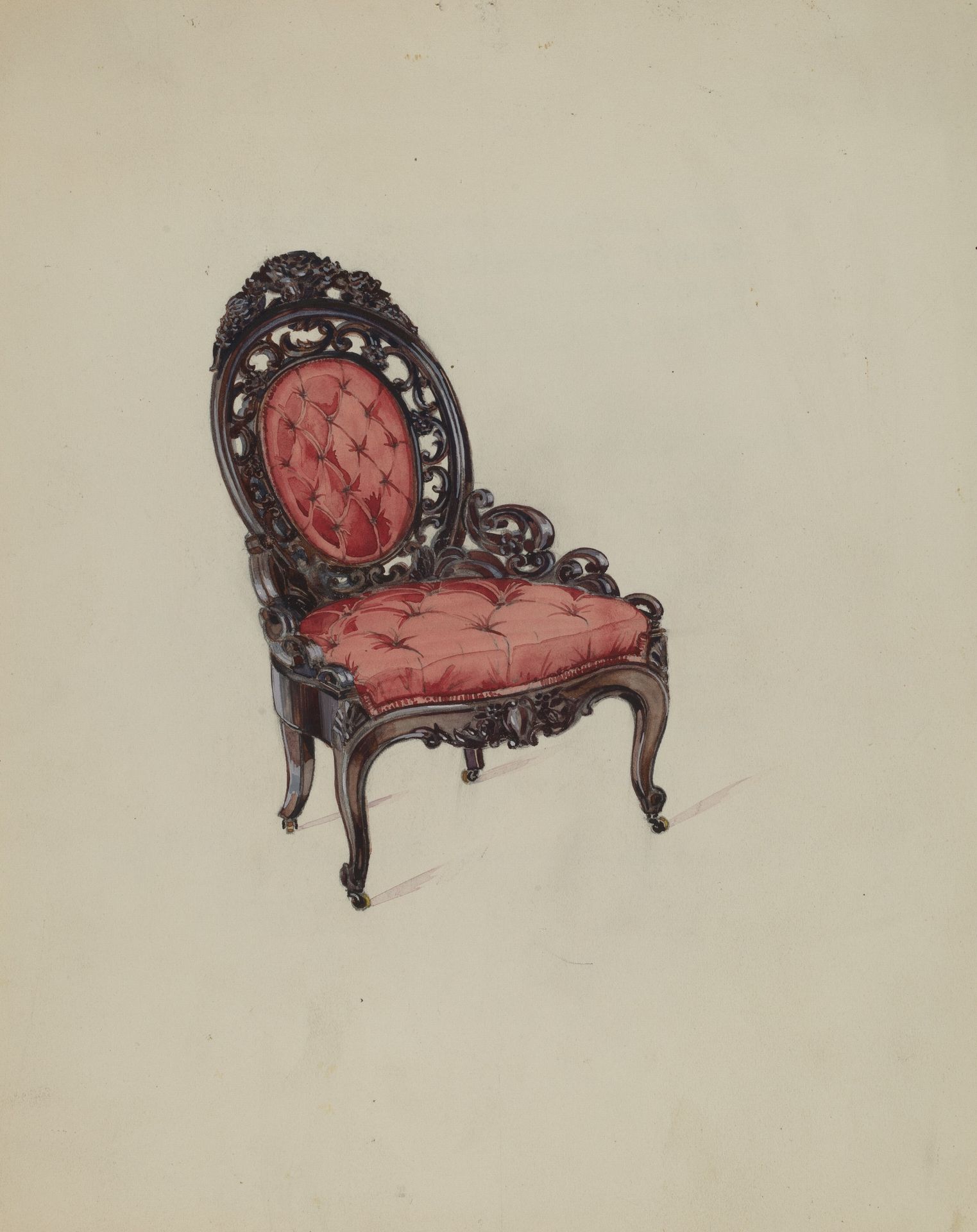
Kurt Melzer made this drawing of a Hoopskirt Chair. He was born in 1855, when women’s fashion dictated huge skirts, supported by whalebone or metal hoops. The chair, then, becomes a clever play on the fashion of the time, literally accommodating the voluminous dresses. But consider: how much space did women occupy then, both physically and socially? Did these dresses give them presence, or were they restrictive symbols of status and domesticity? The chair is ornate, upholstered in a rich red fabric. It suggests luxury and perhaps a certain expectation of how women should present and conduct themselves. This drawing invites us to reflect on the material culture of femininity and consider the complex relationships between clothing, identity, and power. What does it mean to furnish a space for a body so constrained, yet so visually dominant?


Artwork details
- Medium
- drawing, coloured-pencil, watercolor, pencil
- Dimensions
- overall: 35.7 x 25.4 cm (14 1/16 x 10 in.) Original IAD Object: 40 1/4"high overall, 24 7/8" wide, 30 3/4" deep
- Copyright
- National Gallery of Art: CC0 1.0
Tags
drawing
coloured-pencil
watercolor
pencil drawing
coloured pencil
pencil
watercolour illustration
academic-art
watercolor
Comments
Be the first to share your thoughts about this work.
About this artwork
Kurt Melzer made this drawing of a Hoopskirt Chair. He was born in 1855, when women’s fashion dictated huge skirts, supported by whalebone or metal hoops. The chair, then, becomes a clever play on the fashion of the time, literally accommodating the voluminous dresses. But consider: how much space did women occupy then, both physically and socially? Did these dresses give them presence, or were they restrictive symbols of status and domesticity? The chair is ornate, upholstered in a rich red fabric. It suggests luxury and perhaps a certain expectation of how women should present and conduct themselves. This drawing invites us to reflect on the material culture of femininity and consider the complex relationships between clothing, identity, and power. What does it mean to furnish a space for a body so constrained, yet so visually dominant?
Comments
Be the first to share your thoughts about this work.