About this artwork
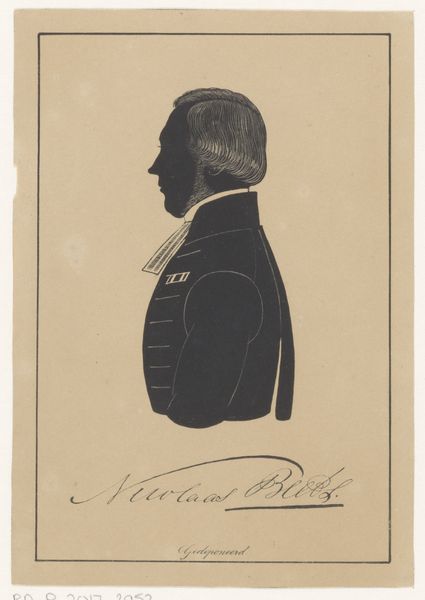
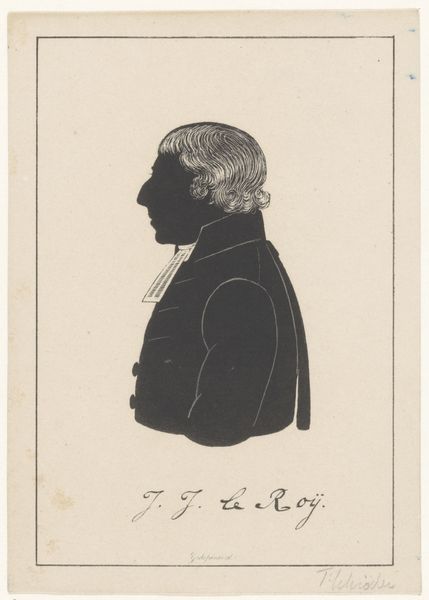
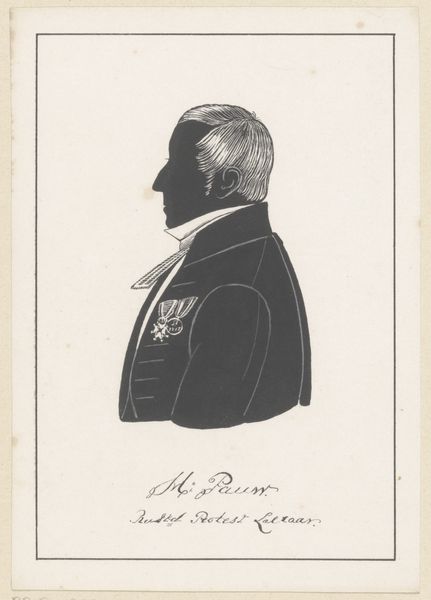
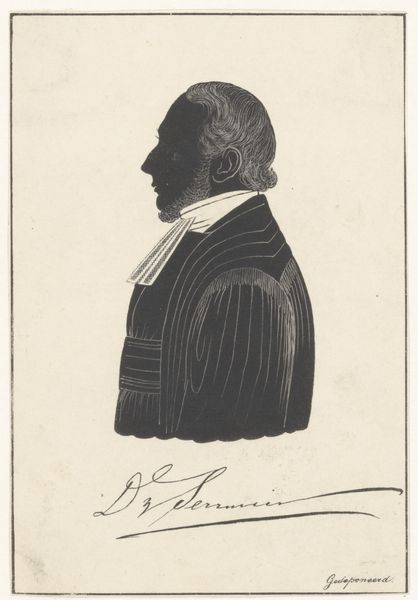
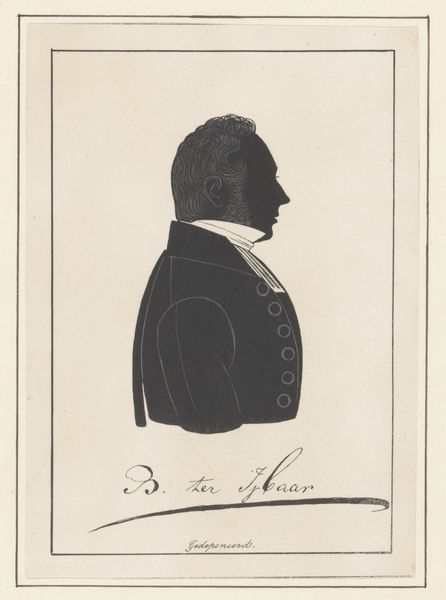
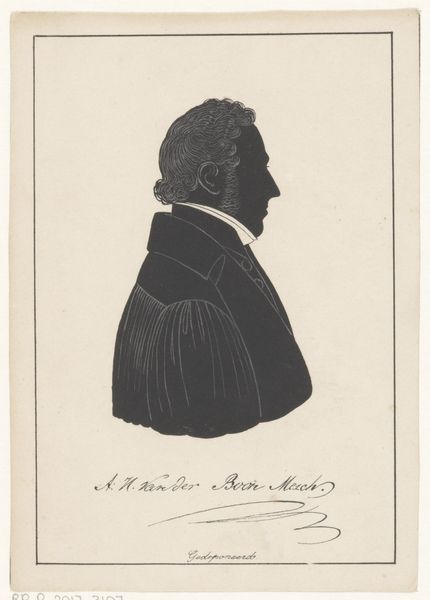
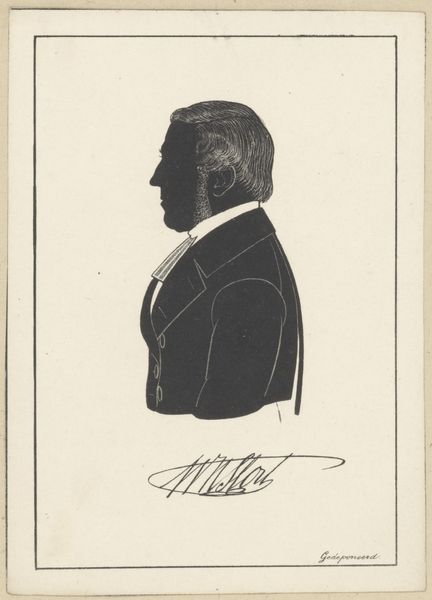
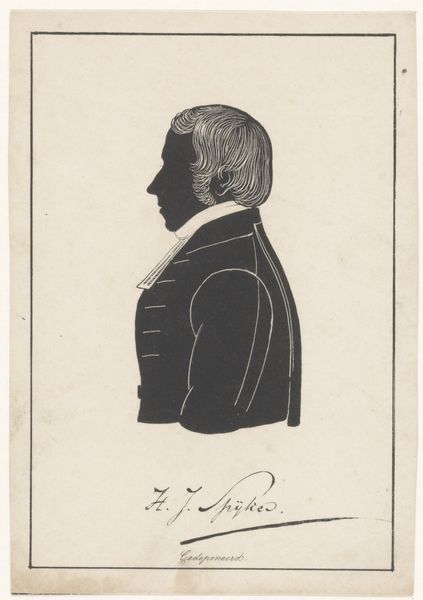
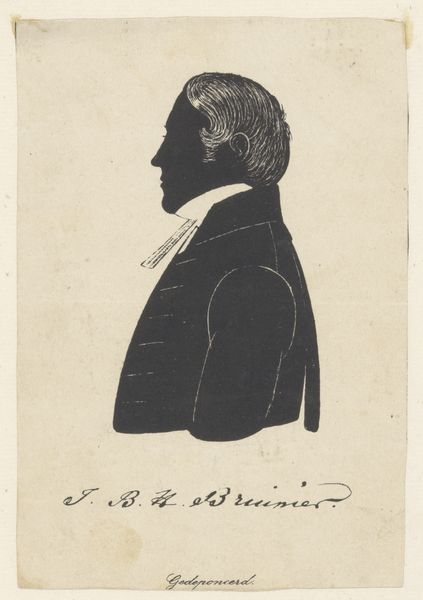
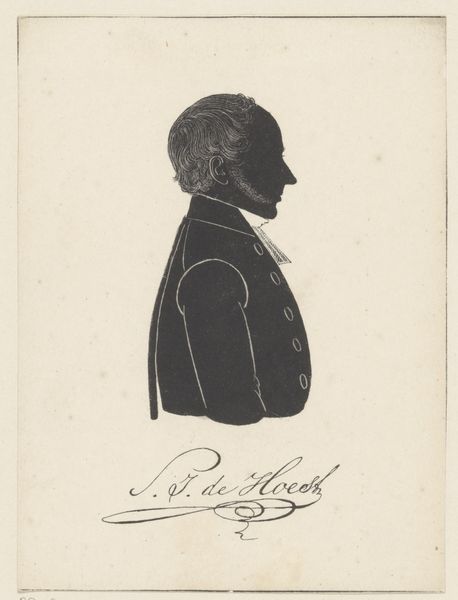
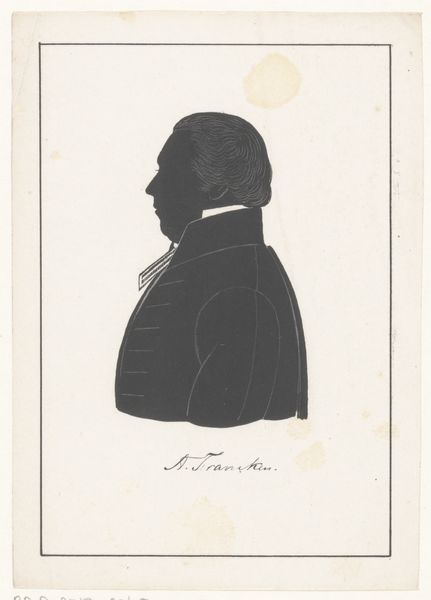
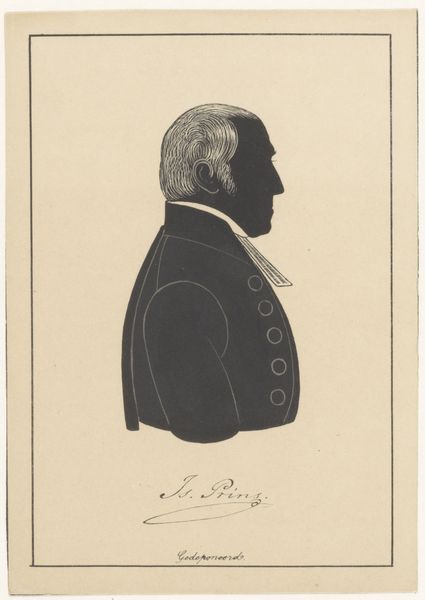
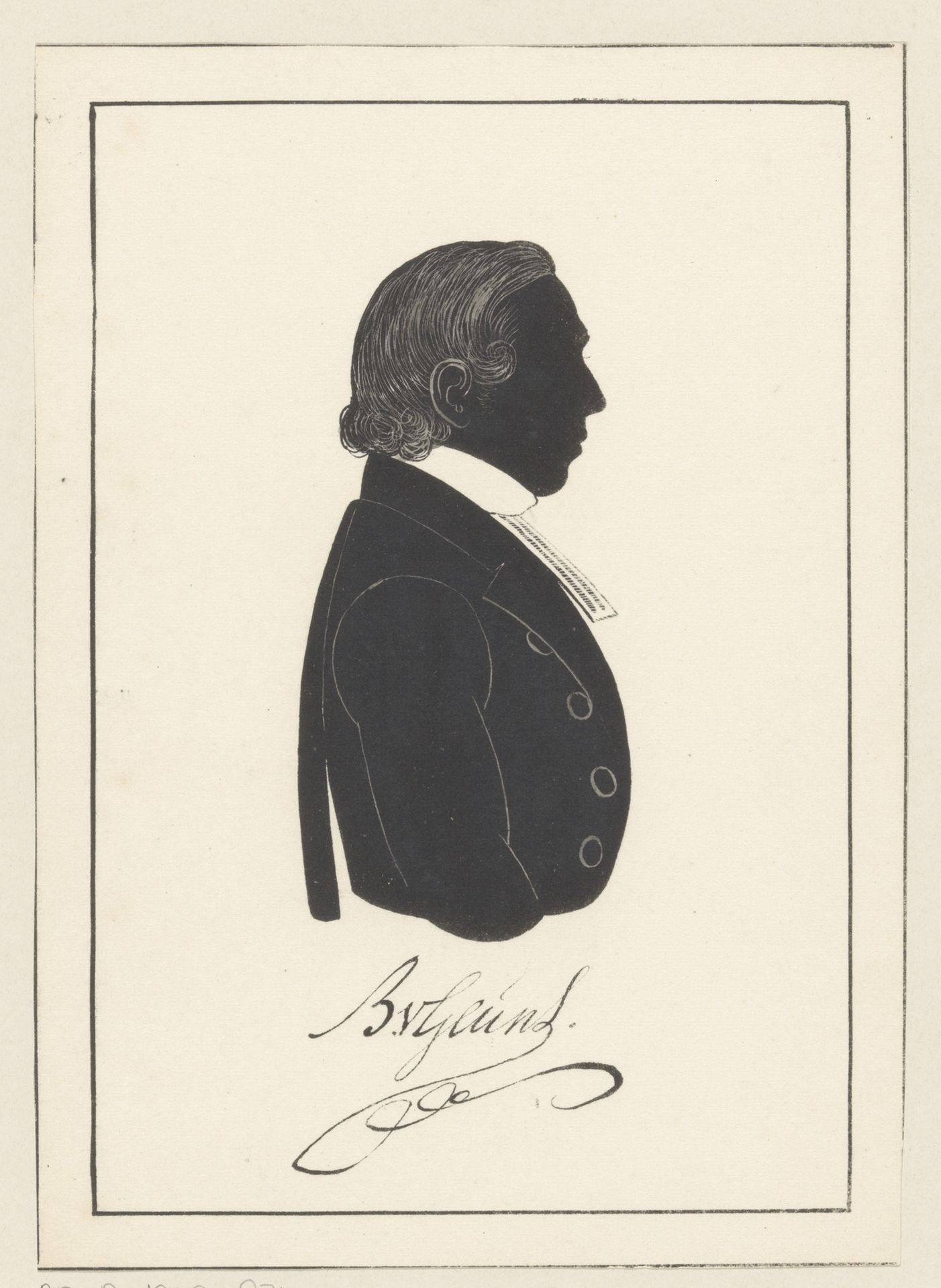
Here we see "Silhouetportret van Bartel van Geuns," a silhouette portrait made by Pieter Barbiers IV. This work is a study in contrasts, primarily between the solid black figure and the stark white background. The artist uses this binary to create a profile that is both striking and informative. Note how the crisp lines meticulously define the contours of Bartel van Geuns's face and clothing, allowing for an immediate recognition of his features and attire. The silhouette flattens the three-dimensional form into a two-dimensional plane, emphasizing shape and outline over depth and volume. The composition invites viewers to consider how much information can be conveyed through minimal means. This reduction challenges our conventional understanding of portraiture, which often relies on detailed renderings and nuanced expressions. Instead, Barbiers offers a simplified yet powerful representation, prompting questions about identity, representation, and the essence of form.
Silhouetportret van Bartel van Geuns
1809 - 1848

Pieter (IV) Barbiers
1798 - 1848Location
RijksmuseumArtwork details
- Medium
- drawing, pen
- Dimensions
- height 150 mm, width 108 mm
- Location
- Rijksmuseum
- Copyright
- Rijks Museum: Open Domain
Tags
Comments
Share your thoughts
About this artwork
Here we see "Silhouetportret van Bartel van Geuns," a silhouette portrait made by Pieter Barbiers IV. This work is a study in contrasts, primarily between the solid black figure and the stark white background. The artist uses this binary to create a profile that is both striking and informative. Note how the crisp lines meticulously define the contours of Bartel van Geuns's face and clothing, allowing for an immediate recognition of his features and attire. The silhouette flattens the three-dimensional form into a two-dimensional plane, emphasizing shape and outline over depth and volume. The composition invites viewers to consider how much information can be conveyed through minimal means. This reduction challenges our conventional understanding of portraiture, which often relies on detailed renderings and nuanced expressions. Instead, Barbiers offers a simplified yet powerful representation, prompting questions about identity, representation, and the essence of form.
Comments
Share your thoughts