About this artwork
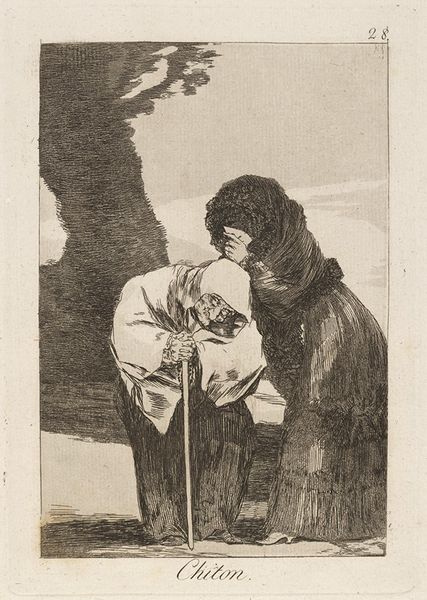
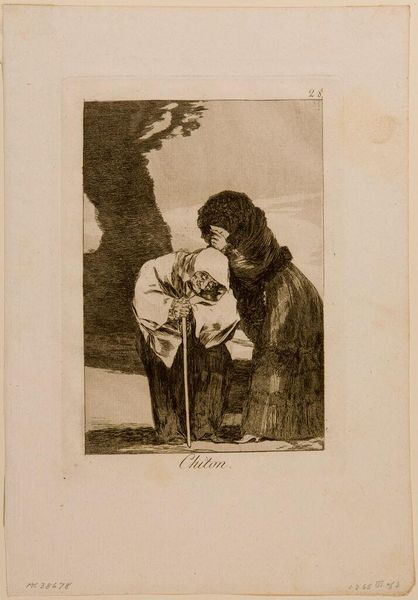
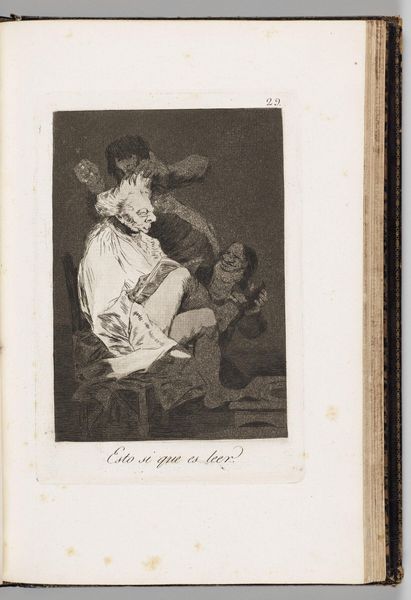
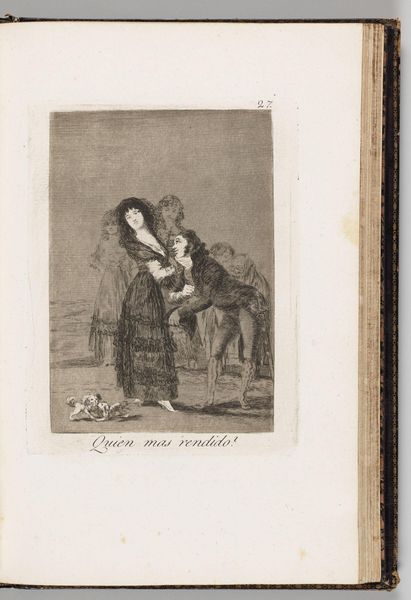
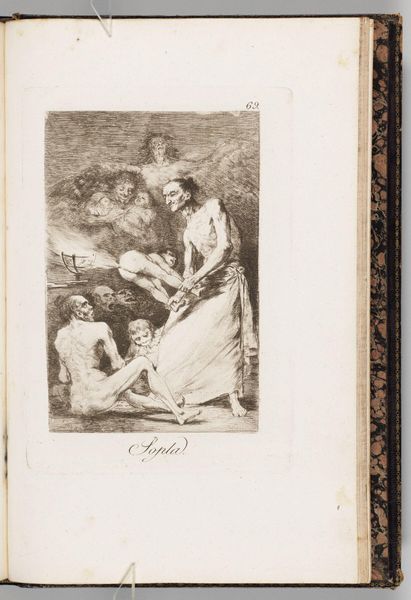
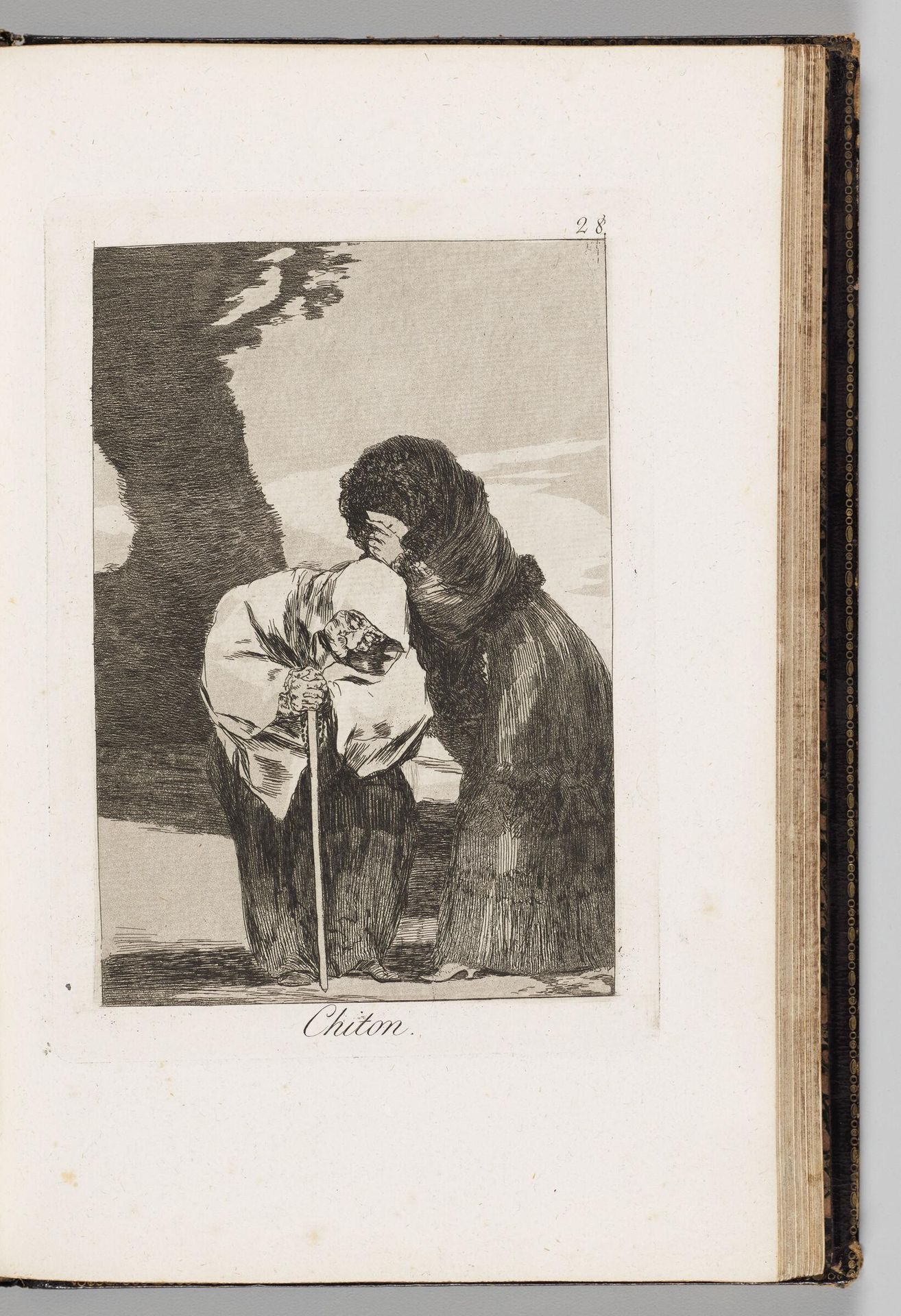
Curator: Here we have "Hush" by Francisco José de Goya y Lucientes, part of his series "Los Caprichos" currently residing at the Harvard Art Museums. It's a potent image isn't it? Editor: Indeed. It feels heavy with unspoken words, a secret shared perhaps. I'm immediately drawn to the contrast—the stooped figure with the cane and the veiled woman, almost whispering. Curator: Goya employed etching and aquatint to achieve those stark contrasts. "Los Caprichos" was a commentary on the social and political landscape of Spain at the time. Editor: So, "Hush," or "Chiton" as inscribed on the original print, could be interpreted as a warning against speaking out? Suppressing truths? Curator: Precisely. Goya was critical of the aristocracy and the clergy. This image could be about silencing dissent, keeping up appearances regardless of the inner turmoil. Editor: It's unsettling. Like a nightmare glimpsed through a crack in reality, but that's Goya, isn't it? Always challenging us to look deeper. Curator: Absolutely. It encourages us to consider whose voices are silenced and why. Editor: It stays with you, doesn't it? That feeling of something important being hidden just out of reach.
Hush
18th-19th century
Francisco José de Goya y Lucientes
@franciscojosadegoyaylucientes
Harvard Art Museums
Harvard Art MuseumsArtwork details
- Location
- Harvard Art Museums
- Copyright
- CC0 1.0
Comments
Share your thoughts
About this artwork
Curator: Here we have "Hush" by Francisco José de Goya y Lucientes, part of his series "Los Caprichos" currently residing at the Harvard Art Museums. It's a potent image isn't it? Editor: Indeed. It feels heavy with unspoken words, a secret shared perhaps. I'm immediately drawn to the contrast—the stooped figure with the cane and the veiled woman, almost whispering. Curator: Goya employed etching and aquatint to achieve those stark contrasts. "Los Caprichos" was a commentary on the social and political landscape of Spain at the time. Editor: So, "Hush," or "Chiton" as inscribed on the original print, could be interpreted as a warning against speaking out? Suppressing truths? Curator: Precisely. Goya was critical of the aristocracy and the clergy. This image could be about silencing dissent, keeping up appearances regardless of the inner turmoil. Editor: It's unsettling. Like a nightmare glimpsed through a crack in reality, but that's Goya, isn't it? Always challenging us to look deeper. Curator: Absolutely. It encourages us to consider whose voices are silenced and why. Editor: It stays with you, doesn't it? That feeling of something important being hidden just out of reach.
Comments
Share your thoughts