

About this artwork
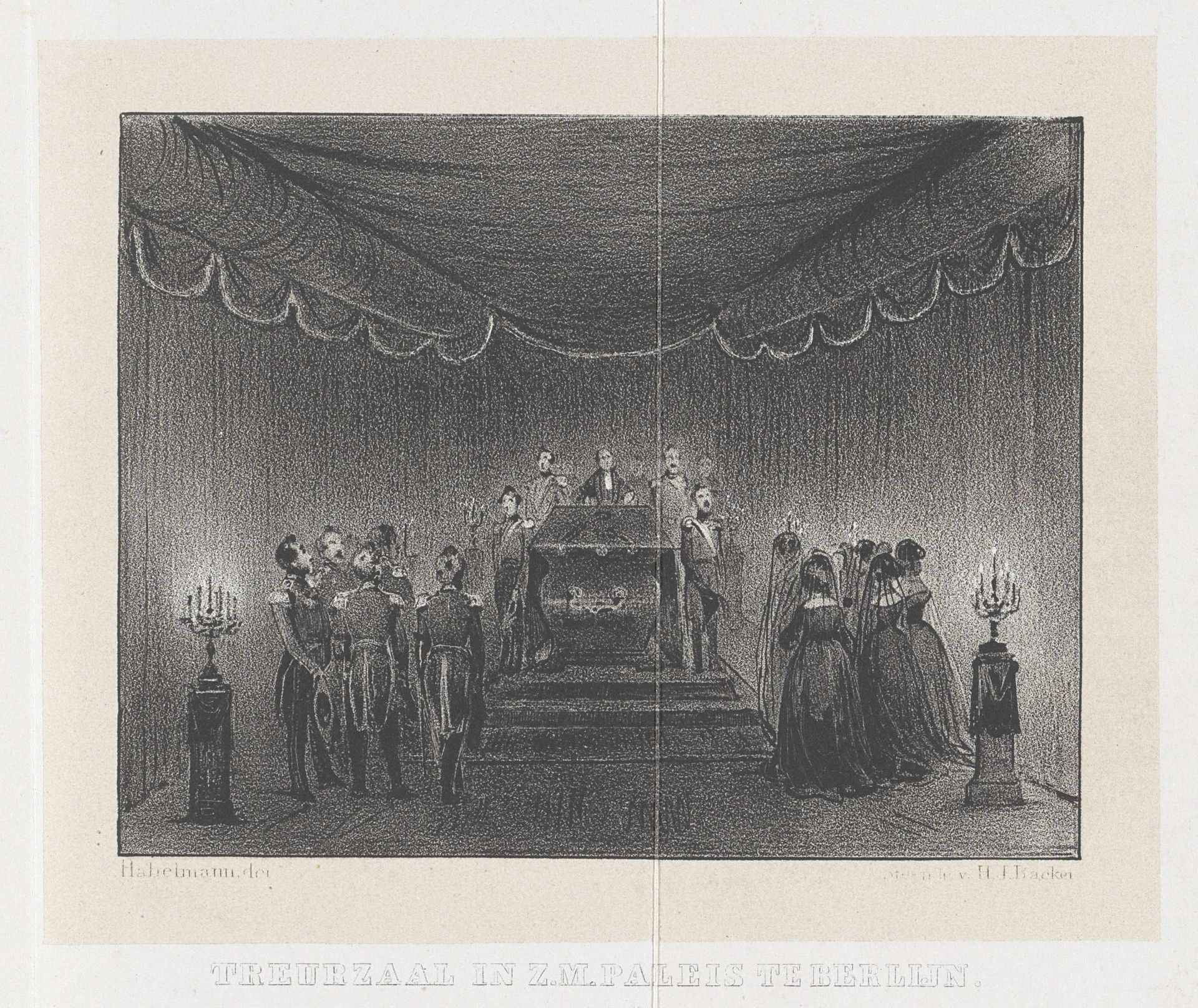
This print from 1843 depicts the lying-in-state of King Willem I in Berlin. The image offers insights into the socio-political climate of the time, particularly the culture surrounding monarchy and death. The artist, whose identity remains unknown, uses the visual codes of the era to convey a sense of solemnity and respect. The composition, with its symmetrical arrangement of figures around the coffin, emphasizes order and decorum. The historical context is crucial. Willem I's reign was marked by significant political and economic changes in the Netherlands, and his death prompted both mourning and reflection on his legacy. This image reflects the institutional power of the monarchy and the ways in which death rituals were orchestrated to reinforce social hierarchies. To truly understand this print, one must delve into the archives, examining newspaper accounts, personal letters, and official documents.
Treurzaal met lijkkist van koning Willem I in Berlijn, 1843 1844

Anonymous
@anonymousLocation
RijksmuseumArtwork details
- Dimensions
- height 180 mm, width 260 mm
- Location
- Rijksmuseum
- Copyright
- Rijks Museum: Open Domain
Tags
photo of handprinted image
aged paper
muted colour palette
photo restoration
light coloured
repetition of white
white palette
desaturated colour
neutral colour
repetition of white colour
Comments
No comments
About this artwork
This print from 1843 depicts the lying-in-state of King Willem I in Berlin. The image offers insights into the socio-political climate of the time, particularly the culture surrounding monarchy and death. The artist, whose identity remains unknown, uses the visual codes of the era to convey a sense of solemnity and respect. The composition, with its symmetrical arrangement of figures around the coffin, emphasizes order and decorum. The historical context is crucial. Willem I's reign was marked by significant political and economic changes in the Netherlands, and his death prompted both mourning and reflection on his legacy. This image reflects the institutional power of the monarchy and the ways in which death rituals were orchestrated to reinforce social hierarchies. To truly understand this print, one must delve into the archives, examining newspaper accounts, personal letters, and official documents.
Comments
No comments