About this artwork
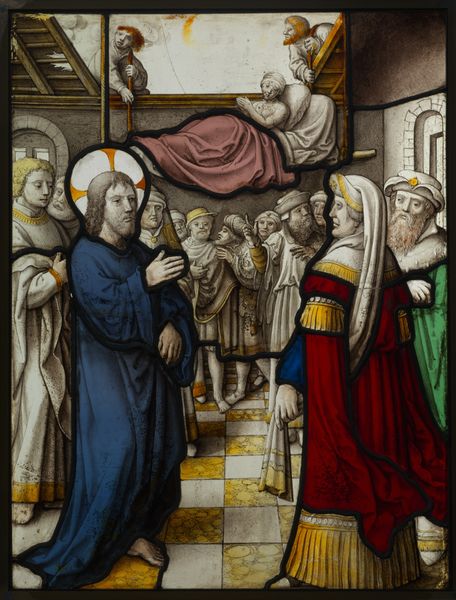
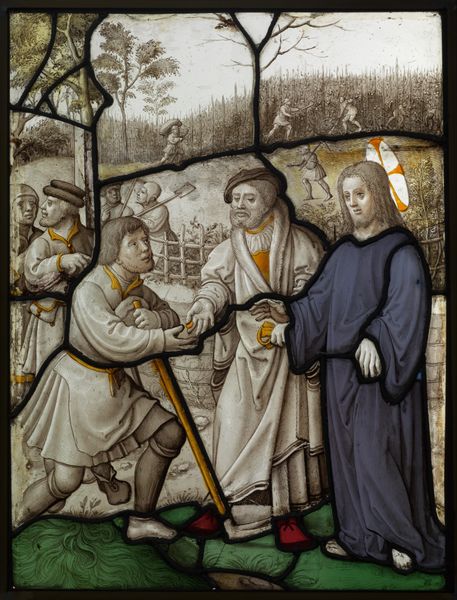
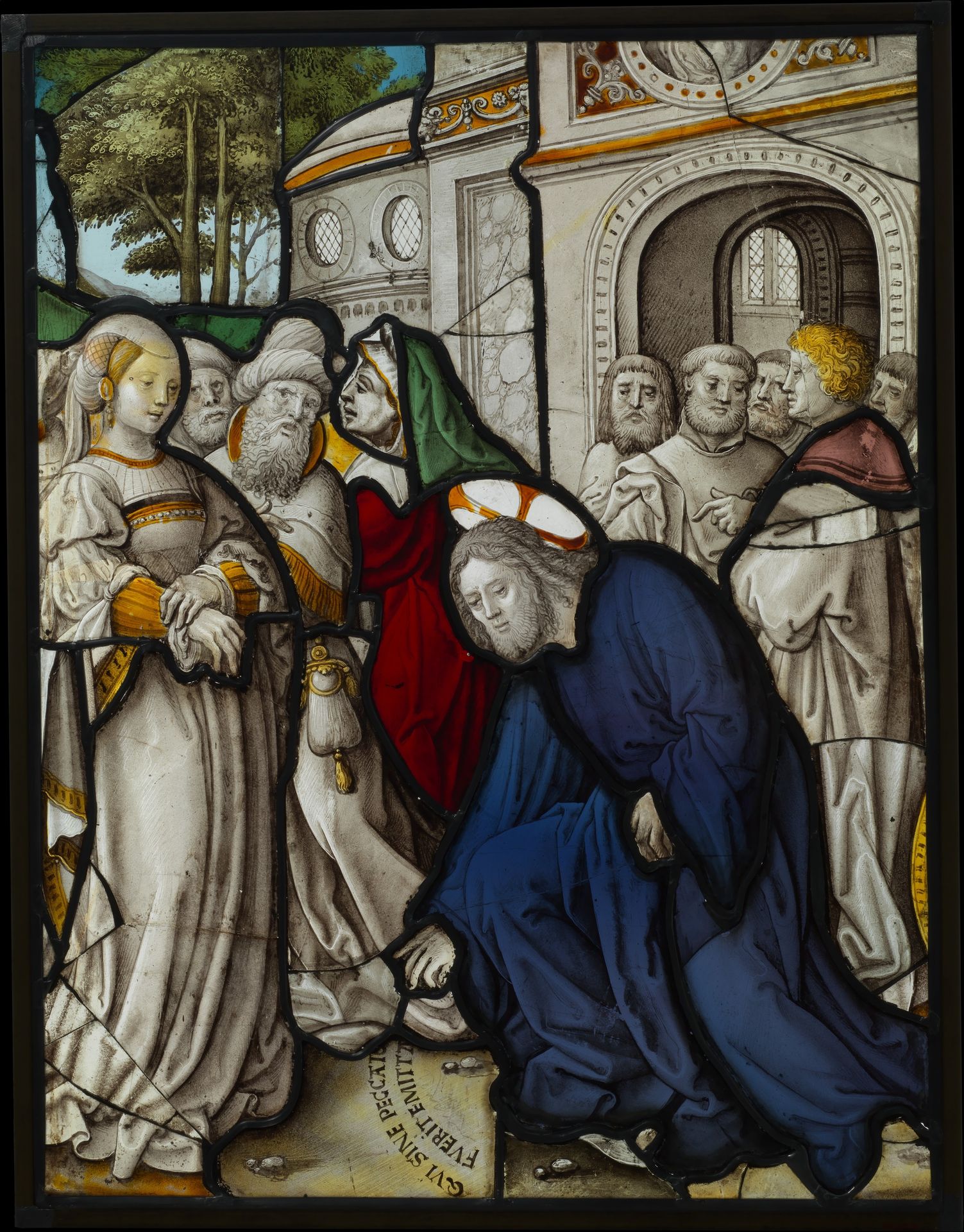
This stained-glass panel, made by Jan Rombouts around the early 16th century, depicts Christ and the woman taken in adultery. Notice Christ, in a deep blue robe, kneeling to write in the ground, an act laden with symbolic weight. The act of writing in the earth is a motif that echoes through time. We find it mirrored in ancient rituals of divination and judgment. In some cultures, writing in the earth was a way to invoke deities. Here, the gesture is one of divine authority, yet also profound empathy. Consider how this image might stir subconscious memories. The downcast eyes of Christ, the accusatory gestures of the crowd, the shame of the woman – these are universal emotions. This panel is not merely a biblical scene, but a mirror reflecting our own struggles with judgment, compassion, and the ever-present tension between law and mercy. The symbol of writing reminds us that history is never linear, but a cyclical return of primal motifs.
Christ and the Woman Taken in Adultery (one of a set of 12 scenes from The Life of Christ)
1520 - 1535


Artwork details
- Medium
- glass, sculpture
- Dimensions
- Overall: 26 × 15 5/8 in. (66 × 39.7 cm)
- Location
- Metropolitan Museum of Art, New York, NY
- Copyright
- Public Domain
Tags
medieval
narrative-art
caricature
figuration
mural art
glass
sculpture
naive art
men
history-painting
northern-renaissance
decorative-art
portrait art
Comments
Be the first to share your thoughts about this work.
About this artwork
This stained-glass panel, made by Jan Rombouts around the early 16th century, depicts Christ and the woman taken in adultery. Notice Christ, in a deep blue robe, kneeling to write in the ground, an act laden with symbolic weight. The act of writing in the earth is a motif that echoes through time. We find it mirrored in ancient rituals of divination and judgment. In some cultures, writing in the earth was a way to invoke deities. Here, the gesture is one of divine authority, yet also profound empathy. Consider how this image might stir subconscious memories. The downcast eyes of Christ, the accusatory gestures of the crowd, the shame of the woman – these are universal emotions. This panel is not merely a biblical scene, but a mirror reflecting our own struggles with judgment, compassion, and the ever-present tension between law and mercy. The symbol of writing reminds us that history is never linear, but a cyclical return of primal motifs.
Comments
Be the first to share your thoughts about this work.