About this artwork
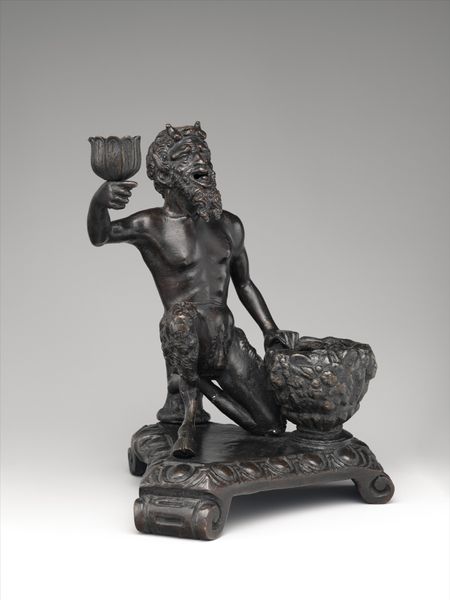
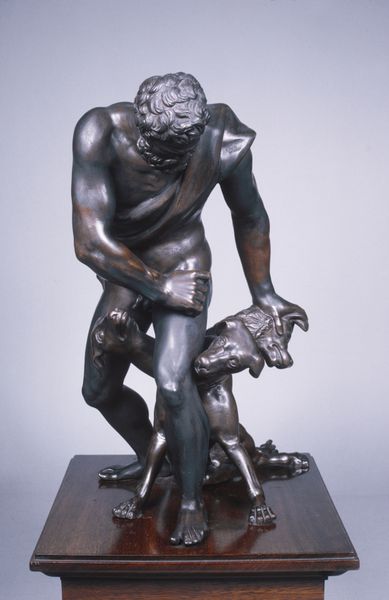
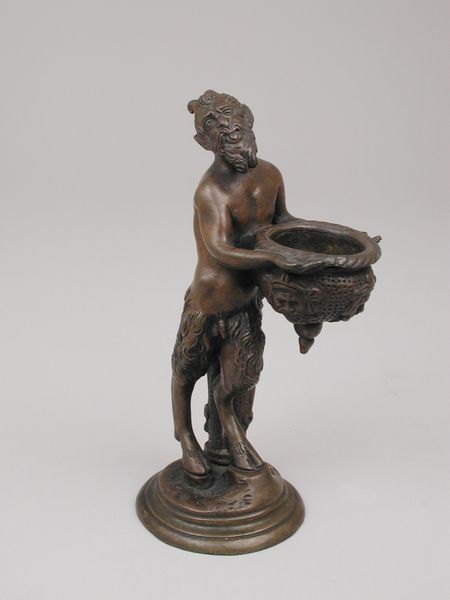
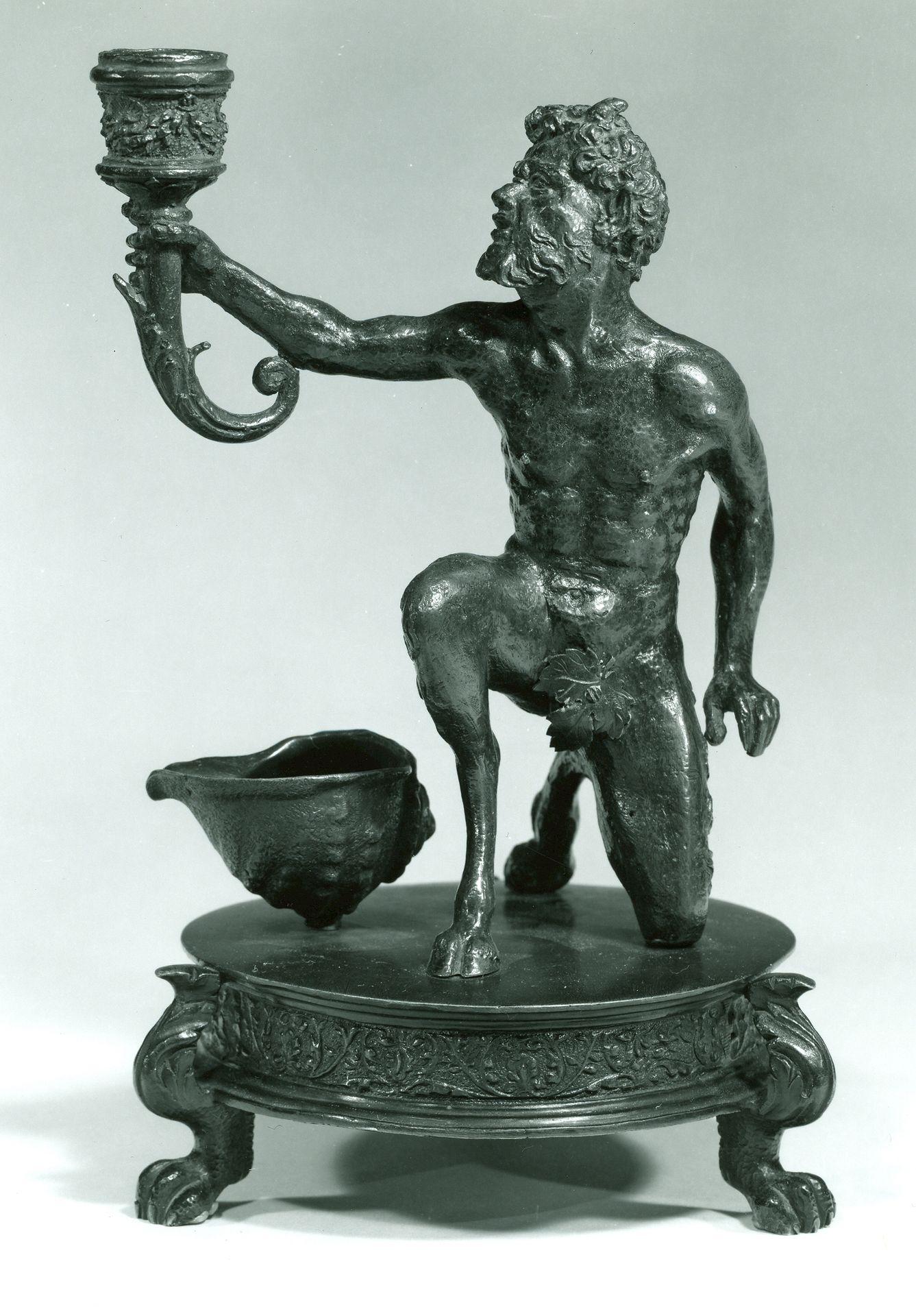
Editor: Here we have Desiderio da Firenze’s "Satyr," a bronze sculpture dating from 1527 to 1533. I’m struck by the figure's pose—kneeling, yet holding up a light. It seems almost...servile. What historical currents shaped the creation and reception of an object like this? Curator: The Renaissance saw a resurgence of interest in classical antiquity, but it wasn’t a straightforward revival. Figures like this satyr were reinterpreted through a Christian lens. Think about the social role such an object might have played. Where would it have been displayed? For whom? Editor: Maybe in a wealthy household? To show off their classical knowledge? Curator: Precisely! And what does it communicate to you, placing this mythological creature – associated with base desires – in a domestic, controlled setting? The power dynamics at play are telling, aren't they? It signals wealth and control, mastering classical themes for personal enjoyment. The satyr, once wild, becomes a servant of refined tastes. What are your thoughts about its relationship with the audience? Editor: It's interesting to consider how the display context impacts the message. It highlights how powerful people appropriated symbols and controlled how other people perceived art. Curator: Indeed. It reflects the era's hierarchical structures and the ways art bolstered those structures. Museums still play a role in this type of framing. Reflect on who the work may not speak to or include, perhaps questioning if similar structures exist in art today. Editor: It's much more complicated than just a revival of classical art, isn't it? There’s so much social commentary baked into the imagery itself. Curator: Exactly! And considering the politics embedded in imagery helps us see art, and its place in the world, with clearer eyes. Thank you, I’ve also learned something from this exploration of power dynamics.
Satyr 1527 - 1533

Desiderio da Firenze
1532 - 1545
The Metropolitan Museum of Art
Metropolitan Museum of Art, New York, NYArtwork details
- Medium
- bronze, sculpture
- Dimensions
- H. 25 cm.
- Location
- Metropolitan Museum of Art, New York, NY
- Copyright
- Public Domain
Tags
sculpture
bronze
figuration
sculpture
italian-renaissance
erotic-art
Comments
No comments
About this artwork
Editor: Here we have Desiderio da Firenze’s "Satyr," a bronze sculpture dating from 1527 to 1533. I’m struck by the figure's pose—kneeling, yet holding up a light. It seems almost...servile. What historical currents shaped the creation and reception of an object like this? Curator: The Renaissance saw a resurgence of interest in classical antiquity, but it wasn’t a straightforward revival. Figures like this satyr were reinterpreted through a Christian lens. Think about the social role such an object might have played. Where would it have been displayed? For whom? Editor: Maybe in a wealthy household? To show off their classical knowledge? Curator: Precisely! And what does it communicate to you, placing this mythological creature – associated with base desires – in a domestic, controlled setting? The power dynamics at play are telling, aren't they? It signals wealth and control, mastering classical themes for personal enjoyment. The satyr, once wild, becomes a servant of refined tastes. What are your thoughts about its relationship with the audience? Editor: It's interesting to consider how the display context impacts the message. It highlights how powerful people appropriated symbols and controlled how other people perceived art. Curator: Indeed. It reflects the era's hierarchical structures and the ways art bolstered those structures. Museums still play a role in this type of framing. Reflect on who the work may not speak to or include, perhaps questioning if similar structures exist in art today. Editor: It's much more complicated than just a revival of classical art, isn't it? There’s so much social commentary baked into the imagery itself. Curator: Exactly! And considering the politics embedded in imagery helps us see art, and its place in the world, with clearer eyes. Thank you, I’ve also learned something from this exploration of power dynamics.
Comments
No comments