About this artwork
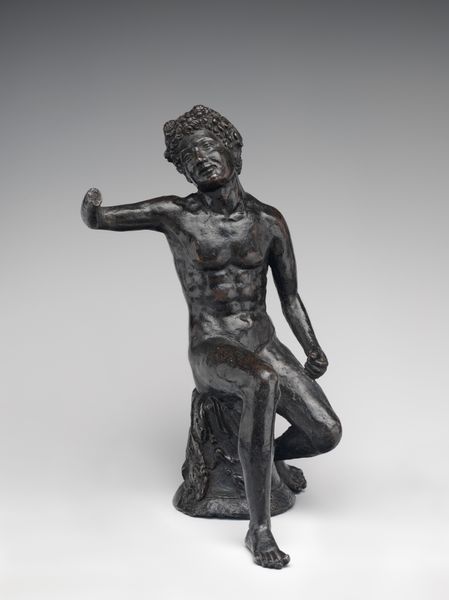
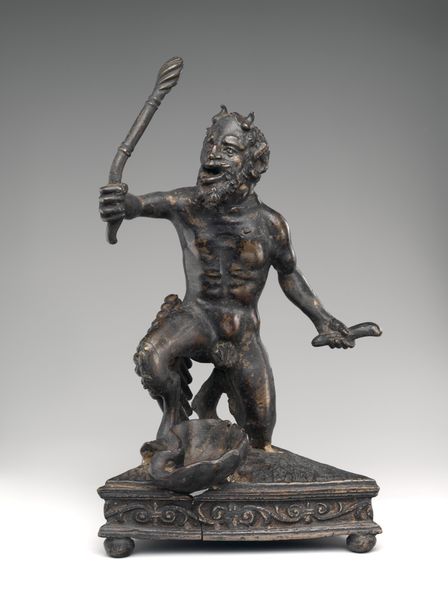
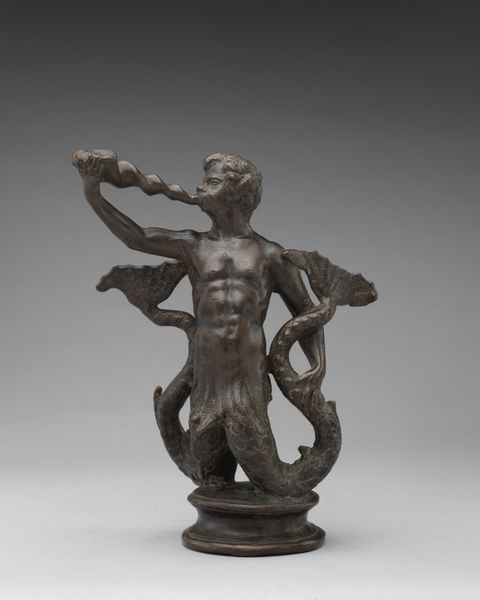
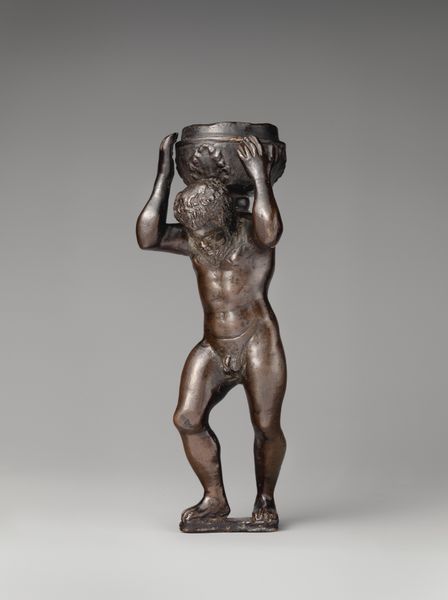
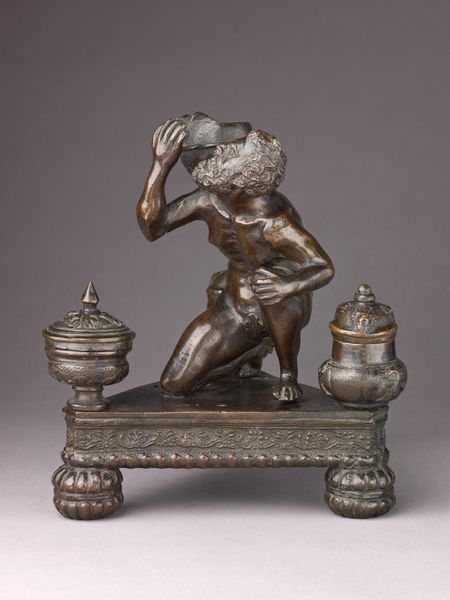
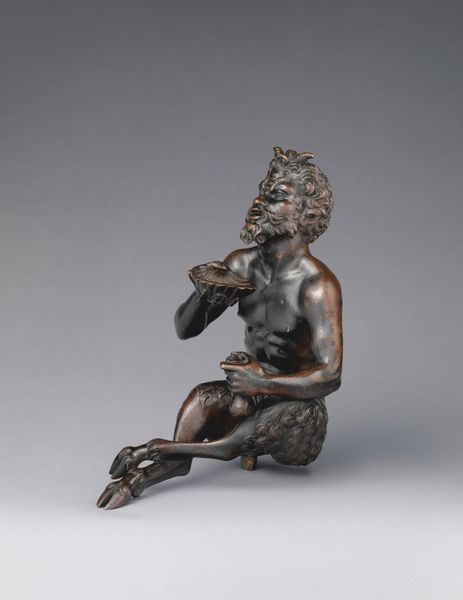
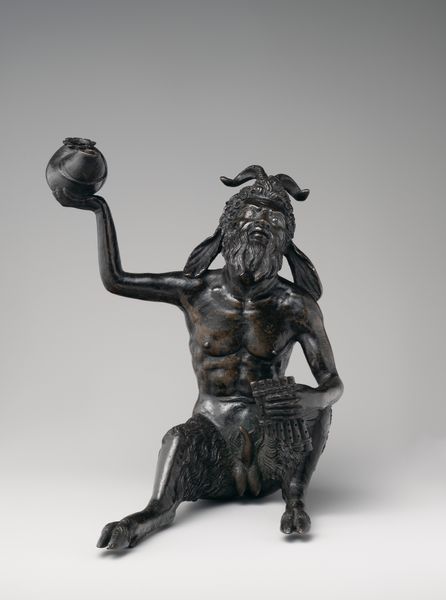
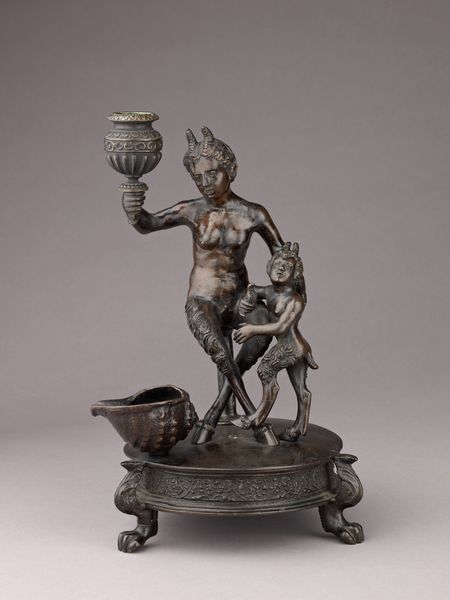
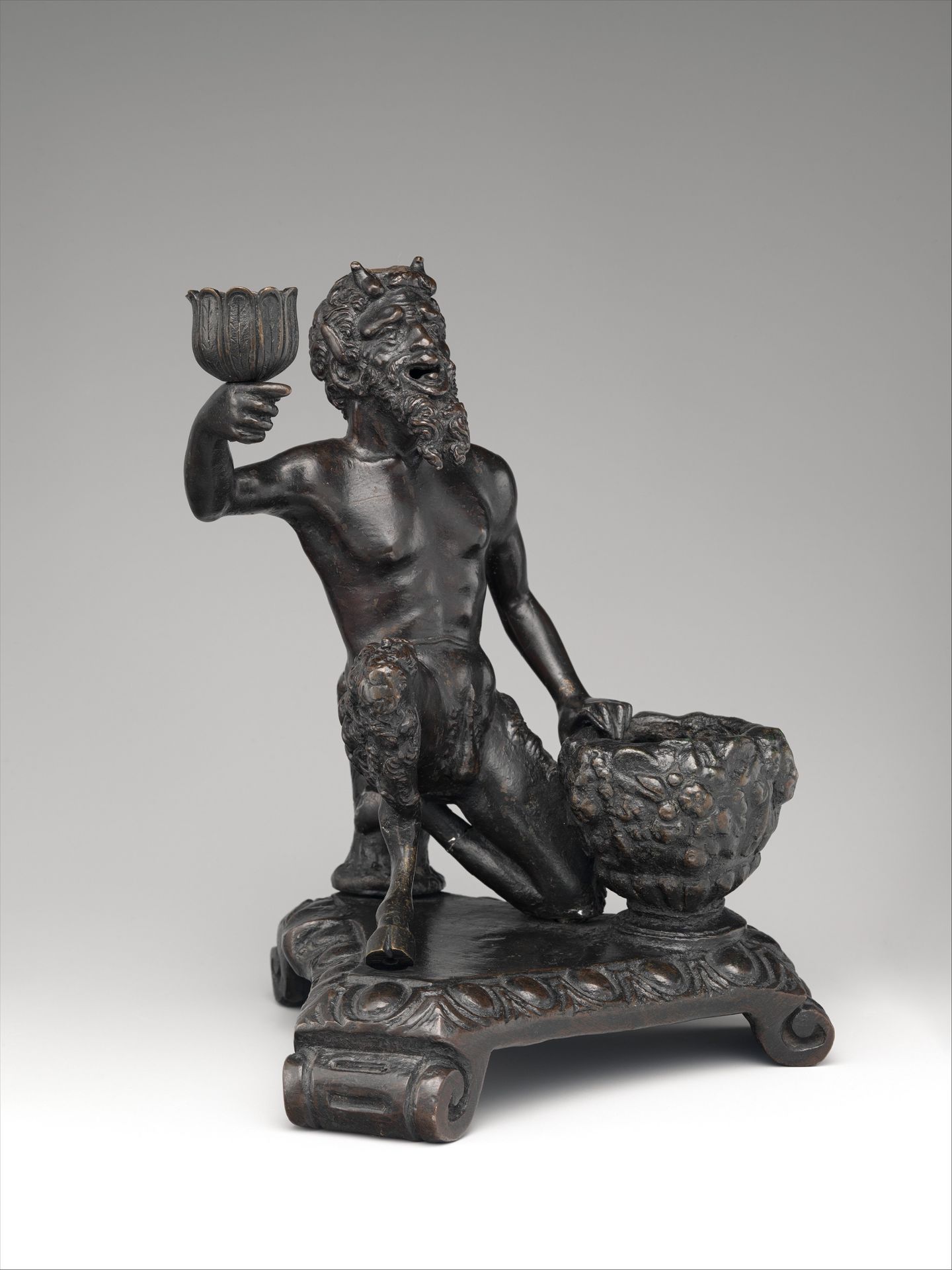
This bronze statuette was made by Andrea Briosco, called Riccio, in Padua, Italy, during the Renaissance. Riccio, whose name means "curly," was renowned for his small bronzes, which captured the humanist spirit of the time. Here, a satyr—a mythical creature, part man, part goat—is caught in a moment of revelry. His face is lifted in a joyous shout, a drinking cup raised high. Consider the satyr's dual nature: human intellect combined with animalistic desires. This tension embodies a key Renaissance preoccupation with the complexity of human nature, our capacity for both reason and instinct. Riccio draws on classical mythology, but he also infuses the figure with a palpable sense of energy and emotion. The statuette invites us to reflect on the interplay between our higher selves and our more primal urges, prompting a deeper understanding of our own humanity.
Statuette 16th century
Andrea Briosco, called Riccio
1470 - 1532The Metropolitan Museum of Art
Metropolitan Museum of Art, New York, NYArtwork details
- Medium
- bronze, sculpture
- Dimensions
- Overall (confirmed): 8 × 6 × 6 1/4 in. (20.3 × 15.2 × 15.9 cm)
- Location
- Metropolitan Museum of Art, New York, NY
- Copyright
- Public Domain
Tags
allegory
sculpture
bronze
figuration
11_renaissance
sculpture
decorative-art
Comments
No comments
About this artwork
This bronze statuette was made by Andrea Briosco, called Riccio, in Padua, Italy, during the Renaissance. Riccio, whose name means "curly," was renowned for his small bronzes, which captured the humanist spirit of the time. Here, a satyr—a mythical creature, part man, part goat—is caught in a moment of revelry. His face is lifted in a joyous shout, a drinking cup raised high. Consider the satyr's dual nature: human intellect combined with animalistic desires. This tension embodies a key Renaissance preoccupation with the complexity of human nature, our capacity for both reason and instinct. Riccio draws on classical mythology, but he also infuses the figure with a palpable sense of energy and emotion. The statuette invites us to reflect on the interplay between our higher selves and our more primal urges, prompting a deeper understanding of our own humanity.
Comments
No comments