About this artwork
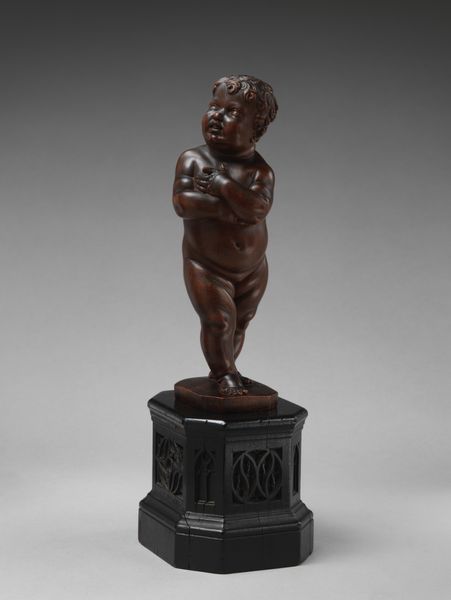
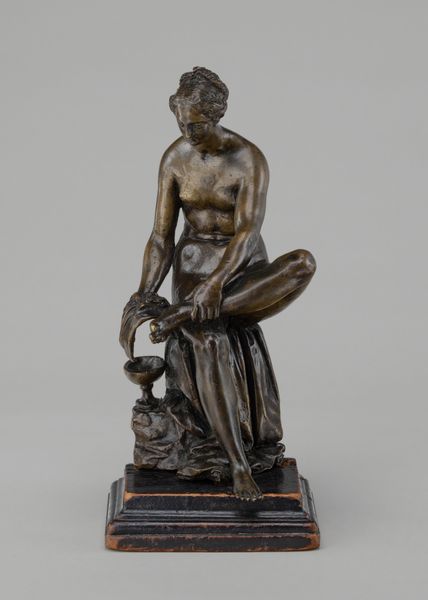
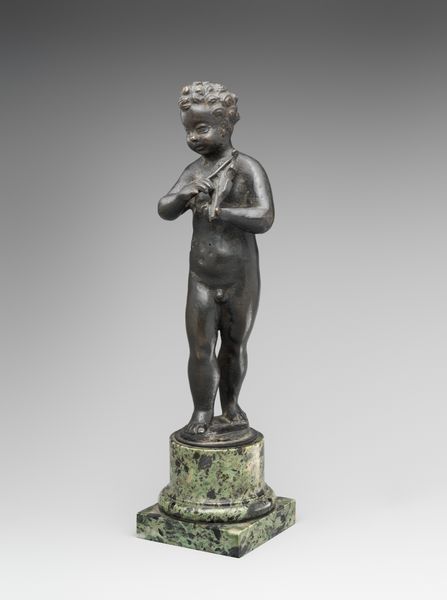
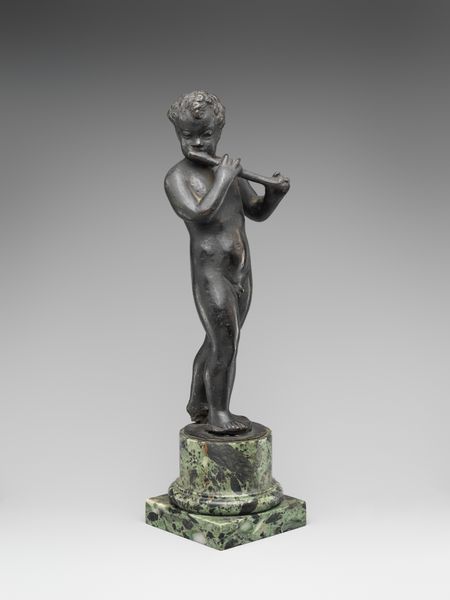
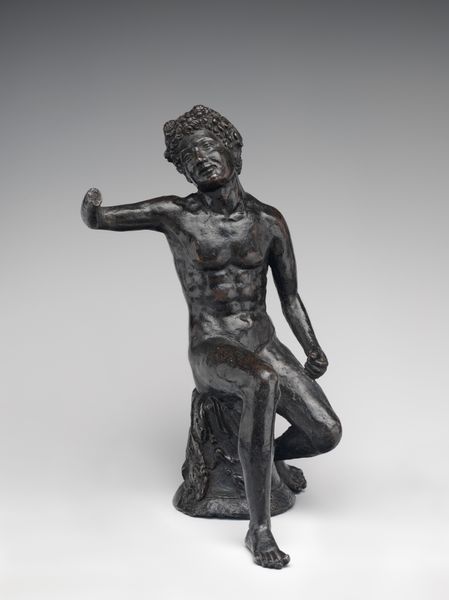
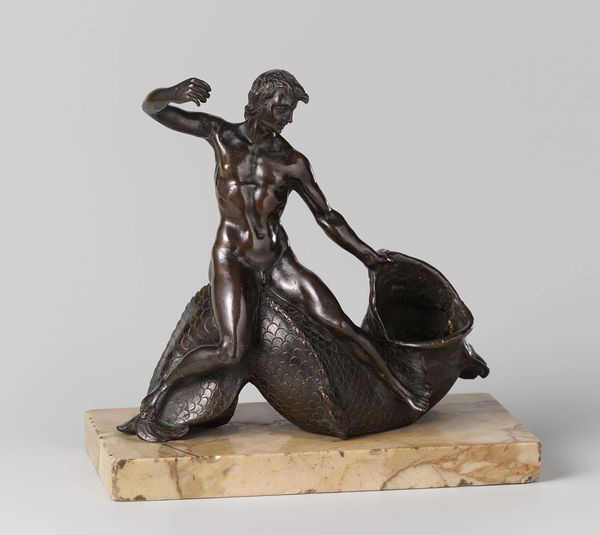
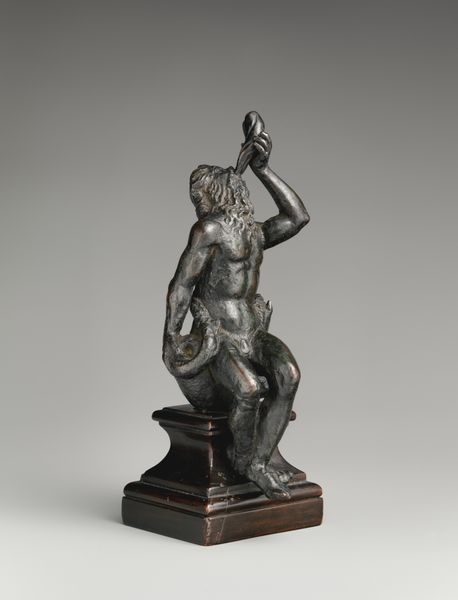
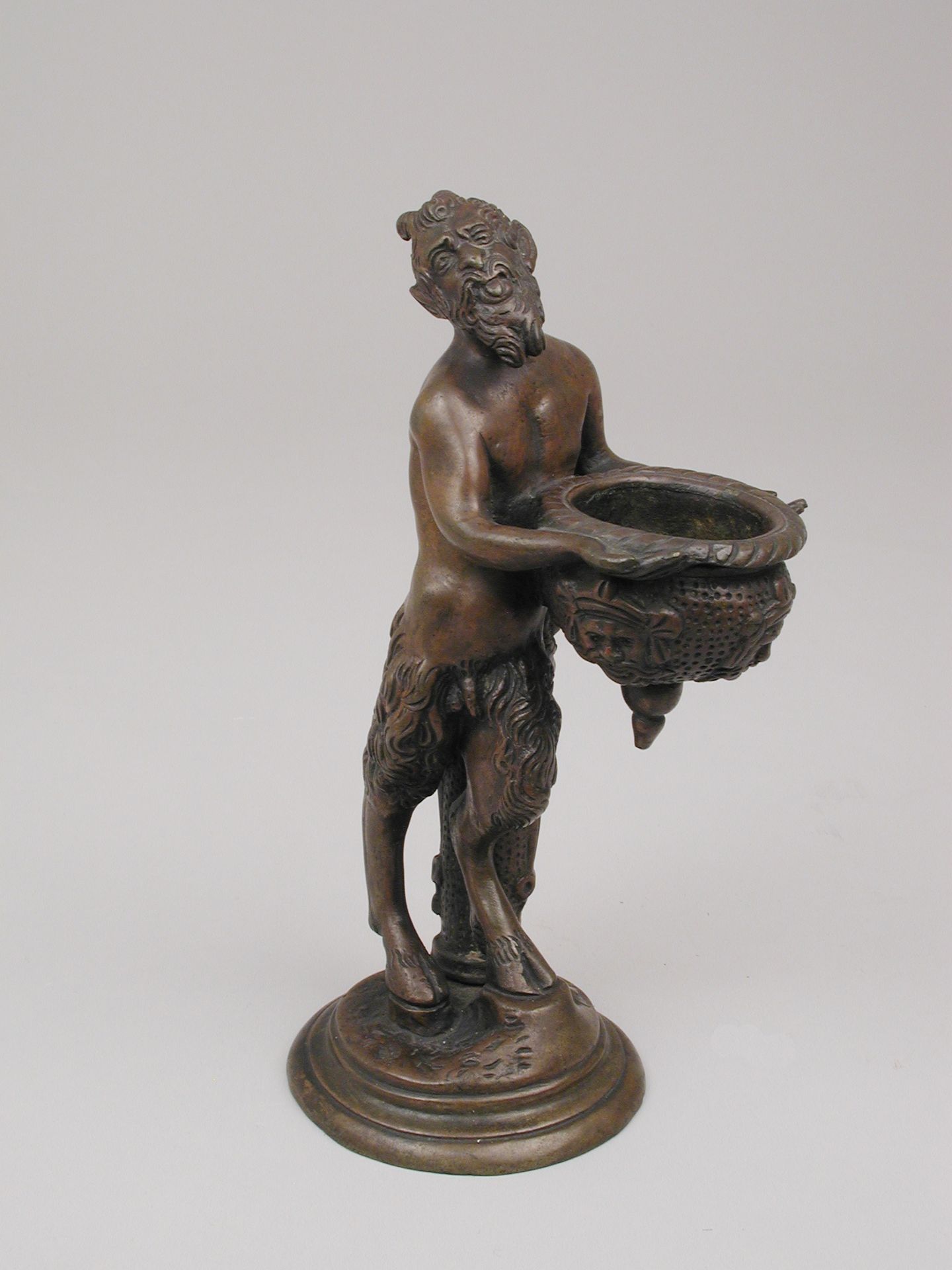
Andrea Briosco, or Riccio, created this bronze sculpture of a Satyr Holding a Vessel in Italy, sometime around the late 15th or early 16th century. The figure of the satyr, a creature from classical mythology, was a popular motif during the Renaissance, embodying a fascination with ancient Greek and Roman culture. But it also stood for something more ambivalent. Satyrs represented untamed nature, instinct, and the rejection of social norms. Here, the satyr's role as a vessel-bearer is intriguing. Is he offering something, or begging? During this period, the Medici family in Florence actively collected and displayed classical art, contributing to its revival and influencing artistic tastes. Works like this one reflect not just individual artistic talent, but the values of powerful patrons and the broader cultural currents of their time. Understanding the social and institutional context enriches our appreciation of art, providing insights into the historical forces that shaped its creation and meaning. Examining archival documents, letters, and other historical records can further illuminate the circumstances surrounding Riccio's work.
Satyr Holding a Vessel
1600 - 1615

Andrea Briosco, called Riccio
1470 - 1532
The Metropolitan Museum of Art
Metropolitan Museum of Art, New York, NYArtwork details
- Medium
- bronze, sculpture
- Dimensions
- Height: 7 9/16 in. (19.2 cm)
- Location
- Metropolitan Museum of Art, New York, NY
- Copyright
- Public Domain
Tags
sculpture
bronze
mannerism
figuration
sculpture
decorative-art
Comments
Be the first to share your thoughts about this work.
About this artwork
Andrea Briosco, or Riccio, created this bronze sculpture of a Satyr Holding a Vessel in Italy, sometime around the late 15th or early 16th century. The figure of the satyr, a creature from classical mythology, was a popular motif during the Renaissance, embodying a fascination with ancient Greek and Roman culture. But it also stood for something more ambivalent. Satyrs represented untamed nature, instinct, and the rejection of social norms. Here, the satyr's role as a vessel-bearer is intriguing. Is he offering something, or begging? During this period, the Medici family in Florence actively collected and displayed classical art, contributing to its revival and influencing artistic tastes. Works like this one reflect not just individual artistic talent, but the values of powerful patrons and the broader cultural currents of their time. Understanding the social and institutional context enriches our appreciation of art, providing insights into the historical forces that shaped its creation and meaning. Examining archival documents, letters, and other historical records can further illuminate the circumstances surrounding Riccio's work.
Comments
Be the first to share your thoughts about this work.