About this artwork
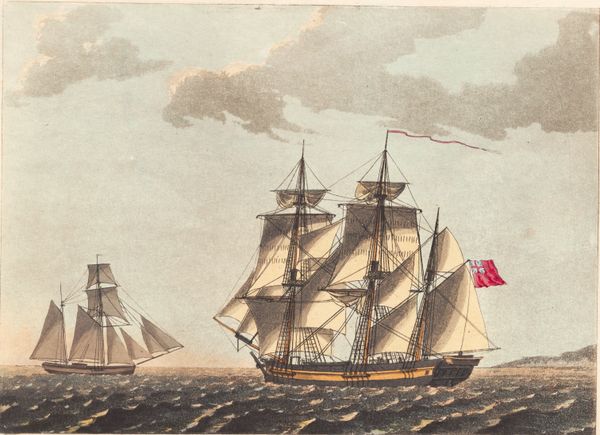
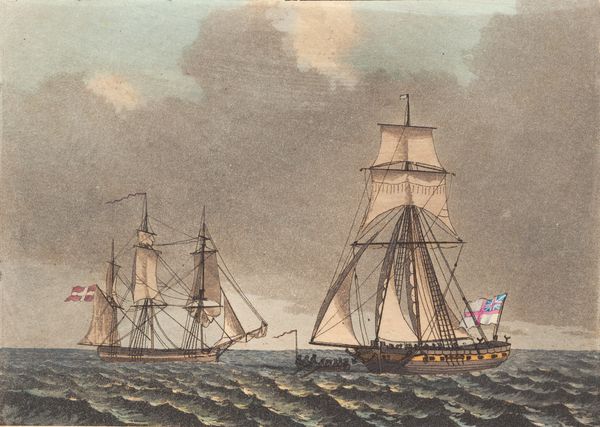
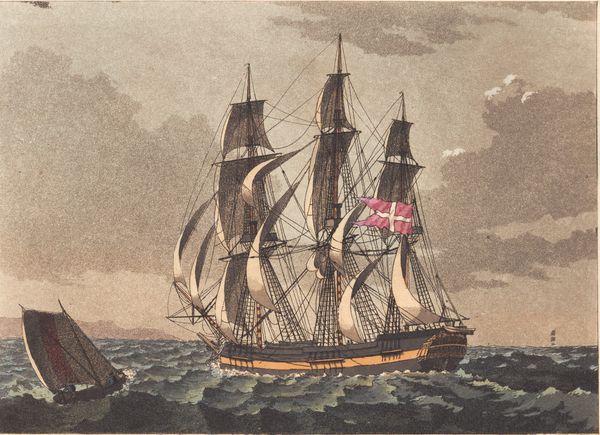
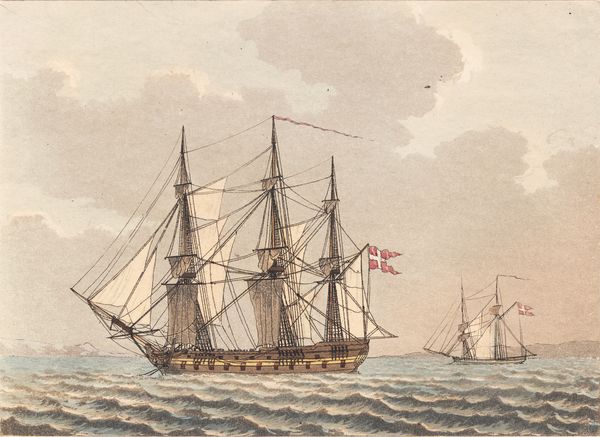
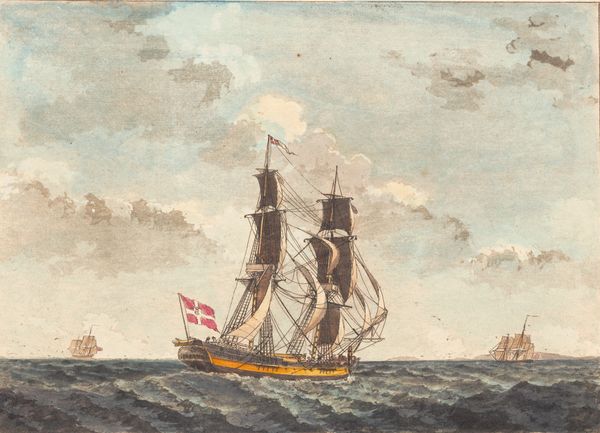
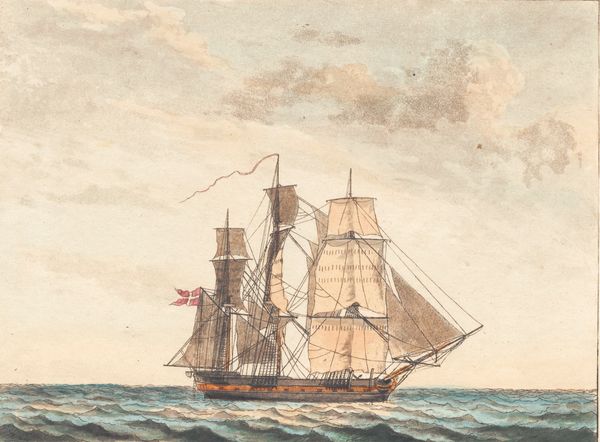
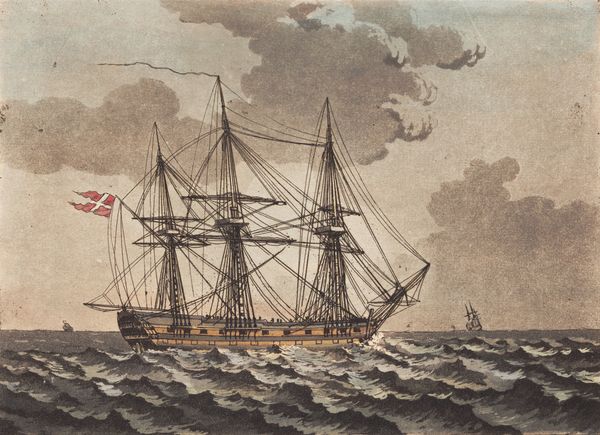
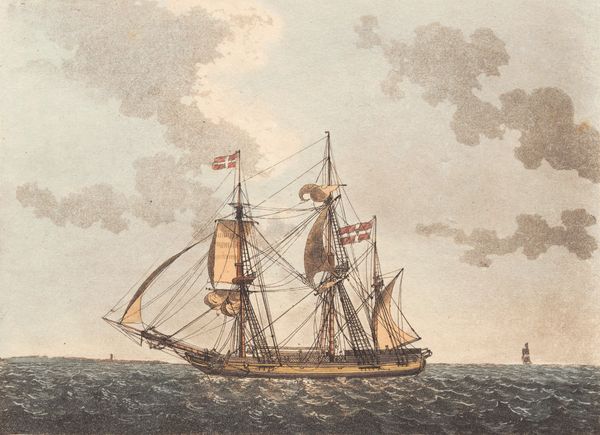
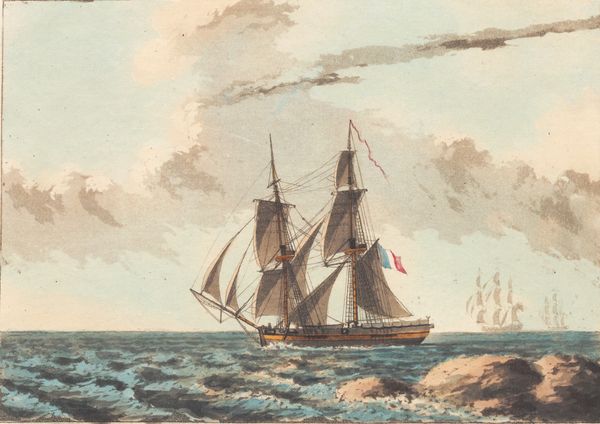
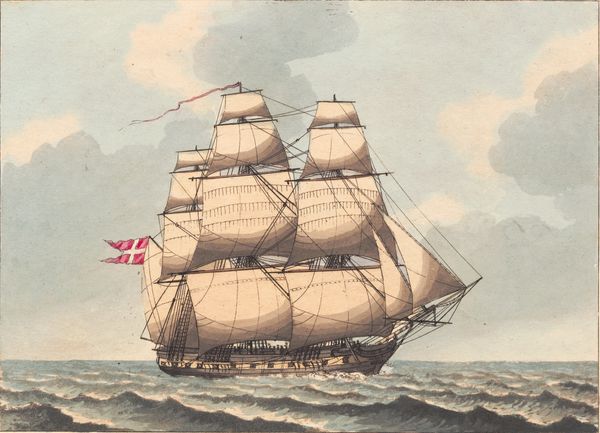
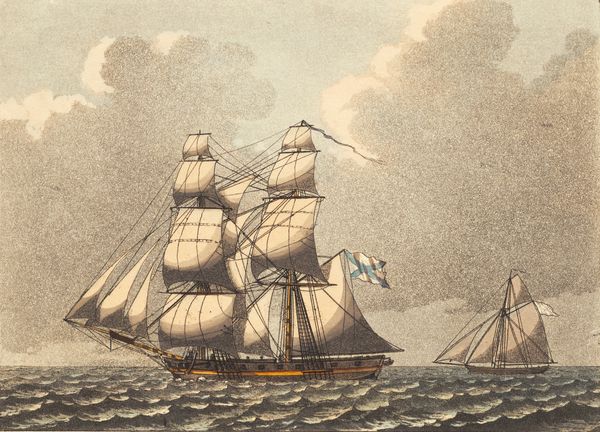
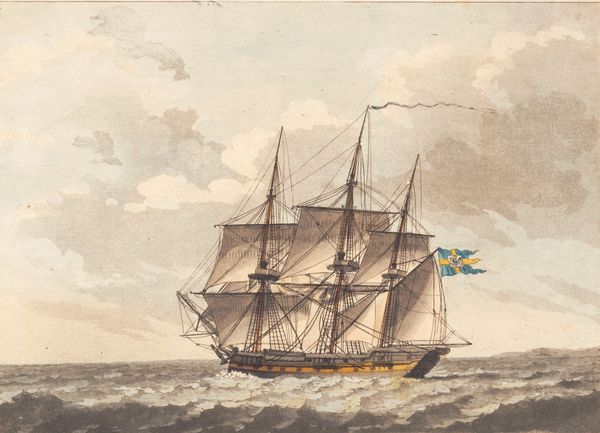
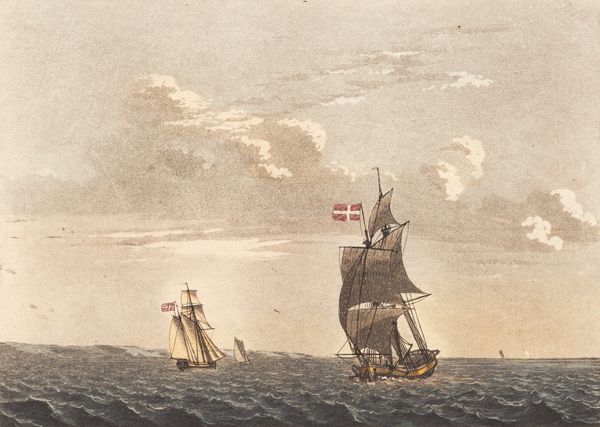
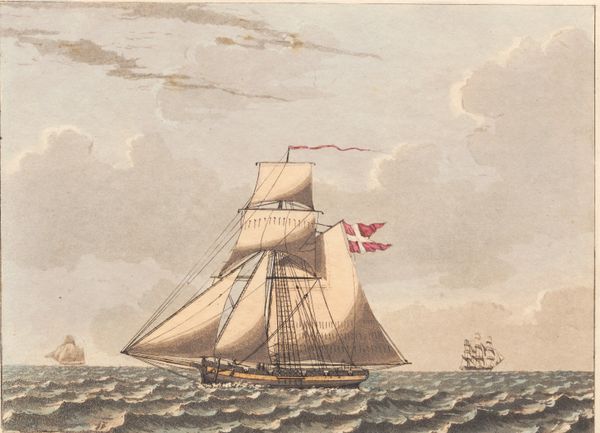
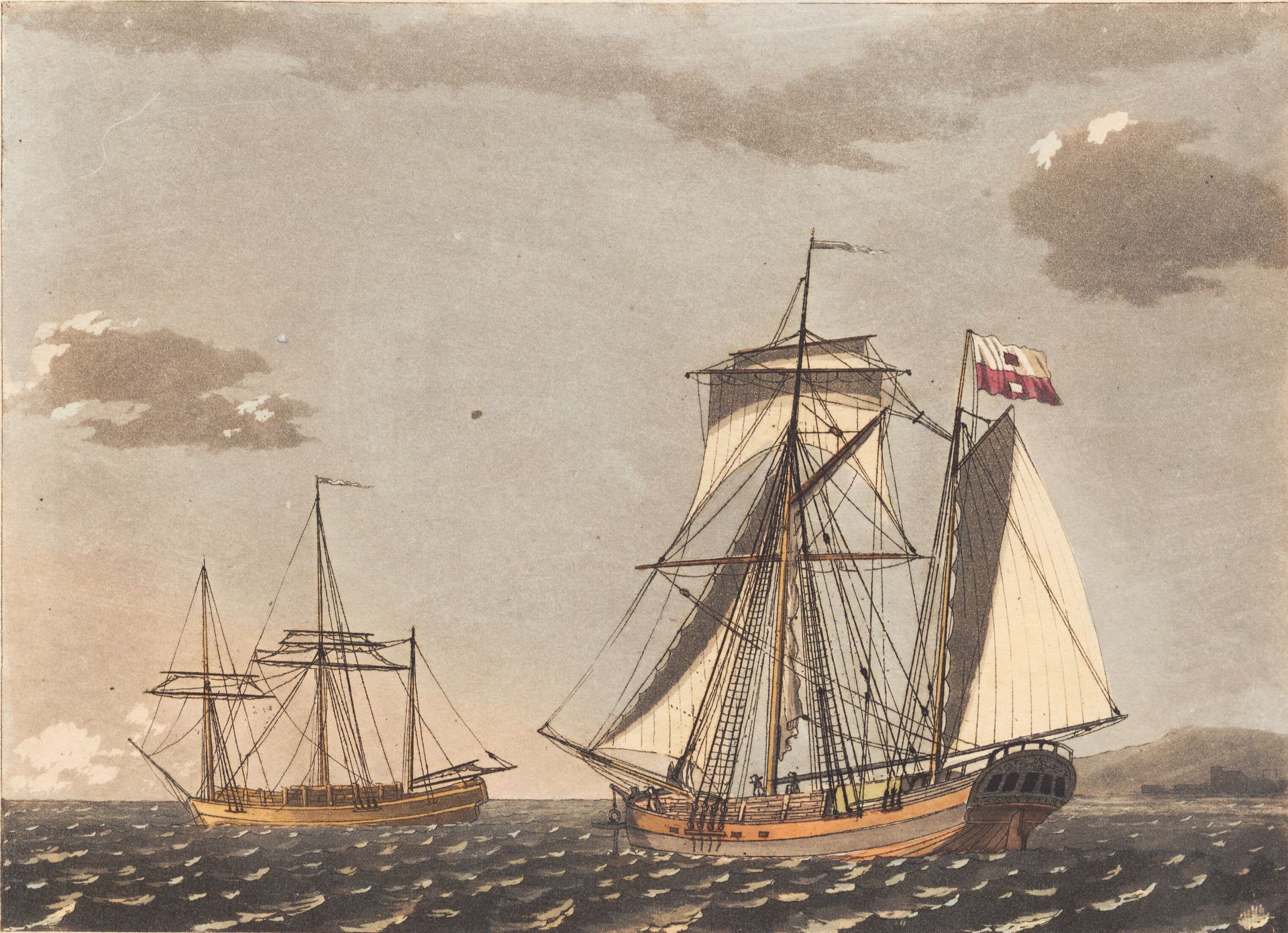
Niels Truslew created this watercolor and etching print of two ships around the late 18th to early 19th century. The composition is neatly divided: two ships cut through the water, while above them, a muted sky fills the remaining space. The color scheme is restrained, dominated by earth tones and pale blues, creating a serene, almost melancholic atmosphere. The ships are rendered with careful attention to detail, their forms defined by a network of lines that articulate masts and sails. Truslew's technique emphasizes clarity and order, typical of the Enlightenment's focus on reason. The image is more than a simple depiction; it is a structured representation of maritime life. We might consider how the orderly arrangement of the ships mirrors the era’s broader cultural values. This etching invites us to consider how art in the Age of Reason used formalism to convey ideas of order and structure in a rapidly changing world.
En frilapper skude til ankers og en stettiner galease som vil ankre
1805


Artwork details
- Medium
- aquatint, print, watercolor
- Dimensions
- 192 mm (height) x 236 mm (width) (bladmaal), 163 mm (height) x 218 mm (width) (Plademål), 143 mm (height) x 199 mm (width) (billedmaal)
- Location
- SMK - Statens Museum for Kunst
Tags
Comments
Share your thoughts
About this artwork
Niels Truslew created this watercolor and etching print of two ships around the late 18th to early 19th century. The composition is neatly divided: two ships cut through the water, while above them, a muted sky fills the remaining space. The color scheme is restrained, dominated by earth tones and pale blues, creating a serene, almost melancholic atmosphere. The ships are rendered with careful attention to detail, their forms defined by a network of lines that articulate masts and sails. Truslew's technique emphasizes clarity and order, typical of the Enlightenment's focus on reason. The image is more than a simple depiction; it is a structured representation of maritime life. We might consider how the orderly arrangement of the ships mirrors the era’s broader cultural values. This etching invites us to consider how art in the Age of Reason used formalism to convey ideas of order and structure in a rapidly changing world.
Comments
Share your thoughts