About this artwork
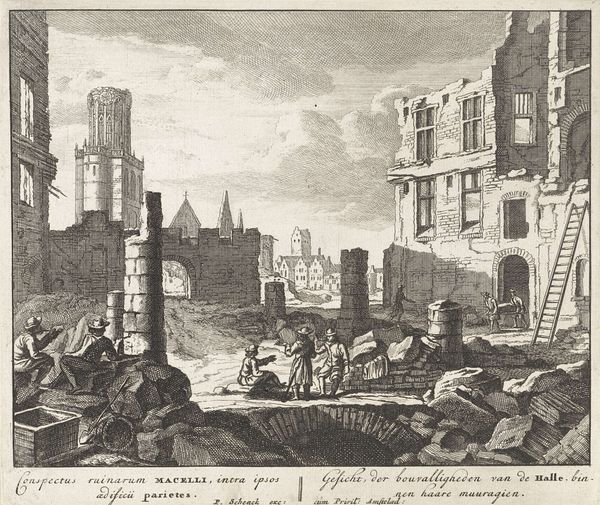
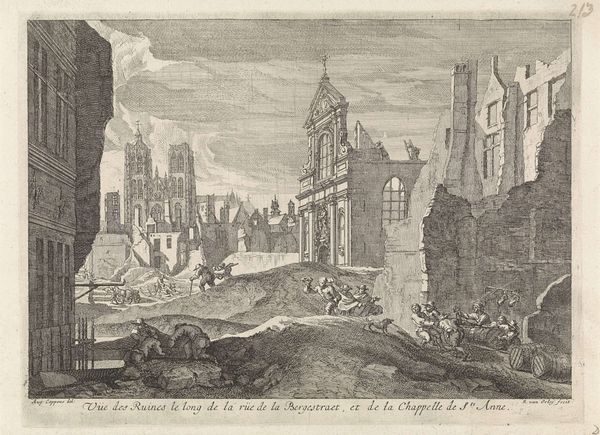
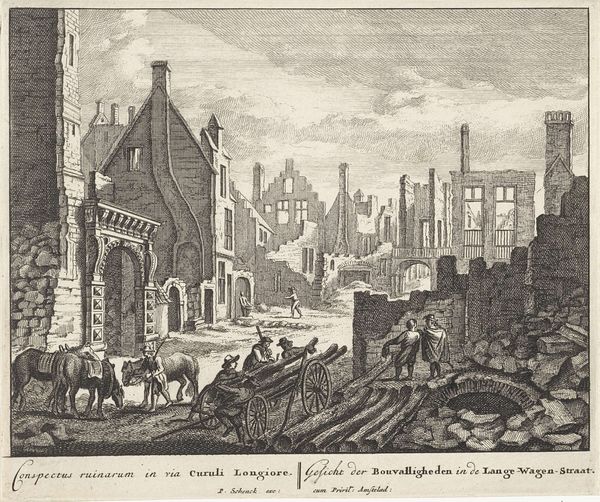
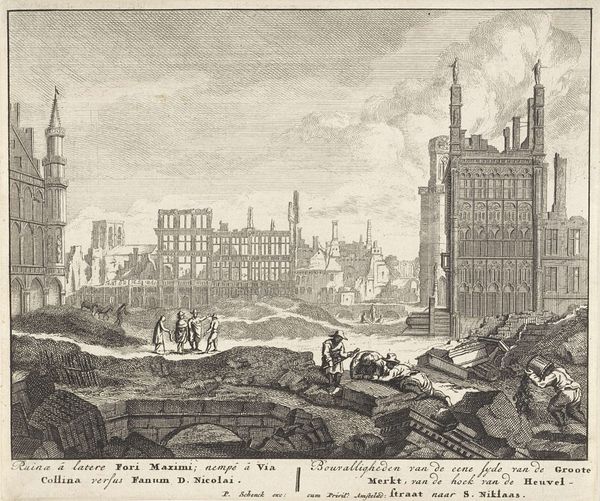
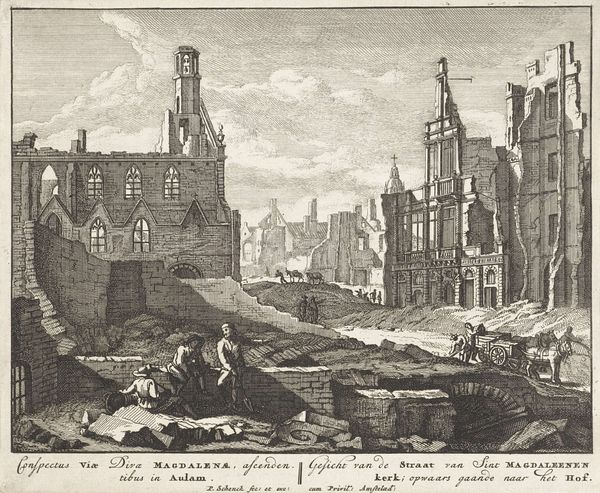
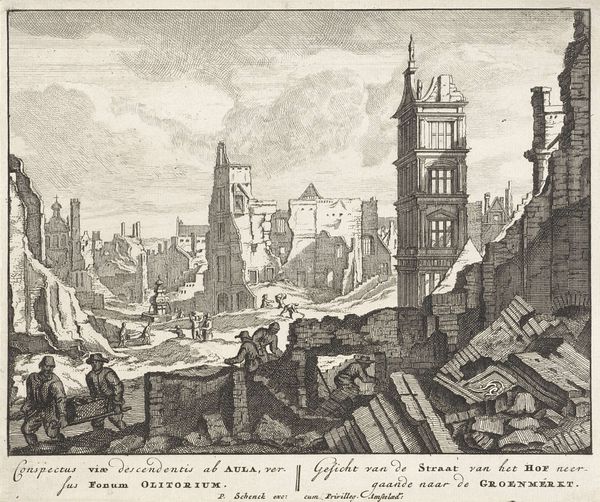
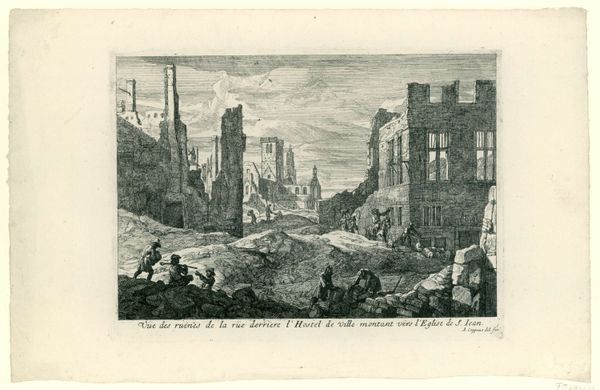
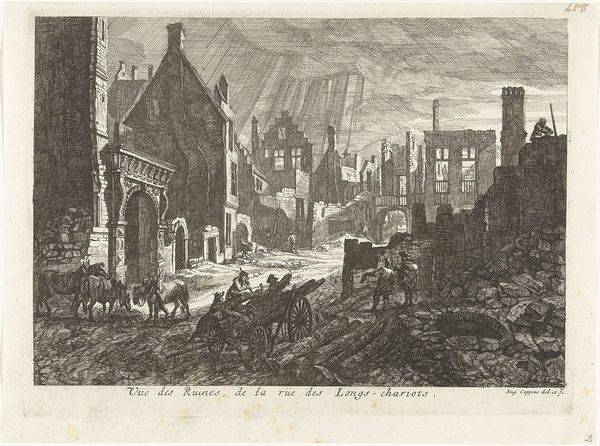
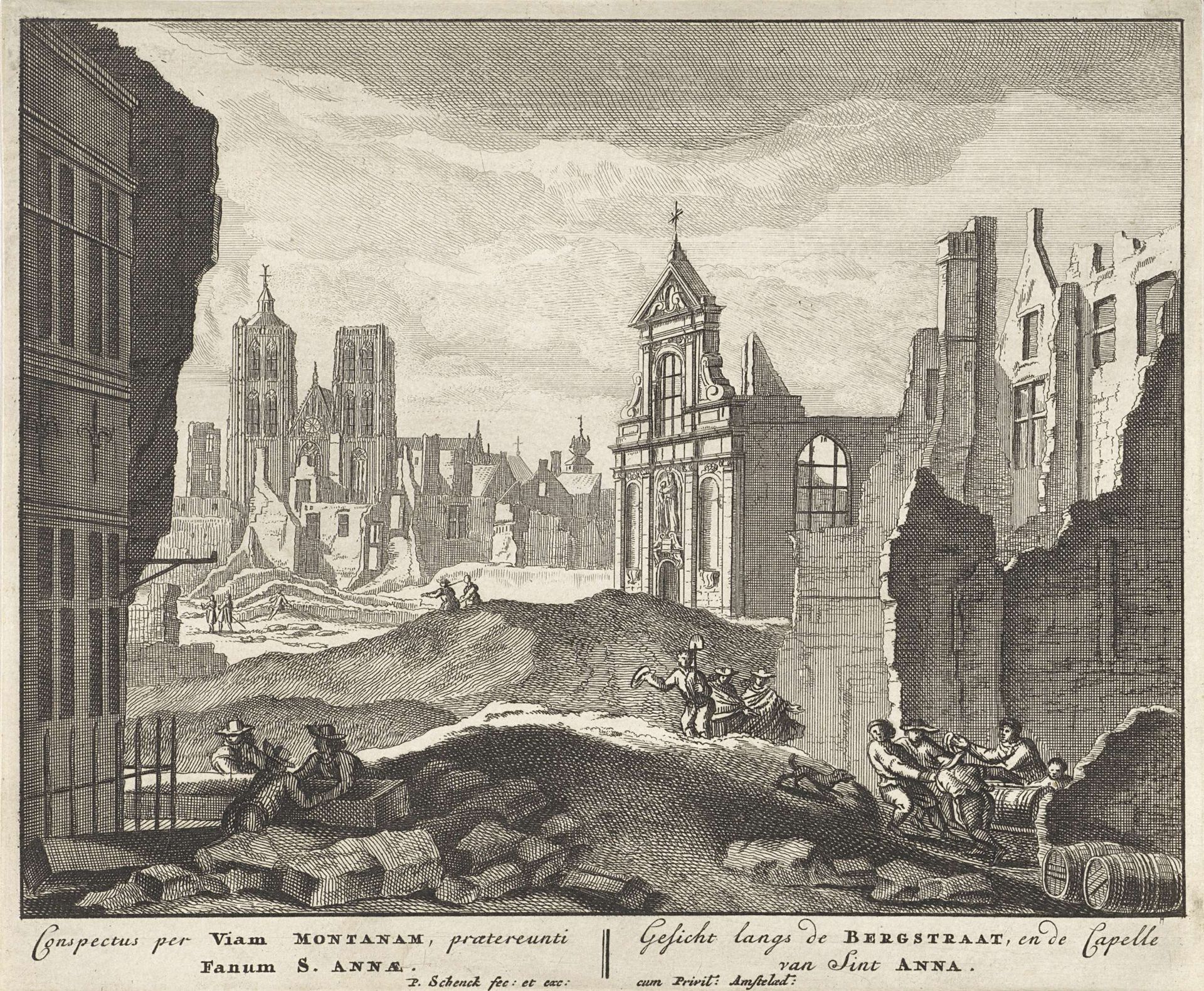
This etching, Ruïnes in de Bergstraat te Brussel, was created in 1695 by Pieter Schenk. It captures the ruins in Bergstraat, Brussels, after the bombardment by the French army. Schenk’s work brings us face to face with the ravages of war, but also with the resilience and determination of the people depicted. We see figures amidst the ruins, going about their work, clearing debris, and perhaps salvaging what they can. These anonymous laborers invite reflection on the lives of ordinary people caught in the crossfires of political conflict. Who were these individuals? How did they experience this devastation, and what did it mean for their futures? By focusing on the ruins of a chapel, Schenk subtly directs our attention to questions of faith, loss, and the enduring human spirit. The scene invites you to reflect on the social fabric of Brussels, and how the shared experience of trauma might forge new bonds of solidarity.
Ruïnes in de Bergstraat te Brussel, 1695
1695 - 1711

Pieter Schenk
1660 - 1711Location
RijksmuseumArtwork details
- Medium
- print, etching, engraving
- Dimensions
- height 165 mm, width 200 mm
- Location
- Rijksmuseum
- Copyright
- Rijks Museum: Open Domain
Tags
Comments
Share your thoughts
About this artwork
This etching, Ruïnes in de Bergstraat te Brussel, was created in 1695 by Pieter Schenk. It captures the ruins in Bergstraat, Brussels, after the bombardment by the French army. Schenk’s work brings us face to face with the ravages of war, but also with the resilience and determination of the people depicted. We see figures amidst the ruins, going about their work, clearing debris, and perhaps salvaging what they can. These anonymous laborers invite reflection on the lives of ordinary people caught in the crossfires of political conflict. Who were these individuals? How did they experience this devastation, and what did it mean for their futures? By focusing on the ruins of a chapel, Schenk subtly directs our attention to questions of faith, loss, and the enduring human spirit. The scene invites you to reflect on the social fabric of Brussels, and how the shared experience of trauma might forge new bonds of solidarity.
Comments
Share your thoughts