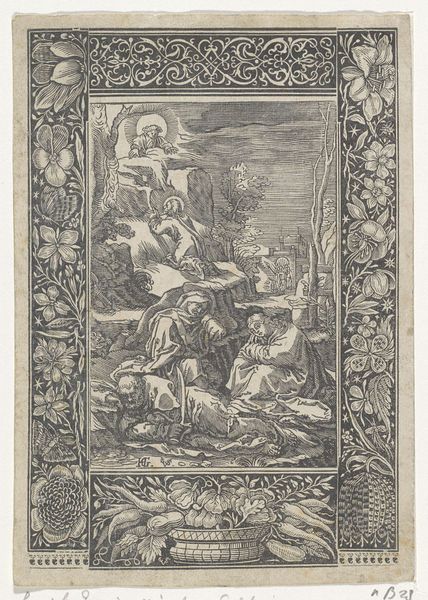
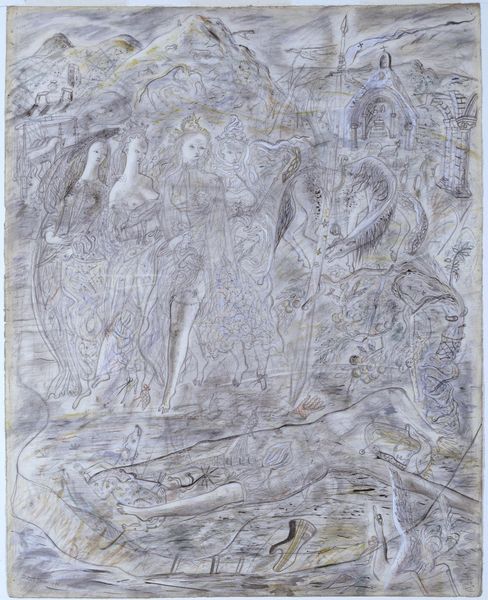
Thisbe an der Leiche des Pyramus, in der Rahmung links Daphne mit dem Amorknaben, rechts Apollo, vom Pfeile Amors getroffen, oben und unten Putten


drawing, gouache, paper, ink, indian-ink, engraving
drawing
gouache
paper
11_renaissance
ink
cupid
swiss
indian-ink
13_16th-century
history-painting
engraving
Copyright: Public Domain
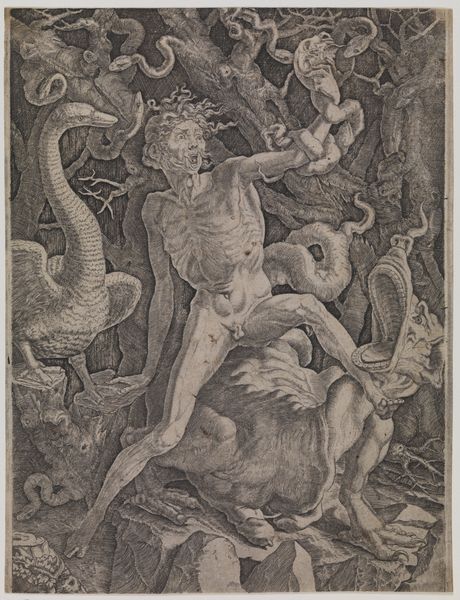
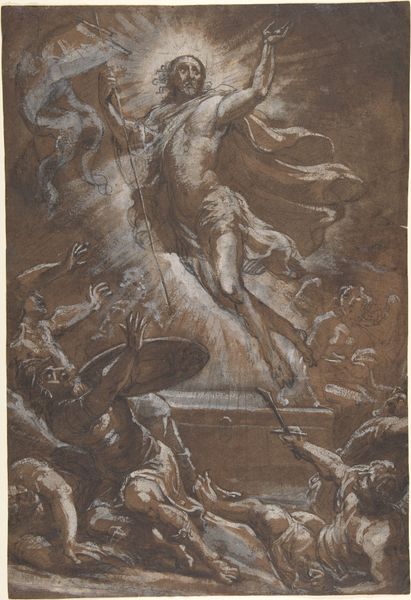
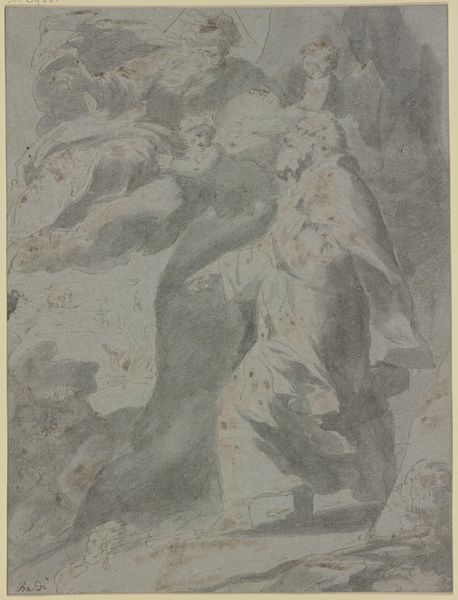
This is "Thisbe an der Leiche des Pyramus" by Christoph Murer, an intriguing artwork crafted with pen and brush in blue ink and heightened with white. The composition of the bodies is striking, set against a decorative frame of putti and classical figures. Note how the monochromatic palette flattens the depth of the narrative scene, pushing the drama forward. The artist plays with light and shadow, creating a theatrical effect. The bodies almost seem to leap from the stone block on which they are positioned. Murer’s technique echoes Mannerist sensibilities, where artifice and emotion reign. The narrative, framed within classical motifs, invites a semiotic reading. The figures of Daphne and Apollo, struck by Cupid's arrow, serve as commentaries on love's transformative power and destructive force. Consider the dynamic arrangement, it underscores the story's tension. The piece destabilizes the boundaries between decoration and narrative, challenging our understanding of form. It invites us to decode its complex structure and layers of meaning.
Comments
No comments
Be the first to comment and join the conversation on the ultimate creative platform.
 React
React Comment