About this artwork
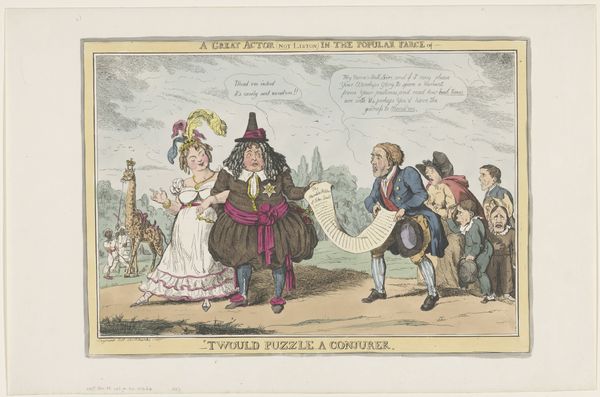
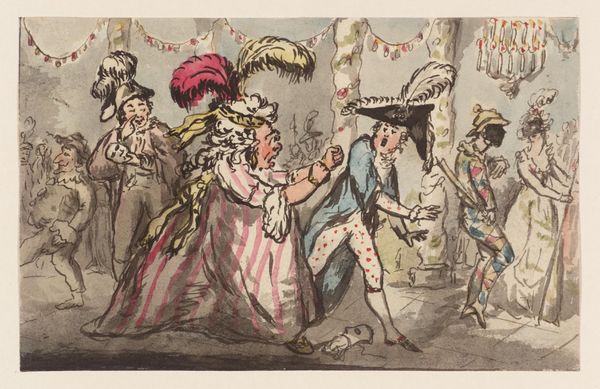
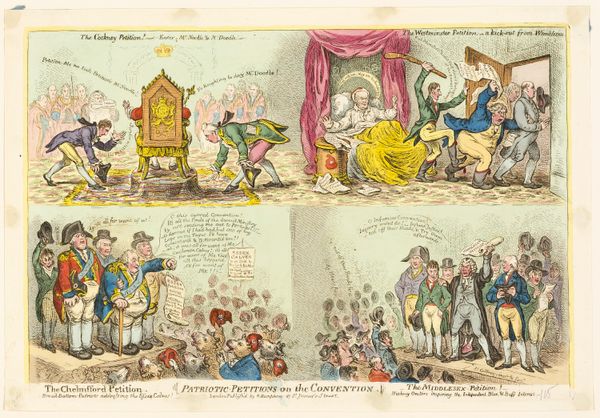
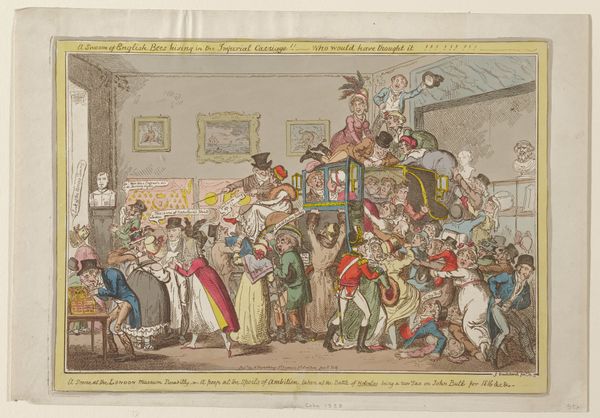
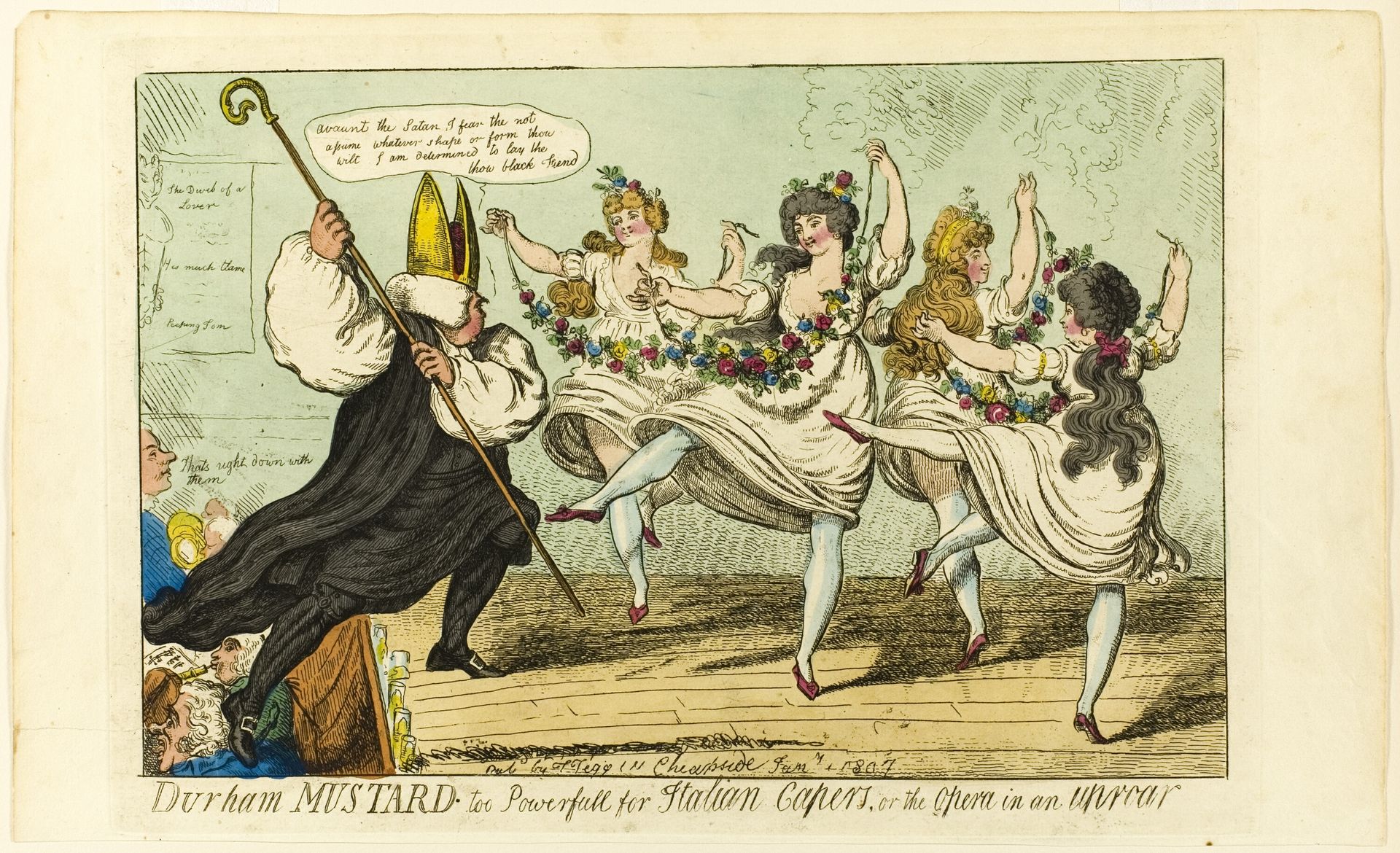
Isaac Cruikshank made this hand-colored etching in 1807; its satirical title reads, "Durham Mustard Too Powerfull for Italian Capers; or, the Opera in an Uproar." This print lampoons the cultural landscape of early 19th century Britain. On one side, we see the Bishop of Durham, a symbol of the established Church of England. He’s often seen as a conservative force in society. On the other side, there are Italian opera dancers, representing foreign artistic trends gaining popularity among the British elite. Cruikshank plays on the social tensions of the time. The opera was seen as an import that threatened traditional British values and arts. The Bishop's presence suggests a clash between British tradition and the perceived decadence of Italian opera. The print uses stereotypes and caricatures, reflecting xenophobia toward foreign influences. By studying sources like newspapers, playbills, and social commentaries from the period, we can better understand the cultural anxieties that Cruikshank was tapping into, and the social norms he was challenging.
Durham Mustard Too Powerfull for Italian Capers
1807


Artwork details
- Medium
- drawing, print, etching, paper
- Dimensions
- 220 × 335 mm (image); 247 × 350 mm (plate); 255 × 425 mm (sheet)
- Location
- The Art Institute of Chicago
- Copyright
- Public Domain
Tags
drawing
toned paper
etching
traditional media
cartoon sketch
paper
personal sketchbook
illustrative and welcoming imagery
england
sketchbook drawing
watercolour illustration
storyboard and sketchbook work
cartoon carciture
sketchbook art
Comments
Be the first to share your thoughts about this work.
About this artwork
Isaac Cruikshank made this hand-colored etching in 1807; its satirical title reads, "Durham Mustard Too Powerfull for Italian Capers; or, the Opera in an Uproar." This print lampoons the cultural landscape of early 19th century Britain. On one side, we see the Bishop of Durham, a symbol of the established Church of England. He’s often seen as a conservative force in society. On the other side, there are Italian opera dancers, representing foreign artistic trends gaining popularity among the British elite. Cruikshank plays on the social tensions of the time. The opera was seen as an import that threatened traditional British values and arts. The Bishop's presence suggests a clash between British tradition and the perceived decadence of Italian opera. The print uses stereotypes and caricatures, reflecting xenophobia toward foreign influences. By studying sources like newspapers, playbills, and social commentaries from the period, we can better understand the cultural anxieties that Cruikshank was tapping into, and the social norms he was challenging.
Comments
Be the first to share your thoughts about this work.