About this artwork
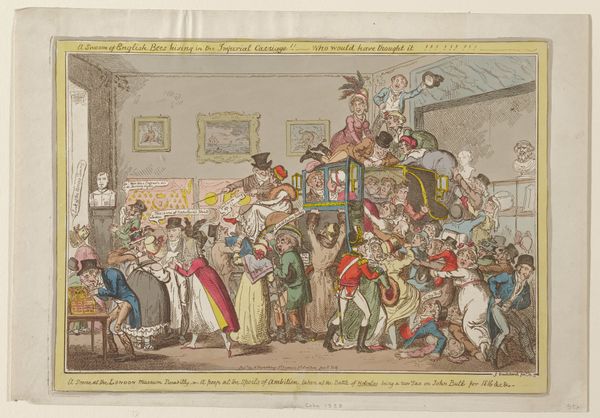
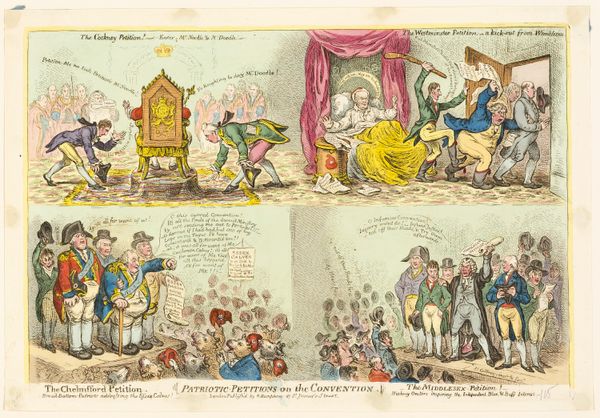
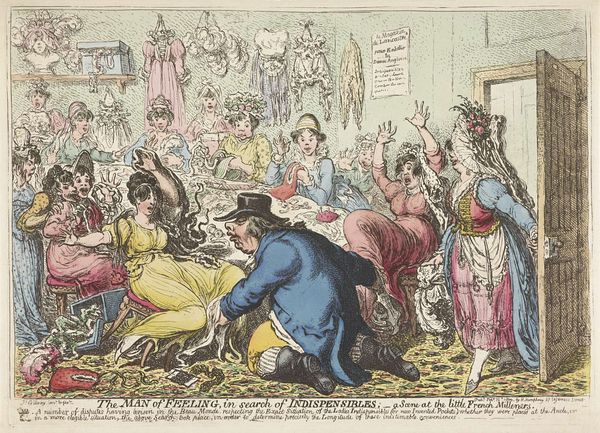
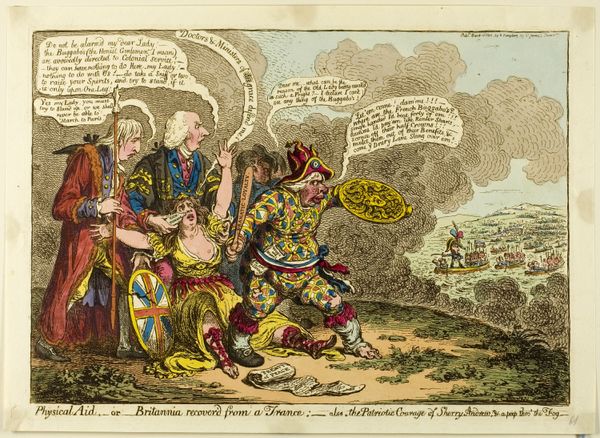
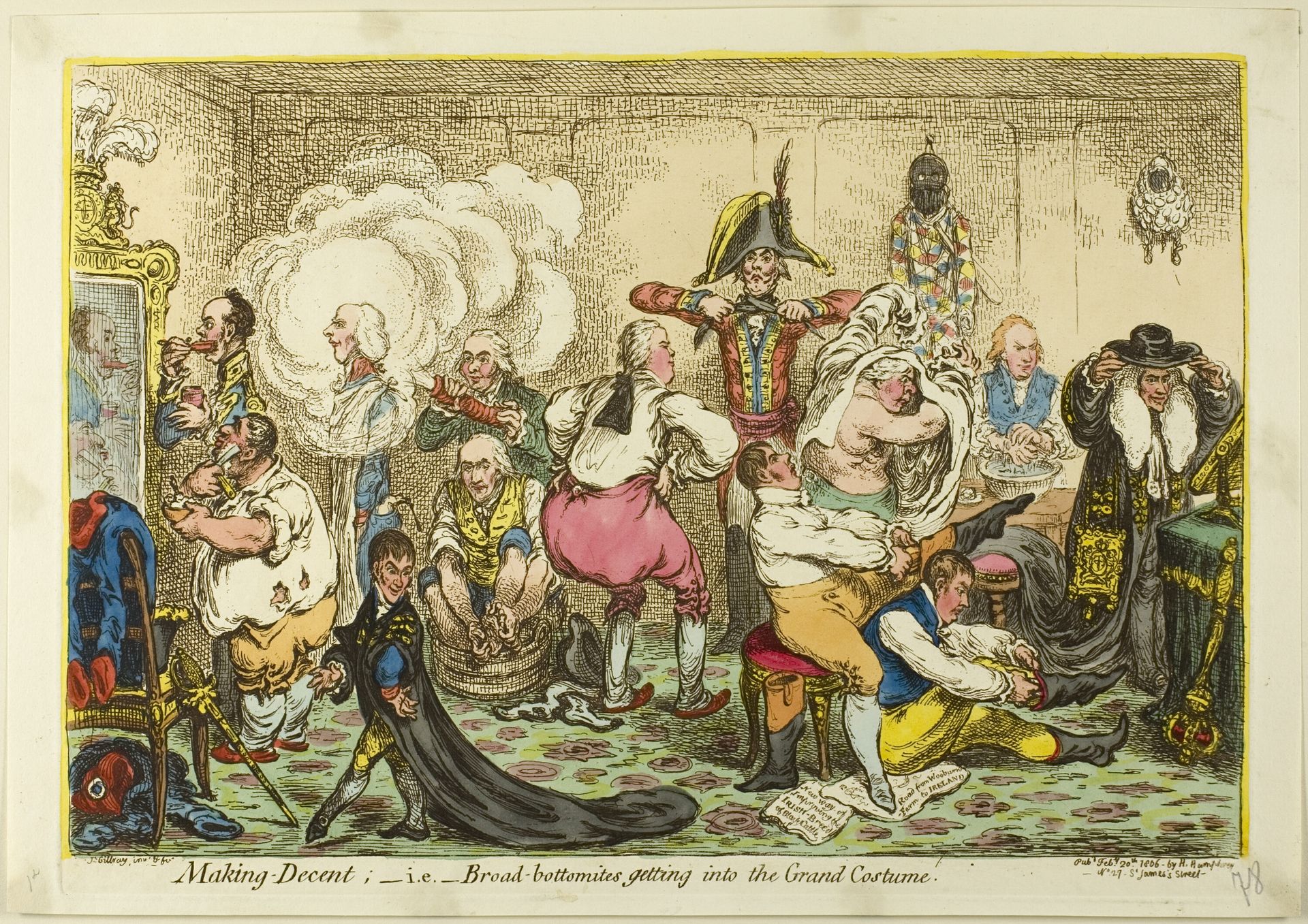
James Gillray created this hand-colored etching in England, likely in 1806. The print satirizes the Whig party's attempt to form a coalition government, which the artist ridicules as a farcical effort to appear dignified. Gillray uses caricature to mock the politicians. The exaggerated physical features and chaotic scene suggest incompetence and corruption. The title, "Making Decent," is ironic, highlighting the perceived hypocrisy of the "Broad-Bottomites." The print references the political climate of early 19th-century Britain, a period marked by shifting alliances and public distrust of politicians. Gillray's work reflects the growing power of the press and its role in shaping public opinion. Political prints like this one were widely circulated and debated, reflecting the era’s vibrant culture of political engagement. By consulting period newspapers, pamphlets, and personal papers, we can reconstruct the contexts of the print, and better understand the ongoing dialogue between political actors, popular opinion, and visual representation.
Making Decent; i.e. Broad-Bottomites Getting into the Grand Costume
Possibly 1806


Artwork details
- Medium
- drawing, print, etching, paper
- Dimensions
- 231 × 342 mm (image); 245 × 350 mm (plate); 275 × 388 mm (sheet)
- Location
- The Art Institute of Chicago
- Copyright
- Public Domain
Tags
Comments
Share your thoughts
About this artwork
James Gillray created this hand-colored etching in England, likely in 1806. The print satirizes the Whig party's attempt to form a coalition government, which the artist ridicules as a farcical effort to appear dignified. Gillray uses caricature to mock the politicians. The exaggerated physical features and chaotic scene suggest incompetence and corruption. The title, "Making Decent," is ironic, highlighting the perceived hypocrisy of the "Broad-Bottomites." The print references the political climate of early 19th-century Britain, a period marked by shifting alliances and public distrust of politicians. Gillray's work reflects the growing power of the press and its role in shaping public opinion. Political prints like this one were widely circulated and debated, reflecting the era’s vibrant culture of political engagement. By consulting period newspapers, pamphlets, and personal papers, we can reconstruct the contexts of the print, and better understand the ongoing dialogue between political actors, popular opinion, and visual representation.
Comments
Share your thoughts