About this artwork
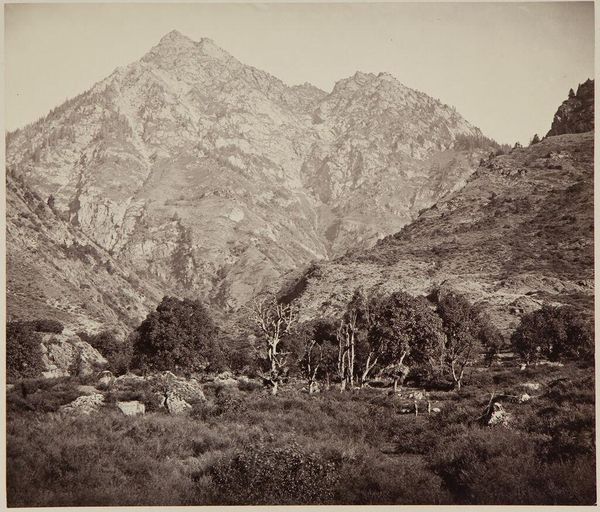
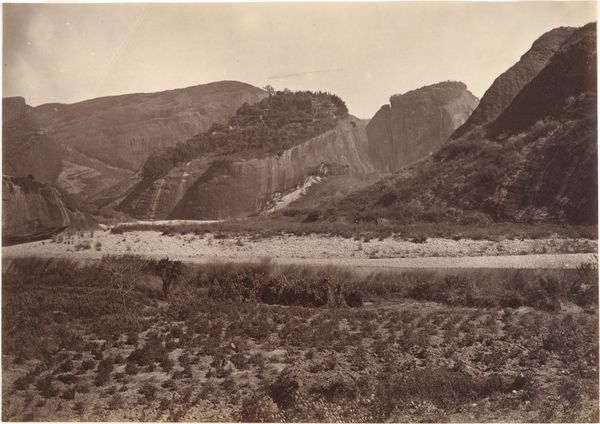
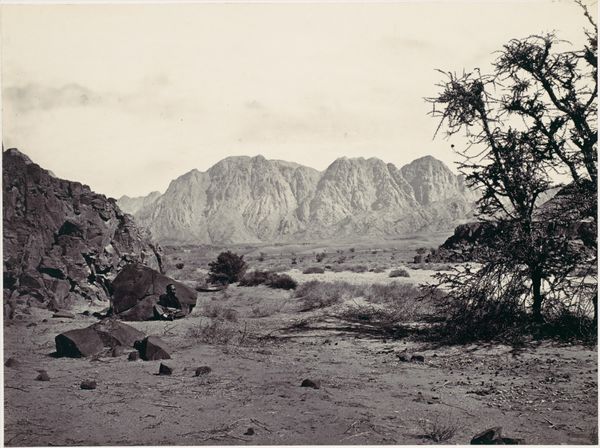
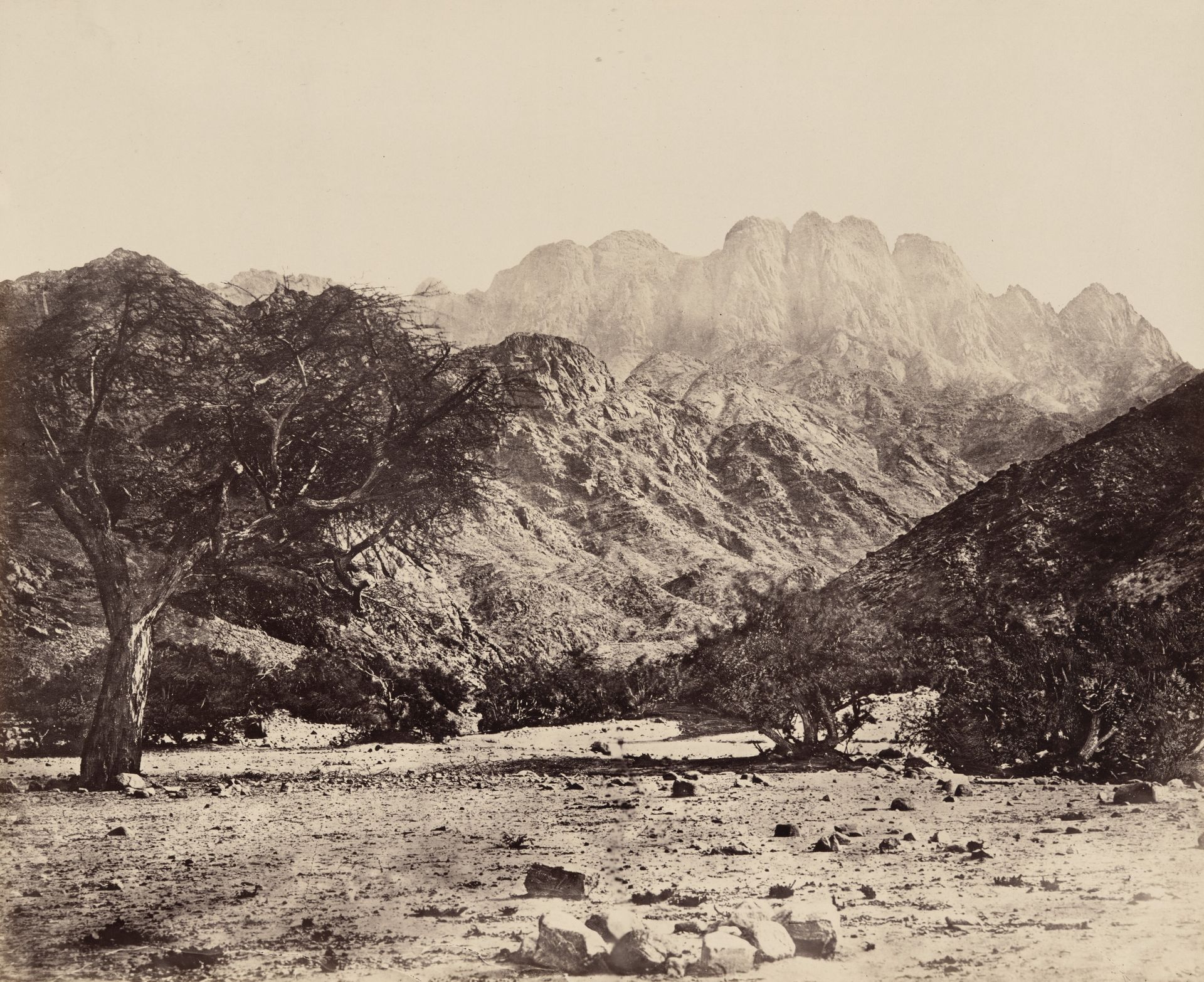
Francis Frith made this albumen silver print titled 'Mount Serbal, from the Wádee Feyrán, Egypt' during his photographic expeditions in the Middle East. Frith, a devout Quaker, embarked on these journeys at a time when the West was increasingly curious about and invested in the East, and in doing so, became one of the first to capture the region on film. The photograph presents a seemingly untouched landscape, yet this image participates in the visual rhetoric of colonialism. The sublime and ‘empty’ landscape served to justify colonial expansion. But there's also a palpable sense of the artist's wonder and respect for the land. Frith’s photographs invited viewers to experience a world both distant and, through the burgeoning technology of photography, intimately accessible. They blur the lines between documentation, artistic interpretation, and the complex politics of representation.
Mount Serbal, from the Wádee Feyrán, Egypt
1858


Artwork details
- Medium
- photography, gelatin-silver-print
- Dimensions
- image: 39.37 × 48.26 cm (15 1/2 × 19 in.) mount: 53.34 × 73 cm (21 × 28 3/4 in.)
- Copyright
- National Gallery of Art: CC0 1.0
Tags
Comments
Share your thoughts
About this artwork
Francis Frith made this albumen silver print titled 'Mount Serbal, from the Wádee Feyrán, Egypt' during his photographic expeditions in the Middle East. Frith, a devout Quaker, embarked on these journeys at a time when the West was increasingly curious about and invested in the East, and in doing so, became one of the first to capture the region on film. The photograph presents a seemingly untouched landscape, yet this image participates in the visual rhetoric of colonialism. The sublime and ‘empty’ landscape served to justify colonial expansion. But there's also a palpable sense of the artist's wonder and respect for the land. Frith’s photographs invited viewers to experience a world both distant and, through the burgeoning technology of photography, intimately accessible. They blur the lines between documentation, artistic interpretation, and the complex politics of representation.
Comments
Share your thoughts