About this artwork
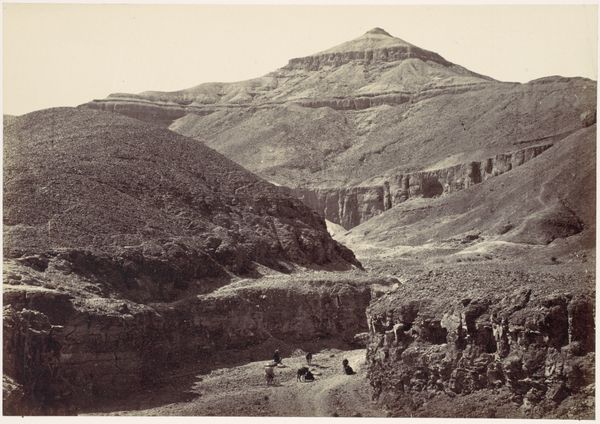
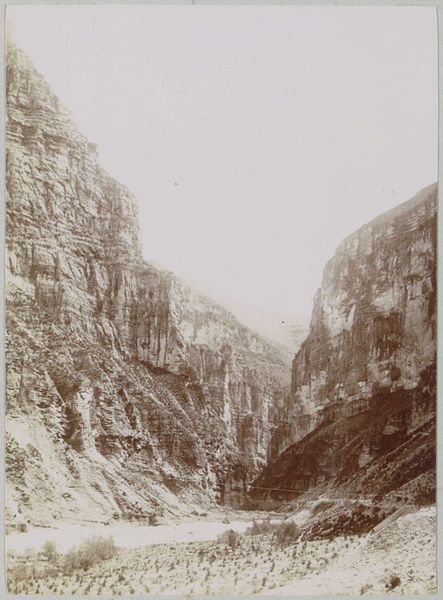
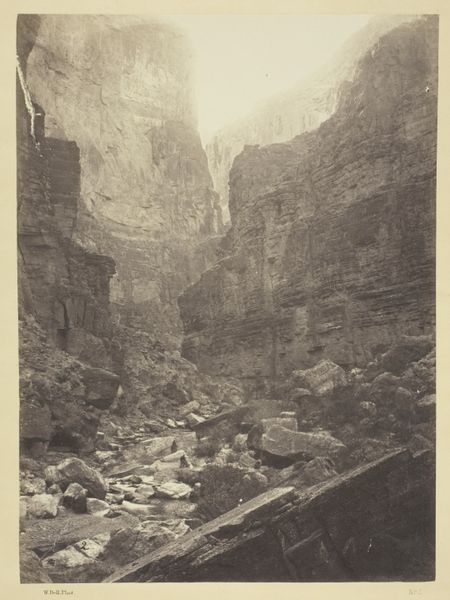
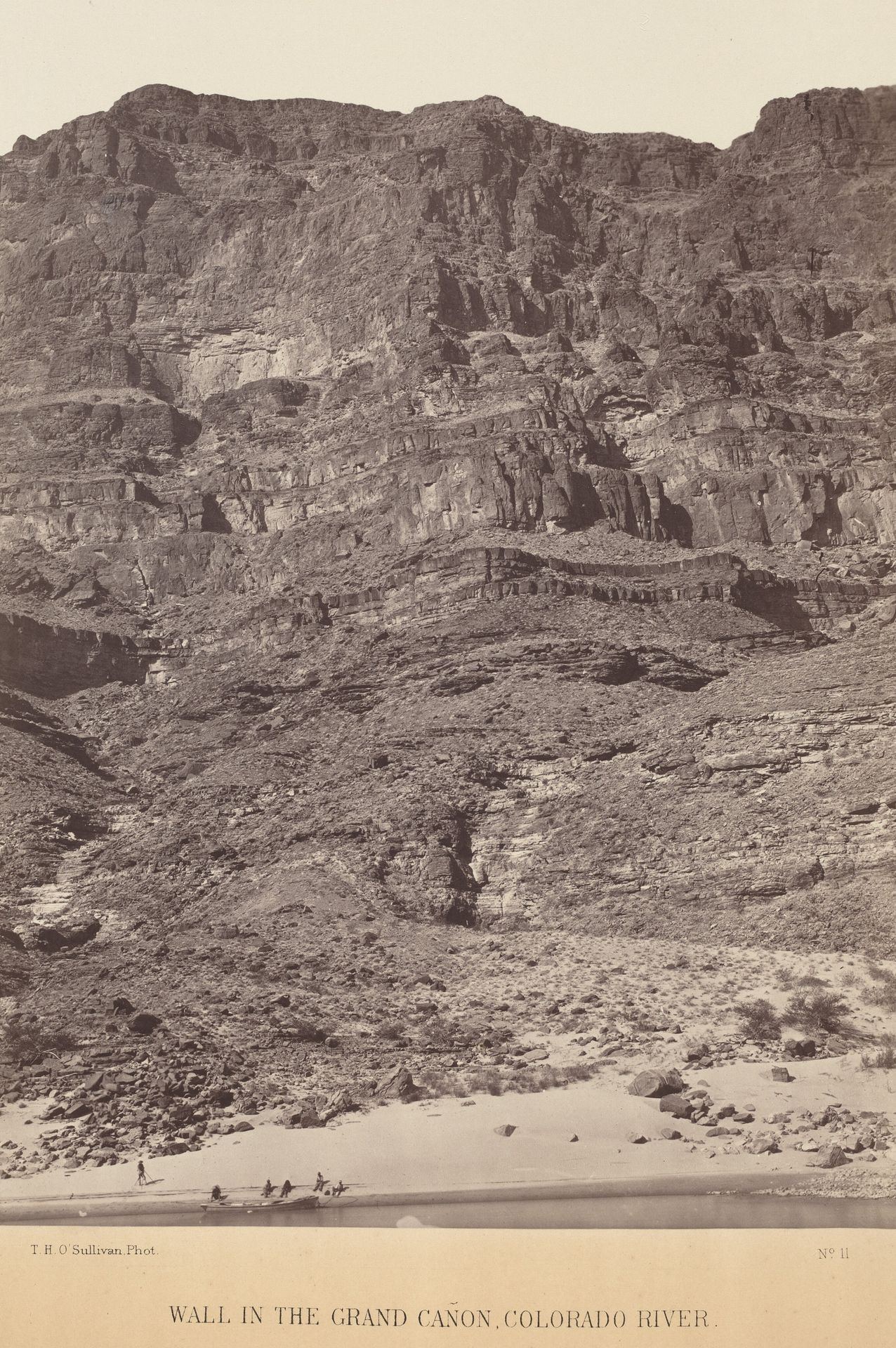
Timothy O'Sullivan made this photograph, "Wall in the Grand Canyon, Colorado River," using a wet plate collodion process. During the 1870s, the American West became a subject of both scientific interest and popular fascination, and photographs like this played a role in shaping national identity. In particular, this image evokes the aesthetic of the "sublime," a concept admired by artists and intellectuals. Here, the tiny figures in the foreground emphasize the canyon's overwhelming scale. But we should also consider the history of American expansion, as the institutional history of the US Geological Survey is relevant. O'Sullivan worked for the government, documenting the landscape, with an eye for its resources, and, arguably, its potential for exploitation. To understand this photo better, we might look at government documents and scientific reports from the period. As historians, it’s our job to remember that even the most seemingly objective image is shaped by the social and political forces of its time.
Wall in the Grand Canyon, Colorado River
1871


Artwork details
- Medium
- photography, site-specific, gelatin-silver-print
- Dimensions
- image: 27.62 x 20.32 cm (10 7/8 x 8 in.) plate: 35.56 x 28.26 cm (14 x 11 1/8 in.) mount: 50.32 x 40.16 cm (19 13/16 x 15 13/16 in.)
- Copyright
- National Gallery of Art: CC0 1.0
Tags
landscape
photography
site-specific
gelatin-silver-print
hudson-river-school
realism
Comments
Be the first to share your thoughts about this work.
About this artwork
Timothy O'Sullivan made this photograph, "Wall in the Grand Canyon, Colorado River," using a wet plate collodion process. During the 1870s, the American West became a subject of both scientific interest and popular fascination, and photographs like this played a role in shaping national identity. In particular, this image evokes the aesthetic of the "sublime," a concept admired by artists and intellectuals. Here, the tiny figures in the foreground emphasize the canyon's overwhelming scale. But we should also consider the history of American expansion, as the institutional history of the US Geological Survey is relevant. O'Sullivan worked for the government, documenting the landscape, with an eye for its resources, and, arguably, its potential for exploitation. To understand this photo better, we might look at government documents and scientific reports from the period. As historians, it’s our job to remember that even the most seemingly objective image is shaped by the social and political forces of its time.
Comments
Be the first to share your thoughts about this work.