About this artwork
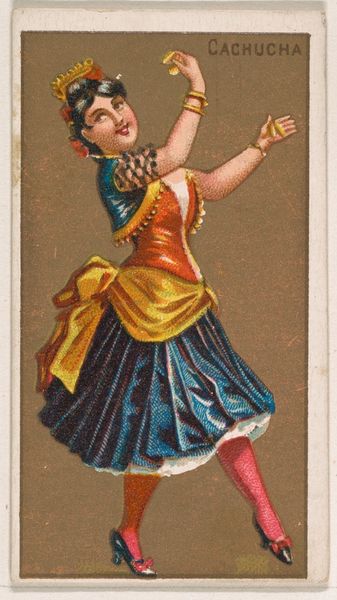
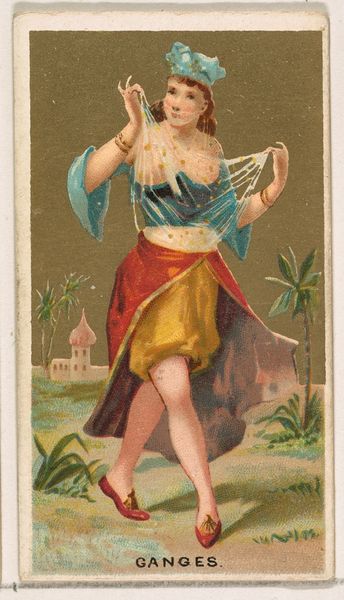
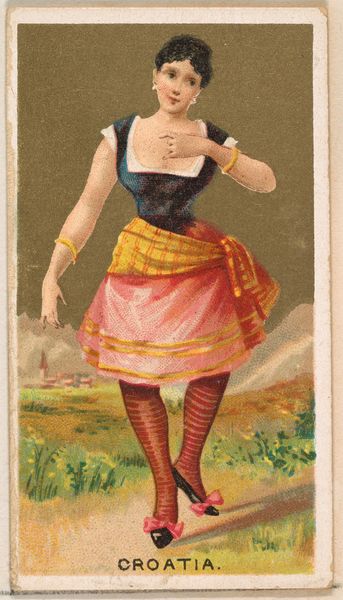
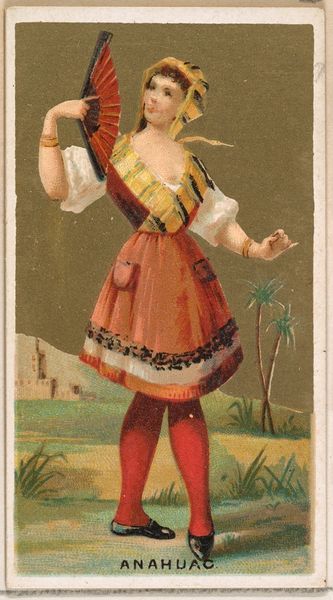
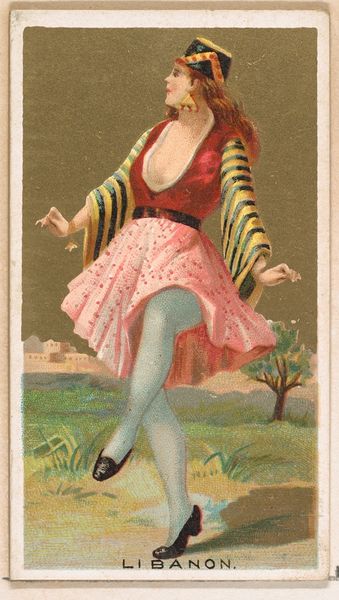
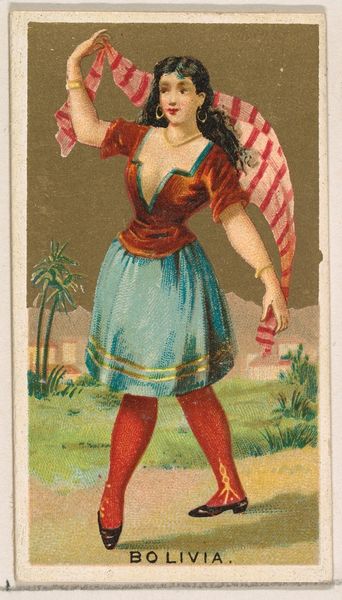
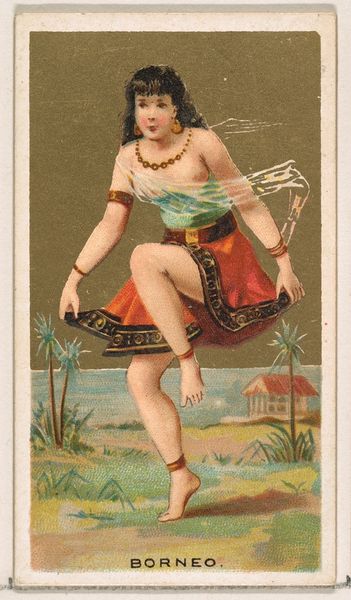
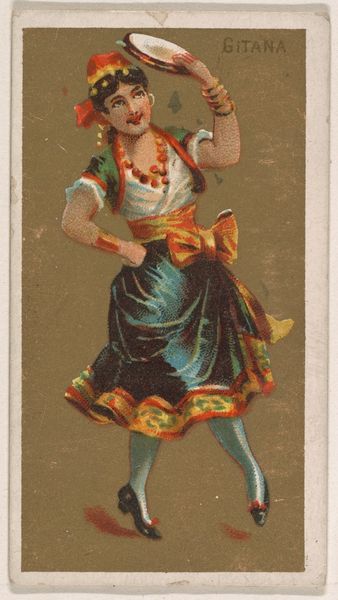
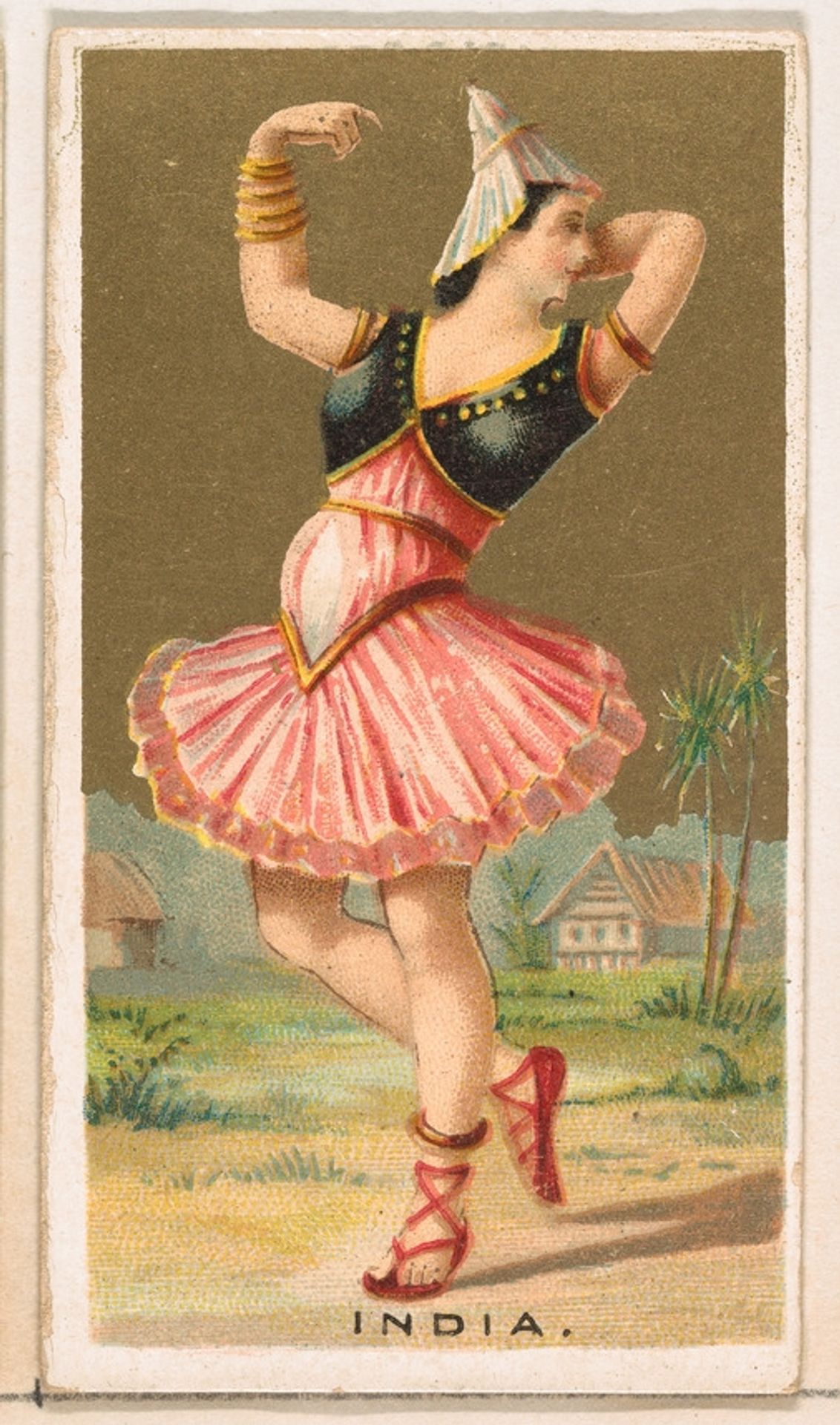
This small chromolithograph, "India," from the "Dancing Girls of the World" series, was issued by Wm. S. Kimball & Co. The dancer is presented in a dynamic pose, her body forming a series of curves and angles. The artist uses a contrasting palette of pinks, blacks, and golds to create a visually stimulating image against a muted background of brown, which serves to push the figure forward. The texture of the dancer's costume, with its frills and embellishments, adds a layer of complexity to the composition. The composition emphasizes the body as a site of cultural expression. Yet, it also perpetuates stereotypes and exoticizes the dancer for a Western audience. The work is less about authentic cultural representation and more about constructing an image that caters to certain cultural expectations and biases. The tension between aesthetic appeal and cultural representation invites reflection on the ways in which images can both celebrate and distort cultural identities.
India, from the Dancing Girls of the World series (N185) issued by Wm. S. Kimball & Co.
1889

William S. Kimball & Company
@williamskimballcompany
The Metropolitan Museum of Art
Metropolitan Museum of Art, New York, NYArtwork details
- Medium
- Dimensions
- Sheet: 2 11/16 × 1 1/2 in. (6.8 × 3.8 cm)
- Location
- Metropolitan Museum of Art, New York, NY
- Copyright
- Public Domain
Tags
Comments
Share your thoughts
About this artwork
This small chromolithograph, "India," from the "Dancing Girls of the World" series, was issued by Wm. S. Kimball & Co. The dancer is presented in a dynamic pose, her body forming a series of curves and angles. The artist uses a contrasting palette of pinks, blacks, and golds to create a visually stimulating image against a muted background of brown, which serves to push the figure forward. The texture of the dancer's costume, with its frills and embellishments, adds a layer of complexity to the composition. The composition emphasizes the body as a site of cultural expression. Yet, it also perpetuates stereotypes and exoticizes the dancer for a Western audience. The work is less about authentic cultural representation and more about constructing an image that caters to certain cultural expectations and biases. The tension between aesthetic appeal and cultural representation invites reflection on the ways in which images can both celebrate and distort cultural identities.
Comments
Share your thoughts