About this artwork
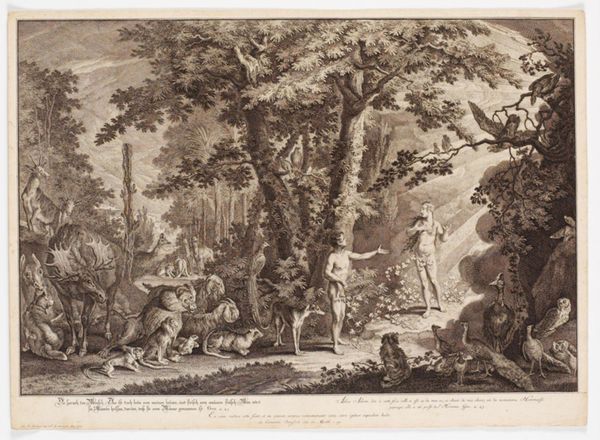
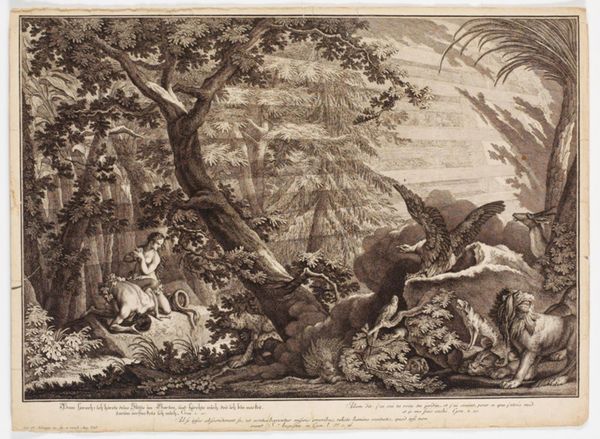
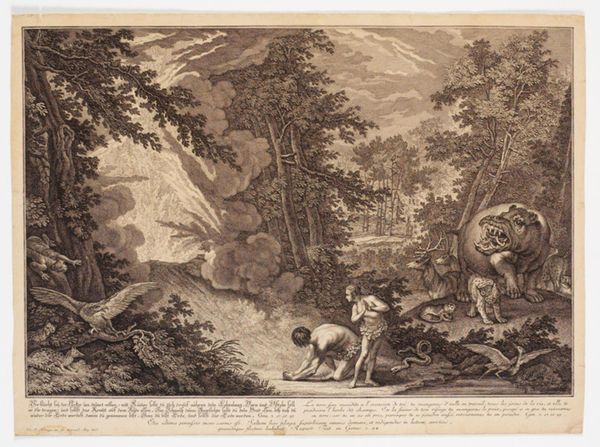
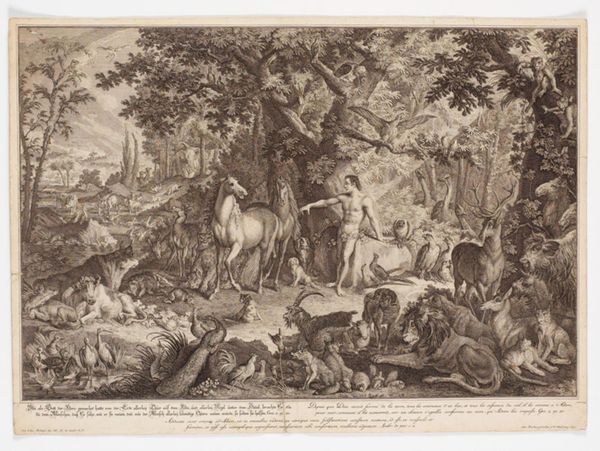
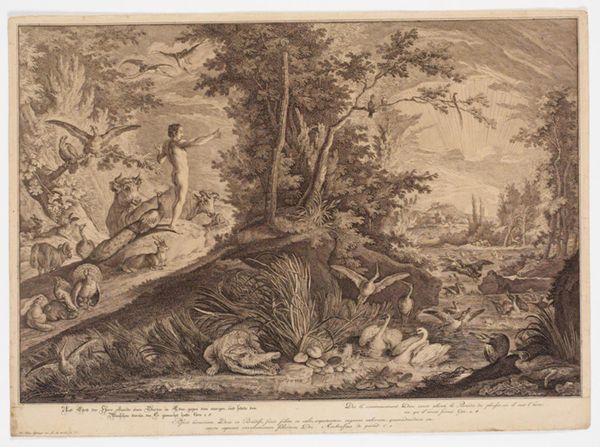
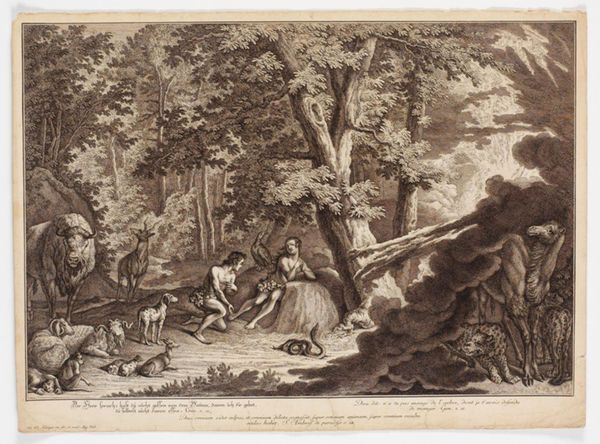
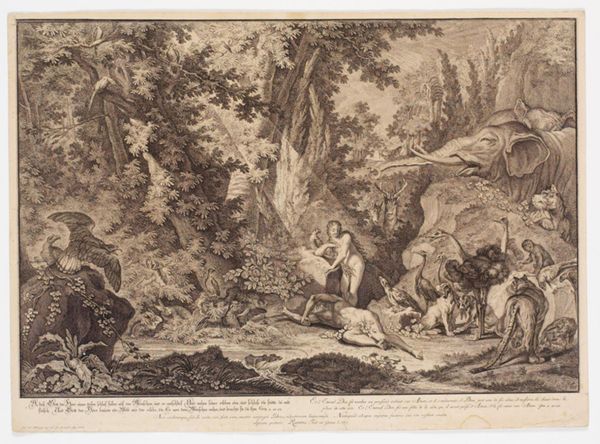
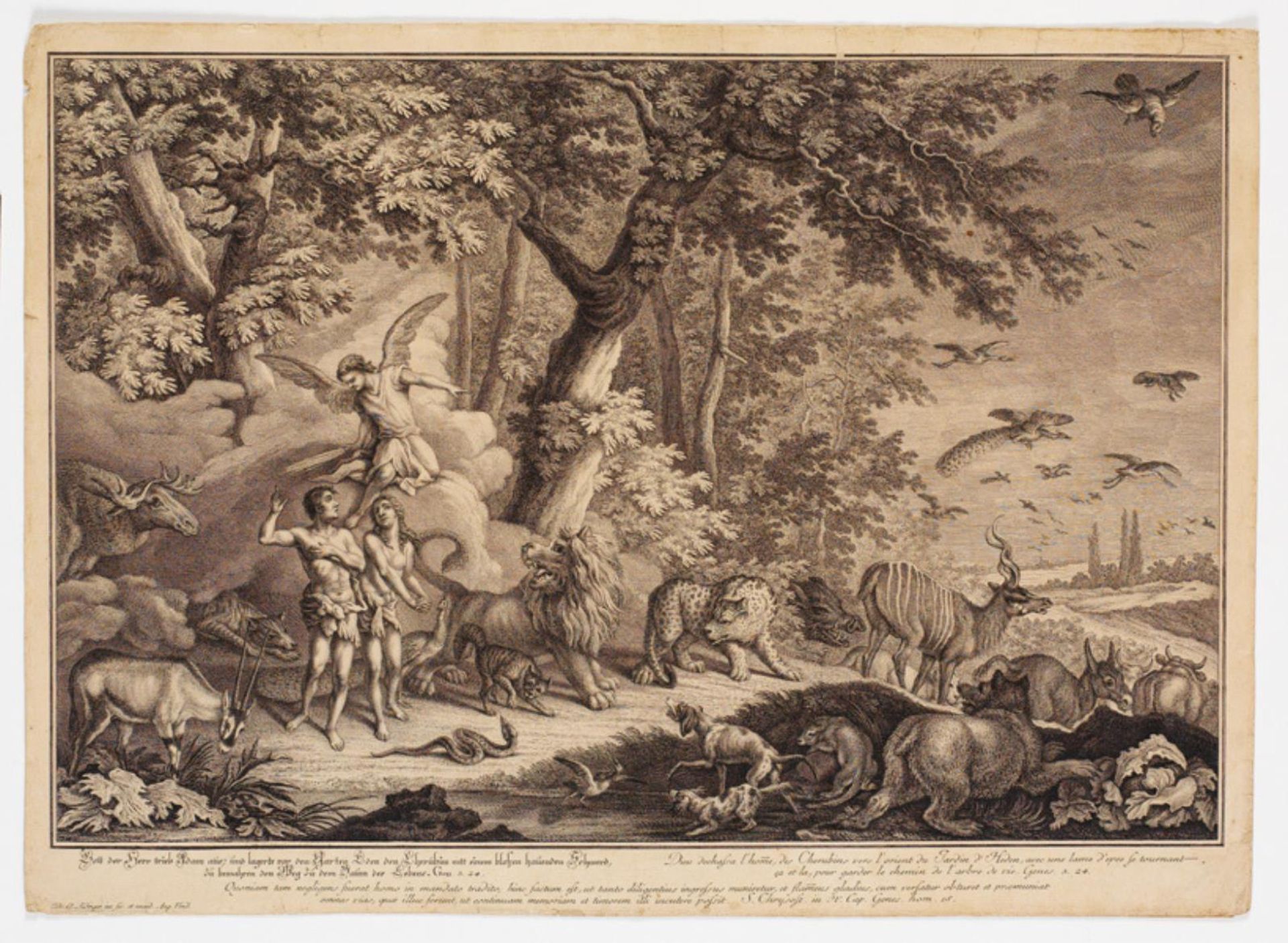
Johann Elias Ridinger created this print of "The Expulsion from Paradise" sometime in the 18th century. Here we see Adam and Eve banished from the Garden of Eden, an episode laden with religious and cultural significance. Made in Germany, the image reflects the period’s complex relationship with religious narratives, filtered through the lens of the Enlightenment. Note the emphasis on the natural world, with animals and detailed landscapes dominating the composition. This could represent the increasing interest in natural history during this period. The scene is orderly, which may reflect the prevailing societal values and the desire for social order within the German states of the time. The viewer should be asking themselves: What does it mean to create a seemingly harmonious image of such a chaotic and transformative event? To understand such images better, we look to religious texts, social histories, and the biographies of artists like Ridinger, to understand the complex exchange between art, belief, and society.
Uddrivelsen fra paradiset
18th century


Artwork details
- Medium
- print, engraving
- Dimensions
- 393 mm (height) x 540 mm (width) (bladmaal)
- Location
- SMK - Statens Museum for Kunst
Tags
Comments
Share your thoughts
About this artwork
Johann Elias Ridinger created this print of "The Expulsion from Paradise" sometime in the 18th century. Here we see Adam and Eve banished from the Garden of Eden, an episode laden with religious and cultural significance. Made in Germany, the image reflects the period’s complex relationship with religious narratives, filtered through the lens of the Enlightenment. Note the emphasis on the natural world, with animals and detailed landscapes dominating the composition. This could represent the increasing interest in natural history during this period. The scene is orderly, which may reflect the prevailing societal values and the desire for social order within the German states of the time. The viewer should be asking themselves: What does it mean to create a seemingly harmonious image of such a chaotic and transformative event? To understand such images better, we look to religious texts, social histories, and the biographies of artists like Ridinger, to understand the complex exchange between art, belief, and society.
Comments
Share your thoughts