About this artwork
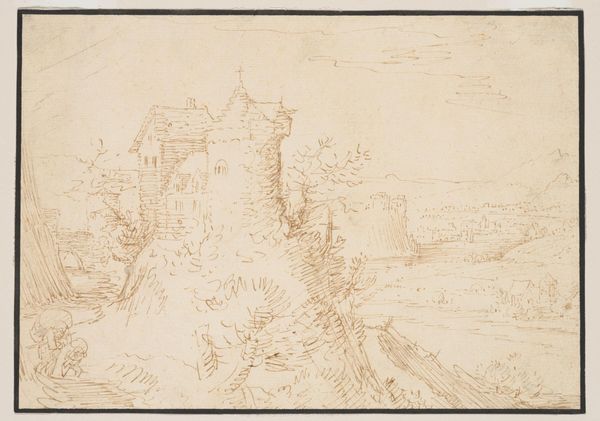
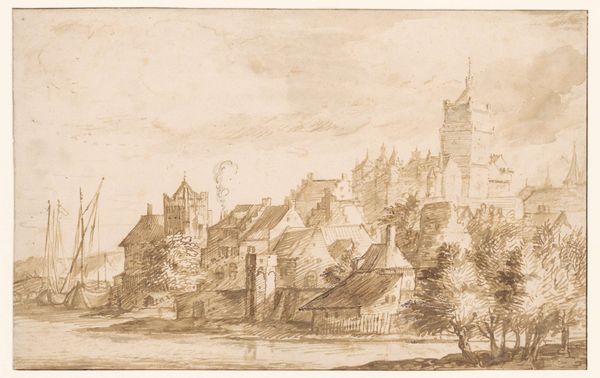
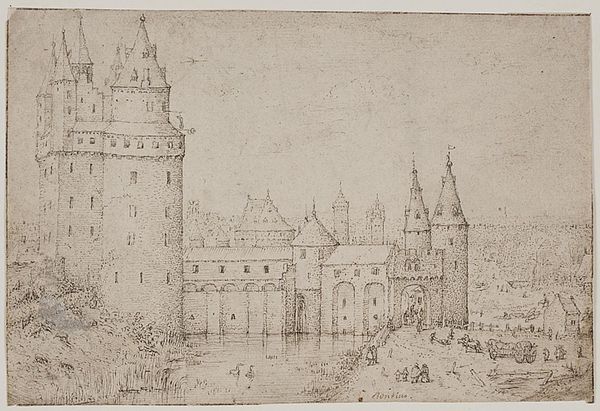
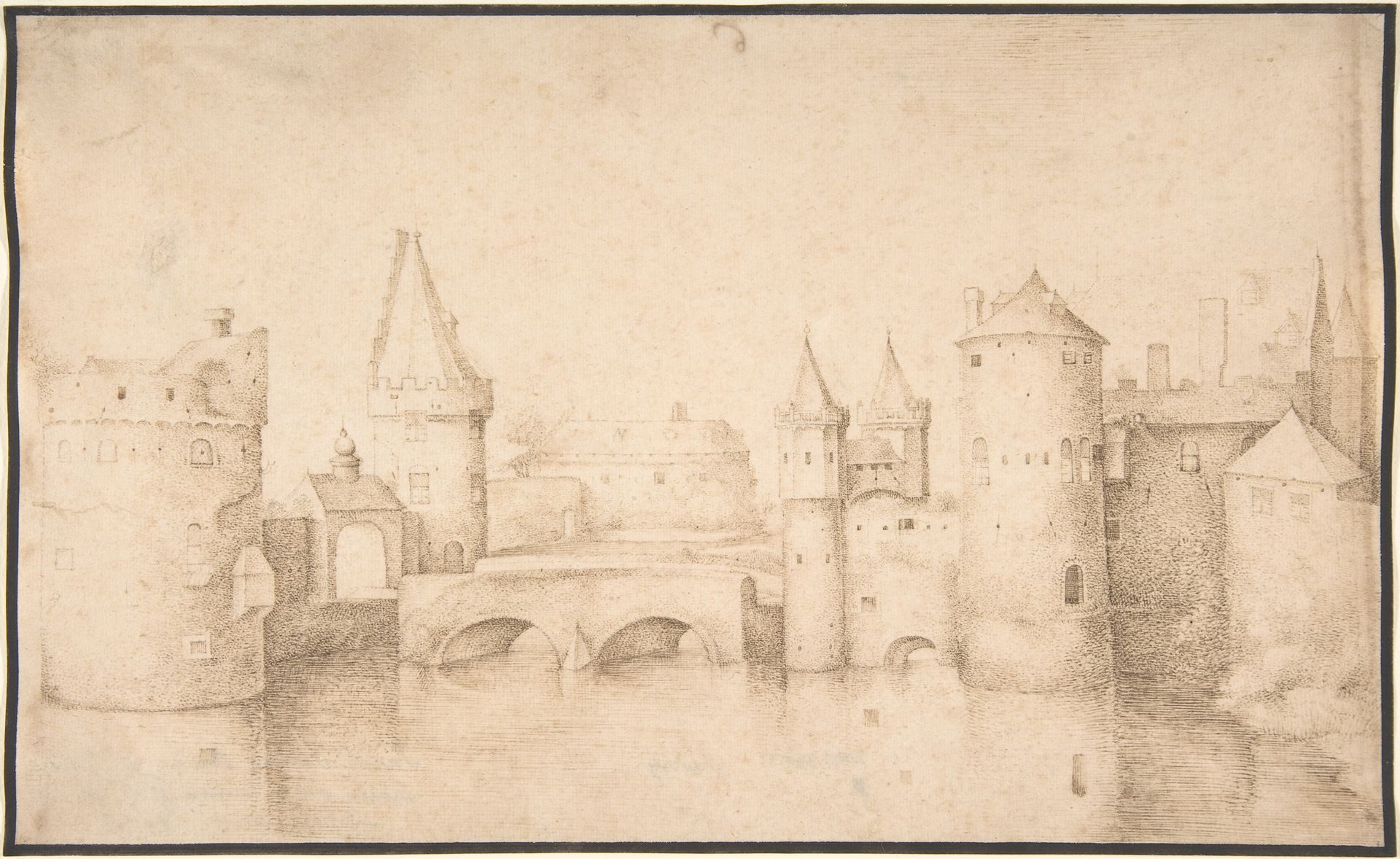
Jacob Savery the First made this drawing of the walls, towers, and gates of Amsterdam with pen and brown ink on paper around the turn of the 17th century. It shows us how the Dutch saw themselves and their cities. Amsterdam was booming, becoming a center for trade and culture. The drawing's focus on fortifications highlights the city's need for defense during the early years of the Dutch Republic as it fought for independence from Spain. The towers and walls weren't just about military might; they symbolized civic pride and the power of Amsterdam's merchant class. This drawing reflects the values of a society that was both commercially ambitious and deeply invested in its own security and identity. To understand art like this better, we dig into archives, maps, and historical accounts to get a sense of the social and institutional forces at play. Art is never just about what you see; it's about where it comes from, and what it says about the world it was made in.
Walls, Towers, and Gates of Amsterdam
1585 - 1603


Artwork details
- Medium
- drawing, print, pencil
- Dimensions
- sheet: 7 3/8 x 11 15/16 in. (18.7 x 30.3 cm)
- Location
- Metropolitan Museum of Art, New York, NY
- Copyright
- Public Domain
Tags
Comments
Share your thoughts
About this artwork
Jacob Savery the First made this drawing of the walls, towers, and gates of Amsterdam with pen and brown ink on paper around the turn of the 17th century. It shows us how the Dutch saw themselves and their cities. Amsterdam was booming, becoming a center for trade and culture. The drawing's focus on fortifications highlights the city's need for defense during the early years of the Dutch Republic as it fought for independence from Spain. The towers and walls weren't just about military might; they symbolized civic pride and the power of Amsterdam's merchant class. This drawing reflects the values of a society that was both commercially ambitious and deeply invested in its own security and identity. To understand art like this better, we dig into archives, maps, and historical accounts to get a sense of the social and institutional forces at play. Art is never just about what you see; it's about where it comes from, and what it says about the world it was made in.
Comments
Share your thoughts