About this artwork
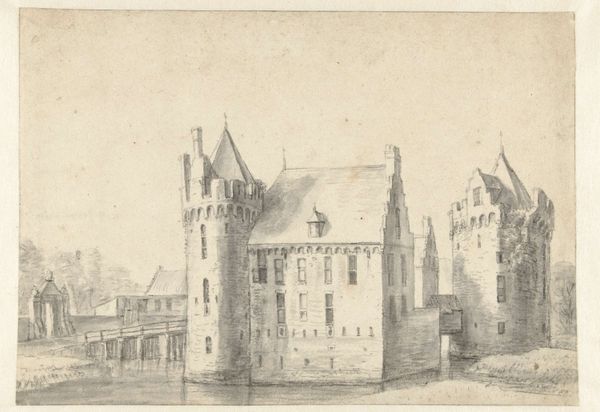
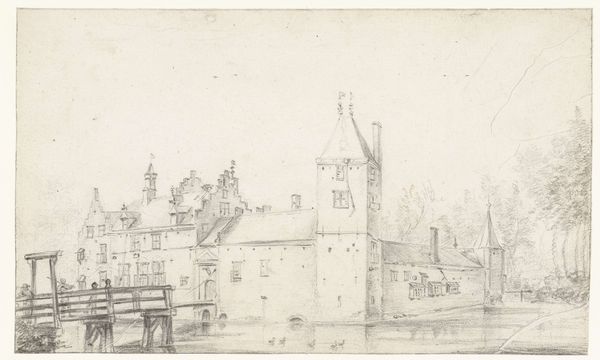
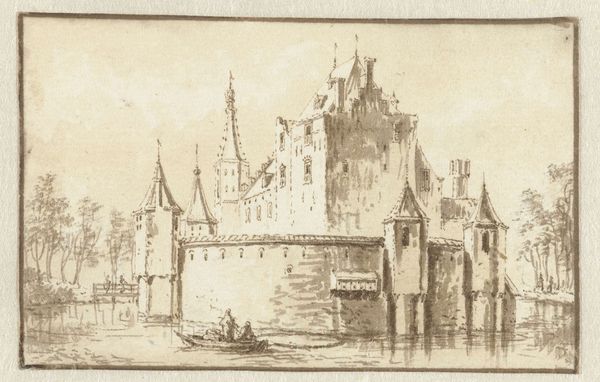
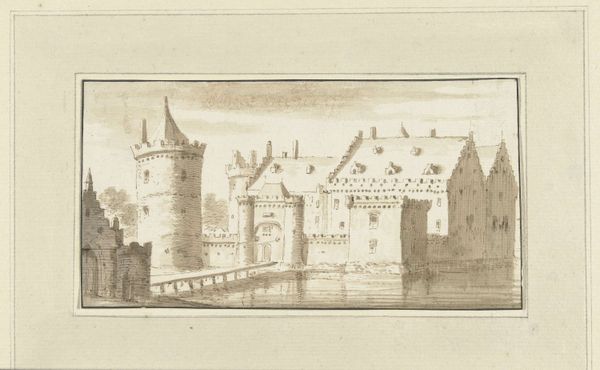
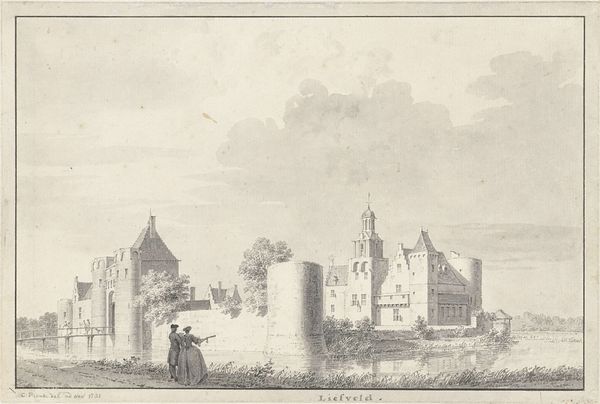
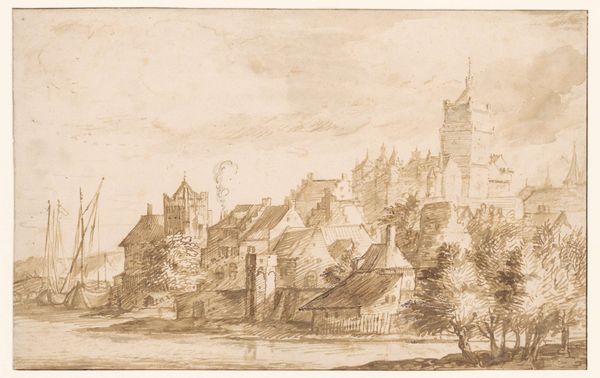
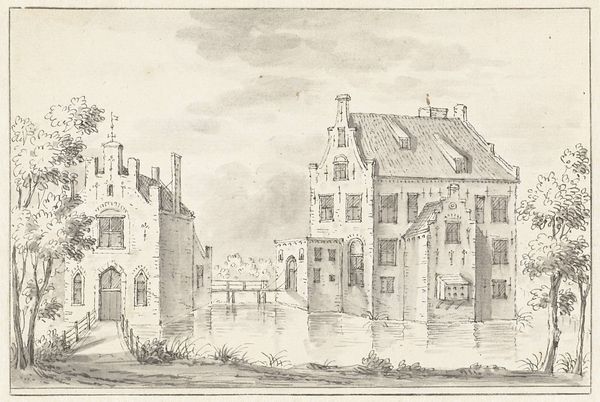
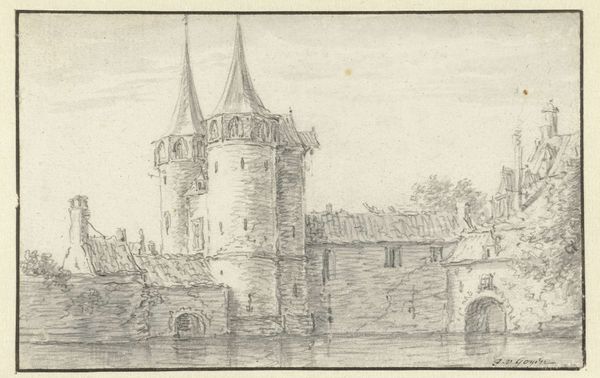
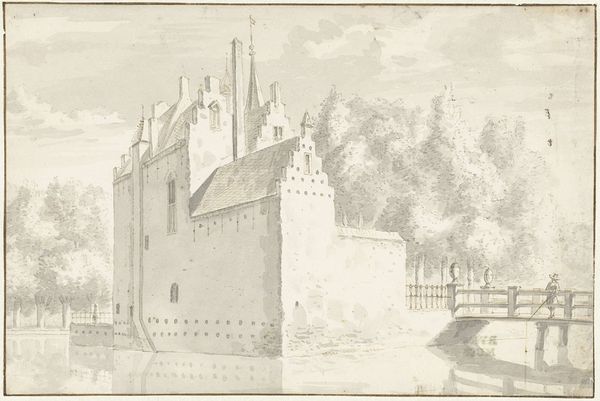
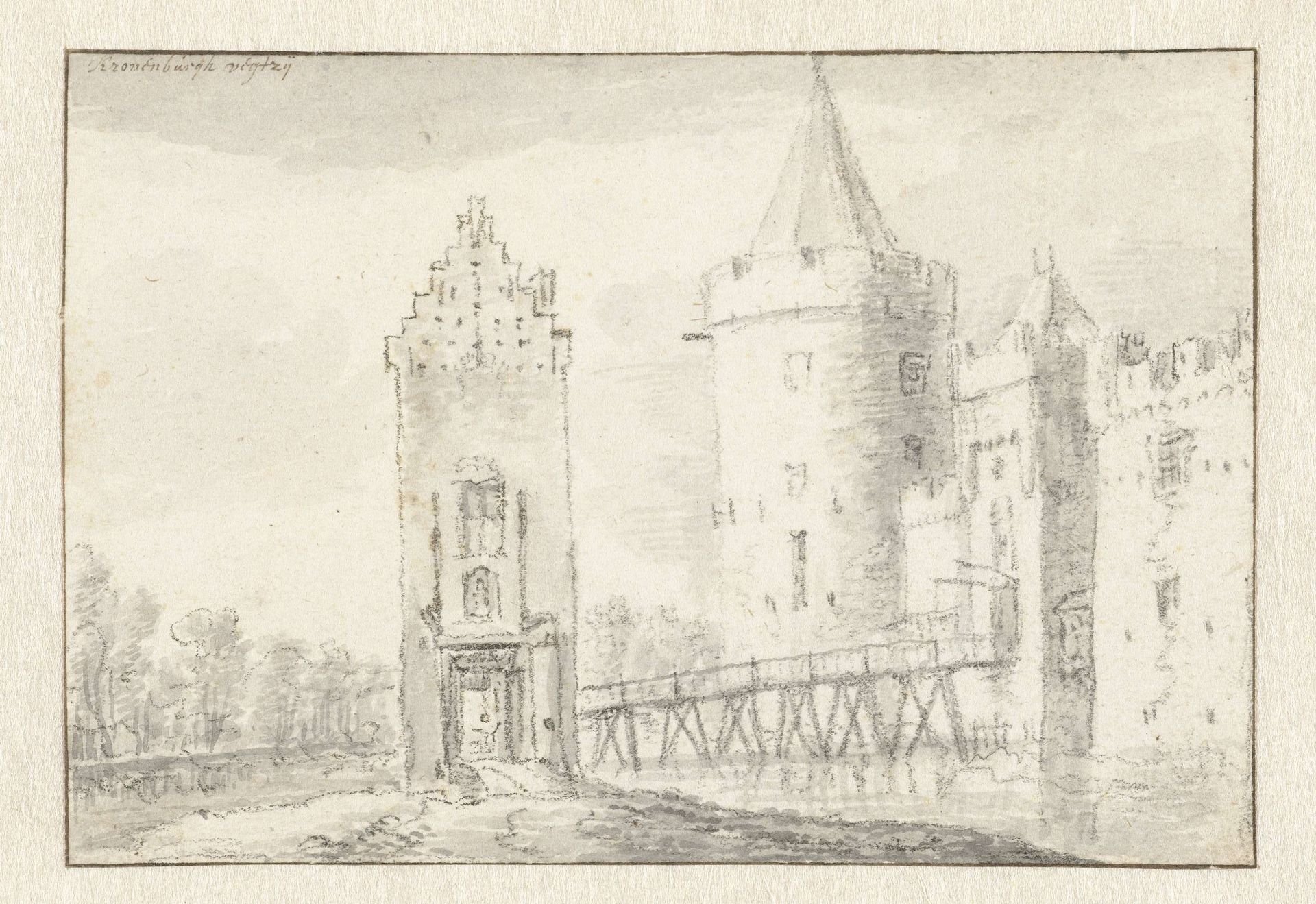
Anthonie Waterloo rendered this drawing of Huis Kronenburg in Loenen with pen in grey ink and grey wash. Castles, like Kronenburg, stand as potent symbols, guarding not just physical territories but also the collective memories of power and protection. Here, the tower, a symbol of strength, echoes through time – think of the Tower of Babel or even the modern skyscraper, each reaching for the heavens, embodying human ambition and the desire for transcendence. The bridge motif in this image is a link, not only literally connecting the castle to the outer world but also symbolizing a connection between different realms, visible and invisible. This notion of a bridge appears, for example, in medieval allegories as a passage between life and death, or in classical mythology, as in the tale of the Bifrost, the rainbow bridge connecting Midgard, the world of humans, to Asgard, the realm of the gods. Notice how the castle, once a symbol of refuge, also conveys a sense of isolation, revealing the complex, cyclical nature of symbols that evolve through the ages, carrying layers of meaning and emotion, and engaging us on a deep, subconscious level.

Artwork details
- Medium
- drawing, paper, pencil
- Dimensions
- height 92 mm, width 134 mm
- Location
- Rijksmuseum
- Copyright
- Rijks Museum: Open Domain
Tags
drawing
baroque
landscape
paper
pencil
cityscape
Comments
No comments
About this artwork
Anthonie Waterloo rendered this drawing of Huis Kronenburg in Loenen with pen in grey ink and grey wash. Castles, like Kronenburg, stand as potent symbols, guarding not just physical territories but also the collective memories of power and protection. Here, the tower, a symbol of strength, echoes through time – think of the Tower of Babel or even the modern skyscraper, each reaching for the heavens, embodying human ambition and the desire for transcendence. The bridge motif in this image is a link, not only literally connecting the castle to the outer world but also symbolizing a connection between different realms, visible and invisible. This notion of a bridge appears, for example, in medieval allegories as a passage between life and death, or in classical mythology, as in the tale of the Bifrost, the rainbow bridge connecting Midgard, the world of humans, to Asgard, the realm of the gods. Notice how the castle, once a symbol of refuge, also conveys a sense of isolation, revealing the complex, cyclical nature of symbols that evolve through the ages, carrying layers of meaning and emotion, and engaging us on a deep, subconscious level.
Comments
No comments