About this artwork
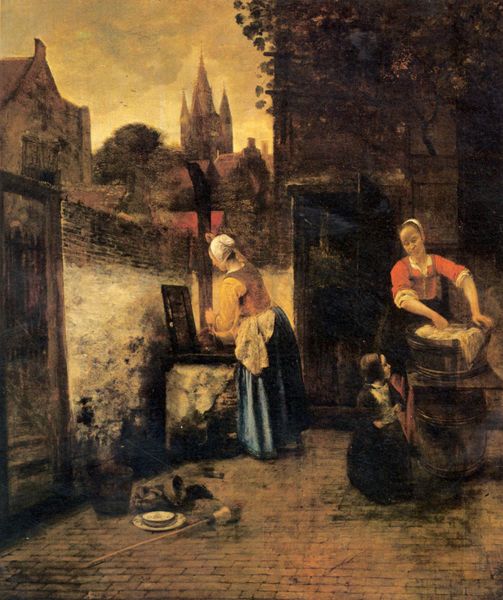
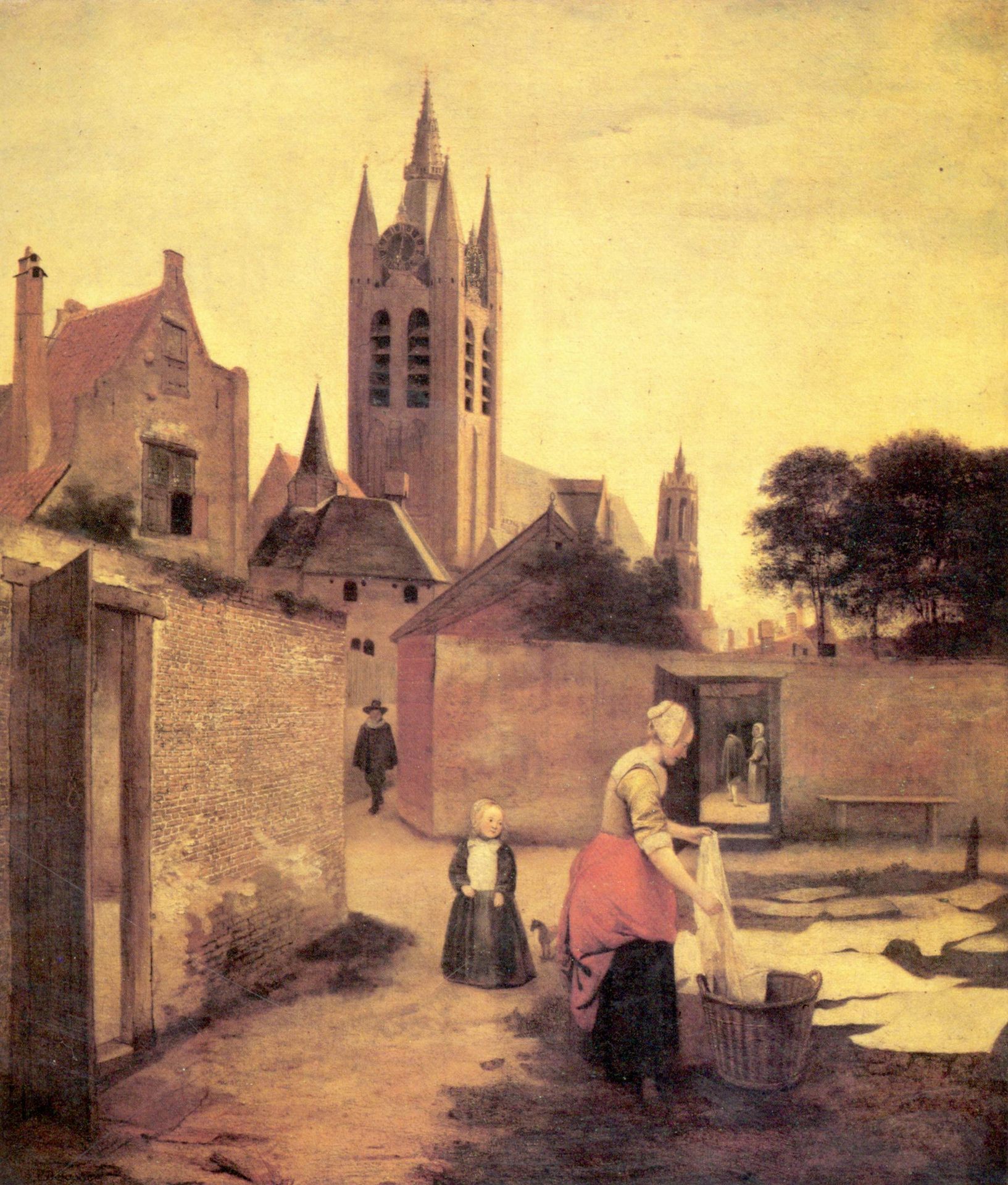
Pieter de Hooch painted ‘A Woman and Child on a Bleichwiese’ sometime in the 17th century using oil on canvas. This genre painting offers us a glimpse into the everyday life of the Dutch Golden Age, a period marked by economic prosperity and cultural flourishing. The scene depicts a woman and child on a bleaching field, with linens spread out to dry in the sun. The imposing church in the background reminds us of the importance of religion in the Dutch Republic, which was a Protestant nation. De Hooch’s painting style emphasizes domestic virtue, order, and cleanliness, reflecting the values of the rising middle class. These paintings weren't just neutral records; they actively promoted certain social ideals, using the intimacy of the home to reflect the prosperity of the nation. To understand this painting fully, we can look at period documents, such as household inventories, civic records, and sermons to better grasp the values and beliefs of this period.
A woman and a child on a Bleichwiese
1658

Pieter de Hooch
1629 - 1684Location
Private CollectionArtwork details
- Medium
- painting, oil-paint, architecture
- Dimensions
- 73.5 x 63 cm
- Location
- Private Collection
- Copyright
- Public domain
Tags
Comments
Share your thoughts
About this artwork
Pieter de Hooch painted ‘A Woman and Child on a Bleichwiese’ sometime in the 17th century using oil on canvas. This genre painting offers us a glimpse into the everyday life of the Dutch Golden Age, a period marked by economic prosperity and cultural flourishing. The scene depicts a woman and child on a bleaching field, with linens spread out to dry in the sun. The imposing church in the background reminds us of the importance of religion in the Dutch Republic, which was a Protestant nation. De Hooch’s painting style emphasizes domestic virtue, order, and cleanliness, reflecting the values of the rising middle class. These paintings weren't just neutral records; they actively promoted certain social ideals, using the intimacy of the home to reflect the prosperity of the nation. To understand this painting fully, we can look at period documents, such as household inventories, civic records, and sermons to better grasp the values and beliefs of this period.
Comments
Share your thoughts