About this artwork
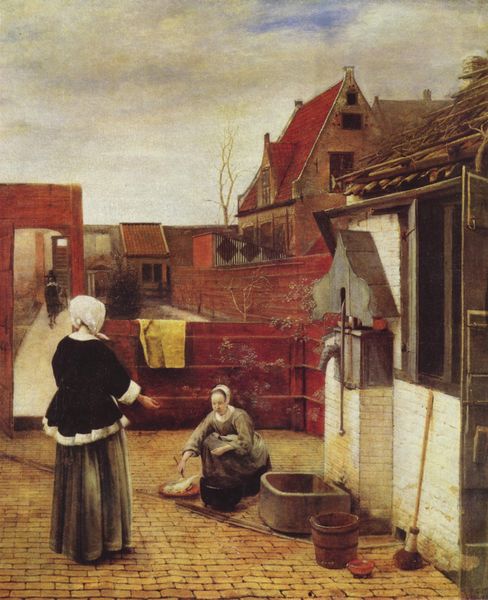
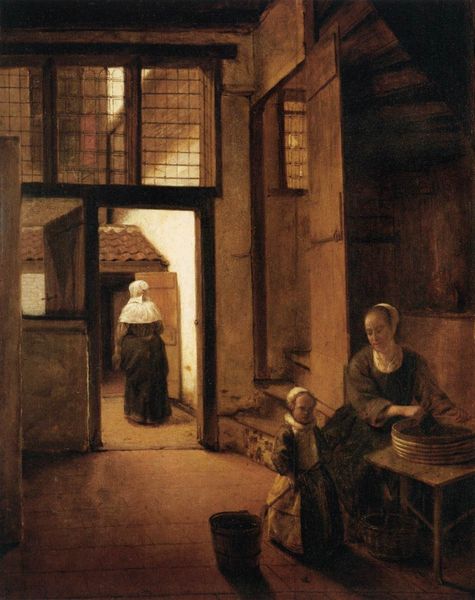
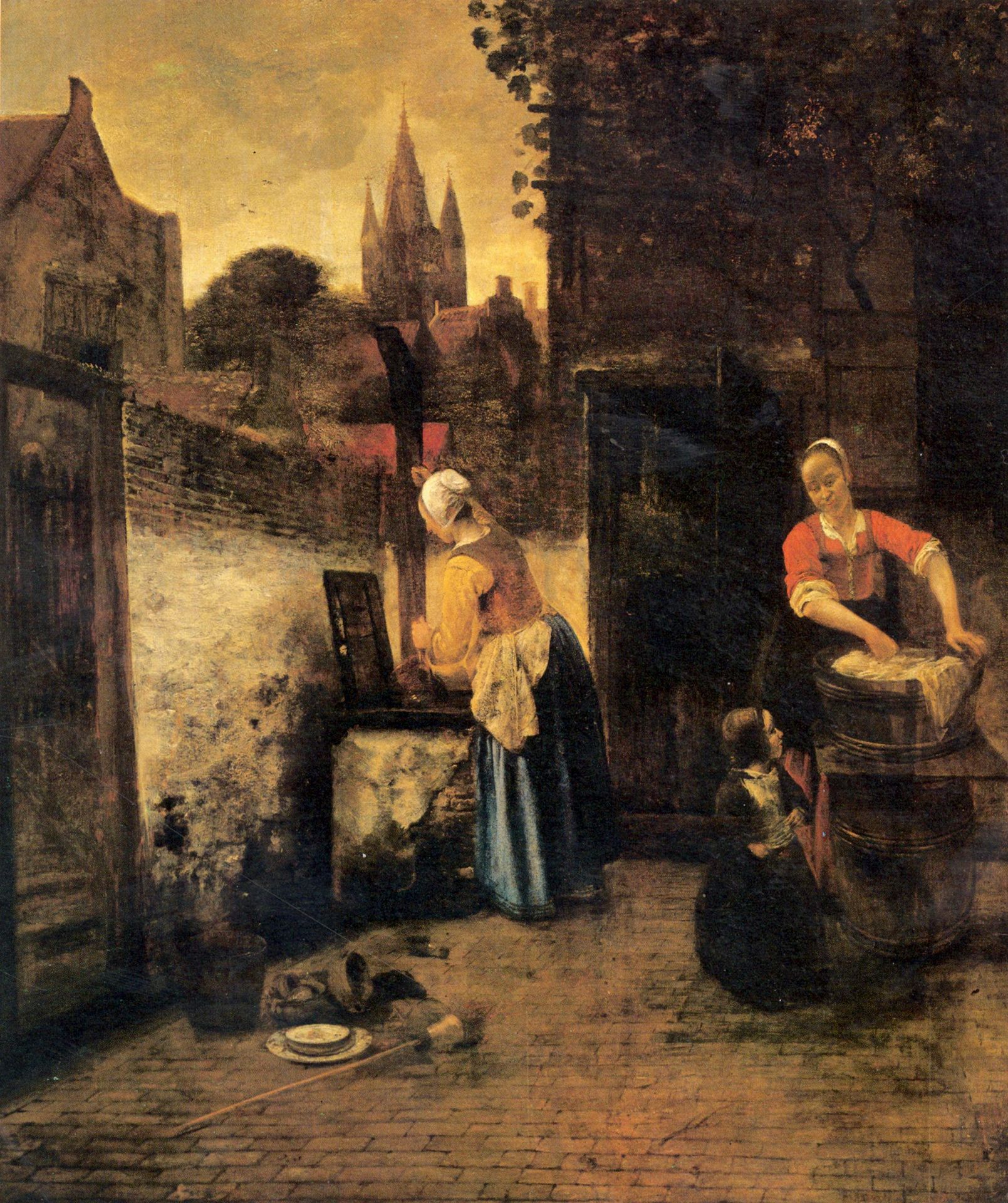
Pieter de Hooch painted "Two Women with a Child in Court" using oil on canvas. Immediately, the work presents a geometric orchestration within a domestic scene. The composition is defined by a balance of horizontal brickwork and vertical architectural elements. De Hooch's deployment of light serves not just to illuminate but to structure space and narrative. The interplay between light and shadow casts certain semiotic weight, inviting the viewer to decode the nuances of daily life. The textures, captured with keen attention, enrich the visual narrative, drawing on a formalistic approach, one can consider the structural contrasts between the rough brick and the smooth textiles. Through the orchestration of space and light, "Two Women with a Child in Court" functions beyond representation. De Hooch compels an evaluation of the formal properties of the work, making the painting a site for the ongoing interpretation of form and meaning.
Two women with a child in court
1657


Artwork details
- Medium
- oil-paint
- Dimensions
- 68 x 57.5 cm
- Location
- Toledo Museum of Art, Toledo, OH, US
- Copyright
- Public domain
Tags
Comments
Share your thoughts
About this artwork
Pieter de Hooch painted "Two Women with a Child in Court" using oil on canvas. Immediately, the work presents a geometric orchestration within a domestic scene. The composition is defined by a balance of horizontal brickwork and vertical architectural elements. De Hooch's deployment of light serves not just to illuminate but to structure space and narrative. The interplay between light and shadow casts certain semiotic weight, inviting the viewer to decode the nuances of daily life. The textures, captured with keen attention, enrich the visual narrative, drawing on a formalistic approach, one can consider the structural contrasts between the rough brick and the smooth textiles. Through the orchestration of space and light, "Two Women with a Child in Court" functions beyond representation. De Hooch compels an evaluation of the formal properties of the work, making the painting a site for the ongoing interpretation of form and meaning.
Comments
Share your thoughts