About this artwork
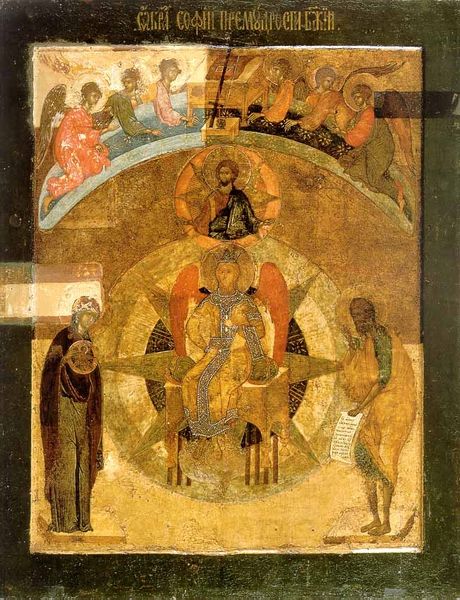
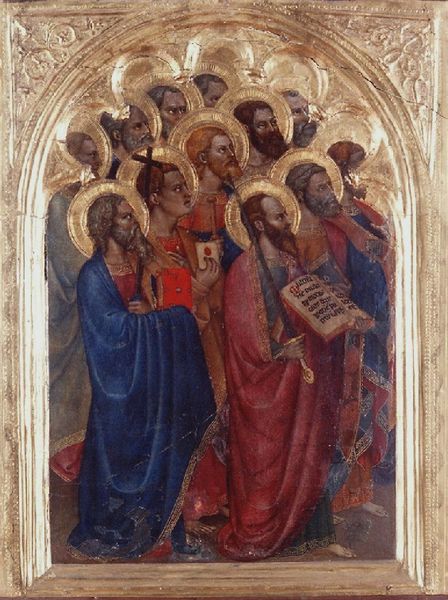
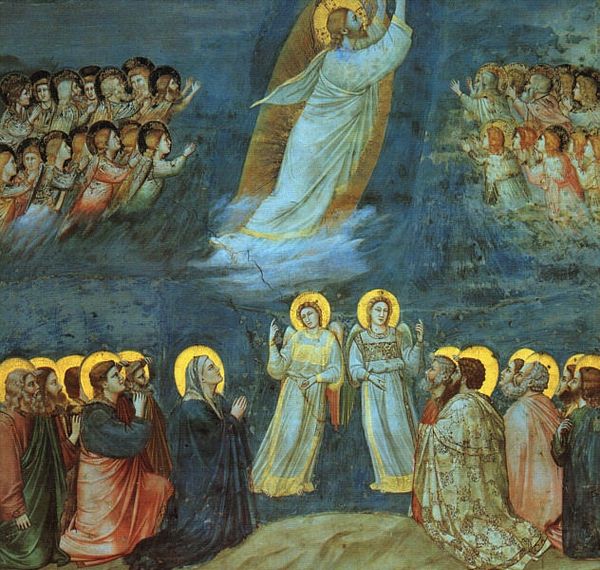
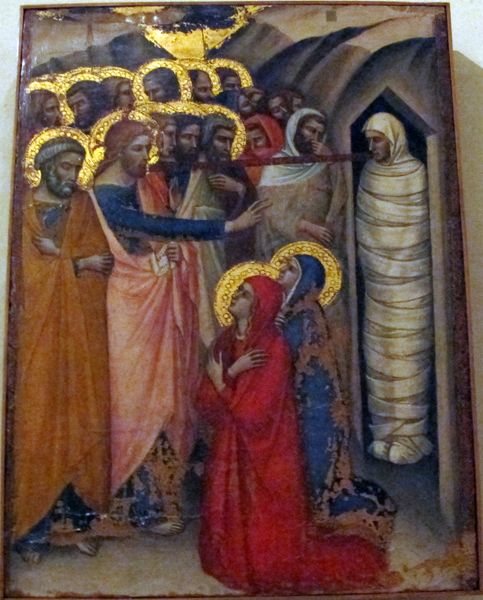
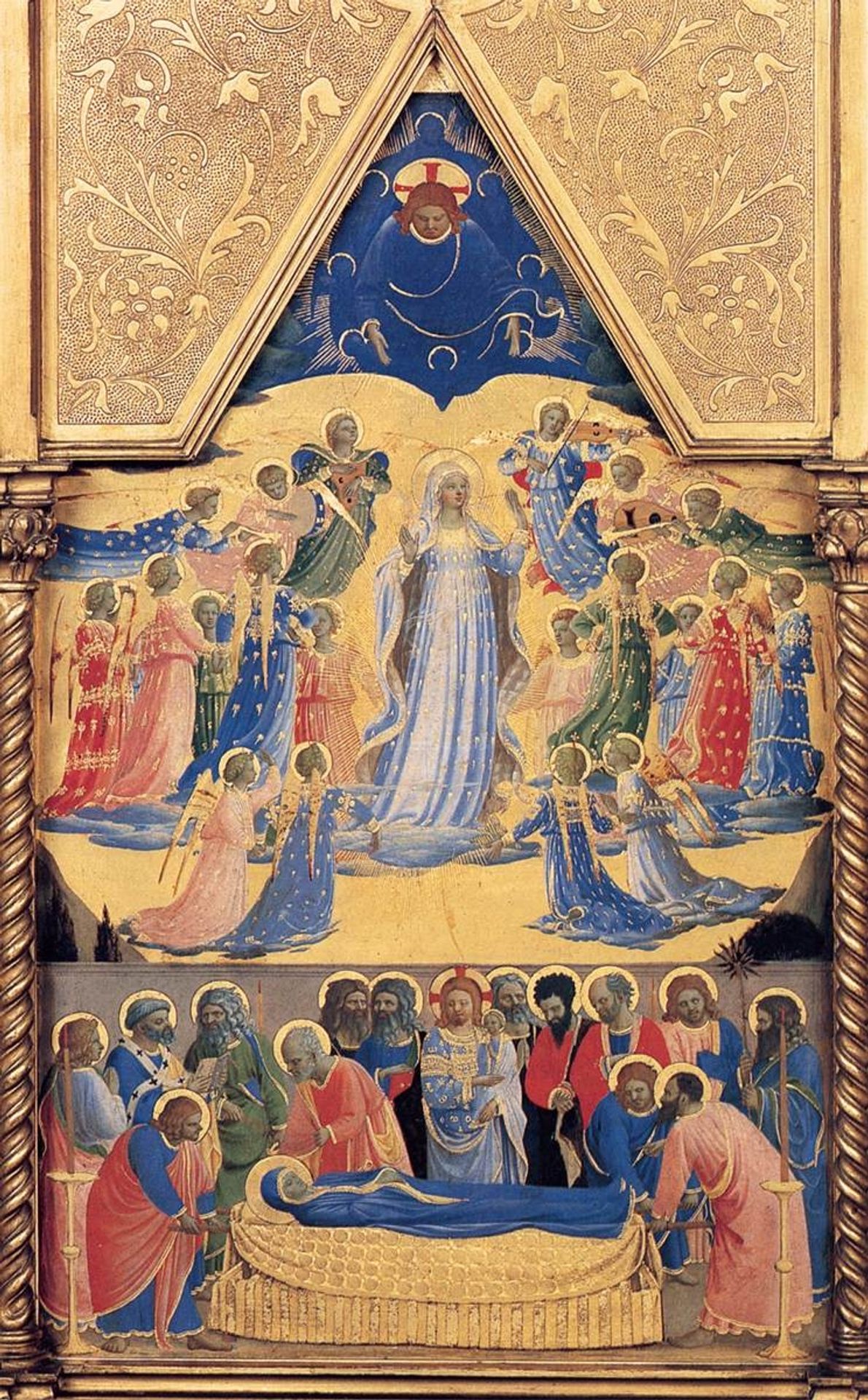
Fra Angelico created this Reliquary Tabernacle, likely in the 15th century, with tempera and gold on panel. The composition is divided into three horizontal registers, each with its own spatial logic, yet unified by a pervasive gold background that denies any realistic depth. At the bottom, the death of the Virgin is depicted with solemn figures clustered around her. Above, the Virgin ascends, surrounded by music-making angels adorned in vibrant hues. In the apex of this layered reality, Christ waits, framed within a golden triangle of geometric precision. Consider how Angelico uses color and line. The gold is not merely decorative; it flattens the space, inviting contemplation on the symbolic nature of the scene rather than its physical reality. Linear perspective is employed selectively, guiding the viewer's gaze upwards, reinforcing a narrative of transcendence. This is not just a depiction but a carefully structured argument about faith.
Reliquary Tabernacle
1430

Fra Angelico
1395 - 1455
Isabella Stewart Gardner Museum
Isabella Stewart Gardner Museum (Fenway Court), Boston, MA, USArtwork details
- Medium
- tempera, painting, textile
- Location
- Isabella Stewart Gardner Museum (Fenway Court), Boston, MA, US
- Copyright
- Public domain
Tags
Comments
Share your thoughts
About this artwork
Fra Angelico created this Reliquary Tabernacle, likely in the 15th century, with tempera and gold on panel. The composition is divided into three horizontal registers, each with its own spatial logic, yet unified by a pervasive gold background that denies any realistic depth. At the bottom, the death of the Virgin is depicted with solemn figures clustered around her. Above, the Virgin ascends, surrounded by music-making angels adorned in vibrant hues. In the apex of this layered reality, Christ waits, framed within a golden triangle of geometric precision. Consider how Angelico uses color and line. The gold is not merely decorative; it flattens the space, inviting contemplation on the symbolic nature of the scene rather than its physical reality. Linear perspective is employed selectively, guiding the viewer's gaze upwards, reinforcing a narrative of transcendence. This is not just a depiction but a carefully structured argument about faith.
Comments
Share your thoughts