About this artwork
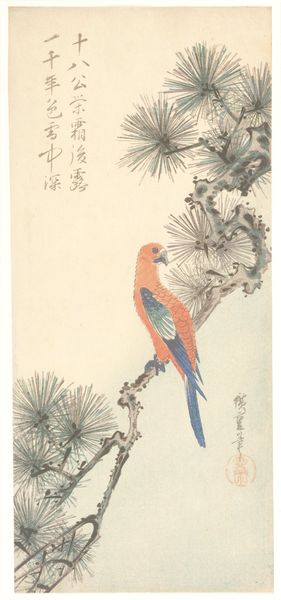
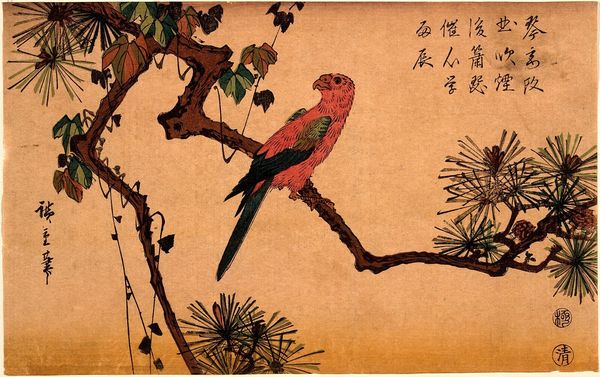
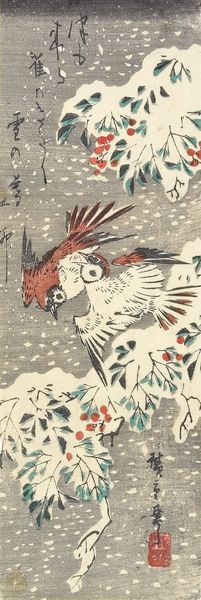
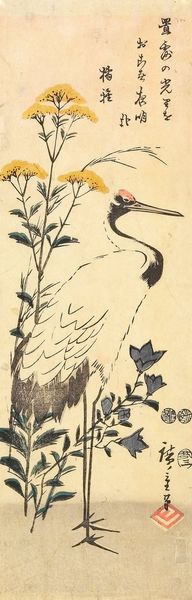
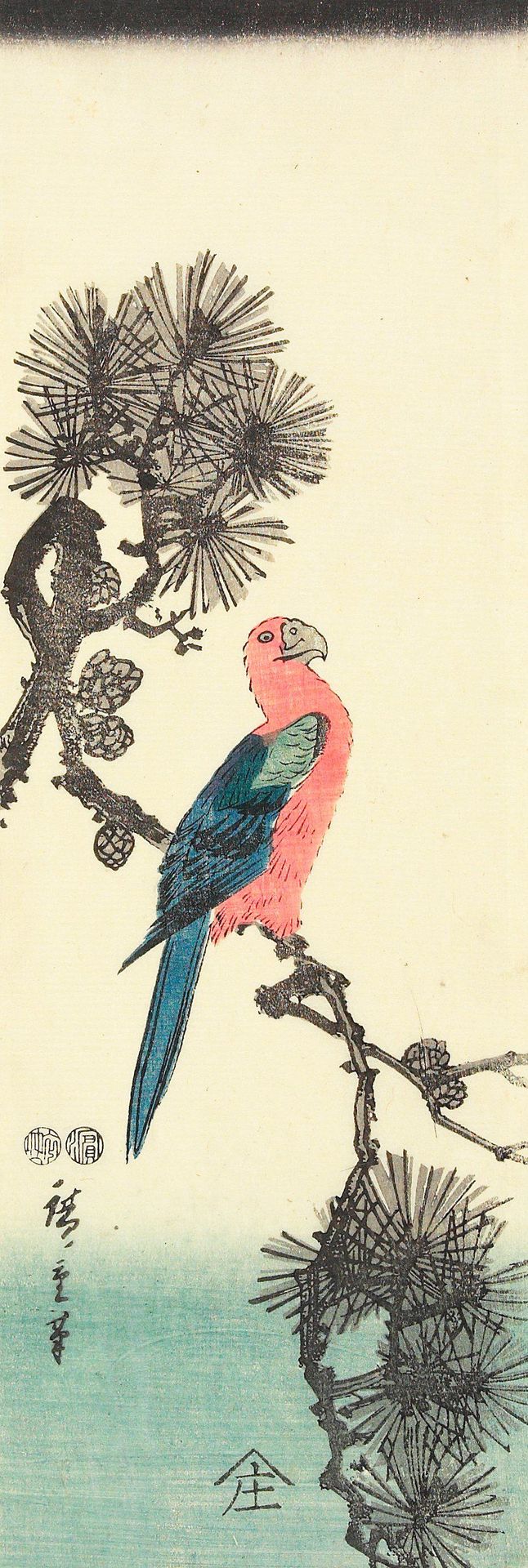
Utagawa Hiroshige crafted "Macaw on Pine Branch" using woodblock printing, a technique integral to the expansion of artistic expression during his time. Woodblock prints like this one, were not produced by a single artist, but through collaborative labor. Hiroshige, as the designer, would have worked closely with woodcutters who would carve the design into separate woodblocks, one for each color. These blocks were then meticulously inked and pressed onto paper by printers to create the final image. The success of woodblock printing in Japan was intertwined with consumer culture. Woodblock prints democratized art, making it more accessible to a broader audience. This print offers a glimpse into the skilled traditions of Japanese printmaking, reflecting both artistic ingenuity and the socio-economic dynamics of its time. Appreciating the material processes and social context unlocks a more complete understanding of its meaning.
Macaw on Pine Branch 1847 - 1848


Artwork details
- Medium
- print, ink, woodblock-print
- Dimensions
- 13 5/8 × 4 1/2 in. (34.6 × 11.4 cm) (image, aitanzaku)
- Location
- Minneapolis Institute of Art
- Copyright
- Public Domain
Tags
asian-art
bird
ukiyo-e
personal sketchbook
ink
woodblock-print
Comments
No comments
About this artwork
Utagawa Hiroshige crafted "Macaw on Pine Branch" using woodblock printing, a technique integral to the expansion of artistic expression during his time. Woodblock prints like this one, were not produced by a single artist, but through collaborative labor. Hiroshige, as the designer, would have worked closely with woodcutters who would carve the design into separate woodblocks, one for each color. These blocks were then meticulously inked and pressed onto paper by printers to create the final image. The success of woodblock printing in Japan was intertwined with consumer culture. Woodblock prints democratized art, making it more accessible to a broader audience. This print offers a glimpse into the skilled traditions of Japanese printmaking, reflecting both artistic ingenuity and the socio-economic dynamics of its time. Appreciating the material processes and social context unlocks a more complete understanding of its meaning.
Comments
No comments