About this artwork
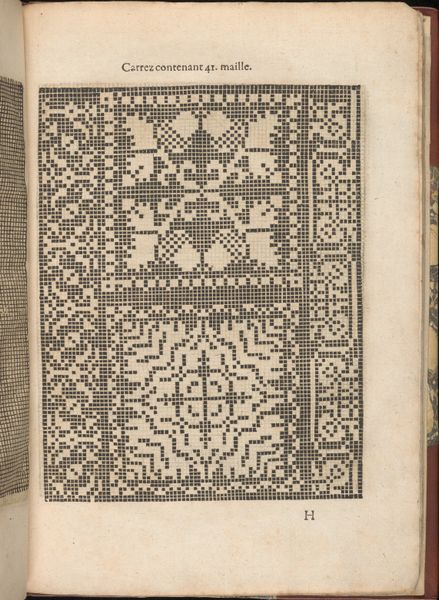
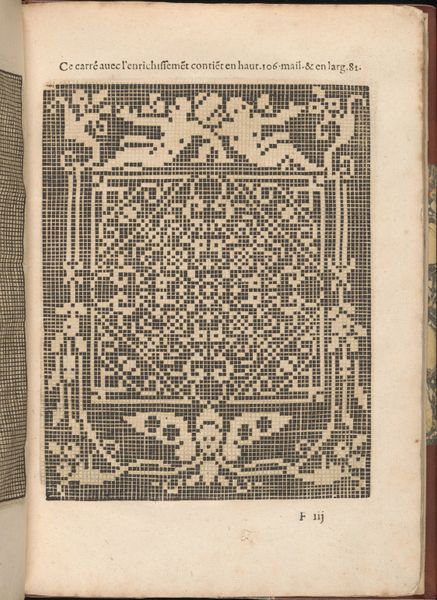
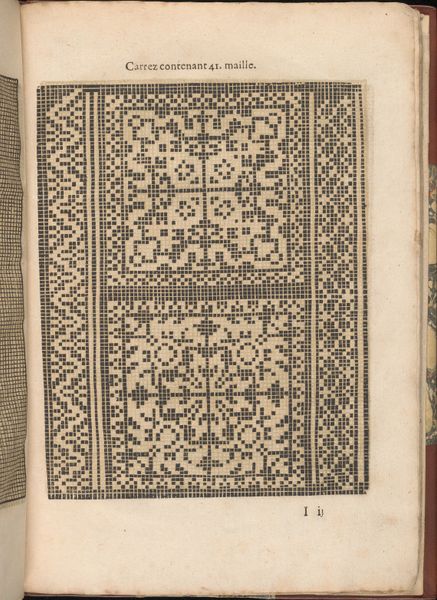
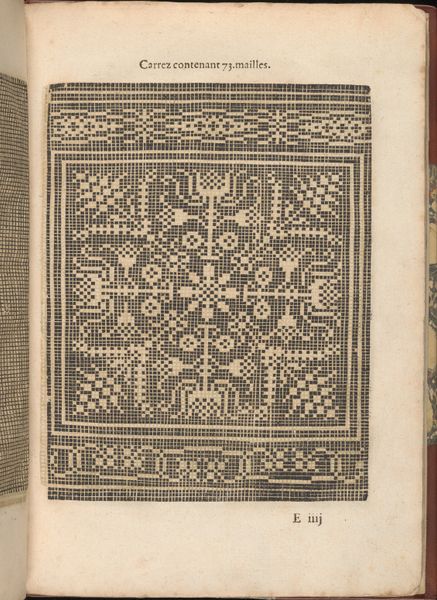
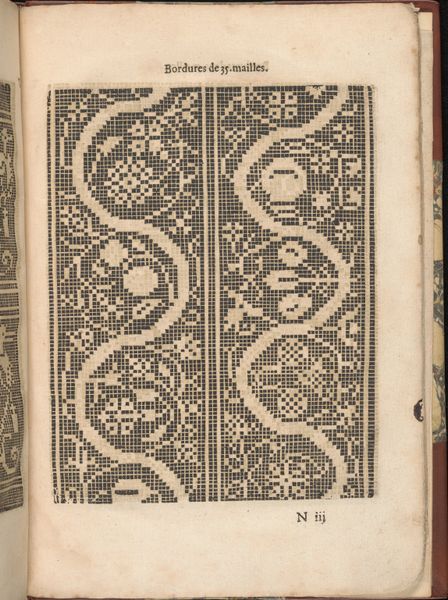
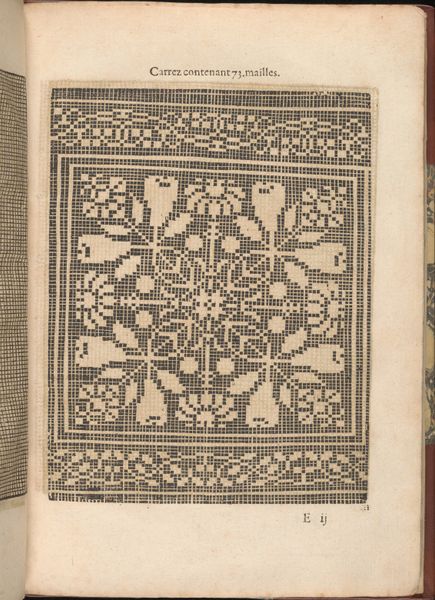
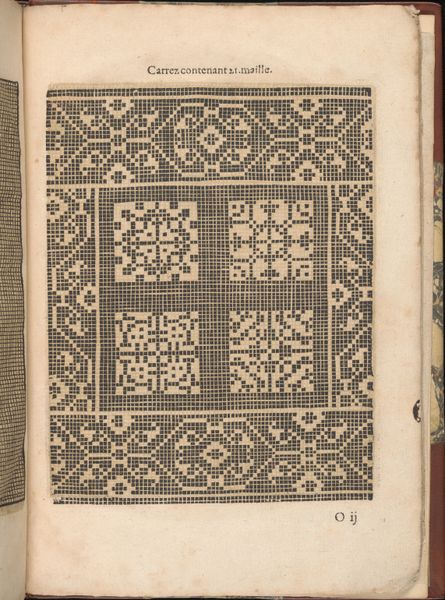
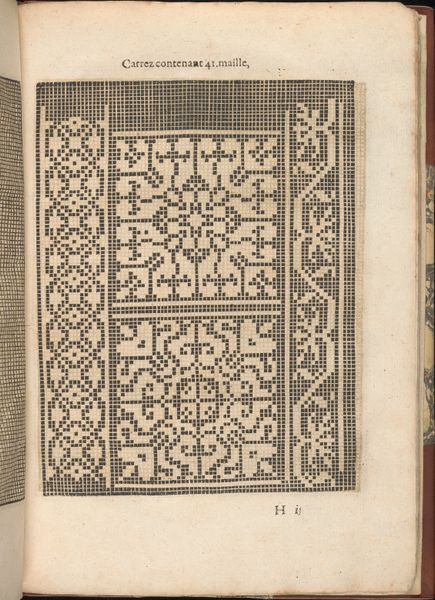
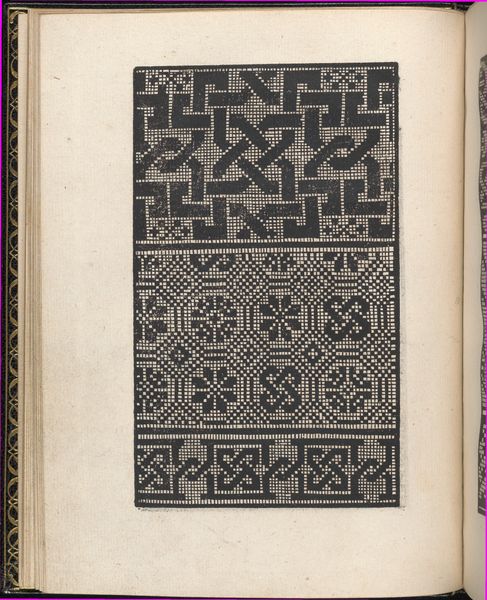
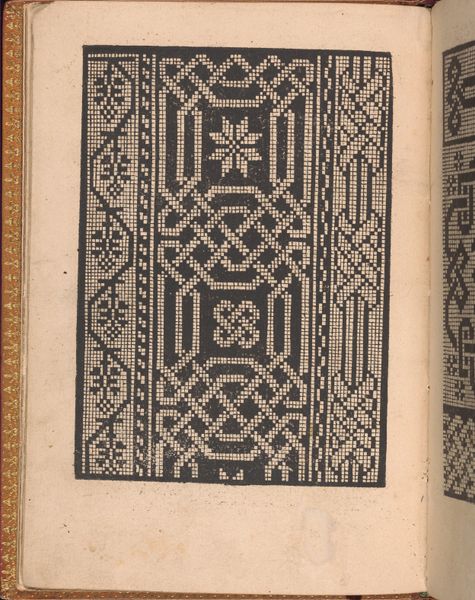
This is page 19 from Federico de Vinciolo’s "Les Secondes Oeuvres," a Venetian book of lace patterns created in the late 16th century. The most striking symbols are the geometric patterns, arranged in a grid-like fashion to inspire needlework. The grid is more than a mere structure; it’s a symbolic anchor. Grids appear in ancient art across cultures, from city planning to religious iconography. They represent order, control, and the imposition of human will upon the natural world. Observe how these patterns have evolved. In earlier cultures, similar geometric forms could be found in mosaics or textiles, often imbued with cosmological or spiritual meanings. The grid evolves here into a template for domestic craft, and embodies both constraint and creative potential, mirroring society’s evolving relationship with order and artistry. This simple image embodies a complex psycho-cultural interplay, demonstrating the enduring human drive to transform the world through pattern and order.
Les Secondes Oeuvres, et Subtiles Inventions De Lingerie du Seigneur Federic de Vinciolo Venitien, page 19 (recto)
1603

Federico de Vinciolo
1582 - 1599
The Metropolitan Museum of Art
Metropolitan Museum of Art, New York, NYArtwork details
- Medium
- drawing, graphic-art, ornament, print, intaglio, paper, ink, engraving
- Dimensions
- Overall: 9 7/16 x 6 1/2 in. (24 x 16.5 cm)
- Location
- Metropolitan Museum of Art, New York, NY
- Copyright
- Public Domain
Tags
Comments
Share your thoughts
About this artwork
This is page 19 from Federico de Vinciolo’s "Les Secondes Oeuvres," a Venetian book of lace patterns created in the late 16th century. The most striking symbols are the geometric patterns, arranged in a grid-like fashion to inspire needlework. The grid is more than a mere structure; it’s a symbolic anchor. Grids appear in ancient art across cultures, from city planning to religious iconography. They represent order, control, and the imposition of human will upon the natural world. Observe how these patterns have evolved. In earlier cultures, similar geometric forms could be found in mosaics or textiles, often imbued with cosmological or spiritual meanings. The grid evolves here into a template for domestic craft, and embodies both constraint and creative potential, mirroring society’s evolving relationship with order and artistry. This simple image embodies a complex psycho-cultural interplay, demonstrating the enduring human drive to transform the world through pattern and order.
Comments
Share your thoughts