About this artwork
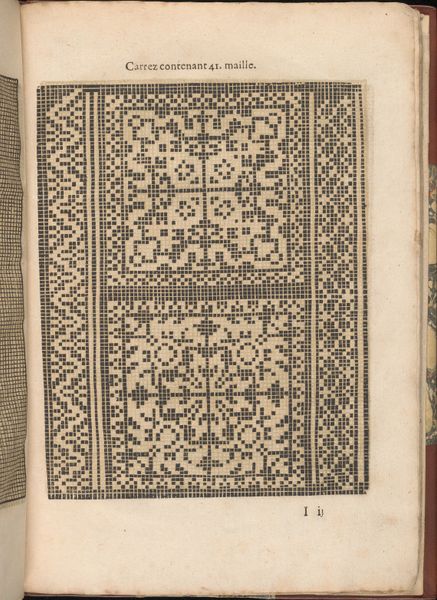
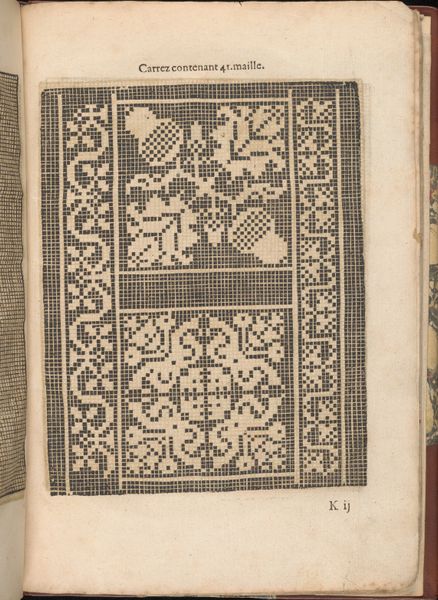
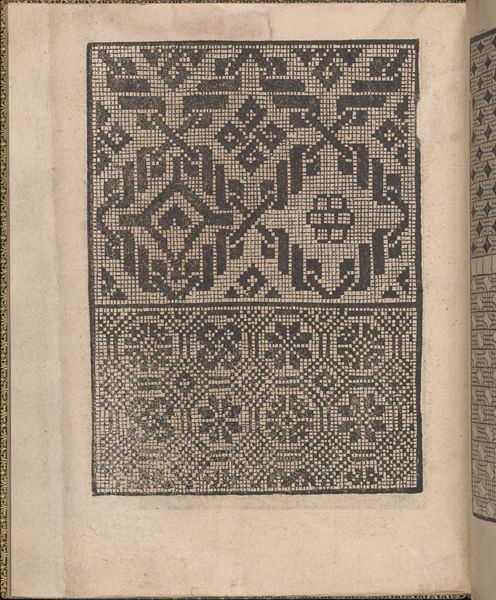
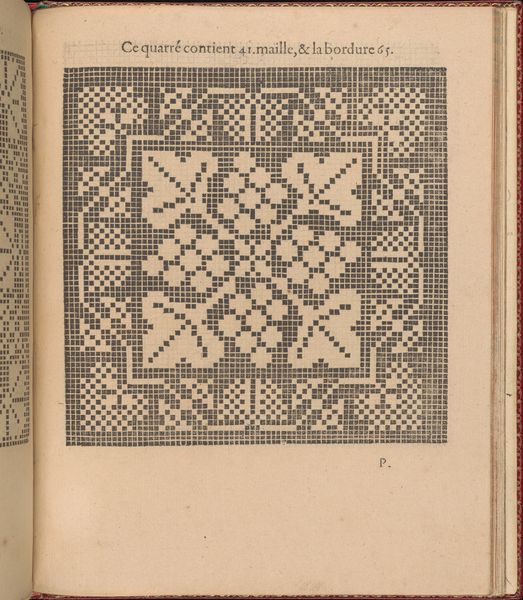
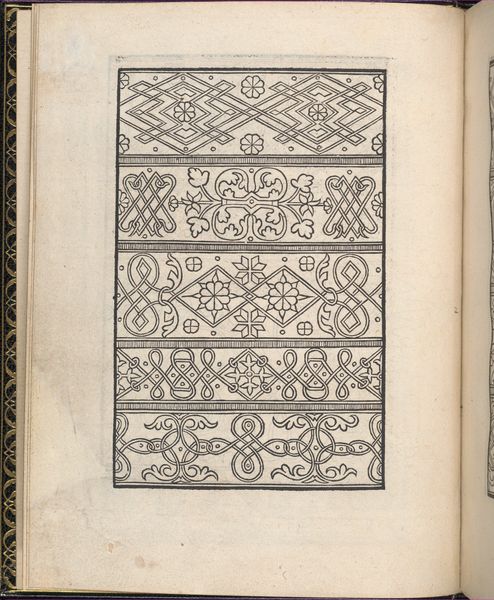
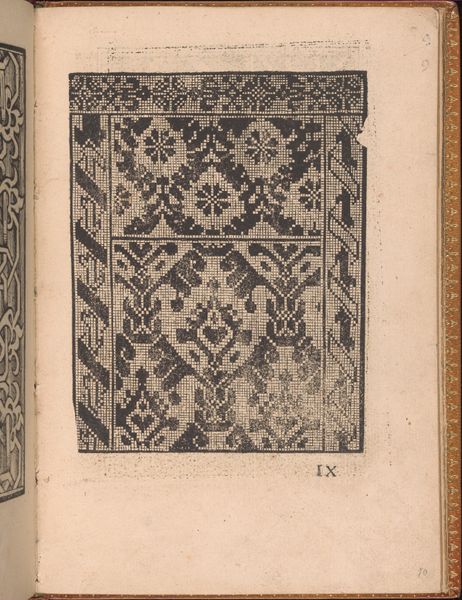
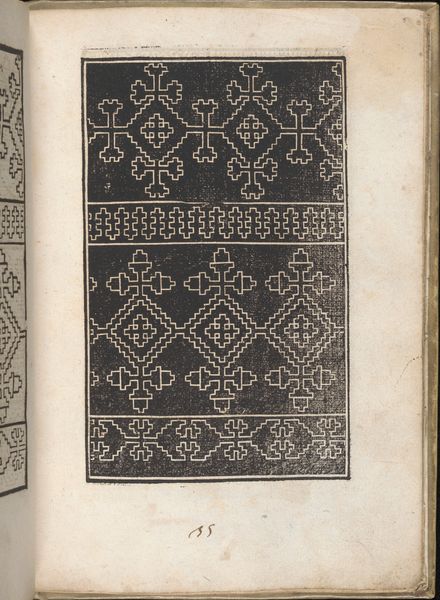
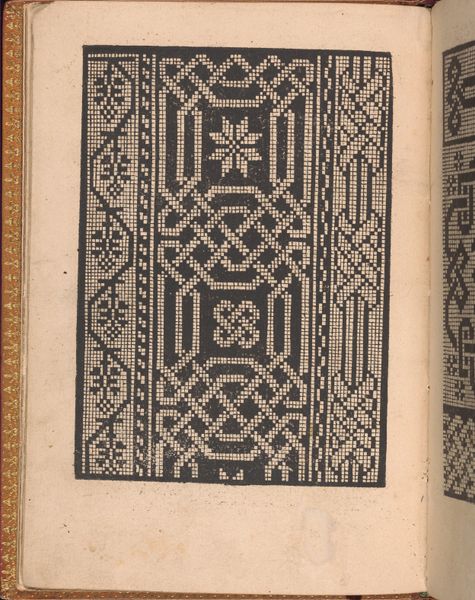
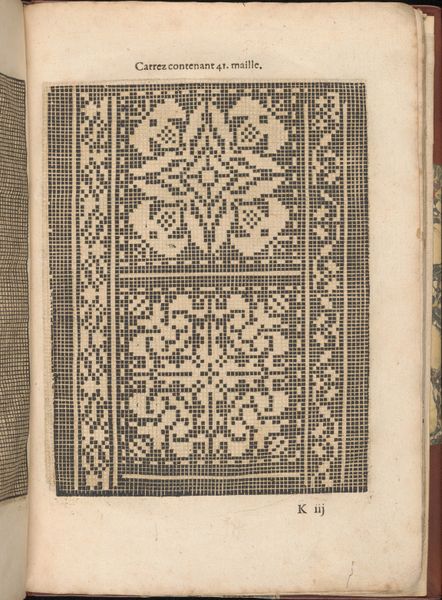
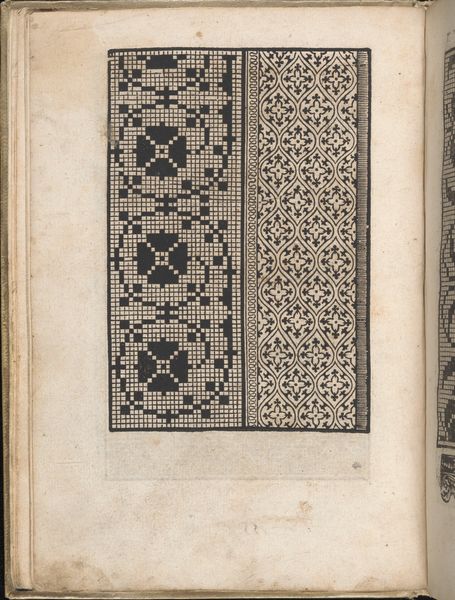
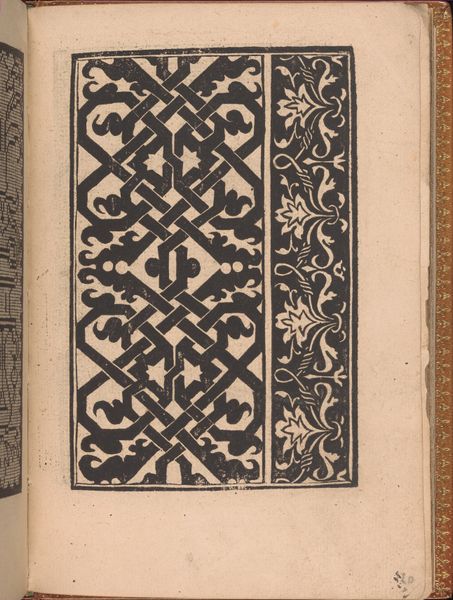
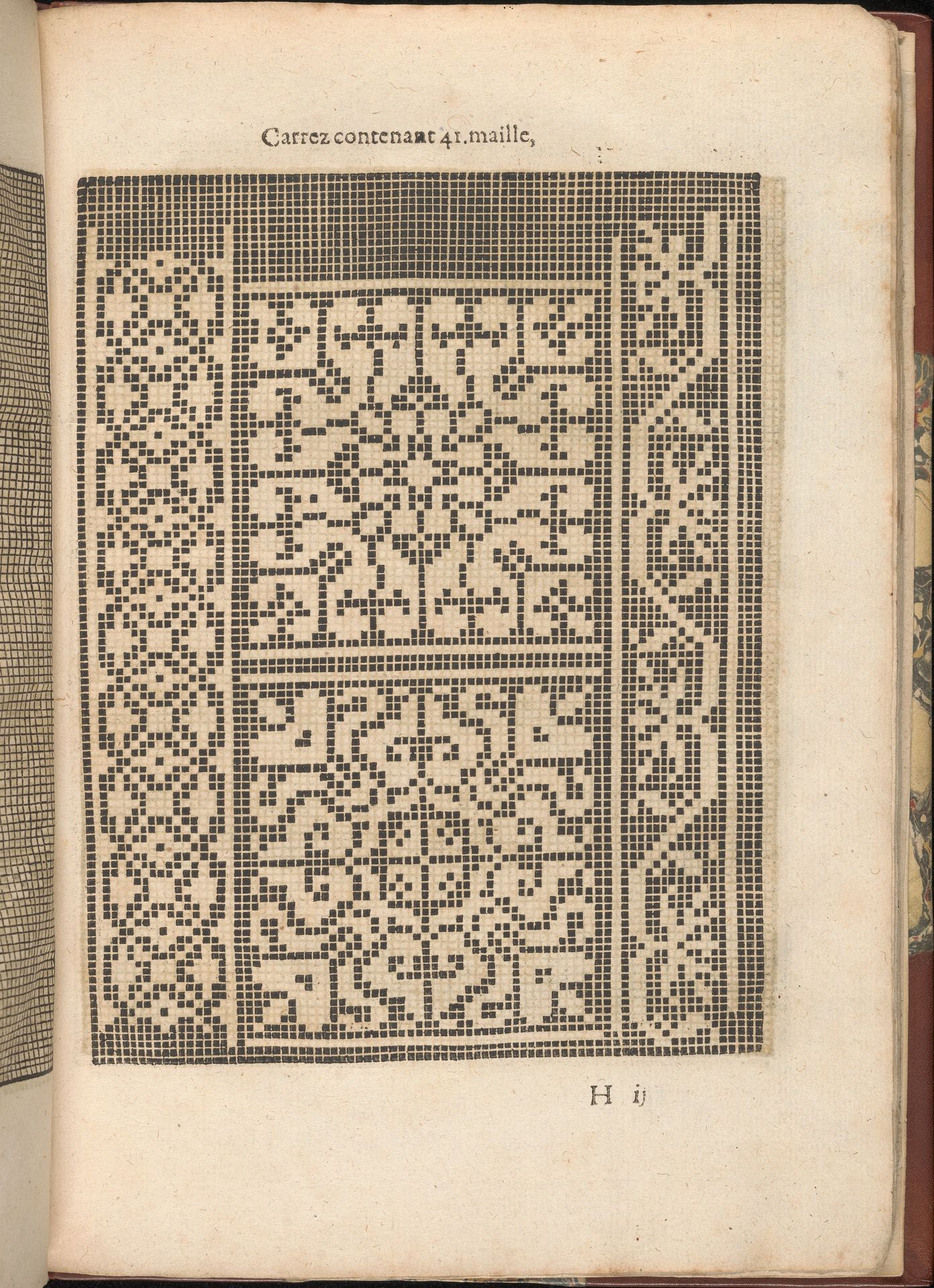
This is page 30 from "Les Secondes Oeuvres," a book of lace patterns made in Venice by Federico de Vinciolo, published in the late 16th century. Printed in ink on paper, it showcases intricate designs for needlework and lacemaking. The grid-like structure dominates the image, influencing its appearance with geometric precision. Each square acts as a guide for individual stitches. The use of simple, repeating motifs speaks to the labor-intensive nature of lacemaking; each motif meticulously crafted by hand. Vinciolo’s pattern books not only display finished works, but also serve as instructional guides. They are deeply rooted in the skilled traditions of textile production. These books played a crucial role in disseminating lace-making techniques throughout Europe, directly influencing fashion, and, by extension, commerce and consumer culture. By emphasizing the link between design and production, it blurs the line between fine art and craft.
Les Secondes Oeuvres, et Subtiles Inventions De Lingerie du Seigneur Federic de Vinciolo Venitien, page 30 (recto)
1603

Federico de Vinciolo
1582 - 1599
The Metropolitan Museum of Art
Metropolitan Museum of Art, New York, NYArtwork details
- Medium
- drawing, print, textile, paper, engraving
- Dimensions
- Overall: 9 7/16 x 6 1/2 in. (24 x 16.5 cm)
- Location
- Metropolitan Museum of Art, New York, NY
- Copyright
- Public Domain
Tags
Comments
Share your thoughts
About this artwork
This is page 30 from "Les Secondes Oeuvres," a book of lace patterns made in Venice by Federico de Vinciolo, published in the late 16th century. Printed in ink on paper, it showcases intricate designs for needlework and lacemaking. The grid-like structure dominates the image, influencing its appearance with geometric precision. Each square acts as a guide for individual stitches. The use of simple, repeating motifs speaks to the labor-intensive nature of lacemaking; each motif meticulously crafted by hand. Vinciolo’s pattern books not only display finished works, but also serve as instructional guides. They are deeply rooted in the skilled traditions of textile production. These books played a crucial role in disseminating lace-making techniques throughout Europe, directly influencing fashion, and, by extension, commerce and consumer culture. By emphasizing the link between design and production, it blurs the line between fine art and craft.
Comments
Share your thoughts