About this artwork
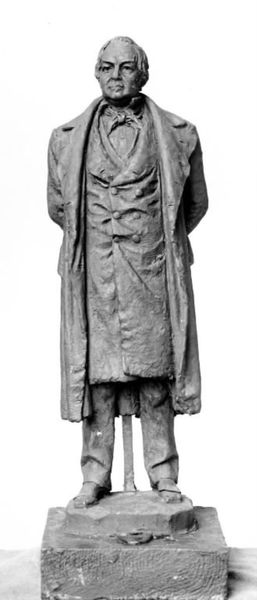
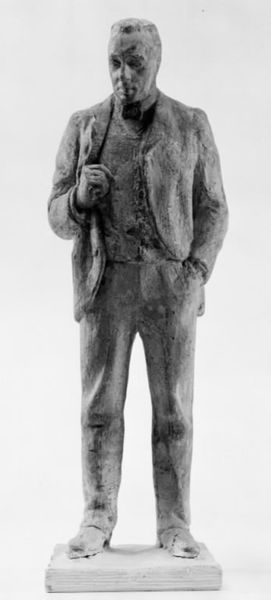
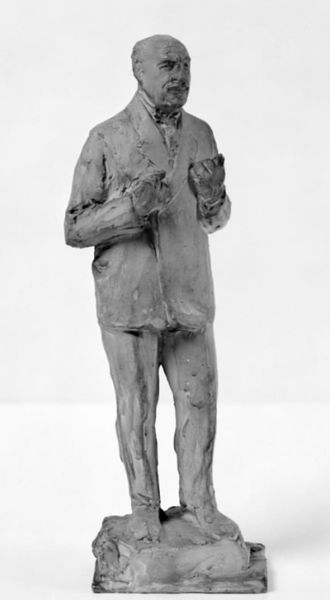
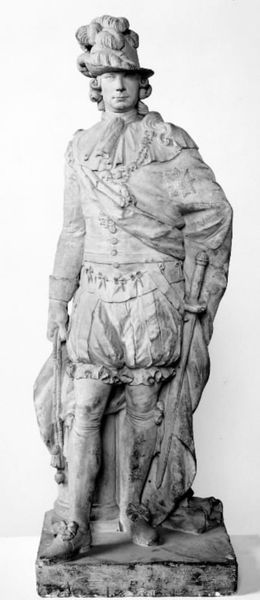
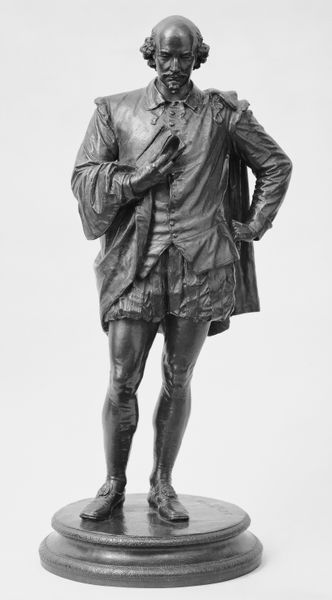
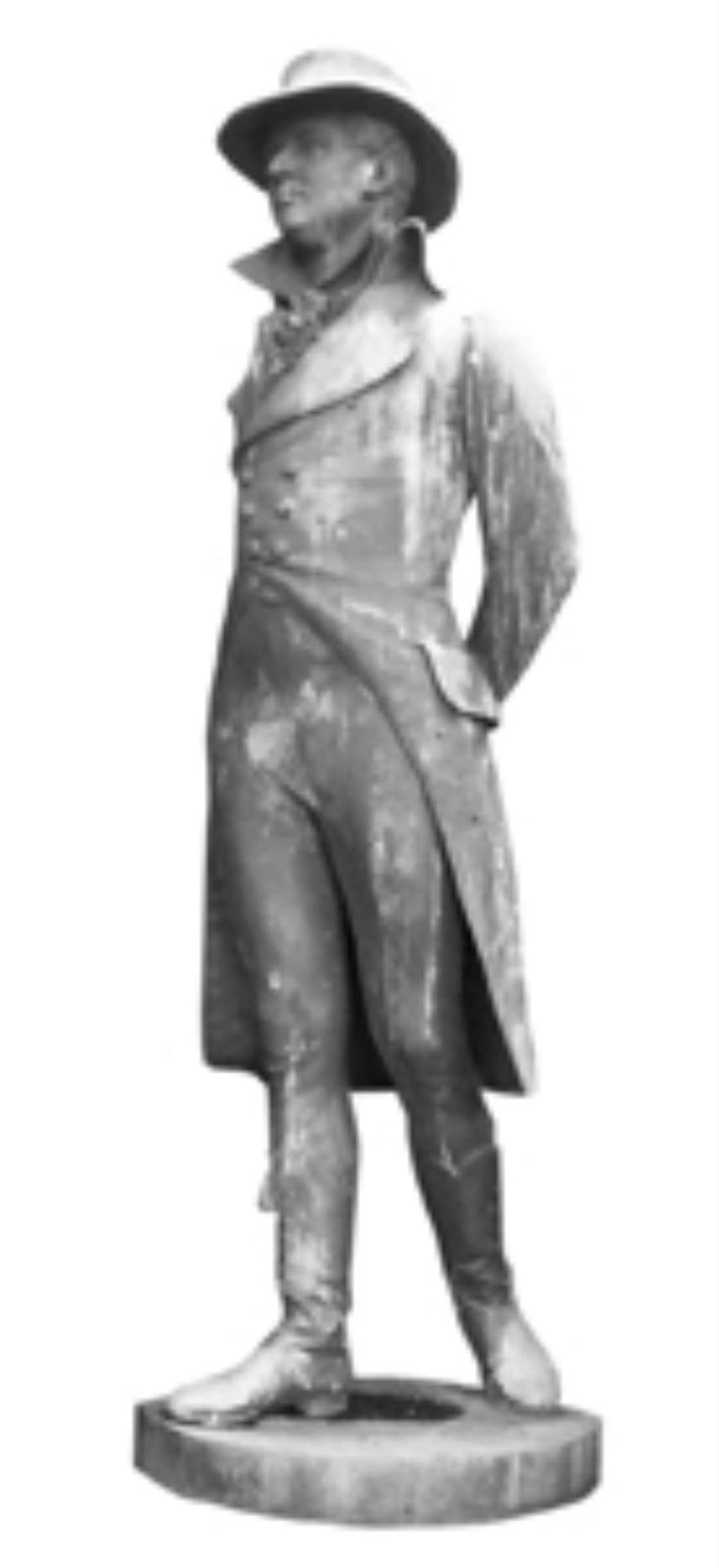
Julius Schultz crafted this statue of Adam Oehlenschläger, immortalizing the Danish poet in bronze. Here, the figure is depicted in a contemplative stance, his hands clasped behind his back, a pose that evokes a sense of introspection and poise. This gesture reminds us of the classical contrapposto, a posture seen in ancient Greek sculptures, where weight is shifted to one leg, lending a natural, relaxed look. Consider the Doryphoros by Polykleitos, where we see a similar balance between tension and relaxation. The hands behind the back is a gesture used through Renaissance portraiture to communicate dignity and self-assurance. This symbol has echoed across time, reappearing in portraits of leaders and thinkers, each time adapted to fit the cultural and psychological context. It represents more than just physical posture; it’s an assertion of intellectual and social standing, a pose that speaks to the deep human desire for recognition and legacy.
Digteren Adam Oehlenschläger
1897


Artwork details
- Medium
- bronze, sculpture
- Dimensions
- 207 cm (height) x 68 cm (width) x 68 cm (depth) (Netto)
- Location
- SMK - Statens Museum for Kunst
Tags
Comments
Share your thoughts
About this artwork
Julius Schultz crafted this statue of Adam Oehlenschläger, immortalizing the Danish poet in bronze. Here, the figure is depicted in a contemplative stance, his hands clasped behind his back, a pose that evokes a sense of introspection and poise. This gesture reminds us of the classical contrapposto, a posture seen in ancient Greek sculptures, where weight is shifted to one leg, lending a natural, relaxed look. Consider the Doryphoros by Polykleitos, where we see a similar balance between tension and relaxation. The hands behind the back is a gesture used through Renaissance portraiture to communicate dignity and self-assurance. This symbol has echoed across time, reappearing in portraits of leaders and thinkers, each time adapted to fit the cultural and psychological context. It represents more than just physical posture; it’s an assertion of intellectual and social standing, a pose that speaks to the deep human desire for recognition and legacy.
Comments
Share your thoughts