About this artwork
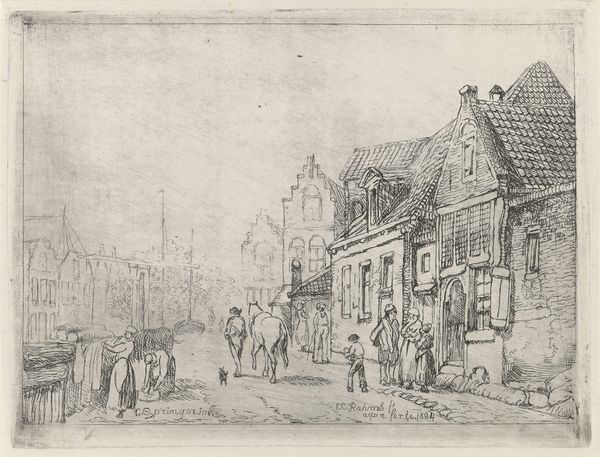
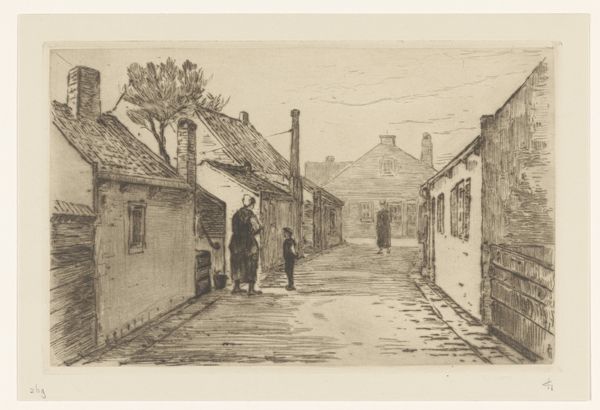
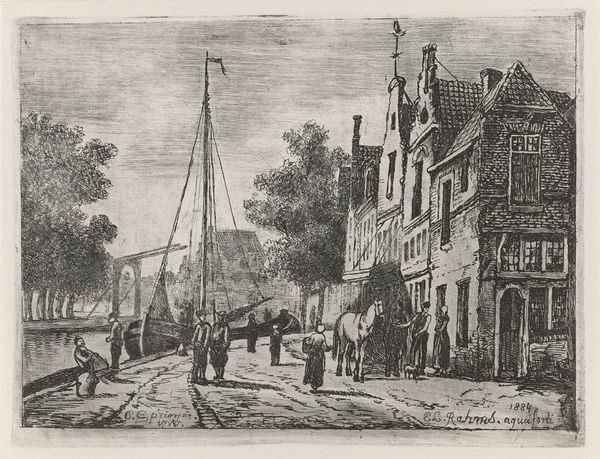
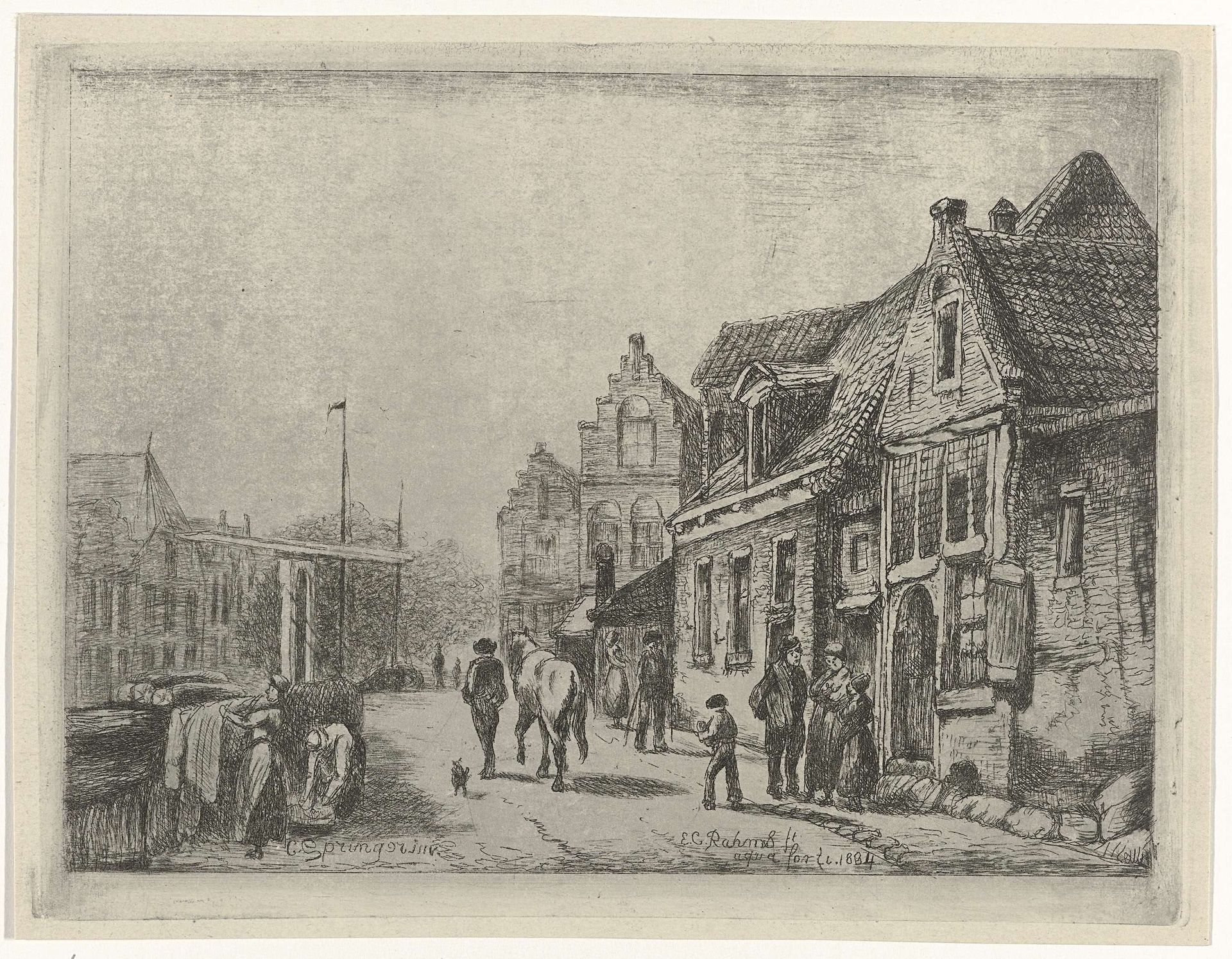
Eberhard Cornelis Rahms created this print, "Stadsgezicht," in 1884. Notice the composition first. The buildings loom on the right, their sharp angles drawing our eyes upward, while figures populate the street. The artist's use of line is particularly striking. Look at the minute, detailed strokes that define the architecture and the figures within the cityscape. Rahms's work encapsulates a specific moment in art history, reflecting the formal concerns of his time. Through a careful arrangement of light and shadow, Rahms captures a sense of depth and realism, inviting us into the scene. Consider also the role of texture. The roughness of the brickwork, the smooth surfaces of the street – all contribute to a rich, multi-sensory experience. It's through these formal elements that Rahms constructs not just an image of a city, but a commentary on space, perception, and representation.

Artwork details
- Medium
- drawing, print, etching, graphite
- Dimensions
- height 142 mm, width 185 mm
- Copyright
- Rijks Museum: Open Domain
Tags
drawing
dutch-golden-age
etching
landscape
etching
horse
graphite
cityscape
genre-painting
street
realism
Comments
No comments
About this artwork
Eberhard Cornelis Rahms created this print, "Stadsgezicht," in 1884. Notice the composition first. The buildings loom on the right, their sharp angles drawing our eyes upward, while figures populate the street. The artist's use of line is particularly striking. Look at the minute, detailed strokes that define the architecture and the figures within the cityscape. Rahms's work encapsulates a specific moment in art history, reflecting the formal concerns of his time. Through a careful arrangement of light and shadow, Rahms captures a sense of depth and realism, inviting us into the scene. Consider also the role of texture. The roughness of the brickwork, the smooth surfaces of the street – all contribute to a rich, multi-sensory experience. It's through these formal elements that Rahms constructs not just an image of a city, but a commentary on space, perception, and representation.
Comments
No comments