About this artwork
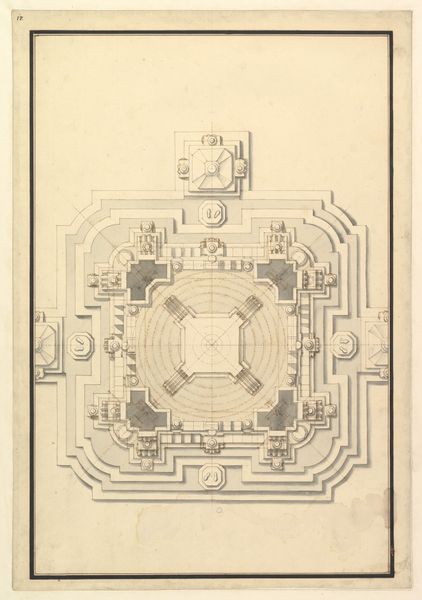
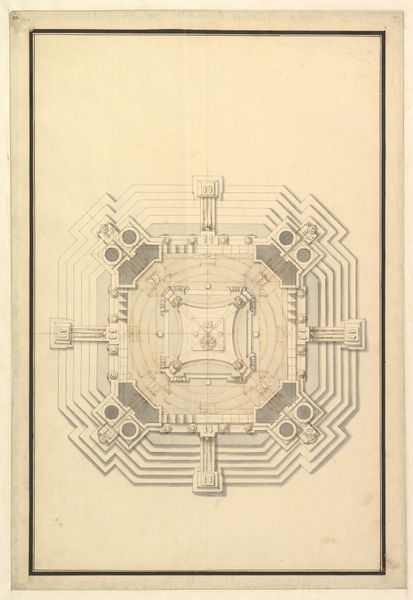
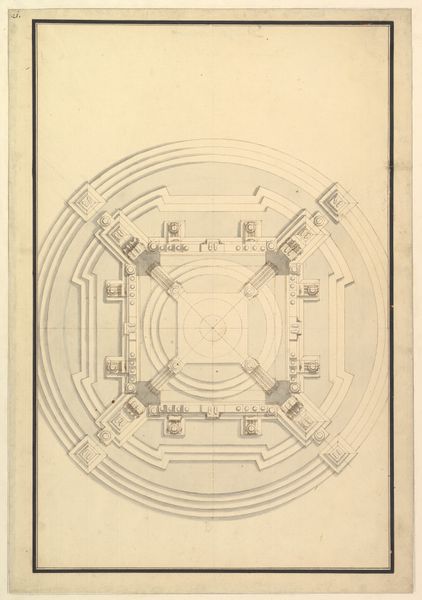
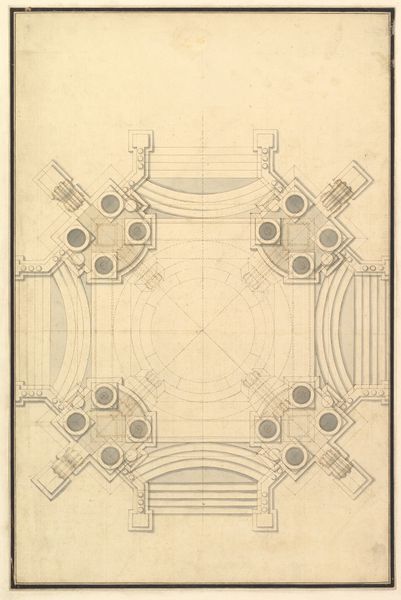
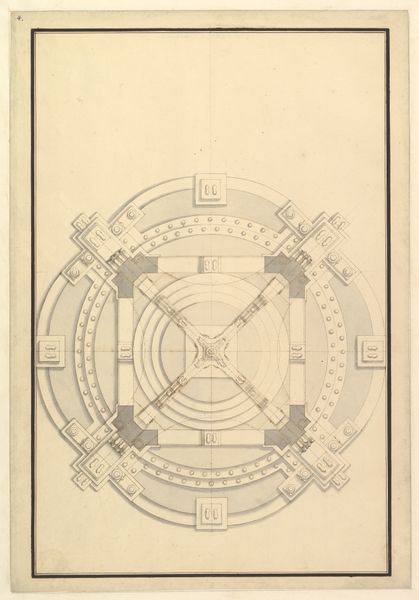
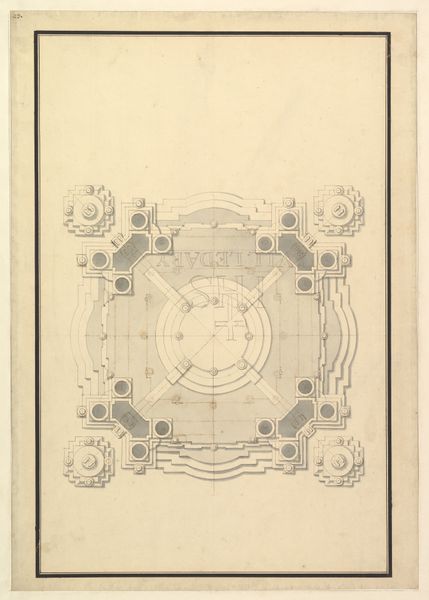
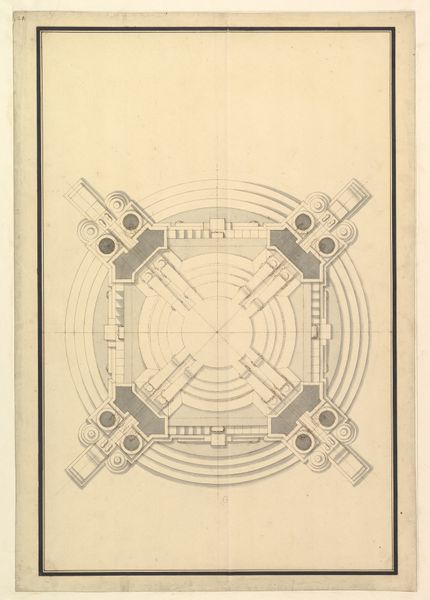
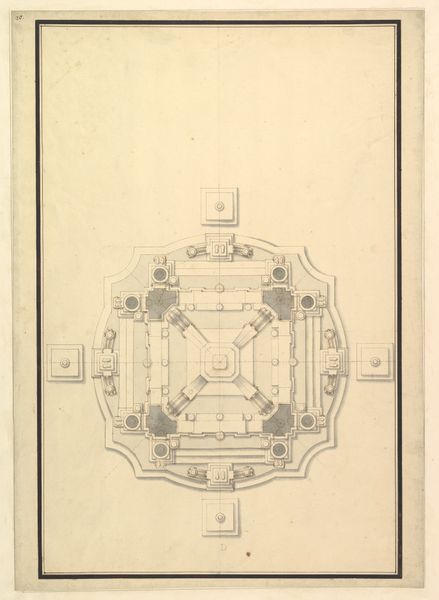
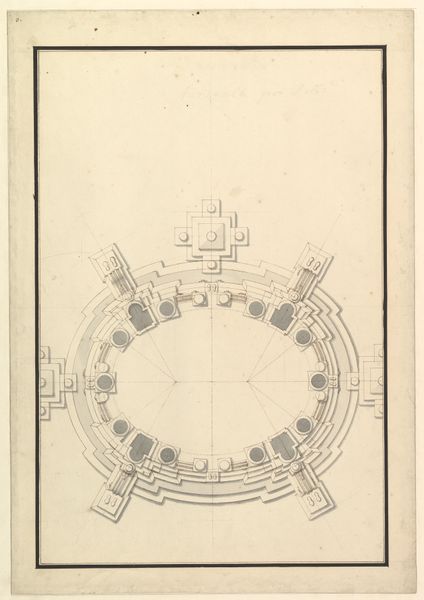
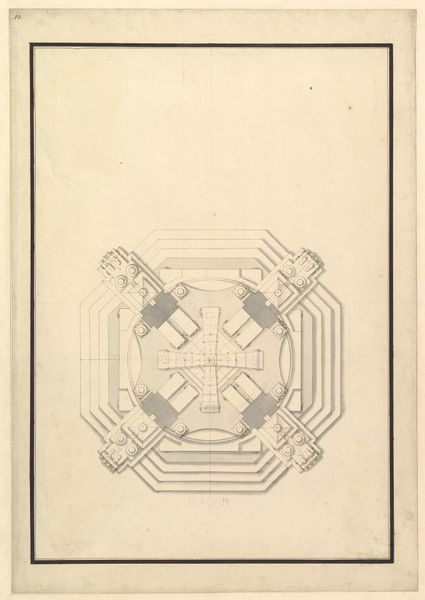
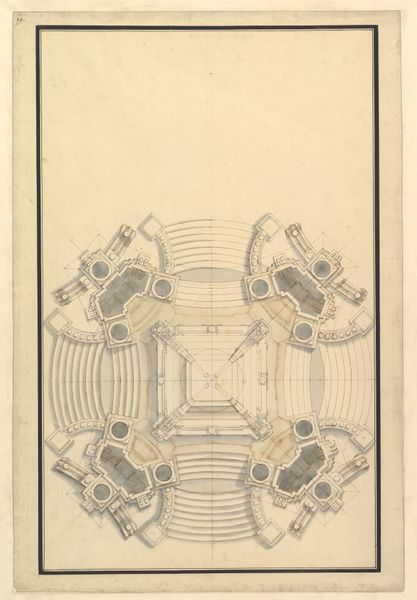
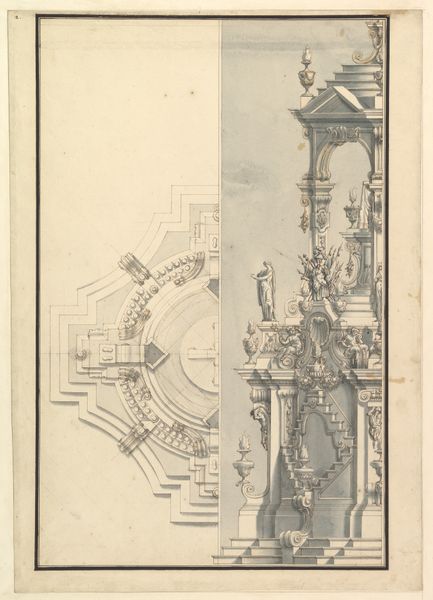
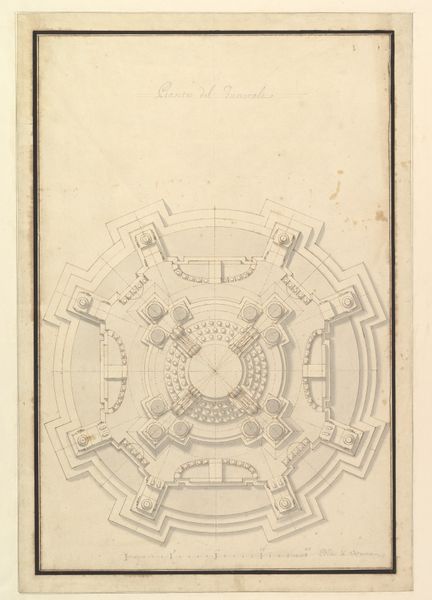
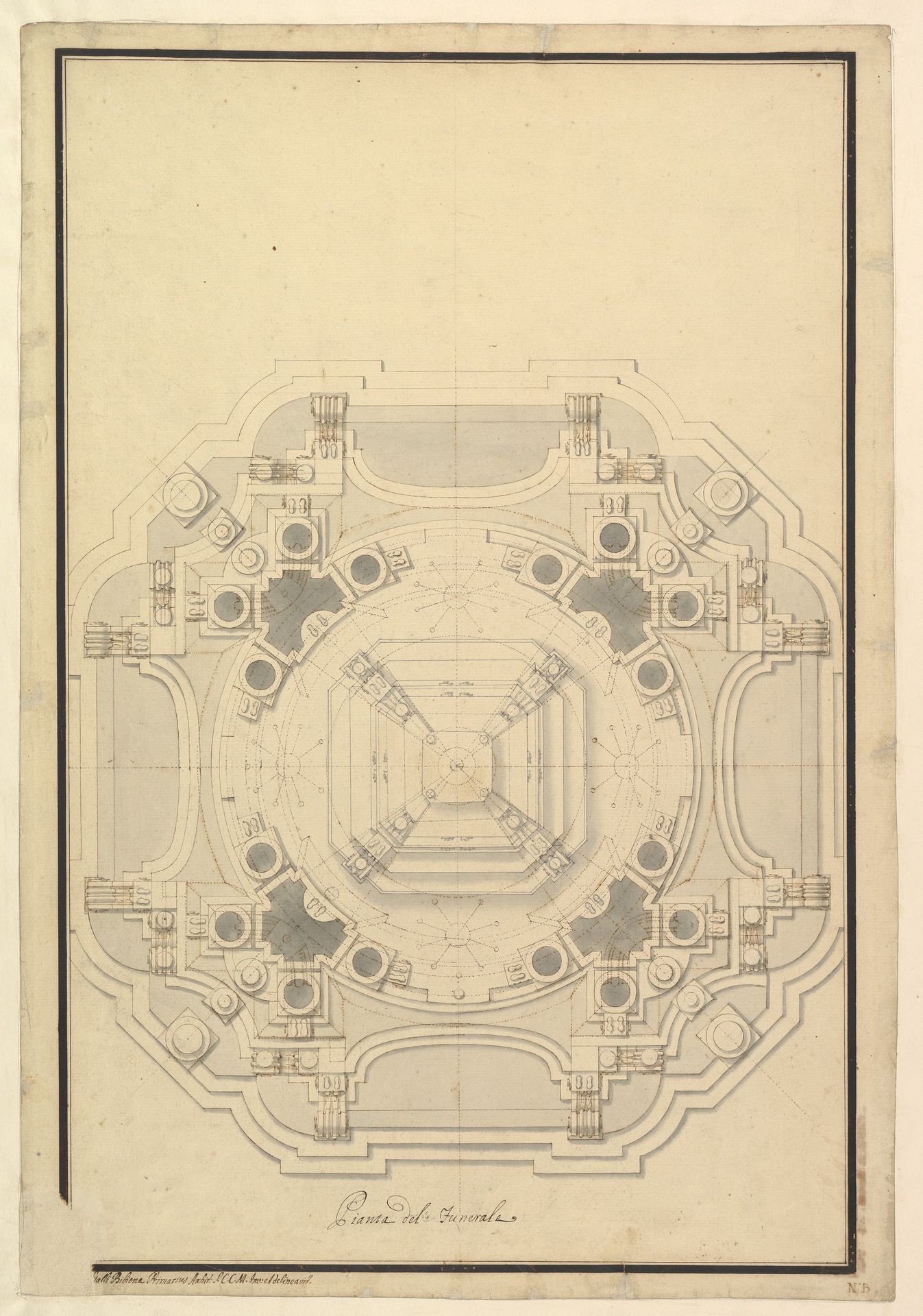
Giuseppe Galli Bibiena created this ink on paper ground plan for the catafalque of Louis XIV. The detailed rendering captures the elaborate design of this temporary structure, intended to honor the deceased French monarch. The process of creating such a plan involved precise drafting and technical skill. Note the intricate linework, the carefully measured proportions, and the subtle shading that suggests depth and volume. This kind of drawing was essential not only for visualizing the final structure but also for communicating the design to craftsmen who would be responsible for its construction. Though ephemeral, the catafalque was a demonstration of power, and its design reflected the hierarchical social structure of the time. The amount of work involved in planning and constructing this monument speaks to the resources and labor commanded by the monarchy. Consider this drawing not just as a plan, but as a document of social relations and material culture. It reminds us of the vital connection between design, labor, and the expression of authority in the 18th century.
Ground Plan for the Catafalque for Louis XIV (d. 1715) 1710 - 1720

Giuseppe Galli Bibiena
1696 - 1756
The Metropolitan Museum of Art
Metropolitan Museum of Art, New York, NYArtwork details
- Medium
- drawing, print, etching, architecture
- Dimensions
- 21-1/4 x 14-5/8 in. (54.0 x 37.1 cm)
- Location
- Metropolitan Museum of Art, New York, NY
- Copyright
- Public Domain
Tags
drawing
baroque
etching
etching
geometric
architecture
Comments
No comments
About this artwork
Giuseppe Galli Bibiena created this ink on paper ground plan for the catafalque of Louis XIV. The detailed rendering captures the elaborate design of this temporary structure, intended to honor the deceased French monarch. The process of creating such a plan involved precise drafting and technical skill. Note the intricate linework, the carefully measured proportions, and the subtle shading that suggests depth and volume. This kind of drawing was essential not only for visualizing the final structure but also for communicating the design to craftsmen who would be responsible for its construction. Though ephemeral, the catafalque was a demonstration of power, and its design reflected the hierarchical social structure of the time. The amount of work involved in planning and constructing this monument speaks to the resources and labor commanded by the monarchy. Consider this drawing not just as a plan, but as a document of social relations and material culture. It reminds us of the vital connection between design, labor, and the expression of authority in the 18th century.
Comments
No comments