![Francesco I d'Este Dissolved the Seige of Reggio, from L'Idea di un Principe ed Eroe Cristiano in Francesco I d'Este, di Modena e Reggio Duca VIII [...] by Bartolomeo Fenice (Fénis)](https://d2w8kbdekdi1gv.cloudfront.net/eyJidWNrZXQiOiAiYXJ0ZXJhLWltYWdlcy1idWNrZXQiLCAia2V5IjogImFydHdvcmtzLzkxYmVhZTczLTZlZmUtNGFkMC1iZDdjLTA4M2ExZWUyOWFhZi85MWJlYWU3My02ZWZlLTRhZDAtYmQ3Yy0wODNhMWVlMjlhYWZfZnVsbC5qcGciLCAiZWRpdHMiOiB7InJlc2l6ZSI6IHsid2lkdGgiOiAxOTIwLCAiaGVpZ2h0IjogMTkyMCwgImZpdCI6ICJpbnNpZGUifX19)
About this artwork
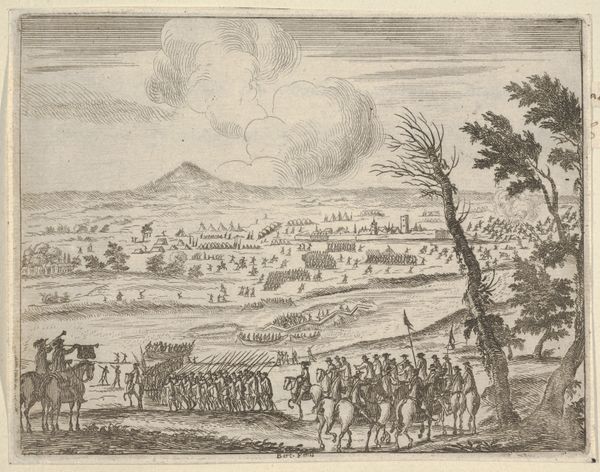
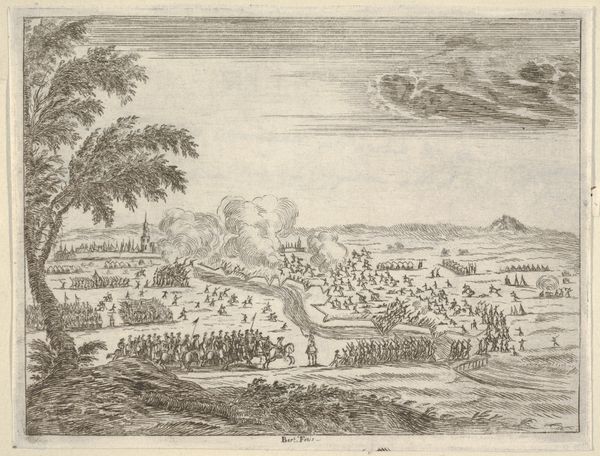
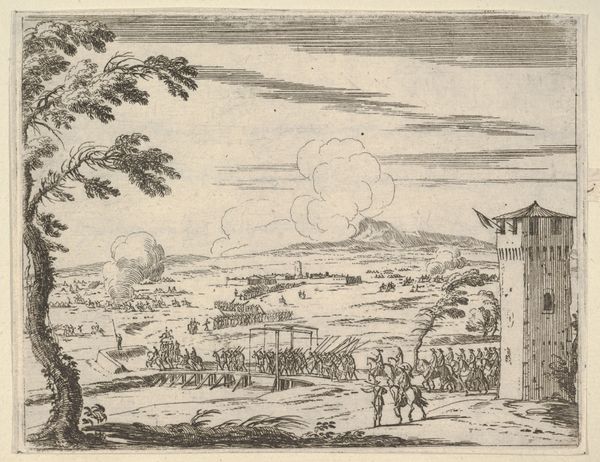
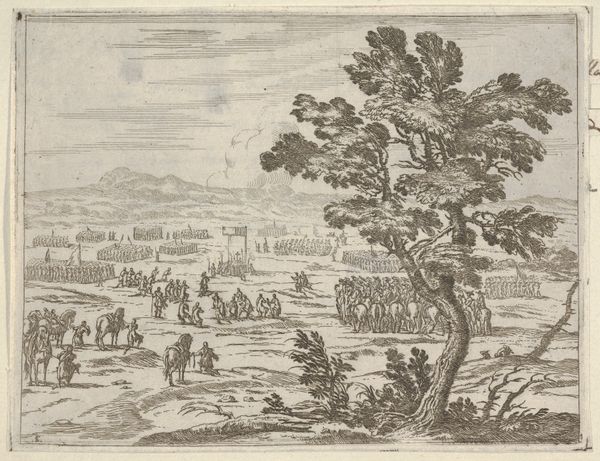
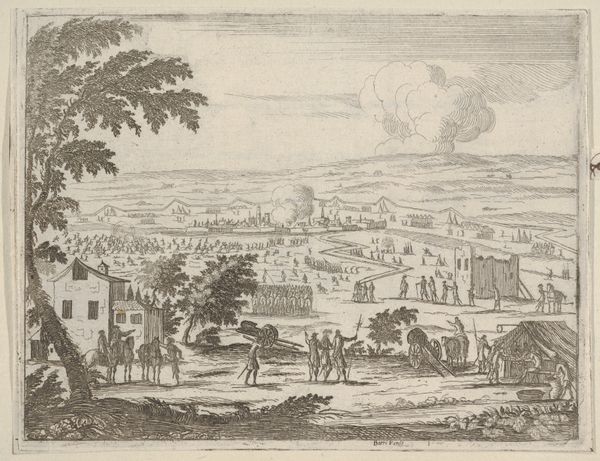
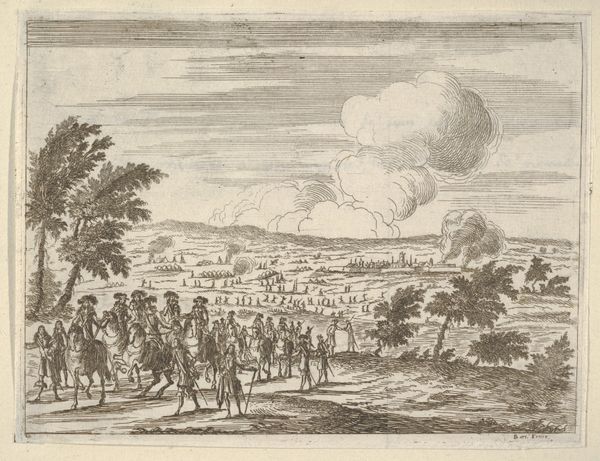
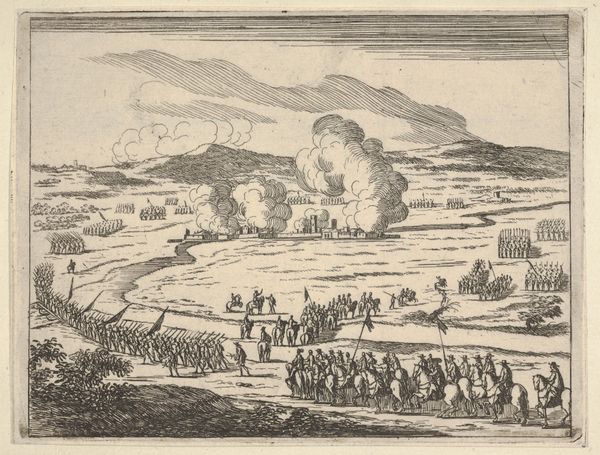
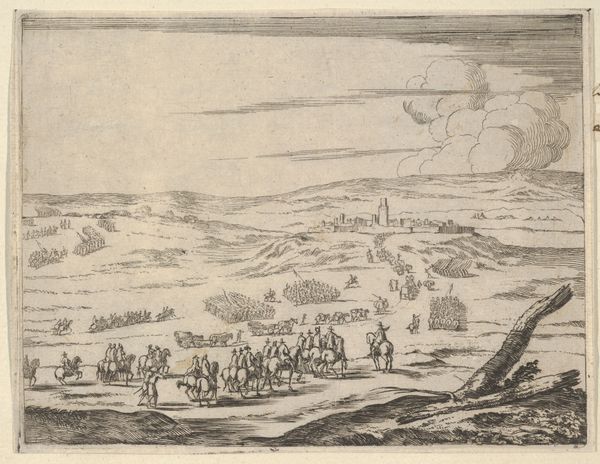
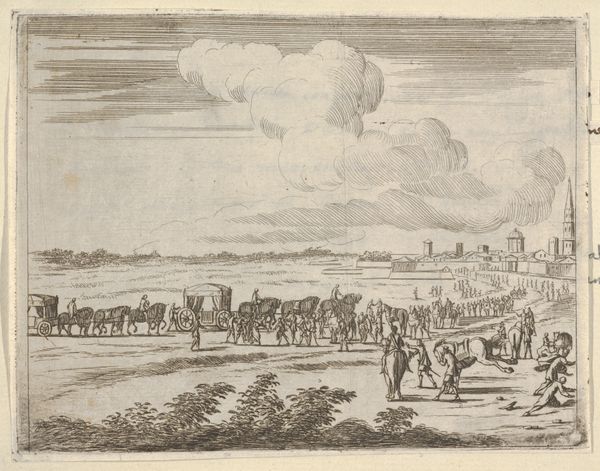
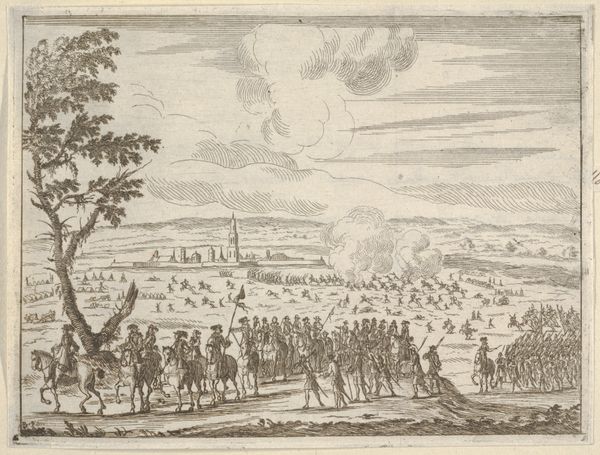
Bartolomeo Fenice made this print, "Francesco I d'Este Dissolved the Siege of Reggio," using etching, likely as part of a series of prints meant to glorify the reign of Francesco the First. The image shows the Duke of Modena and Reggio dissolving a siege, with the city of Reggio in the background. The print is designed to showcase the Duke's power and authority through imagery that evokes military strength and decisive leadership. Note how the city in the background appears orderly, which is a testament to the Duke’s resolve. This print was created in a time when rulers often used art to project an image of strength and legitimacy. Prints like this could be circulated to promote the Duke's image and consolidate his power. To understand this artwork, we would need to look at the history of the Este family, the political context of their rule, and the conventions of early modern printmaking. By exploring these resources, we can better understand the social and institutional forces that shaped its creation.
Francesco I d'Este Dissolved the Seige of Reggio, from L'Idea di un Principe ed Eroe Cristiano in Francesco I d'Este, di Modena e Reggio Duca VIII [...]
1659

Bartolomeo Fenice (Fénis)
@bartolomeofenicefenis
The Metropolitan Museum of Art
Metropolitan Museum of Art, New York, NYArtwork details
- Medium
- drawing, print, etching, engraving
- Dimensions
- Sheet: 4 7/8 × 6 5/16 in. (12.4 × 16 cm) Plate: 4 3/4 × 6 1/8 in. (12.1 × 15.6 cm)
- Location
- Metropolitan Museum of Art, New York, NY
- Copyright
- Public Domain
Tags
Comments
Share your thoughts
About this artwork
Bartolomeo Fenice made this print, "Francesco I d'Este Dissolved the Siege of Reggio," using etching, likely as part of a series of prints meant to glorify the reign of Francesco the First. The image shows the Duke of Modena and Reggio dissolving a siege, with the city of Reggio in the background. The print is designed to showcase the Duke's power and authority through imagery that evokes military strength and decisive leadership. Note how the city in the background appears orderly, which is a testament to the Duke’s resolve. This print was created in a time when rulers often used art to project an image of strength and legitimacy. Prints like this could be circulated to promote the Duke's image and consolidate his power. To understand this artwork, we would need to look at the history of the Este family, the political context of their rule, and the conventions of early modern printmaking. By exploring these resources, we can better understand the social and institutional forces that shaped its creation.
Comments
Share your thoughts