About this artwork
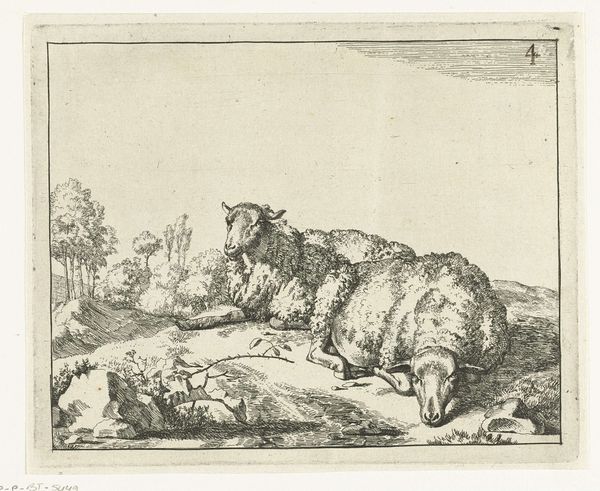
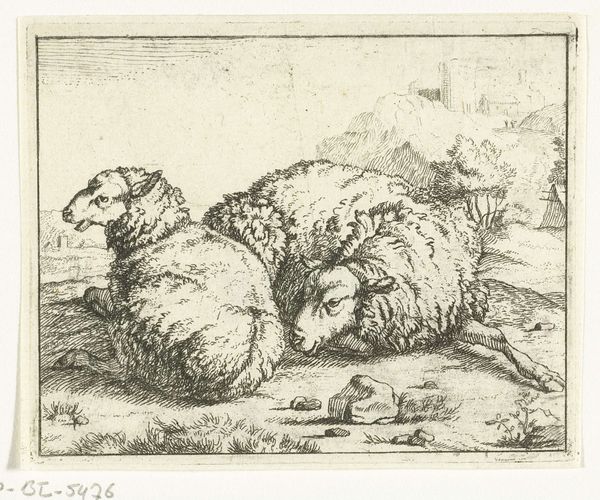
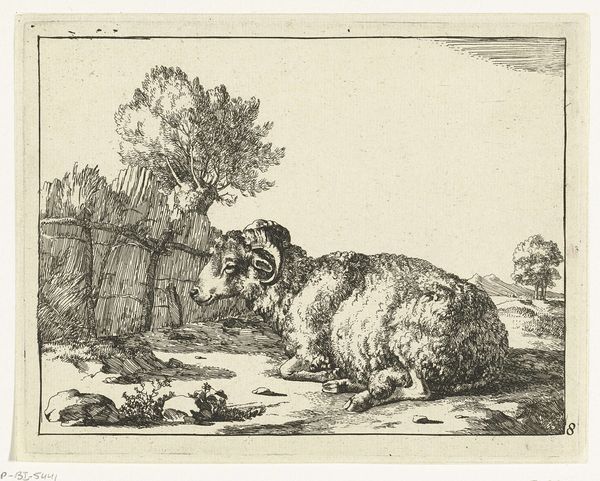
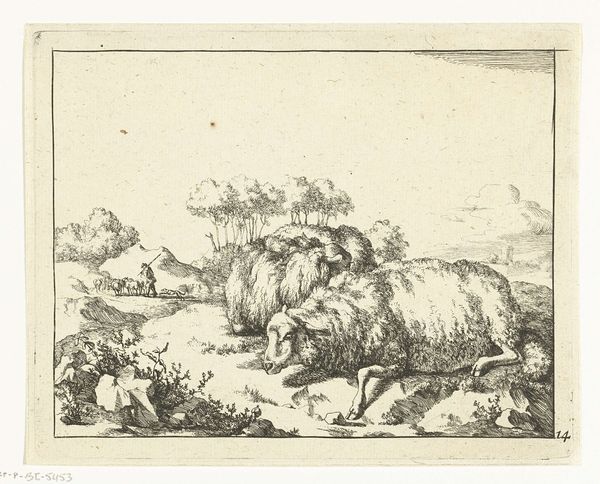
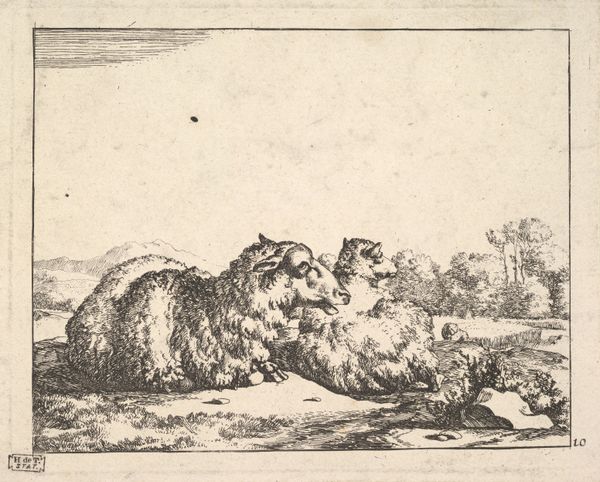
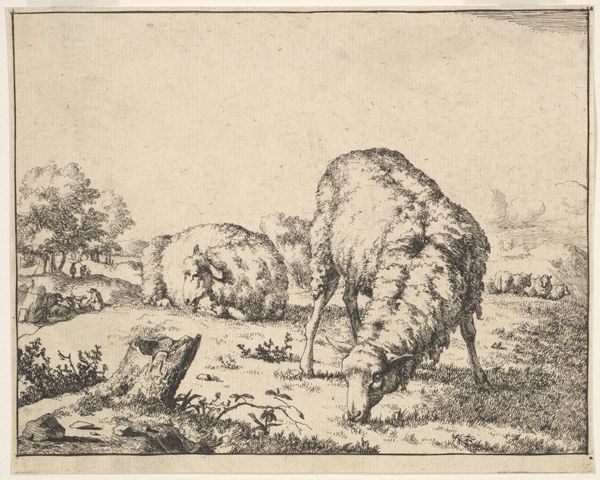
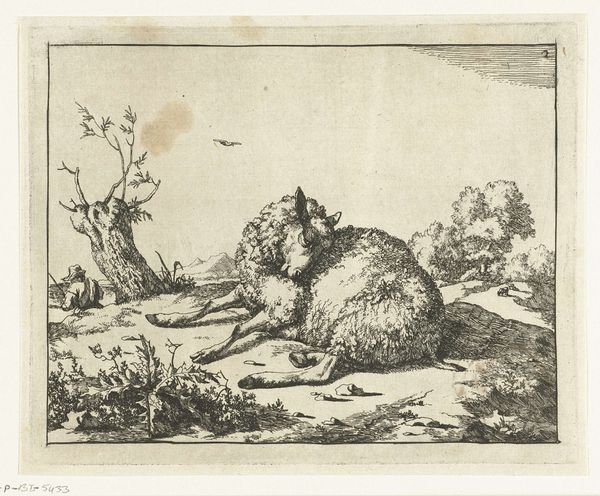
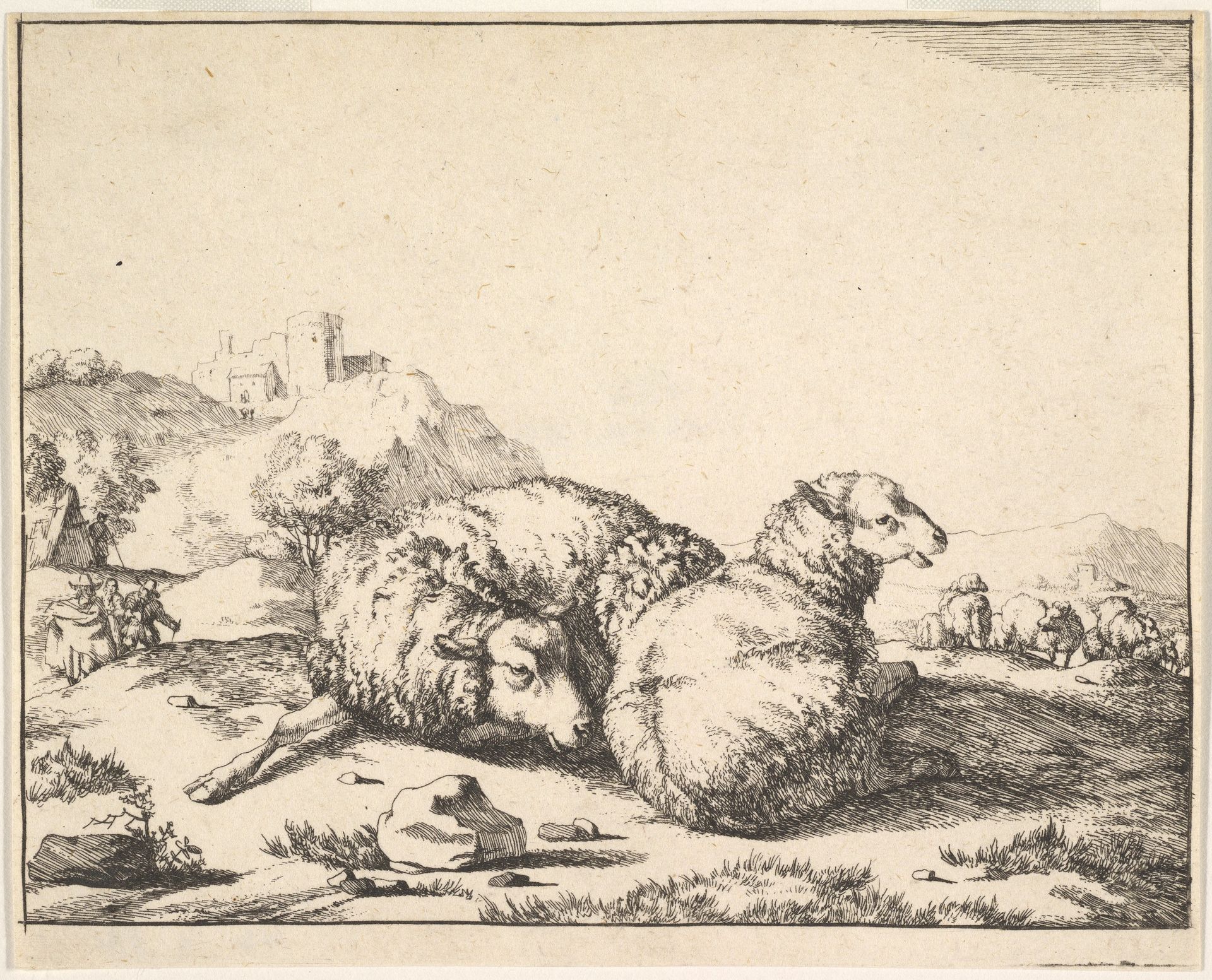
Editor: So, this is "Sheep, from a set of 16 plates," an etching by Marcus de Bye, made in 1664. It's deceptively simple, but there's something melancholic about the reclining sheep in the foreground. What do you see in this piece beyond a pastoral scene? Curator: It’s a window into the social and economic landscape of 17th-century Dutch society. While seemingly idyllic, images like these naturalize power structures. Consider the ownership of land and livestock – who benefited from the wool these sheep produced? These animals were a crucial part of the Dutch economy. How does the imagery reflect or obscure the lives of the laboring classes who tended these flocks? Editor: I hadn’t considered that. The etching’s simplicity almost hides those power dynamics. It focuses so much on the serene depiction of the animals and the landscape. Curator: Exactly. The Baroque period was deeply invested in ideals, sometimes masking complex realities. De Bye presents us with what seems like a genre painting, a slice of life, but what kind of life is being depicted, and whose perspective are we seeing it from? Look at the figures in the background, almost disappearing in the landscape. What is their relationship to the sheep? Editor: Perhaps they are shepherds? It's interesting how the background feels almost secondary, even though the artist placed figures in the distance. Curator: Yes, think about land ownership, class structures, and even the environmental impact of animal husbandry. This seemingly quiet scene is deeply embedded within historical and social frameworks. It forces us to confront whose stories are prioritized in art and history. Editor: This has totally changed my perception. It's more than just pretty sheep in a field; it's a complex commentary on society and class. Curator: Precisely! Art offers opportunities to examine hidden narratives and consider multiple viewpoints on history.
Sheep, from a set of 16 plates 1664


Artwork details
- Medium
- drawing, print, etching
- Dimensions
- sheet: 4 7/16 x 5 1/2 in. (11.2 x 14 cm)
- Location
- Metropolitan Museum of Art, New York, NY
- Copyright
- Public Domain
Tags
drawing
baroque
animal
etching
landscape
figuration
genre-painting
realism
Comments
No comments
About this artwork
Editor: So, this is "Sheep, from a set of 16 plates," an etching by Marcus de Bye, made in 1664. It's deceptively simple, but there's something melancholic about the reclining sheep in the foreground. What do you see in this piece beyond a pastoral scene? Curator: It’s a window into the social and economic landscape of 17th-century Dutch society. While seemingly idyllic, images like these naturalize power structures. Consider the ownership of land and livestock – who benefited from the wool these sheep produced? These animals were a crucial part of the Dutch economy. How does the imagery reflect or obscure the lives of the laboring classes who tended these flocks? Editor: I hadn’t considered that. The etching’s simplicity almost hides those power dynamics. It focuses so much on the serene depiction of the animals and the landscape. Curator: Exactly. The Baroque period was deeply invested in ideals, sometimes masking complex realities. De Bye presents us with what seems like a genre painting, a slice of life, but what kind of life is being depicted, and whose perspective are we seeing it from? Look at the figures in the background, almost disappearing in the landscape. What is their relationship to the sheep? Editor: Perhaps they are shepherds? It's interesting how the background feels almost secondary, even though the artist placed figures in the distance. Curator: Yes, think about land ownership, class structures, and even the environmental impact of animal husbandry. This seemingly quiet scene is deeply embedded within historical and social frameworks. It forces us to confront whose stories are prioritized in art and history. Editor: This has totally changed my perception. It's more than just pretty sheep in a field; it's a complex commentary on society and class. Curator: Precisely! Art offers opportunities to examine hidden narratives and consider multiple viewpoints on history.
Comments
No comments