About this artwork
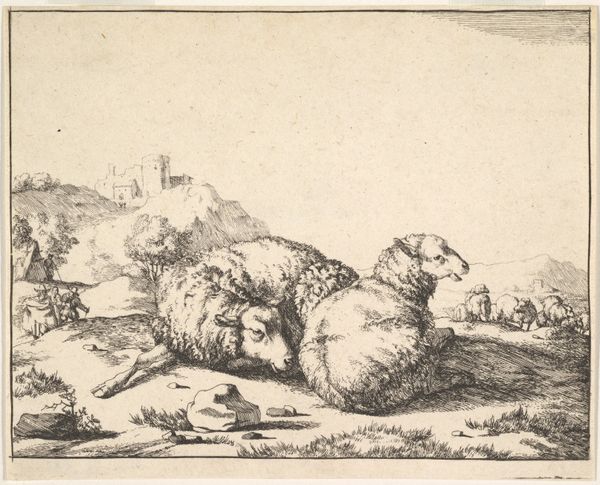
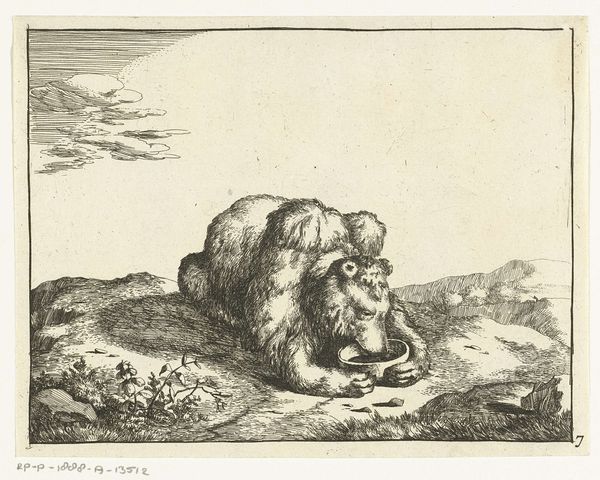
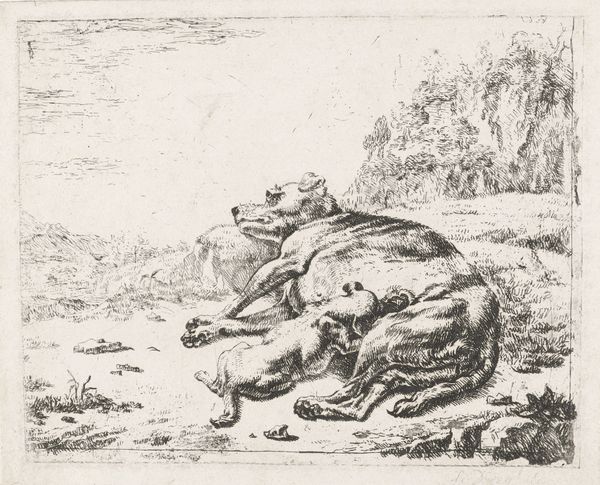
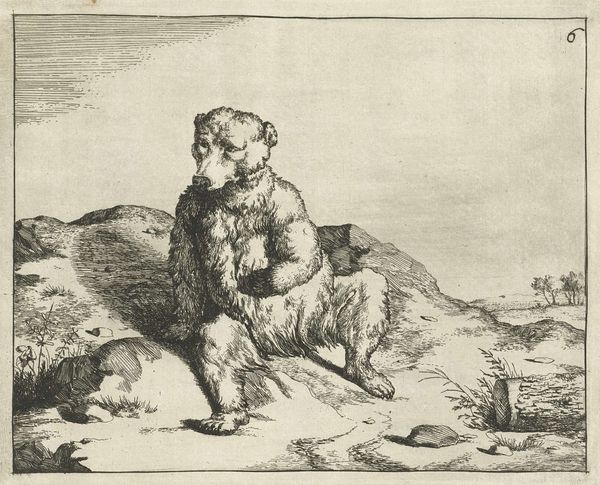
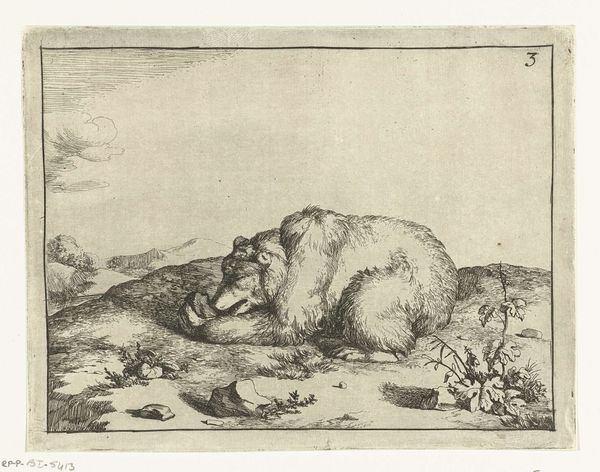
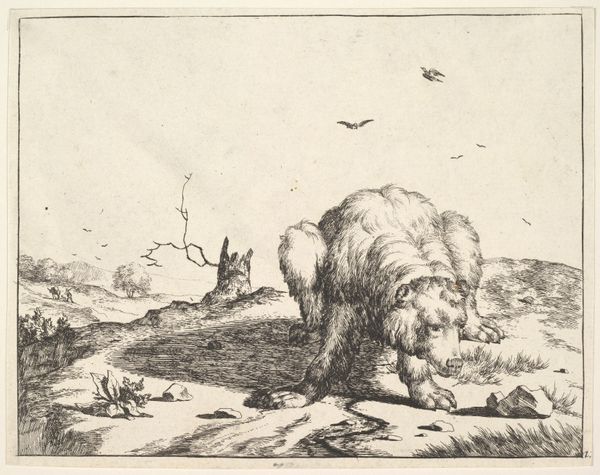
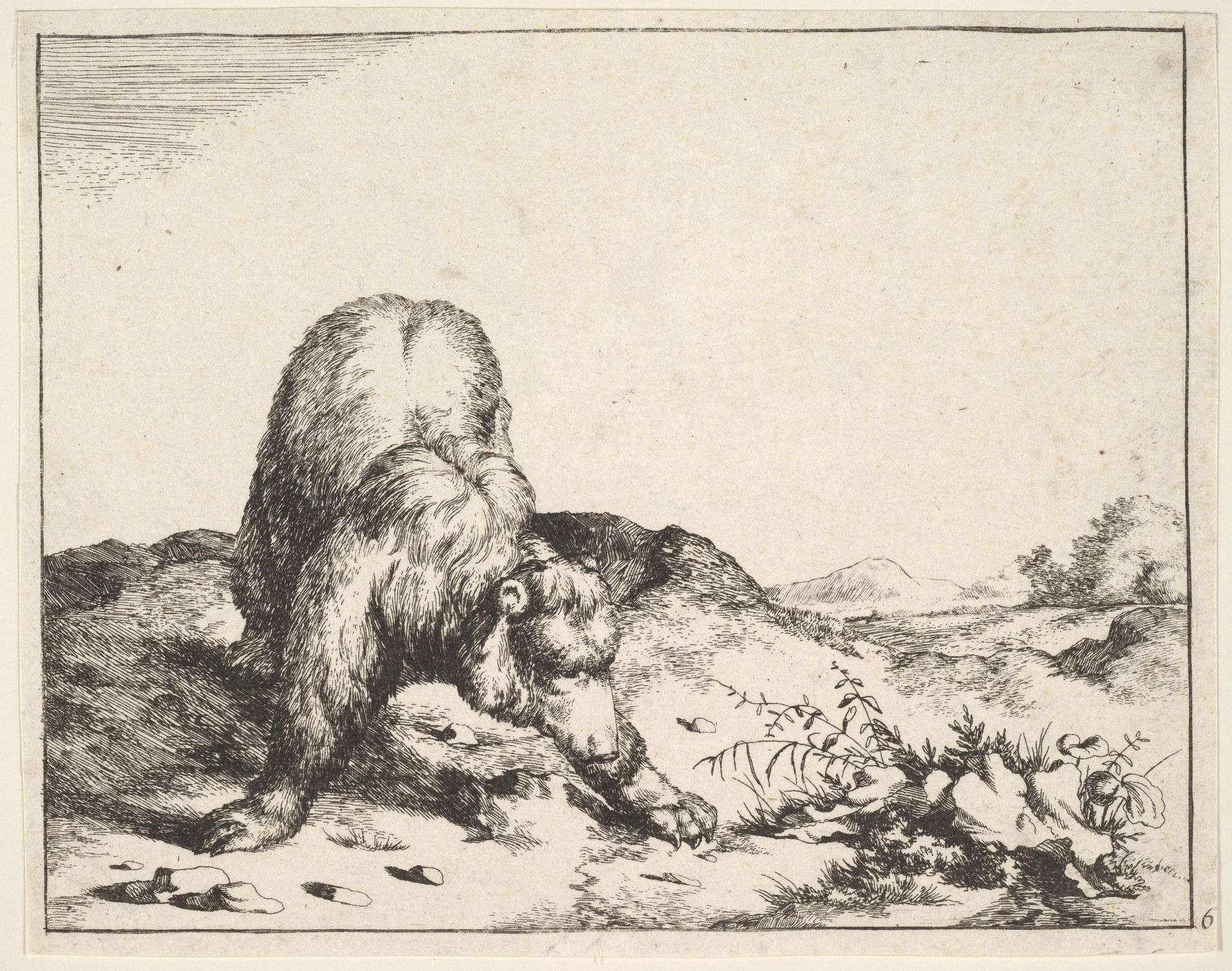
Marcus de Bye created this print, "From the Set of The Bears," with etching. The composition immediately draws the eye to the dominant figure of the bear, its fur rendered through a dense network of fine, dark lines against a sparse landscape. De Bye masterfully employs line and texture to define form and space. The rough, almost chaotic etching marks capture the bear's bulk and suggest movement, while the lighter, more delicate lines in the background create a sense of depth. The bear dominates the foreground, obscuring what's behind it, which invites a reading of nature as a source of the unknown, as a raw force. This print engages with the historical understanding of nature, particularly in its display of wildness and the sublime. Consider how the artist's marks and lines function not just aesthetically but also as part of a larger cultural discourse about our relationship with the natural world. The interpretation of art remains a continuous dialogue.
from The Set of The Bears
1659 - 1669


Artwork details
- Medium
- drawing, print, etching
- Dimensions
- sheet: 4 1/2 x 5 11/16 in. (11.5 x 14.5 cm)
- Location
- Metropolitan Museum of Art, New York, NY
- Copyright
- Public Domain
Tags
drawing
baroque
etching
landscape
realism
Comments
Be the first to share your thoughts about this work.
About this artwork
Marcus de Bye created this print, "From the Set of The Bears," with etching. The composition immediately draws the eye to the dominant figure of the bear, its fur rendered through a dense network of fine, dark lines against a sparse landscape. De Bye masterfully employs line and texture to define form and space. The rough, almost chaotic etching marks capture the bear's bulk and suggest movement, while the lighter, more delicate lines in the background create a sense of depth. The bear dominates the foreground, obscuring what's behind it, which invites a reading of nature as a source of the unknown, as a raw force. This print engages with the historical understanding of nature, particularly in its display of wildness and the sublime. Consider how the artist's marks and lines function not just aesthetically but also as part of a larger cultural discourse about our relationship with the natural world. The interpretation of art remains a continuous dialogue.
Comments
Be the first to share your thoughts about this work.