About this artwork
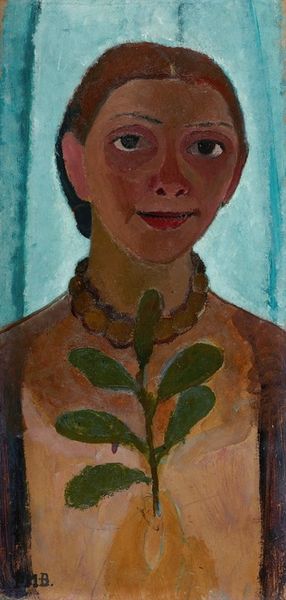
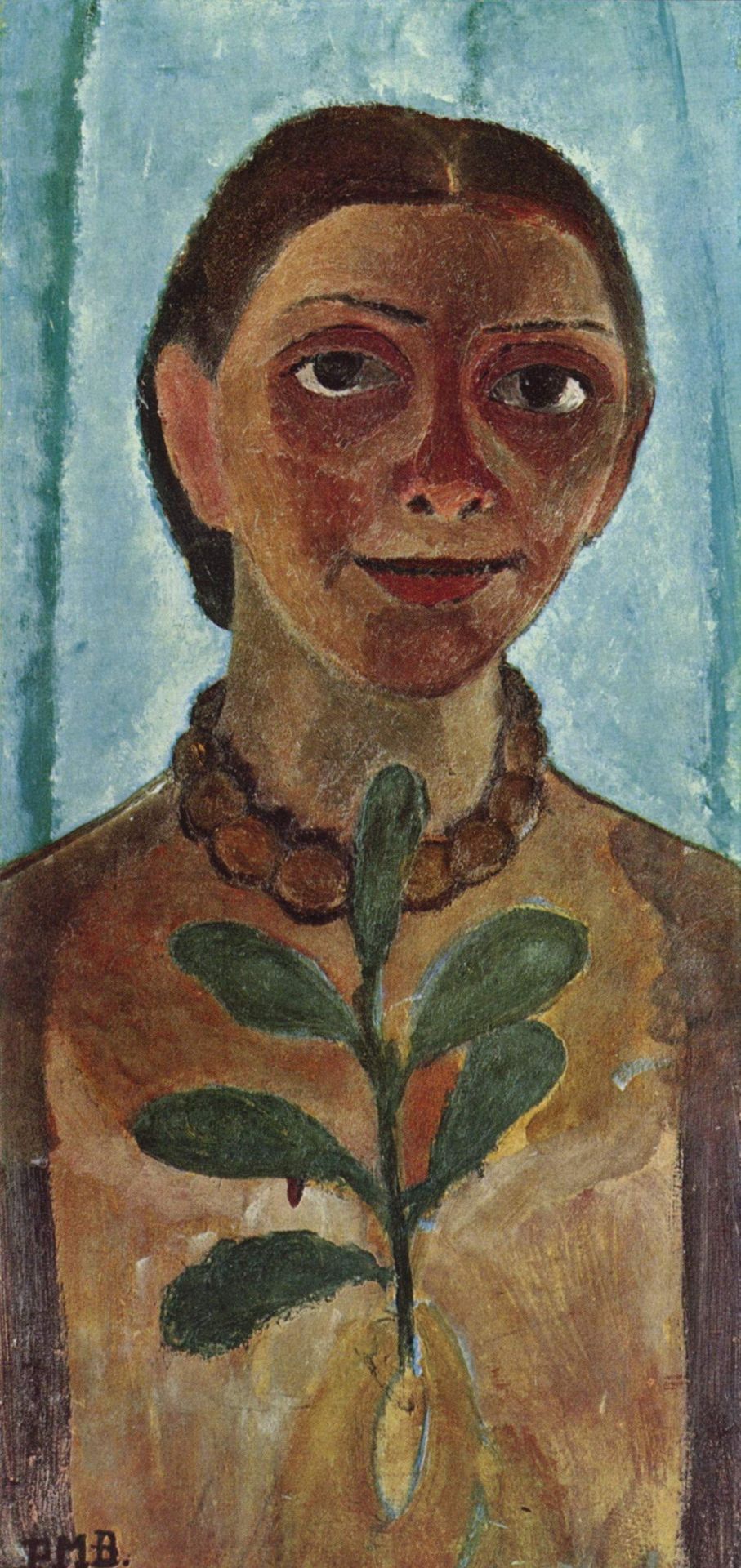
Paula Modersohn-Becker painted this self-portrait with a camellia branch sometime around 1907, we think. It's interesting how she goes about building up the image. The colours, mostly earthy browns and greens against a blue background, are laid down pretty flat. I like how the physical, material presence of the paint contributes to the emotional landscape here. The paint isn't trying to trick you into thinking it's anything other than pigment on canvas. Look closely at her face. See how the warm reddish-browns define her features with a kind of raw honesty. There's no soft blending or traditional modeling, just these direct, almost blunt strokes that give her face a sculptural quality. It's a way of seeing that's both tender and unflinching. Modersohn-Becker reminds me a little of other early modernists, like maybe Munch, in how she uses color and form to express inner states. But there's something uniquely personal and self-possessed about her work. It leaves you with this feeling of quiet strength.
The Painter with Camellia Branch (Self-Portrait)
1907


Artwork details
- Medium
- mixed-media, oil-paint
- Dimensions
- 62 x 31 cm
- Location
- Folkwang Museum, Essen, Germany
- Copyright
- Public domain
Tags
portrait
mixed-media
self-portrait
oil-paint
oil painting
expressionism
portrait drawing
Comments
Be the first to share your thoughts about this work.
About this artwork
Paula Modersohn-Becker painted this self-portrait with a camellia branch sometime around 1907, we think. It's interesting how she goes about building up the image. The colours, mostly earthy browns and greens against a blue background, are laid down pretty flat. I like how the physical, material presence of the paint contributes to the emotional landscape here. The paint isn't trying to trick you into thinking it's anything other than pigment on canvas. Look closely at her face. See how the warm reddish-browns define her features with a kind of raw honesty. There's no soft blending or traditional modeling, just these direct, almost blunt strokes that give her face a sculptural quality. It's a way of seeing that's both tender and unflinching. Modersohn-Becker reminds me a little of other early modernists, like maybe Munch, in how she uses color and form to express inner states. But there's something uniquely personal and self-possessed about her work. It leaves you with this feeling of quiet strength.
Comments
Be the first to share your thoughts about this work.