About this artwork
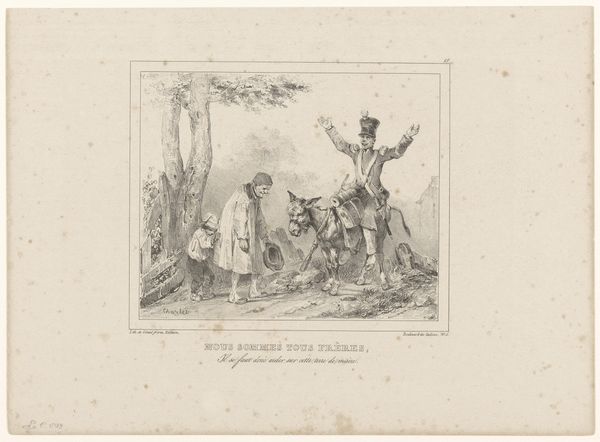
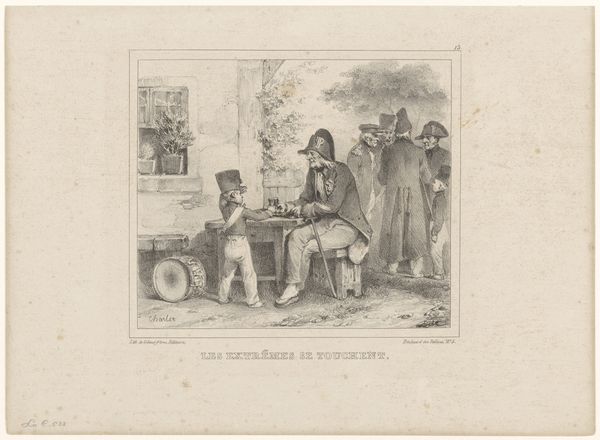
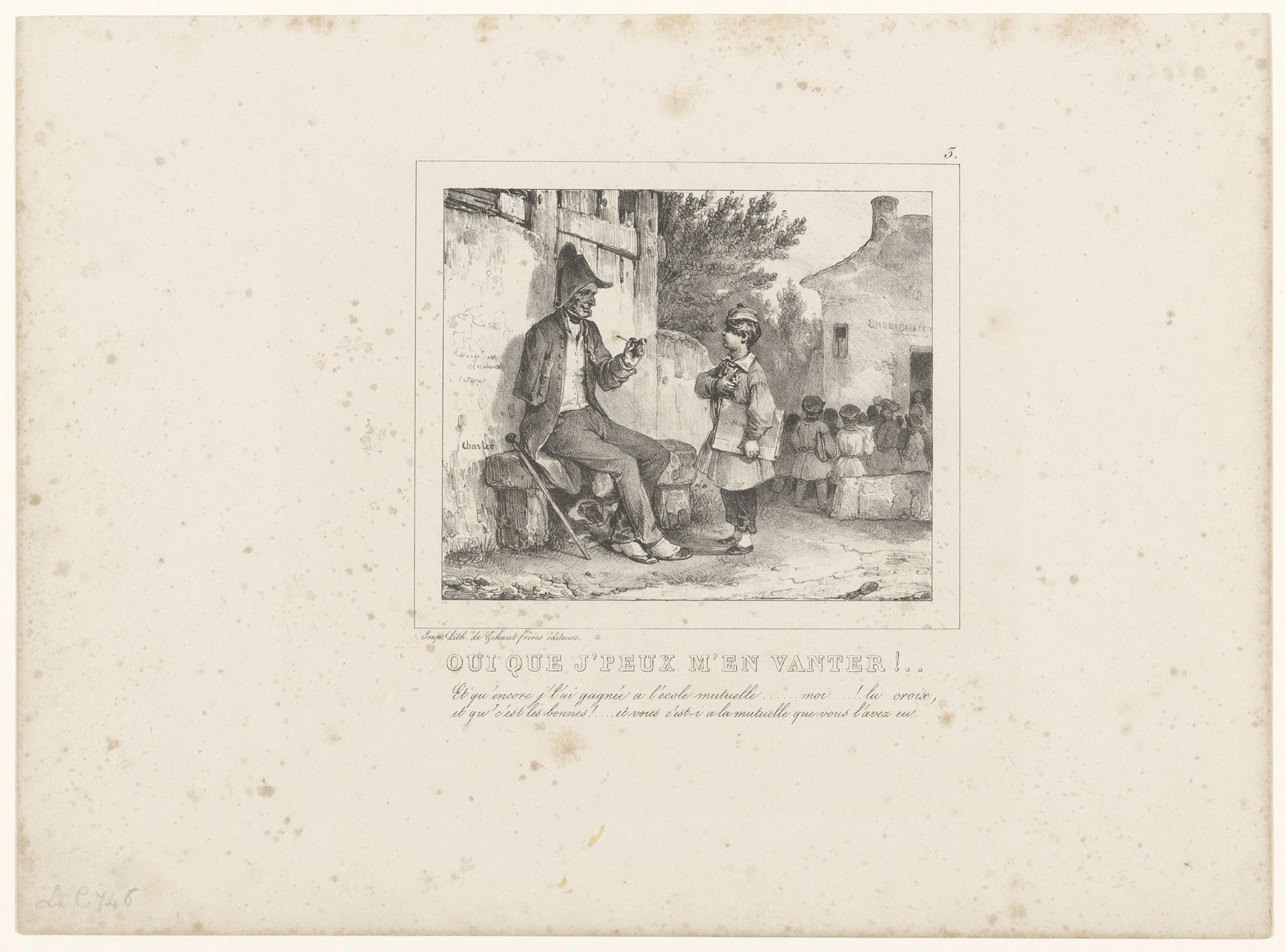
This print by Nicolas Toussaint Charlet shows a young scholar displaying his medal to a disabled soldier. Medals, emblems of honor and achievement, carry a weight far beyond their material form. Consider, for example, the Roman laurel wreath, a symbol of triumph adapted through the ages, resurfacing during the Renaissance and beyond. Here, the medal serves as a modern echo of that ancient desire to commemorate valor. The act of display is itself a potent symbol, reflecting a universal need for recognition. It echoes across time, from the trophies of antiquity to contemporary awards ceremonies. This scene resonates on a psychological level: the vulnerability of the soldier, the pride of the boy, and the shared human experience of seeking and bestowing honor. These symbols remind us that history is not linear, but cyclical, with motifs and gestures reappearing, evolving, and carrying new meanings across generations.
Jonge scholier laat een invalide soldaat zijn medaille zien
1830

Nicolas Toussaint Charlet
1792 - 1845Location
RijksmuseumArtwork details
- Medium
- drawing, print, paper, engraving
- Dimensions
- height 249 mm, width 338 mm
- Location
- Rijksmuseum
- Copyright
- Rijks Museum: Open Domain
Tags
Comments
Share your thoughts
About this artwork
This print by Nicolas Toussaint Charlet shows a young scholar displaying his medal to a disabled soldier. Medals, emblems of honor and achievement, carry a weight far beyond their material form. Consider, for example, the Roman laurel wreath, a symbol of triumph adapted through the ages, resurfacing during the Renaissance and beyond. Here, the medal serves as a modern echo of that ancient desire to commemorate valor. The act of display is itself a potent symbol, reflecting a universal need for recognition. It echoes across time, from the trophies of antiquity to contemporary awards ceremonies. This scene resonates on a psychological level: the vulnerability of the soldier, the pride of the boy, and the shared human experience of seeking and bestowing honor. These symbols remind us that history is not linear, but cyclical, with motifs and gestures reappearing, evolving, and carrying new meanings across generations.
Comments
Share your thoughts