About this artwork
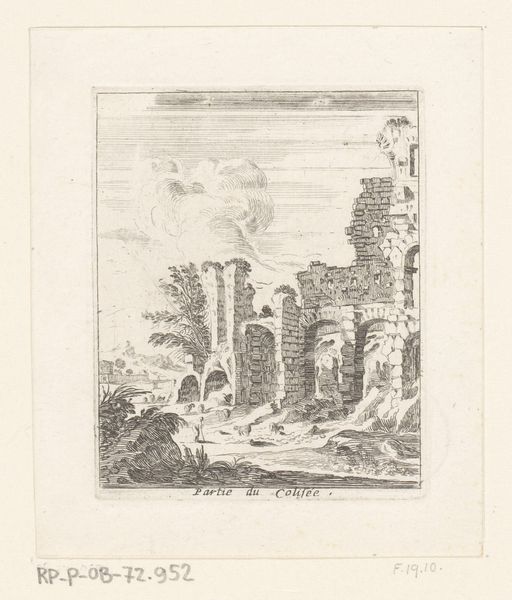
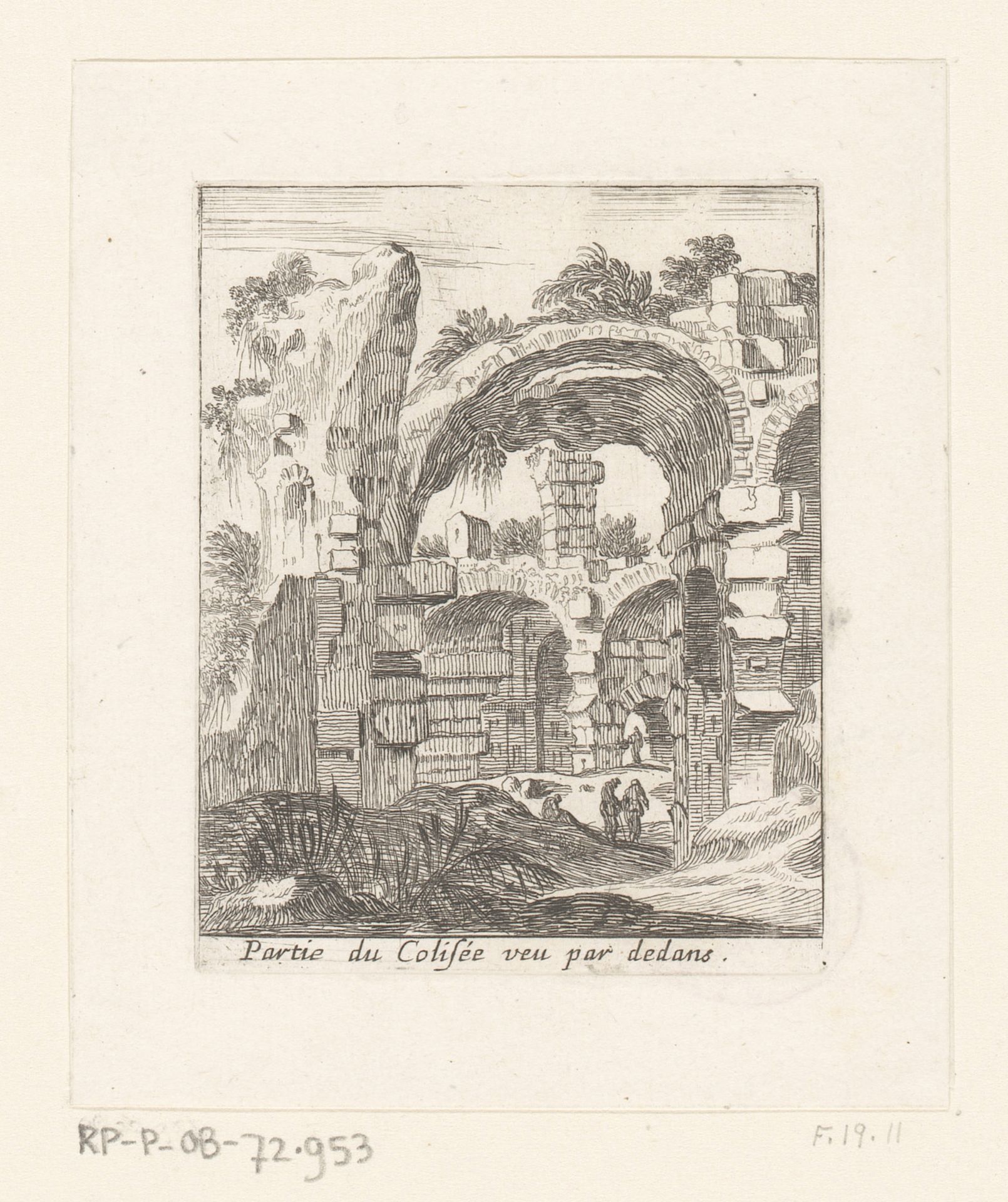
This is Israel Silvestre’s etching of the Colosseum from the inside, created some time before 1691. From the outset, the image presents itself through a network of fine, precise lines, structuring the ruins with considerable detail. Silvestre’s technique uses line to define form and texture, giving the stone surfaces a tactile quality. The composition is carefully arranged, using the arches and openings to frame the Roman landscape. The strong contrast between light and shadow creates depth and emphasizes the monumentality of the Colosseum, even in its ruined state. The etching is not merely a depiction, but an interpretation. The artist invites us to reflect on the interplay between the past and present, and to consider how time and decay transform meanings. Silvestre's formal choices function as a cultural commentary on the themes of history, memory, and transformation.
Gezicht op het Colosseum van binnenuit 1631 - 1661

Israel Silvestre
1621 - 1691Location
RijksmuseumArtwork details
- Medium
- print, etching, engraving
- Dimensions
- height 87 mm, width 69 mm
- Location
- Rijksmuseum
- Copyright
- Rijks Museum: Open Domain
Tags
baroque
etching
old engraving style
landscape
ancient-mediterranean
pen-ink sketch
cityscape
engraving
Comments
No comments
About this artwork
This is Israel Silvestre’s etching of the Colosseum from the inside, created some time before 1691. From the outset, the image presents itself through a network of fine, precise lines, structuring the ruins with considerable detail. Silvestre’s technique uses line to define form and texture, giving the stone surfaces a tactile quality. The composition is carefully arranged, using the arches and openings to frame the Roman landscape. The strong contrast between light and shadow creates depth and emphasizes the monumentality of the Colosseum, even in its ruined state. The etching is not merely a depiction, but an interpretation. The artist invites us to reflect on the interplay between the past and present, and to consider how time and decay transform meanings. Silvestre's formal choices function as a cultural commentary on the themes of history, memory, and transformation.
Comments
No comments