About this artwork
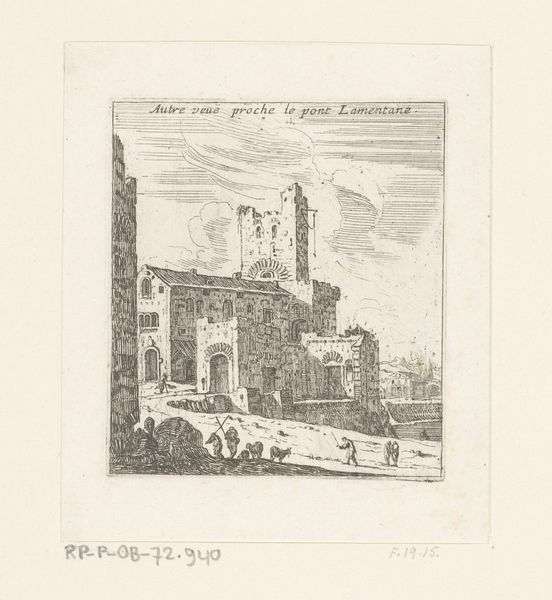
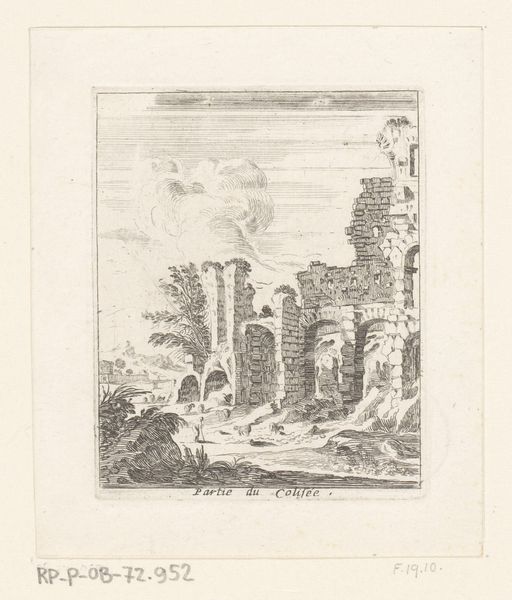
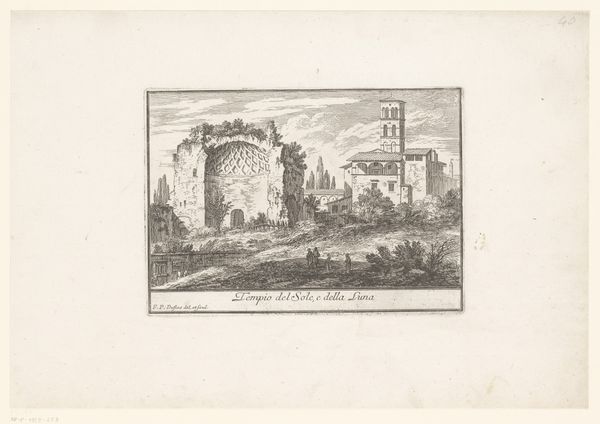
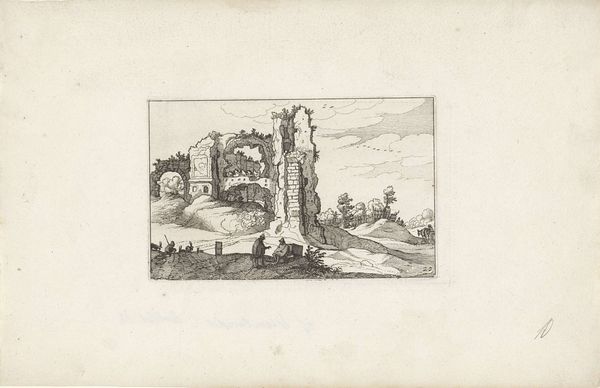
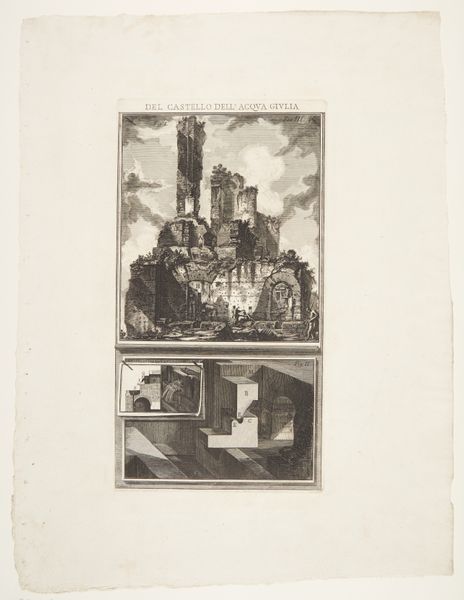
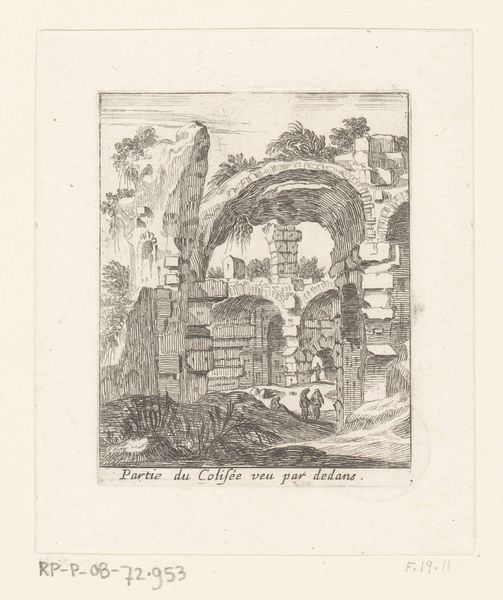
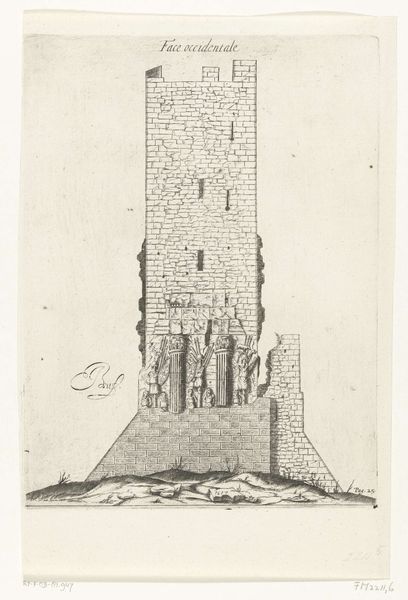
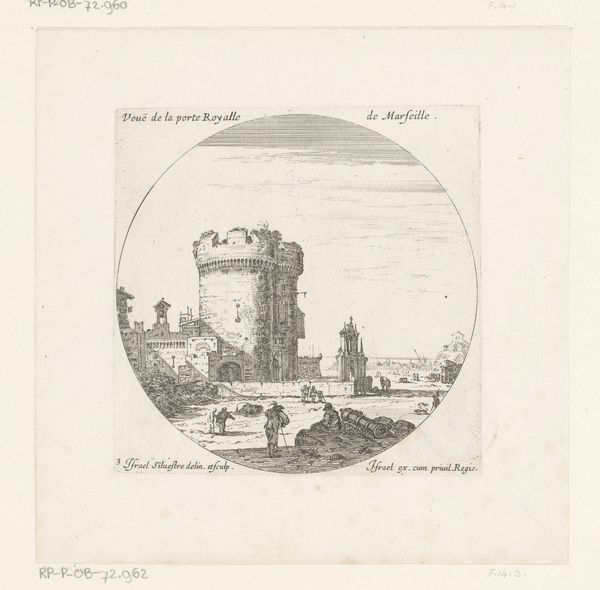
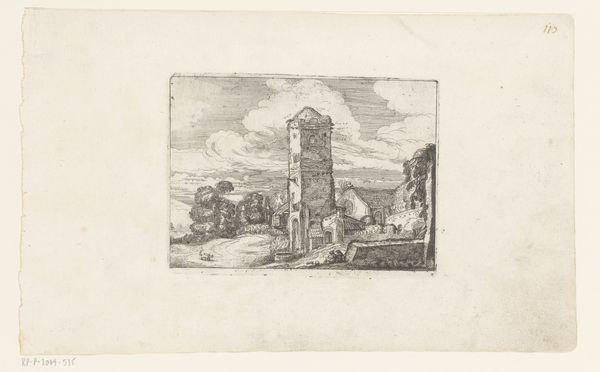
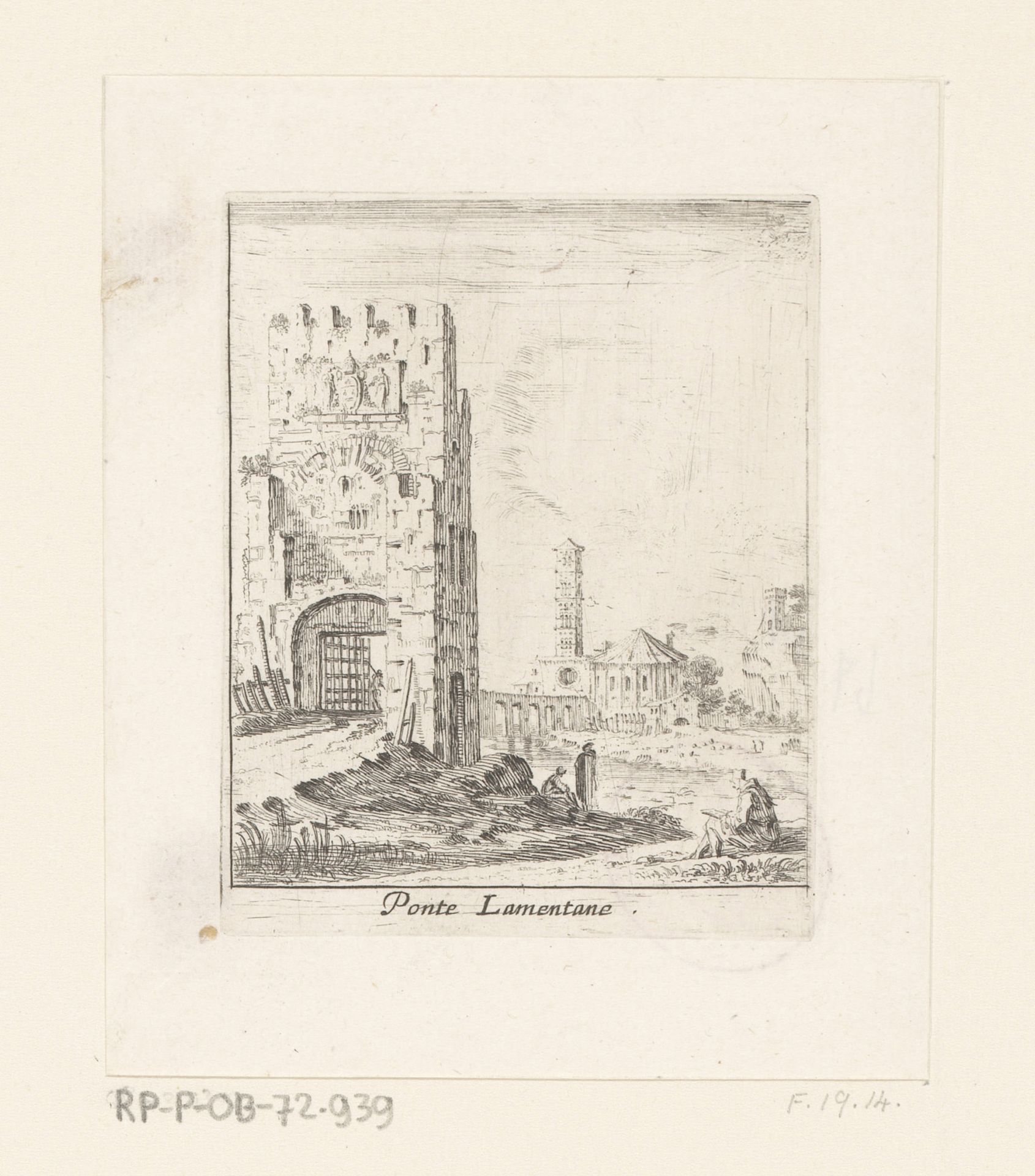
Editor: This etching, “Gezicht op de Ponte Nomentano,” or View of the Ponte Nomentano, made sometime between 1631 and 1661 by Israel Silvestre, presents this monumental scene with a surprising sense of intimacy. I’m really drawn to how Silvestre captured the light. What stands out to you? Curator: The light is compelling, yes, but I see in this print a dialogue between power and decay. The Ponte Nomentano was historically a critical infrastructure, literally and figuratively bridging communities. However, Silvestre captures it in a state of disrepair. Note the figures in the foreground; are they benefiting from this infrastructure, or are they perhaps squatters, living within its crumbling shadow? Editor: I hadn’t thought of it that way, as a symbol of something crumbling! It definitely adds a layer of complexity to the landscape. Do you think Silvestre was making a political statement? Curator: Possibly, but I also believe he’s inviting us to consider Rome’s layered histories. Think about how empires rise and fall, and what is left behind. What does it mean to depict such a historically charged location as Rome in a state of partial ruin during this early modern period? Are we looking at a nostalgic view or a commentary on shifting powers? Consider this work in light of, say, feminist architectural theory… how do buildings gender power? Editor: That’s fascinating! Thinking about the architecture as gendered—like this decaying bridge somehow represents power imbalances. Curator: Precisely. Silvestre’s choice of subject invites reflection on continuity, the transience of power, and who gets to benefit from these grand structures across history. Editor: I’m starting to see that it’s more than just a pretty view, it’s a really thoughtful piece. Curator: Indeed! Art allows us to excavate narratives within visual landscapes, prompting dialogues about society, power, and our place within these constructs.

Artwork details
- Medium
- print, etching
- Dimensions
- height 87 mm, width 69 mm
- Location
- Rijksmuseum
- Copyright
- Rijks Museum: Open Domain
Tags
baroque
etching
landscape
etching
cityscape
Comments
Be the first to share your thoughts about this work.
About this artwork
Editor: This etching, “Gezicht op de Ponte Nomentano,” or View of the Ponte Nomentano, made sometime between 1631 and 1661 by Israel Silvestre, presents this monumental scene with a surprising sense of intimacy. I’m really drawn to how Silvestre captured the light. What stands out to you? Curator: The light is compelling, yes, but I see in this print a dialogue between power and decay. The Ponte Nomentano was historically a critical infrastructure, literally and figuratively bridging communities. However, Silvestre captures it in a state of disrepair. Note the figures in the foreground; are they benefiting from this infrastructure, or are they perhaps squatters, living within its crumbling shadow? Editor: I hadn’t thought of it that way, as a symbol of something crumbling! It definitely adds a layer of complexity to the landscape. Do you think Silvestre was making a political statement? Curator: Possibly, but I also believe he’s inviting us to consider Rome’s layered histories. Think about how empires rise and fall, and what is left behind. What does it mean to depict such a historically charged location as Rome in a state of partial ruin during this early modern period? Are we looking at a nostalgic view or a commentary on shifting powers? Consider this work in light of, say, feminist architectural theory… how do buildings gender power? Editor: That’s fascinating! Thinking about the architecture as gendered—like this decaying bridge somehow represents power imbalances. Curator: Precisely. Silvestre’s choice of subject invites reflection on continuity, the transience of power, and who gets to benefit from these grand structures across history. Editor: I’m starting to see that it’s more than just a pretty view, it’s a really thoughtful piece. Curator: Indeed! Art allows us to excavate narratives within visual landscapes, prompting dialogues about society, power, and our place within these constructs.
Comments
Be the first to share your thoughts about this work.